TICKETSFree
No routine ticketed admission; respect local access and safety restrictions.
View current prices
Exterior viewingFree
InteriorNo managed public entry
 Castle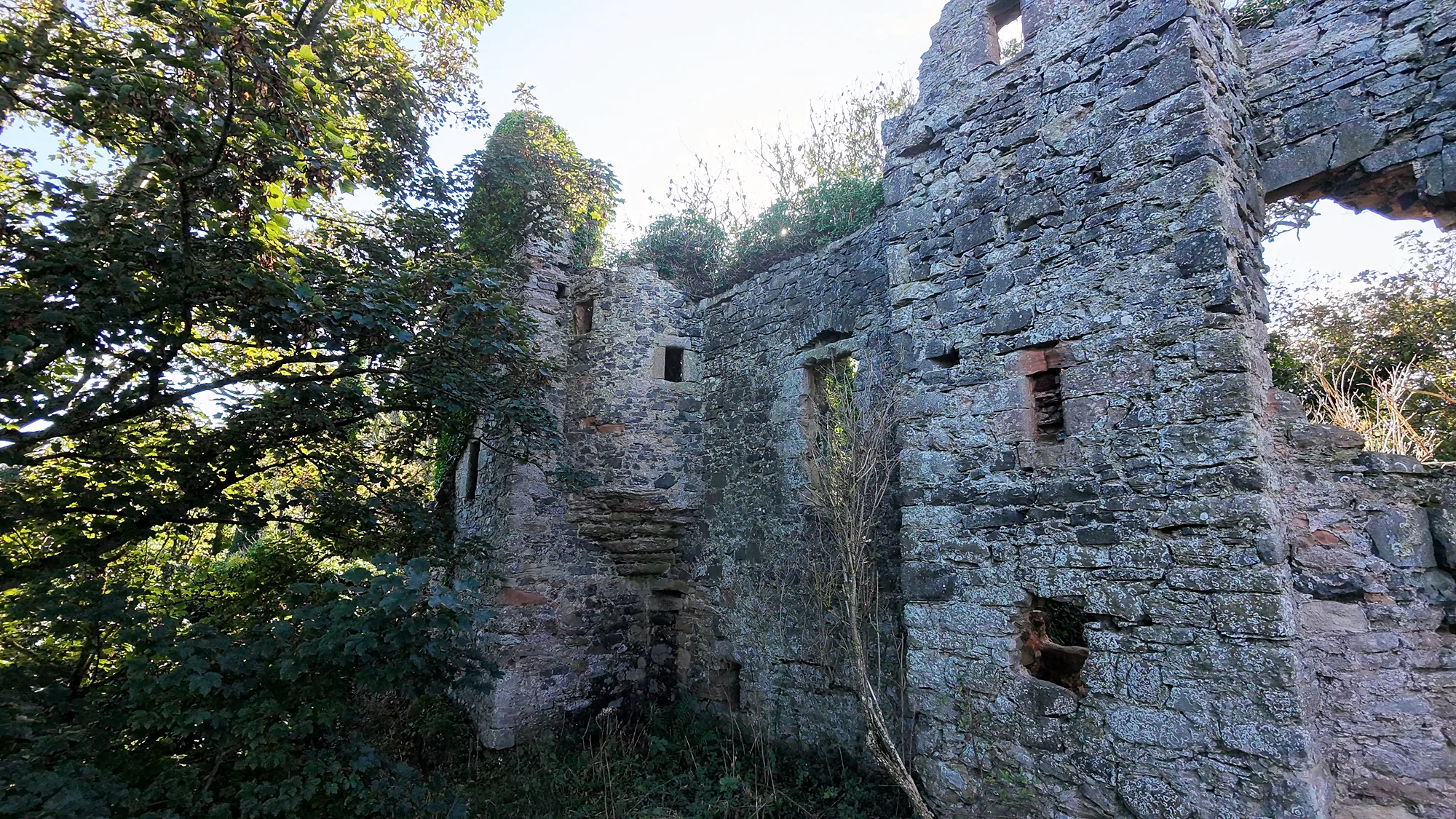
SEACLIFF RIDGE · EAST LOTHIAN
A small tower house. A quieter neighbour to Tantallon.
PLAN YOUR VISIT
Auldhame, near Seacliff Beach, East Lothian
No routine ticketed admission; respect local access and safety restrictions.
Exterior viewingFree
InteriorNo managed public entry
There is no standard ticket or managed visitor route. View from permitted public routes near Seacliff and check local conditions before travelling.
Parking information
Paid parking at Seacliff Beach. Use the beach car park and continue on foot towards Auldhame; do not drive onto farm tracks. Follow the entrance and parking signs.
Parking sources checked · 11 October 2026
Ground can be rough or overgrown and the masonry is unstable. Do not enter unsafe parts of the ruin.
A specialist East Lothian stop for careful visitors who enjoy small domestic ruins and the meeting of coastal, secular and religious landscapes.
WHAT TO EXPECT
01 / THE STORY
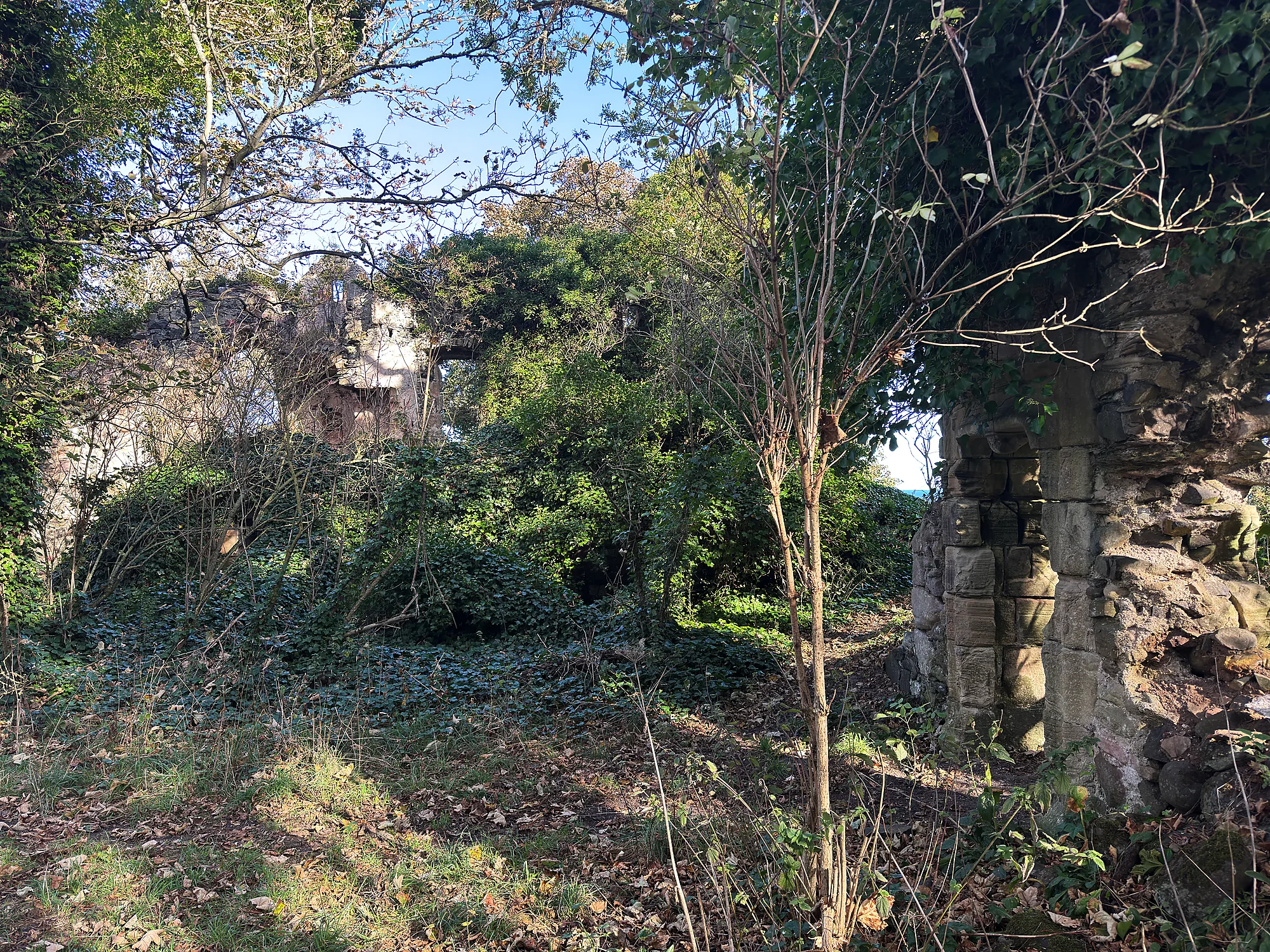
Auldhame Castle stands on a wooded coastal rise above Seacliff Beach in East Lothian, close to Tantallon. This sixteenth-century tower house was a laird’s residence: a compact home combining accommodation with defensive features.
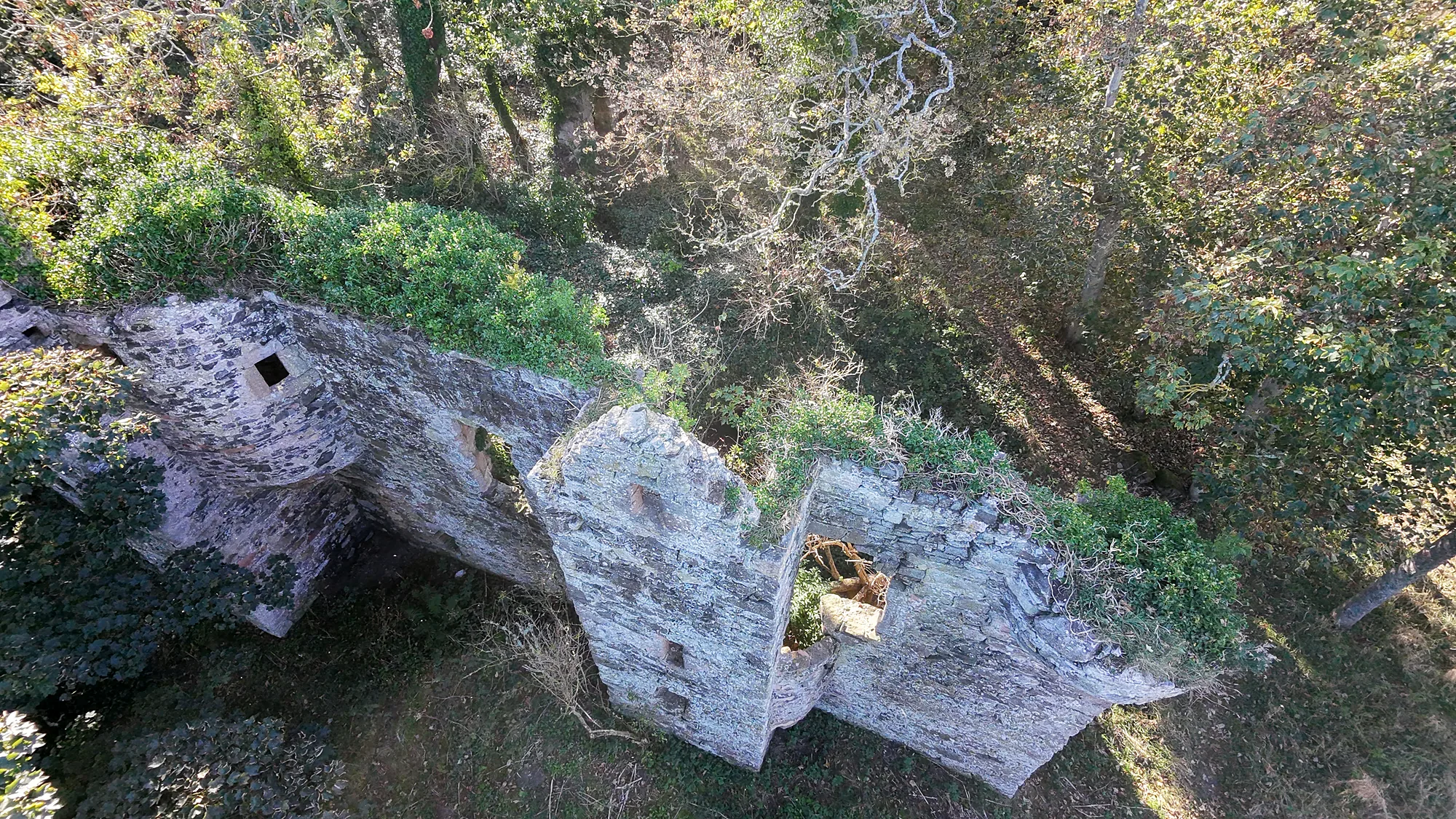
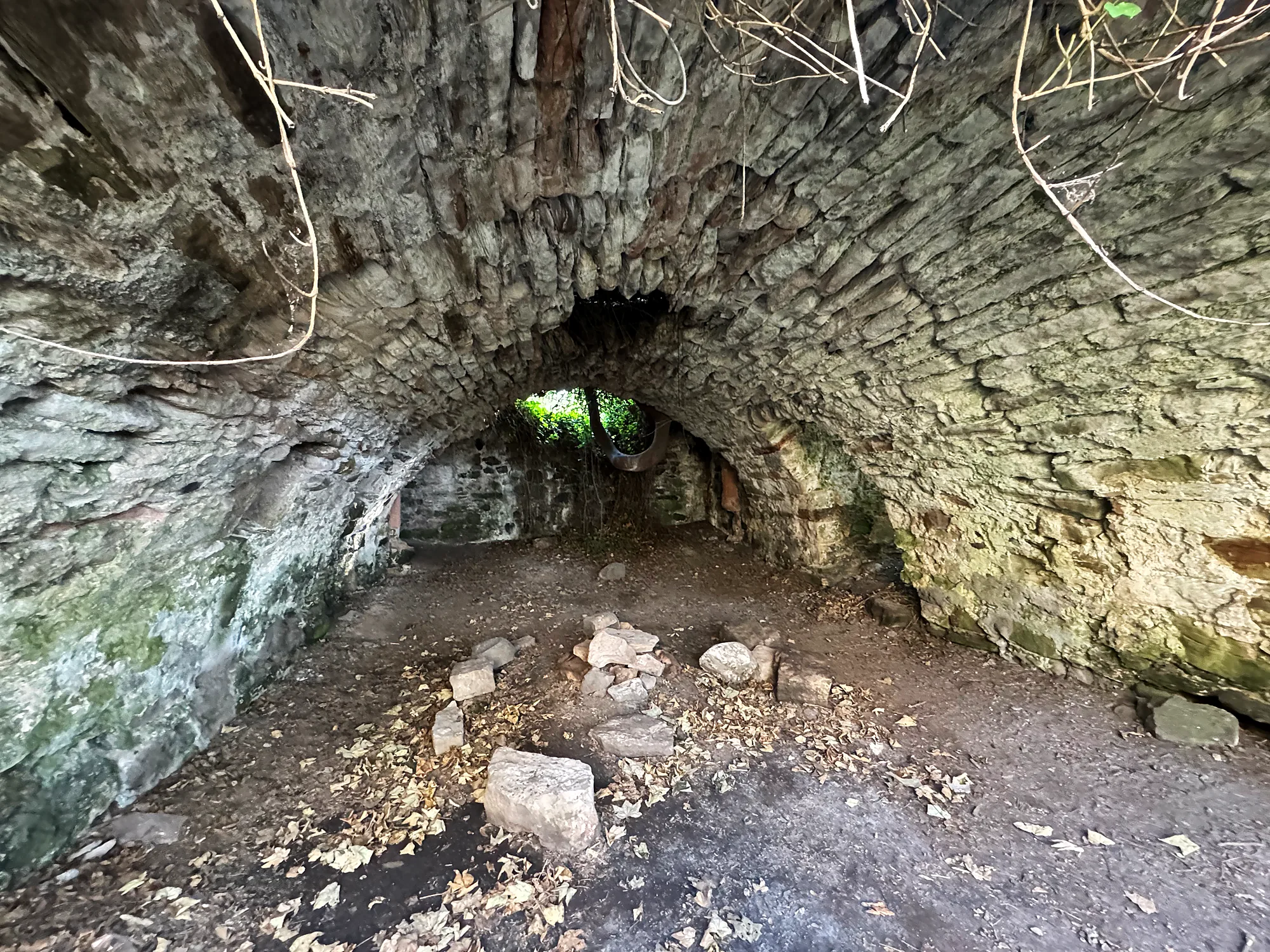
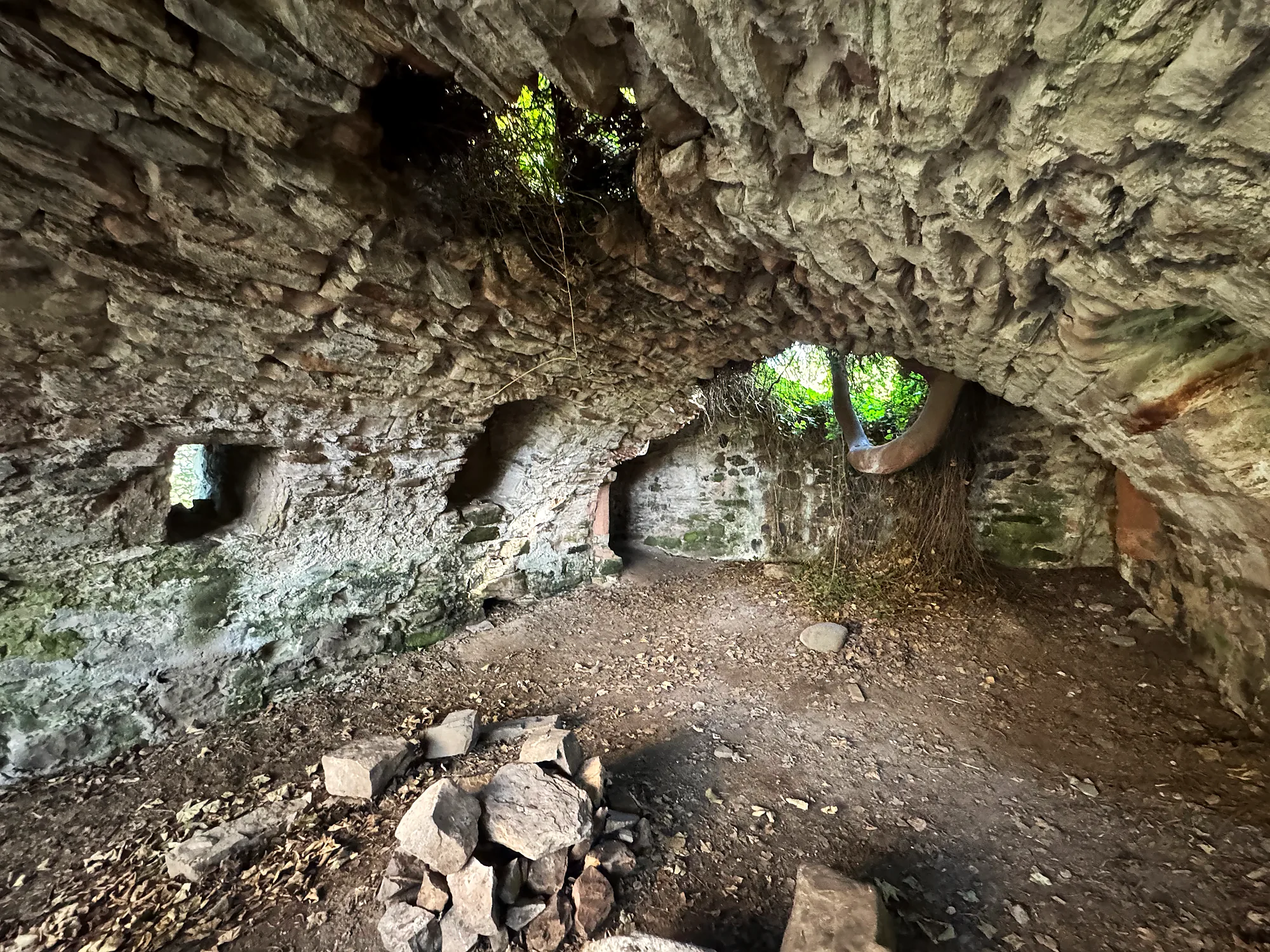
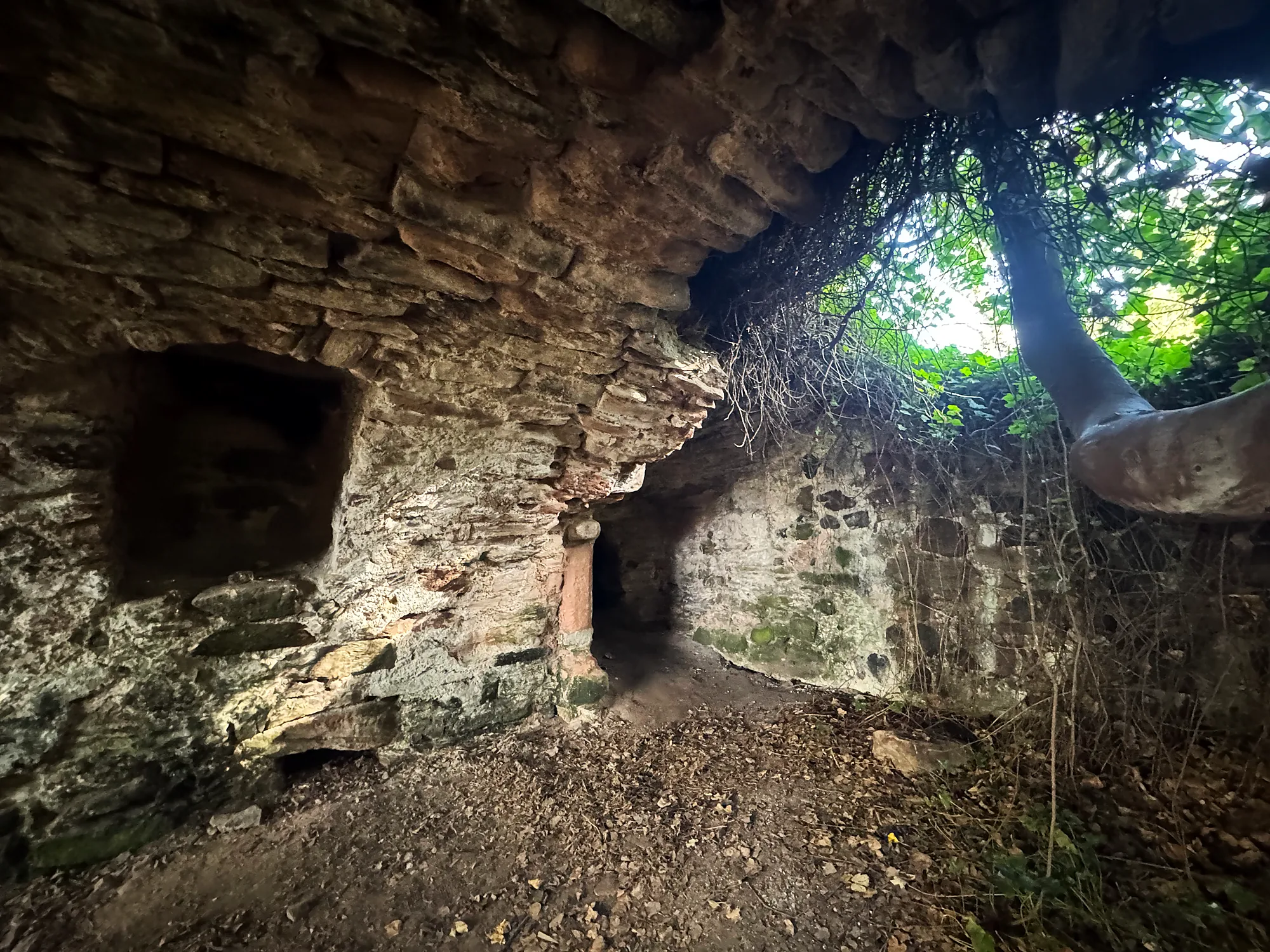
Its broken walls preserve clues to everyday life, including a vaulted kitchen and a bread oven. Nearby, a separate early medieval chapel and burial ground reveal a history reaching back many centuries before the house was built.
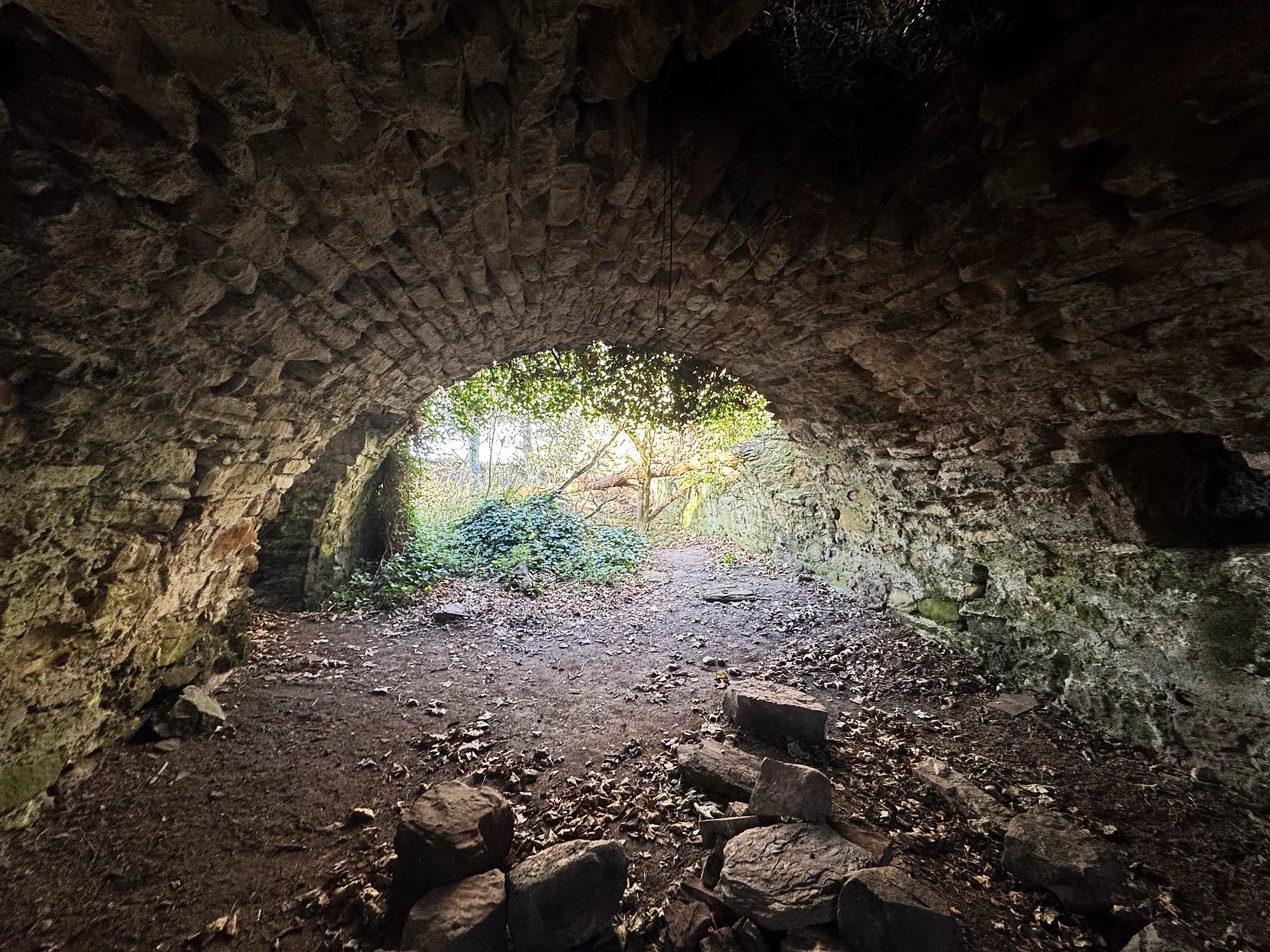
A vaulted lower level, a fireplace and a bread oven preserve the practical side of a laird’s household. Most of the upper accommodation has disappeared.
Look from a safe position outside: the fragile masonry is not a route to climb or explore.
The likely builder was a lawyer and Lord Provost of Edinburgh. The house is dated to the sixteenth century, but its exact foundation year is uncertain.
The Colt family later held Auldhame.
02 / VISUAL JOURNAL
Every photograph on this page was taken by CastleScotland during visits to the site.
01 / THE STORY CONTINUES
The traditional name recalls the saint’s association with the area, centuries before the tower house was built.
The nearby chapel and cemetery belong to a separate archaeological site.
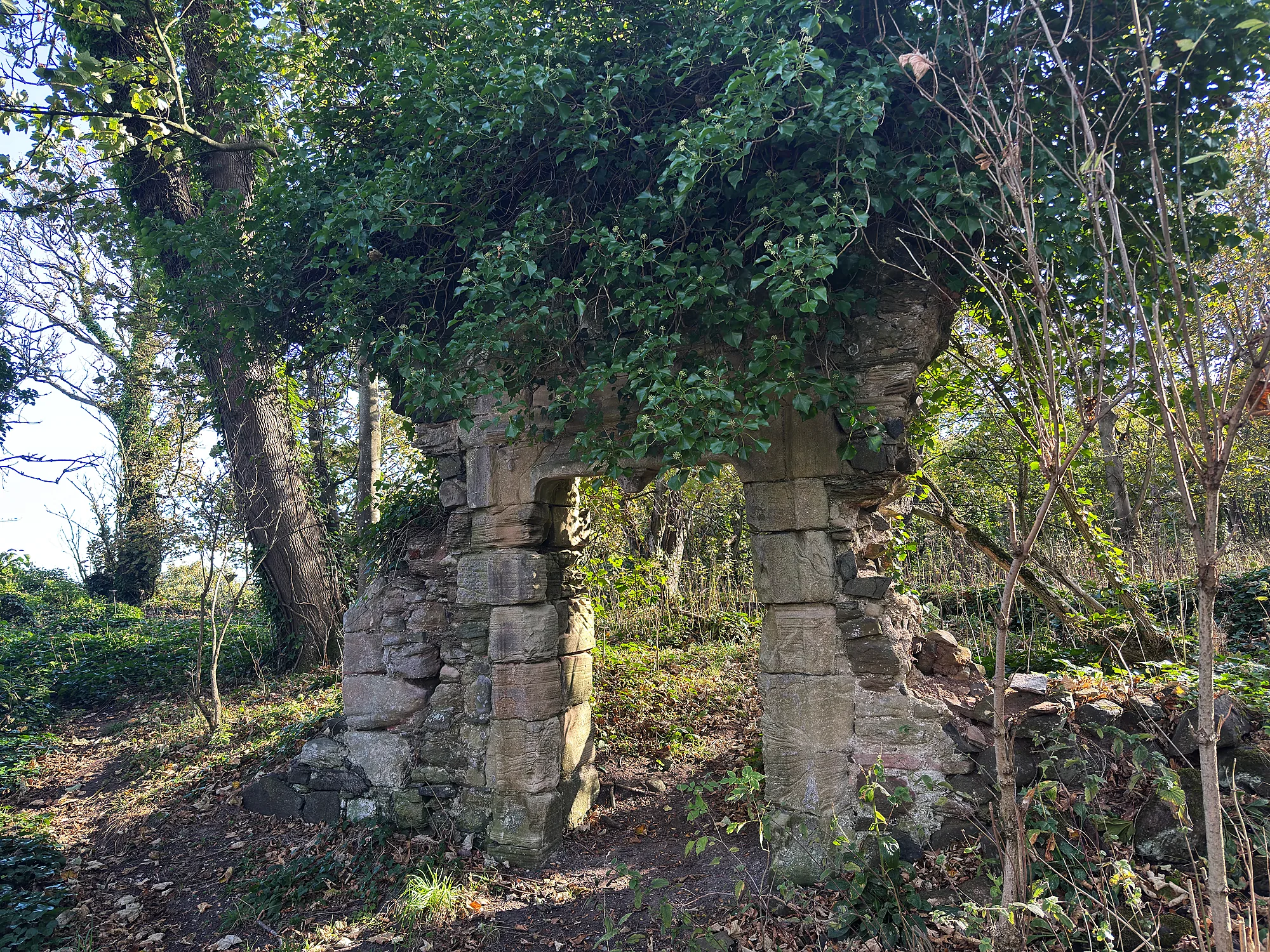
A surviving courtyard entrance has a classical pediment. It is a reminder of the care once given to the appearance of this small residence.
Together with the projecting turrets, it adds detail to the ruined outline.
03 / MOMENTS IN STONE
The surviving laird’s house is built; attribution to Adam Otterburn remains probable. Auldhame stands above Seacliff Beach, close to Tantallon.
The house is scheduled as Auldhame, St Baldred’s House (SM5605). A fireplace and bread oven recall cooking in the vaulted lower rooms.
Excavation investigates the separate neighbouring chapel and burial ground. View from permitted ground and avoid unstable walls and cliff edges.
Usually described as an L-plan tower house, Auldhame was considerably taller and more substantial than today’s ruin suggests. Historic Environment Scotland records a main block measuring roughly 18 by 9 metres, with at least three storeys. Rubble masonry was finished with sandstone dressings, and part of the basement was covered by a barrel vault. The surviving walls give only a partial impression of the original residence.
The kitchen is one of the most evocative parts of the building. Architectural accounts describe a broad, arched fireplace and a domed bread oven in the vaulted lower level. These were working features of a household that cooked and baked on site. Above were the principal rooms and private accommodation, though the loss of most upper floors makes a complete reconstruction difficult.
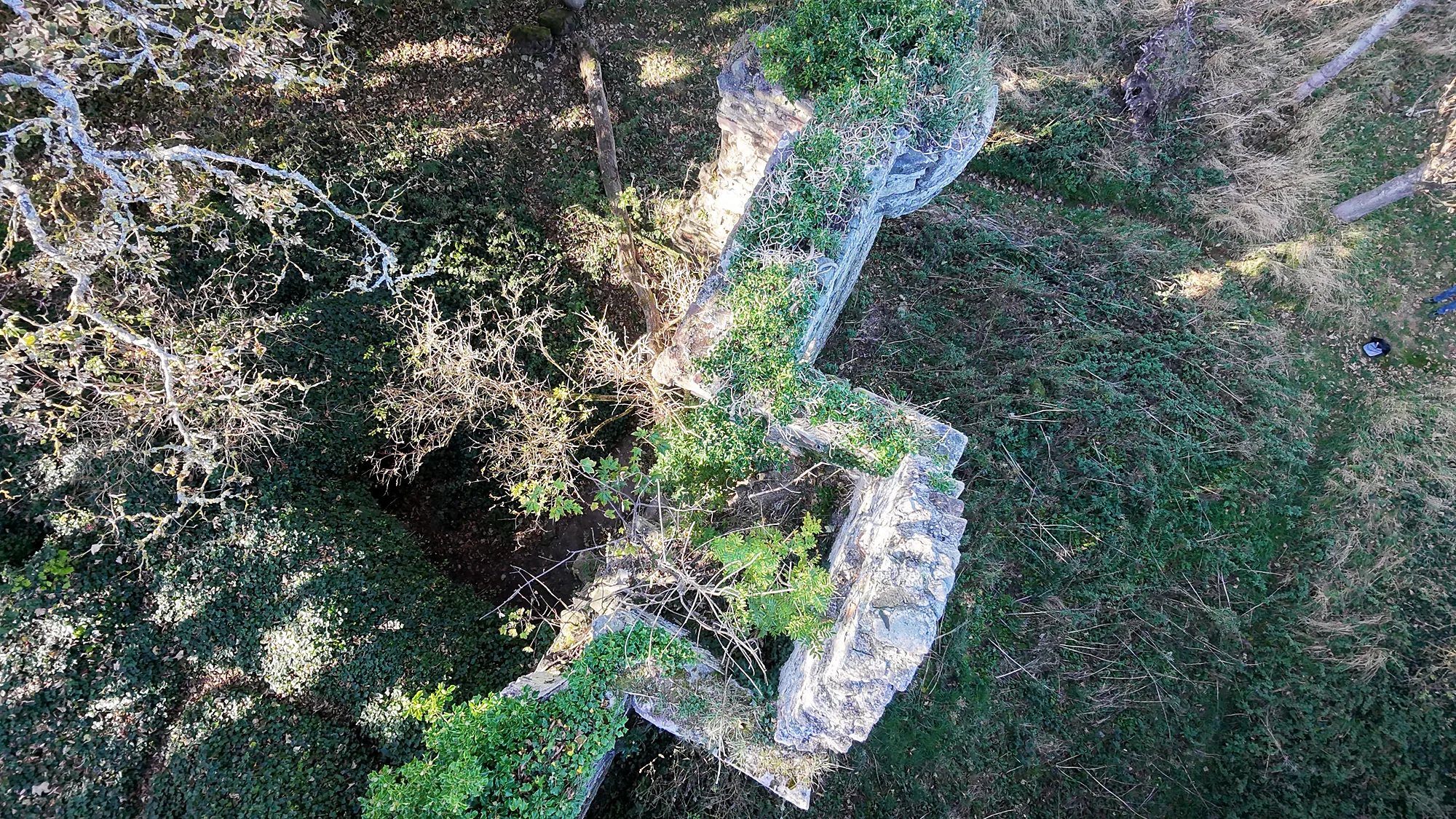
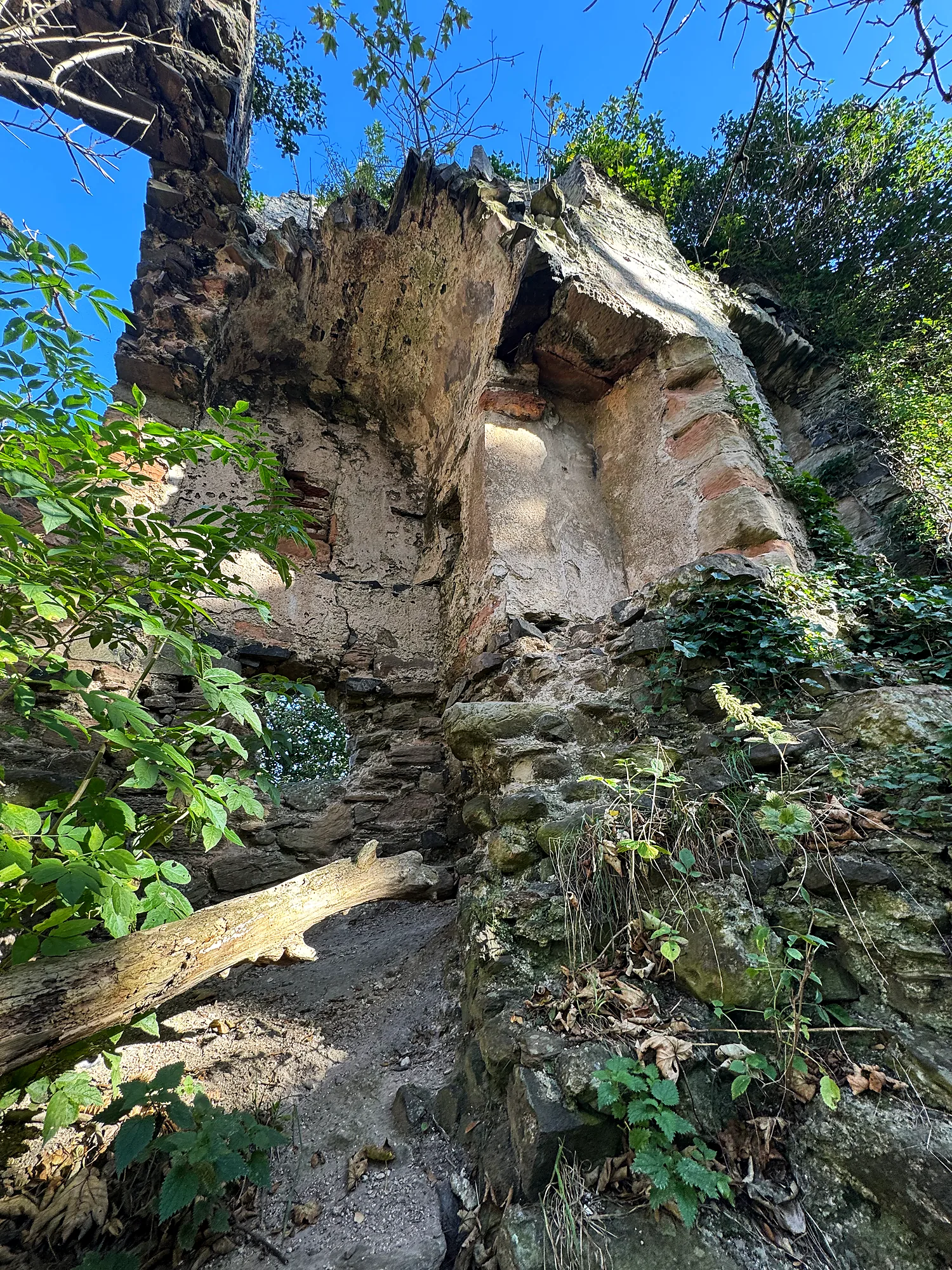
The eastern side has two rectangular projections, with small turrets carried out on stone corbels in their inner angles. Remains of a spiral stair survive in the south-eastern turret. The uneven survival of the walls makes the house look different from each side: the seaward elevation retains more of its outline than the courtyard side. These details reward a careful exterior view.
Auldhame also had a courtyard and associated buildings. A surviving section of courtyard wall extends from the south-west corner of the house and contains an entrance with a classical pediment. This decorated gateway adds a detail of architectural display to a residence otherwise easily dismissed as a small, broken tower. Traces of outbuildings help explain that the household occupied more than the main block alone.
The lands belonged to the Church before passing to Sir Adam Otterburn of Reidhall, a lawyer, King’s Advocate and Lord Provost of Edinburgh. He is generally regarded as the likely builder, although the attribution is not certain. The estate was later held by the Colt family. Sources give differing dates for Otterburn’s acquisition, so a precise foundation year would be misleading.
Early descriptions also record decorative plasterwork in the upper rooms, including a frieze attributed to the seventeenth century. That detail suggests an interior with more comfort and ornament than the bare masonry now conveys. It is a historical observation, not a promise that visitors can still identify the decoration today.
One suggested episode links Auldhame with the siege of nearby Tantallon in 1651: soldiers of General George Monck may have lodged here during the campaign. The account supplied by Zamki Szkocji explicitly treats this as a possibility, and notes that Auldhame is not named in the reports discussed. It should therefore be read as a historical hypothesis. The house’s precise abandonment date and the circumstances of its decline remain uncertain.
The neighbouring chapel and cemetery have a much earlier history. Excavation in 2005 revealed evidence for a probable early medieval religious settlement. Historic Environment Scotland dates the earliest chapel and associated burials broadly to around AD 650–780, with later rebuilding and burial continuing intermittently until about 1700. The archaeological remains were covered again for preservation; they are not a second set of standing castle ruins.
Local tradition associates Auldhame with St Baldred, reflected in the name ‘St Baldred’s House’. The saint belongs to a much earlier period than the surviving tower house. The name preserves a religious association with the area, rather than identifying these sixteenth-century walls as his home. The house and neighbouring religious site have separate protected-monument records.
For a visit, look for the contrast between the vaulted lower rooms, taller surviving walls and the remains of the courtyard entrance. The coastal setting is part of Auldhame’s appeal, especially when combined with Seacliff and nearby Tantallon. View from permitted ground, respect local access restrictions and keep clear of unstable masonry and cliff edges. The details can be enjoyed without entering dangerous parts of the ruin.
08 / EXPLORE NEXT
Find Scottish castles by region, landscape or the stories that bring them to life.
 Edinburgh & The LothiansEdinburgh Castle
  Edinburgh & The LothiansTantallon Castle
  Edinburgh & The LothiansCraigmillar Castle