Historic Environment Scotland online and walk-up prices shown separately. Members enter free; check the official page before travelling.
View current prices
Adult£10.00£11.00
Concession£8.00£9.00
Child (7–15)£5.00£5.50
Historic Scotland membersFree
Castle
THE GREAT HALL · DOUNE
One courtyard. A towering hall. A castle with many lives.
PLAN YOUR VISIT
Castle Hill, Doune, FK16 6EA
Historic Environment Scotland online and walk-up prices shown separately. Members enter free; check the official page before travelling.
Adult£10.00£11.00
Concession£8.00£9.00
Child (7–15)£5.00£5.50
Historic Scotland membersFree
Opening arrangements, admission and access can change. Check the official visitor source before you travel.
Parking information
Castle parking is very limited; donations are welcomed. Draggie Burn Park & Stride, FK16 6QJ, is about a 20-minute walk away. Larger vehicles cannot use the castle car park.
Parking sources checked · 11 October 2026
Historic ground can include uneven paths, steps and exposed conditions. Wear suitable footwear.
A good choice for a castle visit with recognisable screen connections and satisfying interiors. Compact enough to follow easily, with plenty to notice once the familiar scenes have had their moment.
WHAT TO EXPECT
01 / THE STORY
Some visitors arrive at Doune thinking of Jamie Fraser. Others are trying very hard not to quote Monty Python. Then the gatehouse rises above them, and a much older character takes over.
This is a castle with rooms you can imagine using: a hall for a crowd, a kitchen to feed it and private spaces set apart from the noise. Its screen career is a wonderful introduction, but the household behind the walls is worth meeting too.
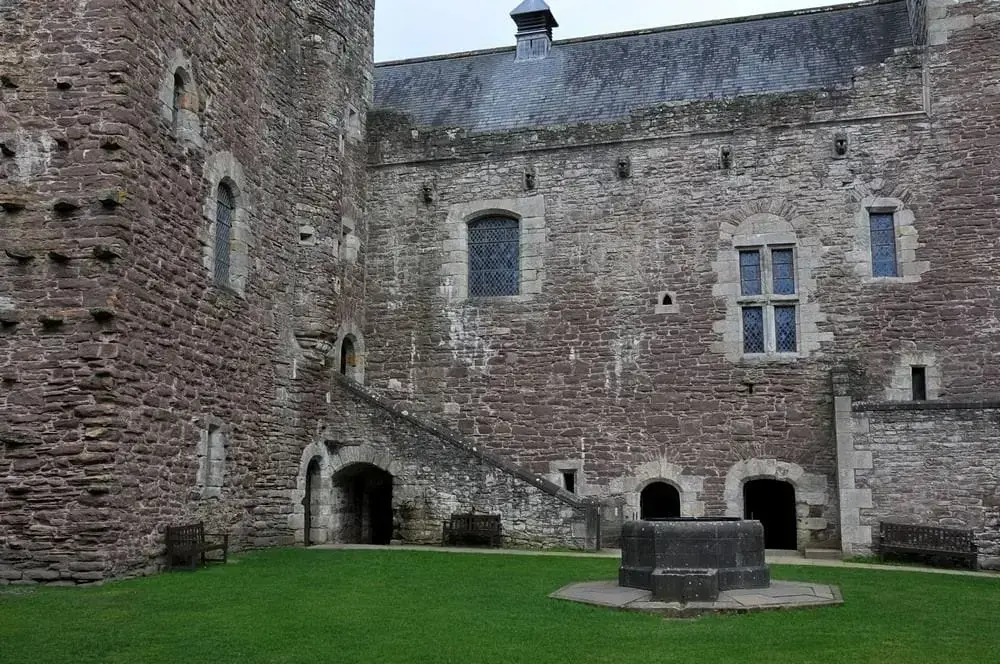
Doune gives you the pleasure of going inside a castle that still has a strong sense of enclosure. The courtyard brings the main buildings together, so the visit feels like exploring one household rather than following a long trail of disconnected ruins.
It is especially rewarding if you enjoy interiors, film locations or simply finding out what lies behind an imposing door.
Robert Stewart, Duke of Albany, was a royal prince and regent who exercised enormous power in Scotland. Doune was his residence, and its scale makes more sense when you realise its owner was no ordinary local lord.
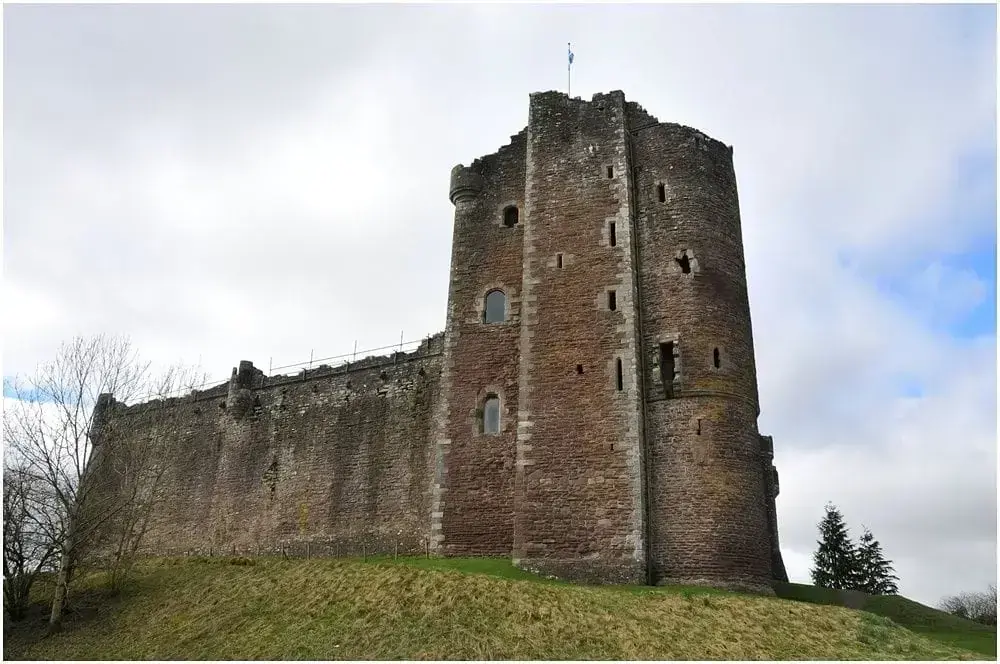
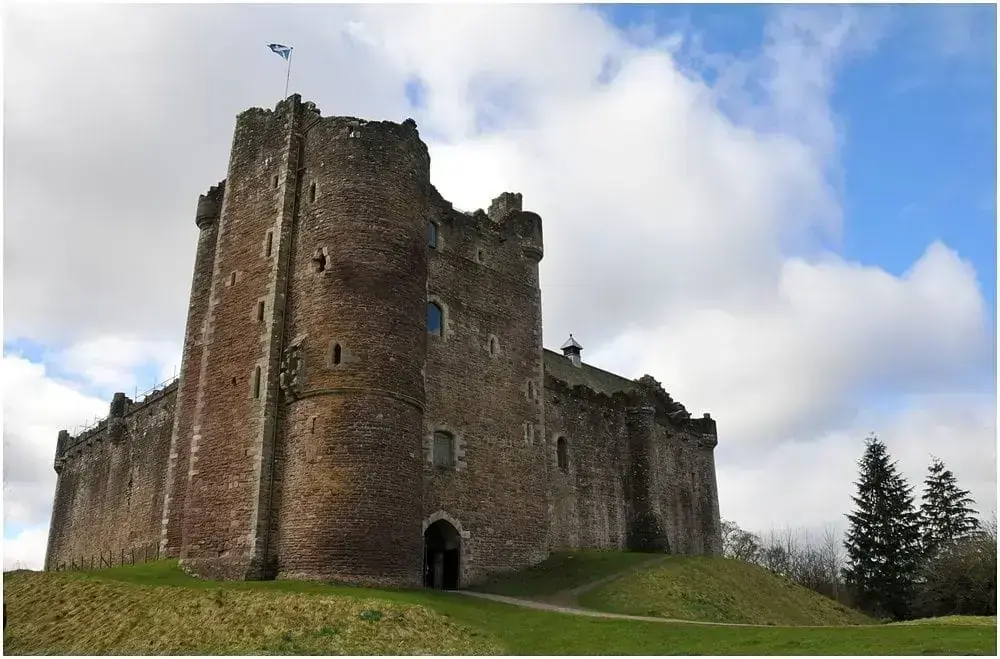
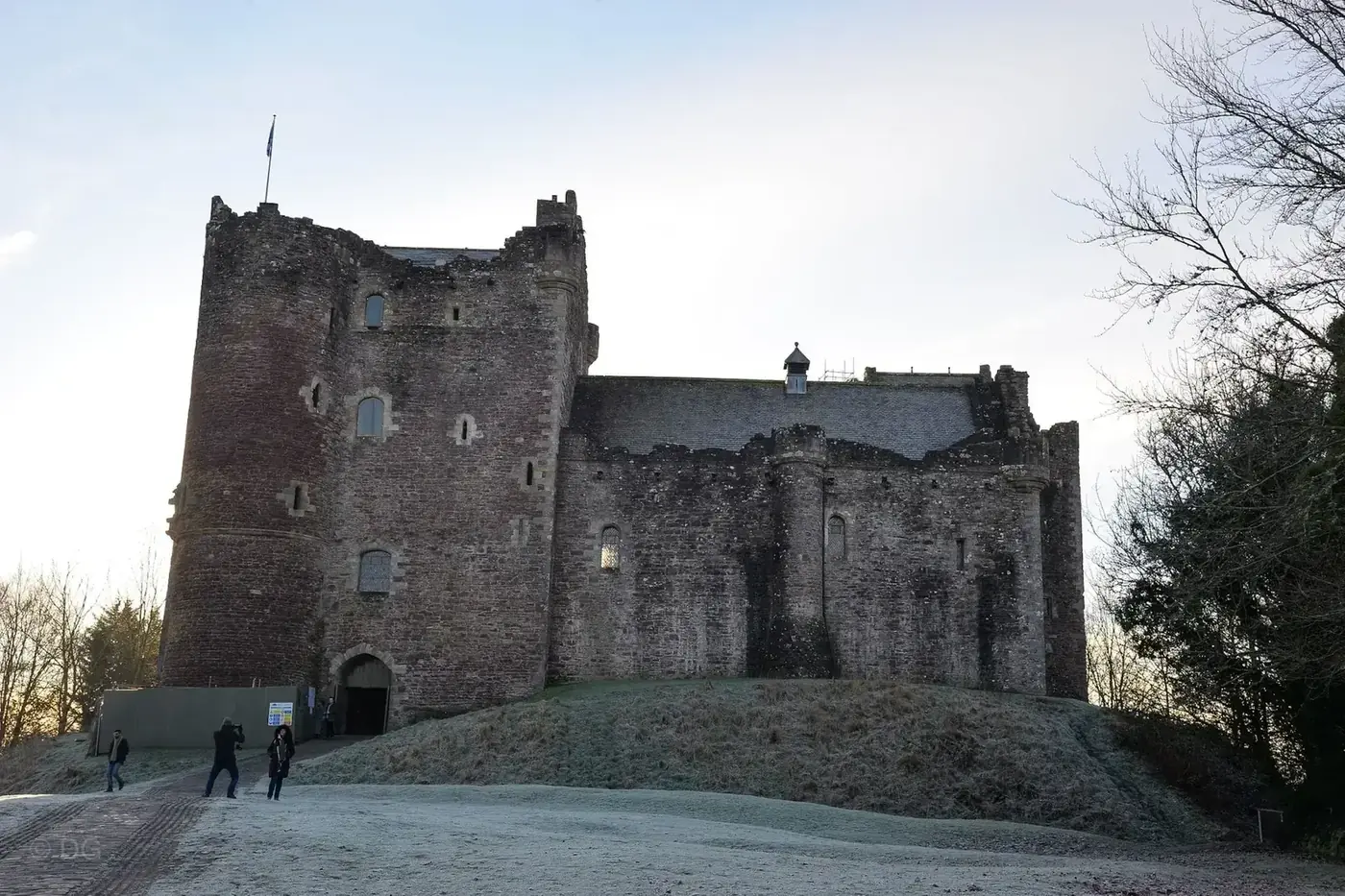
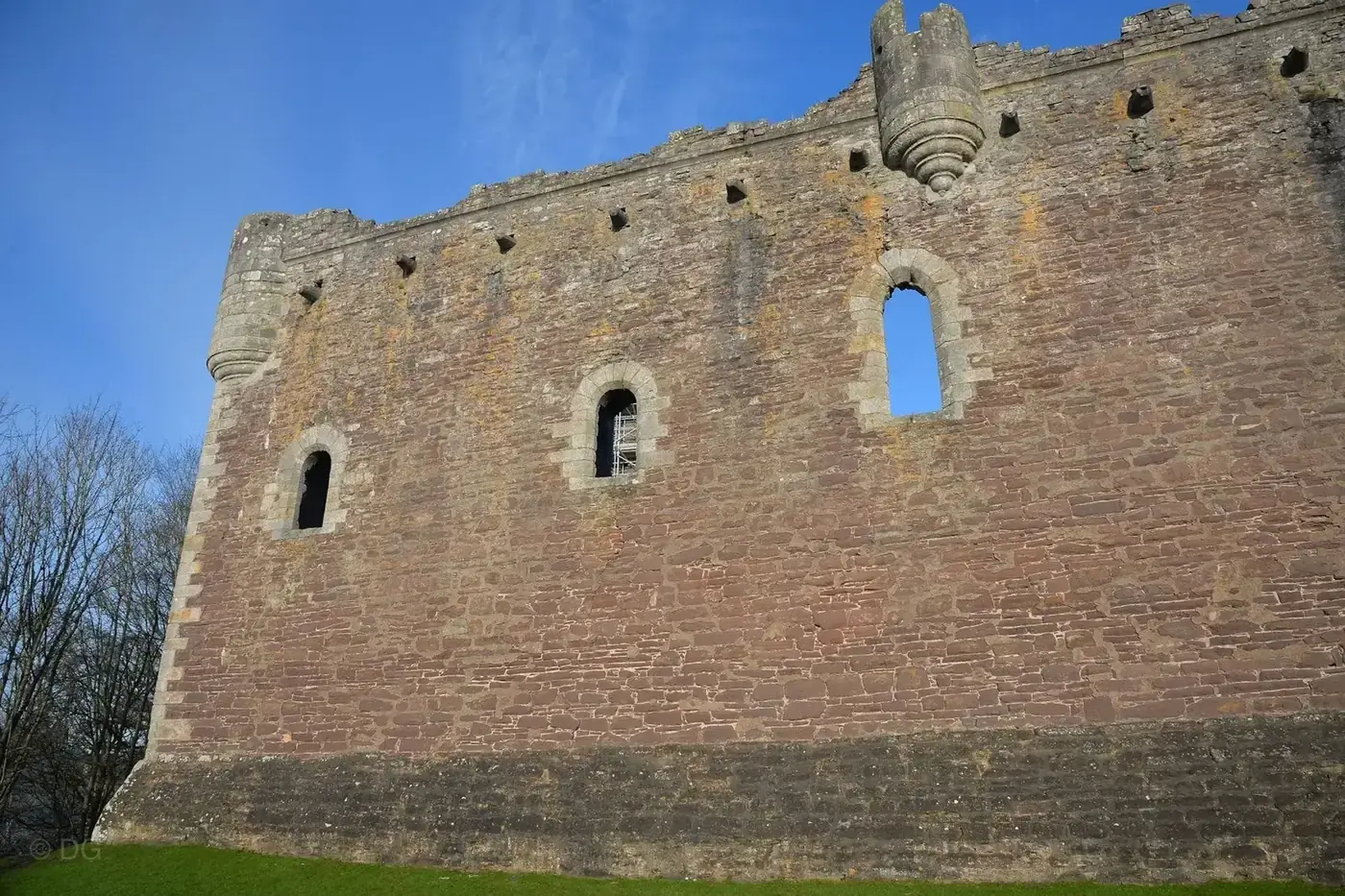
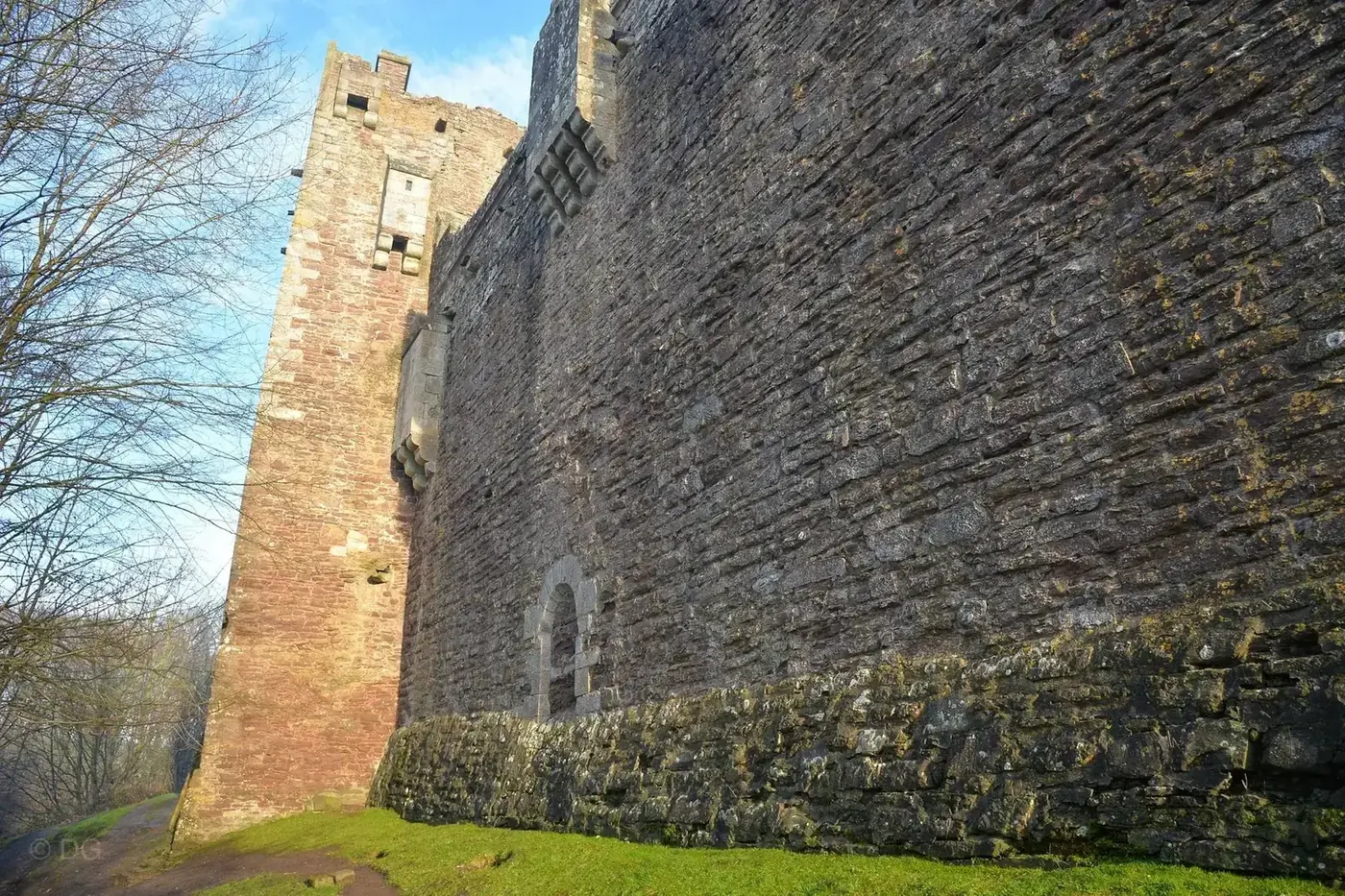
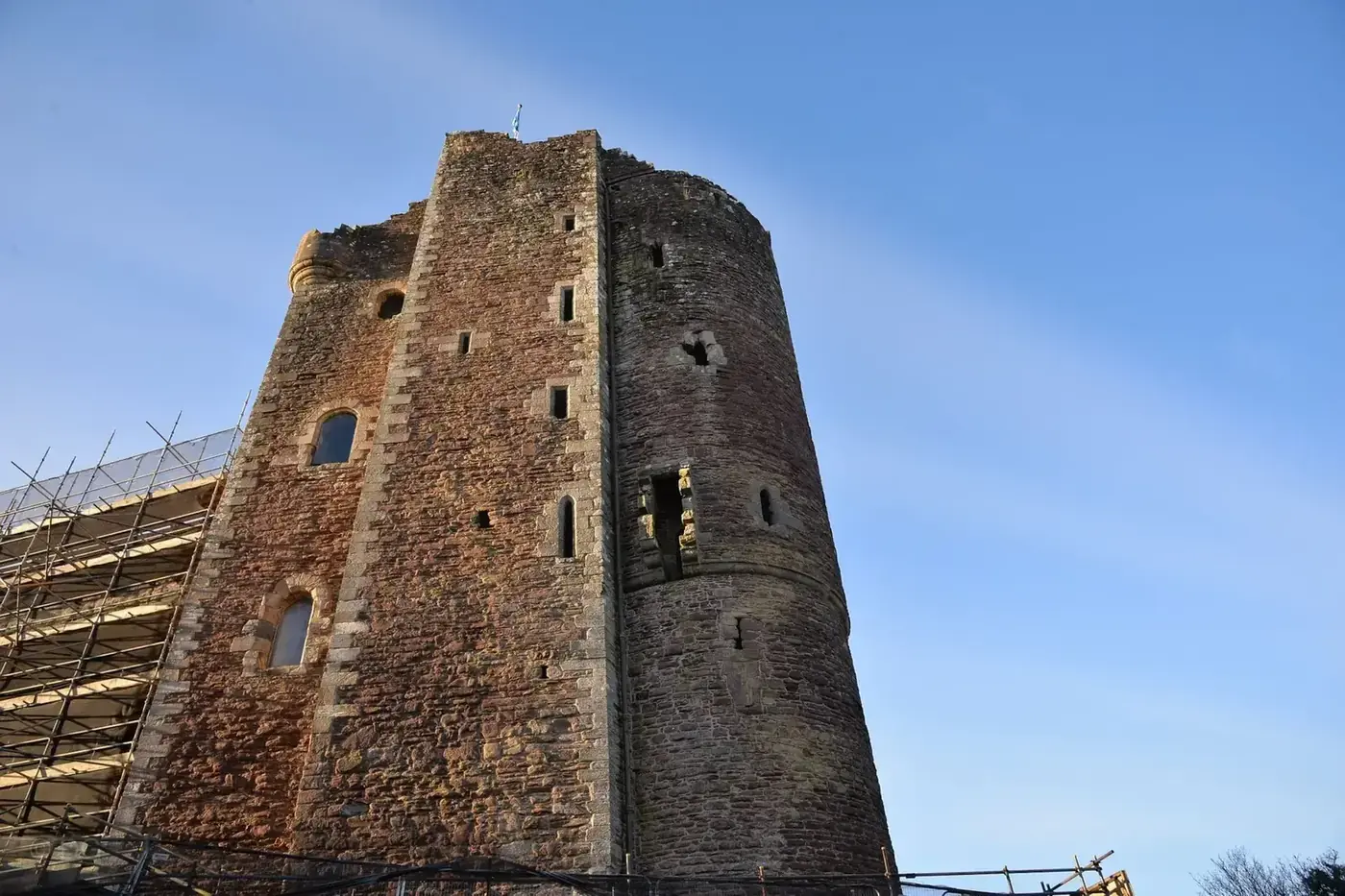
The great tower over the entrance sets the tone before anyone reaches the hall. A visitor would have understood the message without needing to read the family tree.
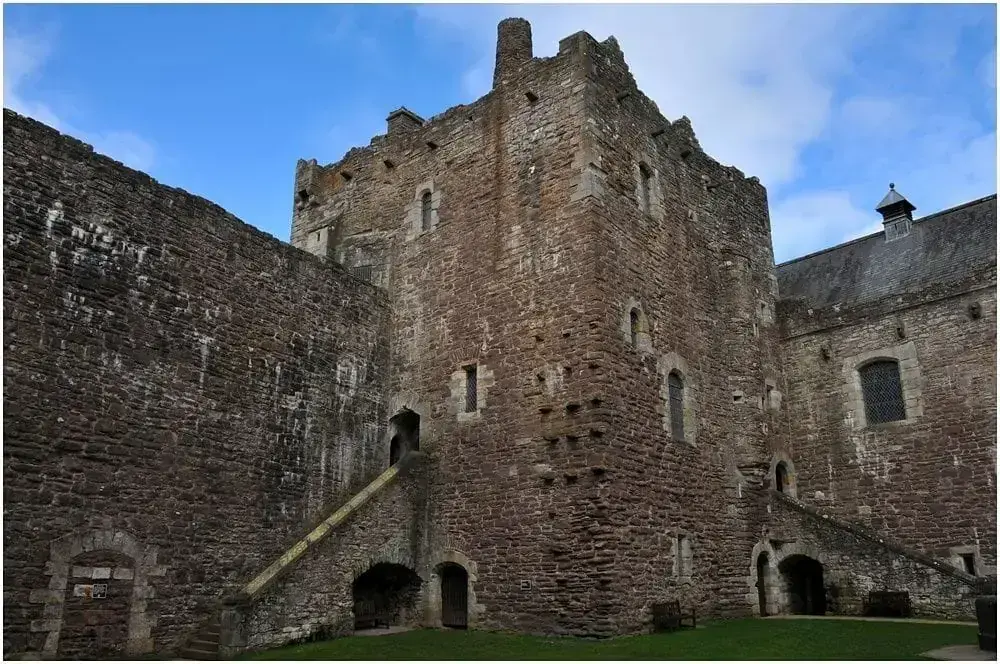
The kitchen is one of Doune’s most enjoyable stops. Its great fireplace brings the work of feeding a large household into focus: heat, fuel, heavy pots and people carrying food towards the hall.
Then look at the hall itself. The distance between preparing a feast and enjoying it is short on the ground, but the two spaces belonged to very different working days. It is an easy way into castle life without memorising a single battle.

02 / VISUAL JOURNAL
Every photograph on this page was taken by CastleScotland during visits to the site.
10 of 12 photographs
01 / THE STORY CONTINUES
Compare the larger public spaces with the lord’s more private accommodation. A castle needed to impress guests, but its owner did not necessarily want every guest following him everywhere.
Doorways and stairs tell that story quietly. As you move through, notice where a broad, welcoming space gives way to a narrower route. The building can do the explaining.
Film fans may arrive with a particular scene in mind, but give the hall and kitchen time as places in their own right. Look upwards, then back towards the courtyard, before moving to the next room.
Check the official visitor page for current access and audio-guide arrangements. Historic stairs and uneven surfaces are part of the experience, so choose shoes for exploring rather than just the photograph outside.
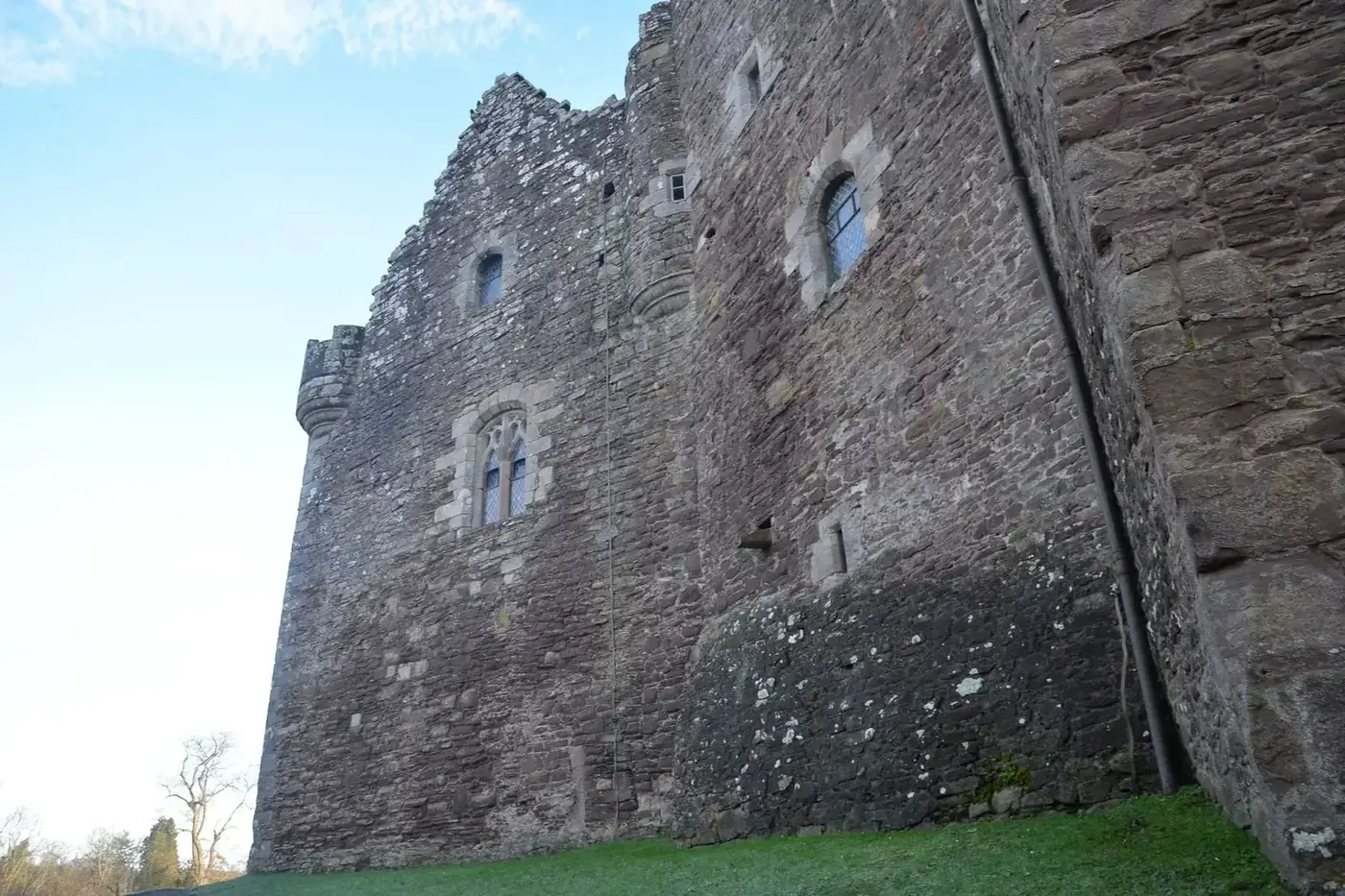
In 1746, the minister John Witherspoon was among the government supporters held by Jacobites at Doune Castle. He and fellow prisoner John Home escaped from rooms above the kitchen using a rope made from knotted sheets. Other men attempting the descent were killed or injured when the improvised rope failed.
Witherspoon later became president of the college now known as Princeton and signed the United States Declaration of Independence in 1776. His legacy was contradictory: he also enslaved people and opposed abolition. The escape is therefore an extraordinary connection between Doune and American history, but not a simple heroic tale.
Doune plays Castle Leoch in Outlander and several castles in Monty Python and the Holy Grail (1975). That means one courtyard can feel familiar for very different reasons: Highland drama for one visitor, coconut-powered comedy for the next.
It was also used as Winterfell for the original Game of Thrones pilot. Keep that distinction in mind: Doune was not the regular Winterfell location throughout the series.
03 / MOMENTS IN STONE
The principal surviving castle is developed for Robert Stewart, duke of Albany, possibly incorporating earlier work. The scale of the great hall conveys the status of the household.
Jacobites hold government prisoners captured at Falkirk. The gatehouse makes defence and display inseparable.
Restoration for the fourteenth earl of Moray repairs and reroofs the castle. Recognisable scenes are a route into a much older story.
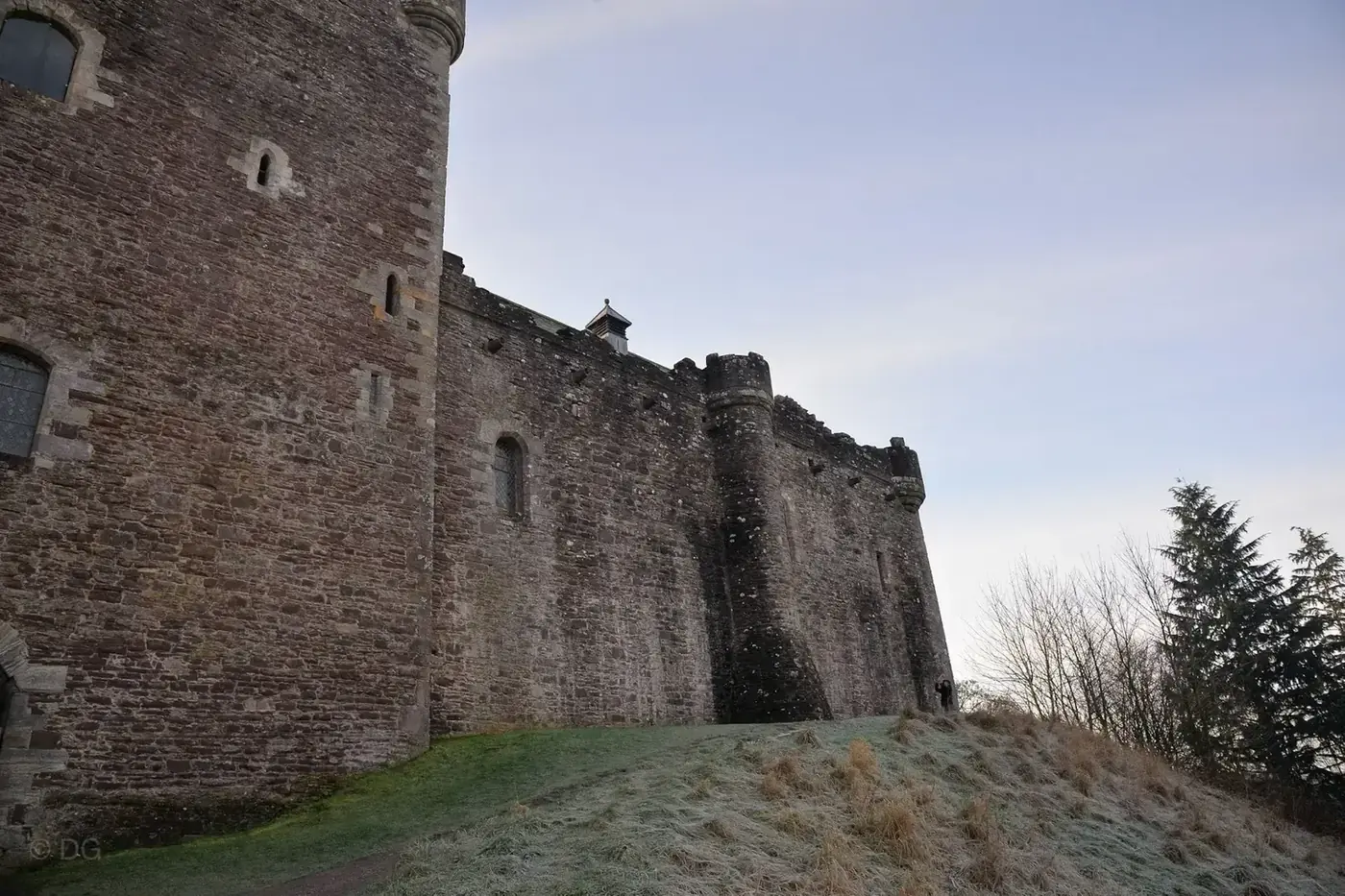
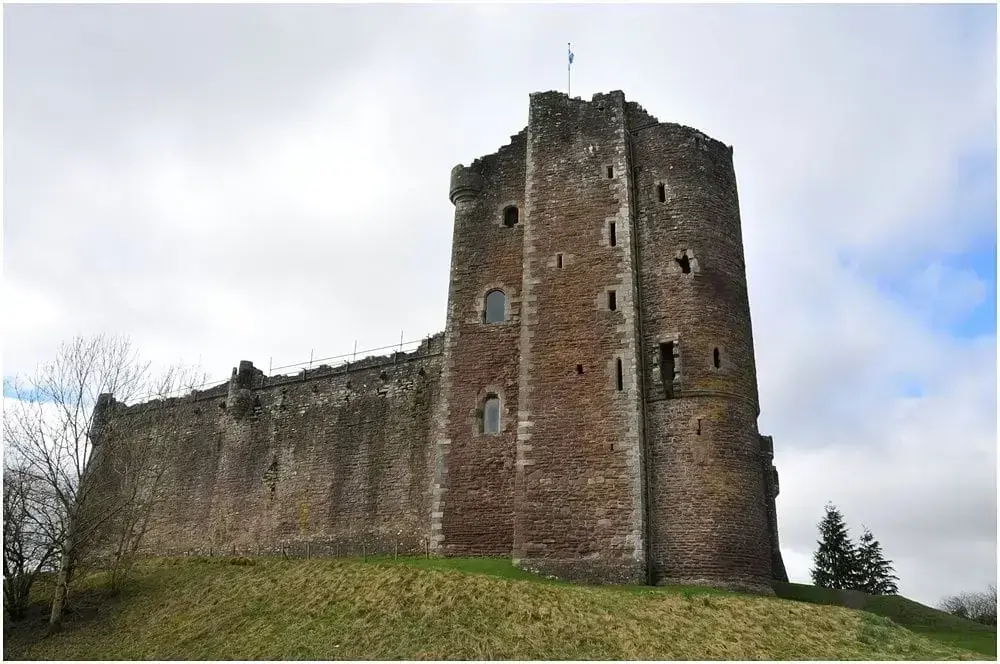
The location helps explain the ambitions of Doune’s owners. Doune occupies raised ground between the River Teith and the Ardoch Burn, with the main approach from the north. Its position combined natural protection with access to the surrounding country. The castle was a base for managing estates and receiving people, not simply a refuge to be occupied when danger approached. Its size and arrangement expressed the resources of a powerful household.
Above the defended entrance, the gatehouse contained the lord's principal accommodation. The great hall linked this part of the residence with the kitchen tower, bringing public hospitality, food preparation and private life into a coordinated arrangement. Look at that relationship before concentrating on individual features. Projecting masonry and openings elsewhere in the courtyard suggest further buildings were intended, although the full planned enclosure of residential ranges appears not to have been completed.
After the fall of Albany's family in the fifteenth century, Doune became a royal residence. It served as a hunting retreat and a dower house for queens, while later keepers connected its history to the earls of Moray. These changing roles explain why the building remained useful after the generation most closely associated with its construction. The rooms belonged to continuing administrative and domestic life, rather than becoming a monument as soon as their first owner died.
Its later military history includes the Jacobite risings. In 1746, during the rising of 1745–46, the Jacobite-controlled castle held government prisoners captured at Falkirk. It was not simply a government base after the campaign. Accounts tell of prisoners escaping on knotted bedding from rooms above the kitchen. The episode gives those upper rooms a different significance, but the evidence for individual escapees needs care: the details depend on accounts that were written after the events.
By the end of the eighteenth century Doune was roofless. Restoration commissioned by the fourteenth earl of Moray in the 1880s repaired the building and reinstated interior elements. The roofed spaces encountered today must therefore be understood alongside that later work. Medieval masonry and Victorian restoration contribute together to the impression of completeness. This does not lessen the value of the visit; it makes looking upwards at roofs and fittings another way to follow the castle's changing fortunes.
Doune's screen career adds a more recent layer, notably through Monty Python and the Holy Grail and Outlander. Recognising a scene can be a welcome introduction, but the real building rewards a slower exploration of its own. Follow the relationship between entrance, hall and kitchen, then compare the enclosed rooms with the open courtyard where access permits. Doune is protected as scheduled monument SM12765. Its enduring appeal is the chance to understand a substantial household through unusually legible spaces, while remembering that preservation, alteration and storytelling all shape what survives.
Find Scottish castles by region, landscape or the stories that bring them to life.