TICKETS£13.50
Current standard admission from the official booking page. Under-5s are free; prices and opening arrangements can change.
View current prices
Adult£13.50
Concession£12.00
Child (5–15)£6.25
Family (2 adults + 2 children)£36.00
 Castle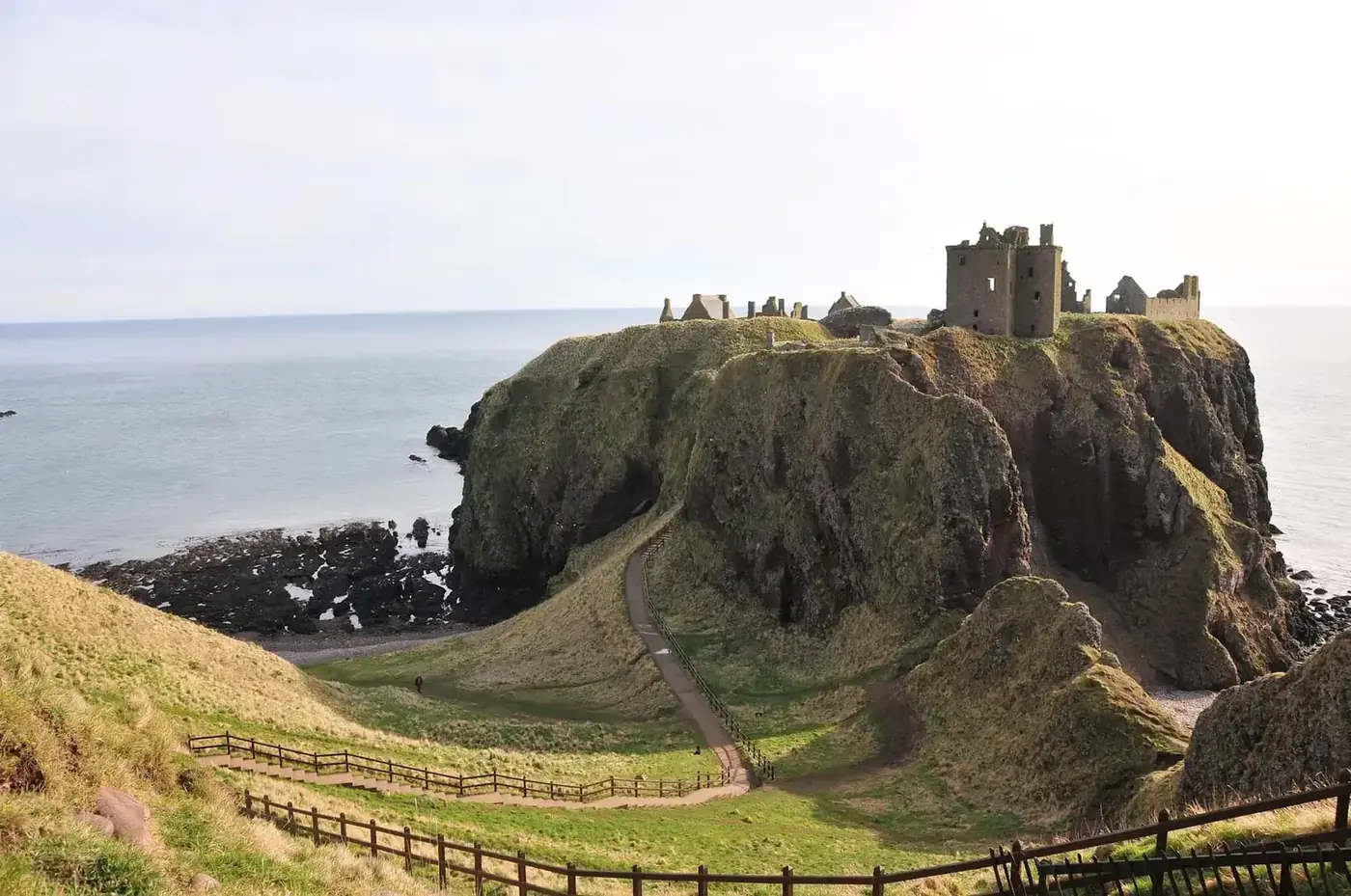
CLIFF FORTRESS · STONEHAVEN
A sea cliff. A broken fortress. A story built for weather.
PLAN YOUR VISIT
Stonehaven, Aberdeenshire, AB39 2TL
Current standard admission from the official booking page. Under-5s are free; prices and opening arrangements can change.
Adult£13.50
Concession£12.00
Child (5–15)£6.25
Family (2 adults + 2 children)£36.00
Opening arrangements, admission and access can change. Check the official visitor source before you travel.
Parking information
Free parking for castle visitors, with two Blue Badge spaces. The car park is small and can fill up. Coach parking has separate booking and access conditions.
Parking sources checked · 11 October 2026
Historic ground can include uneven paths, steps and exposed conditions. Wear suitable footwear.
A memorable coastal outing with more to explore than the famous silhouette suggests. Best for visitors who enjoy walking, dramatic scenery and a few good stories between the viewpoints.
WHAT TO EXPECT
01 / THE STORY
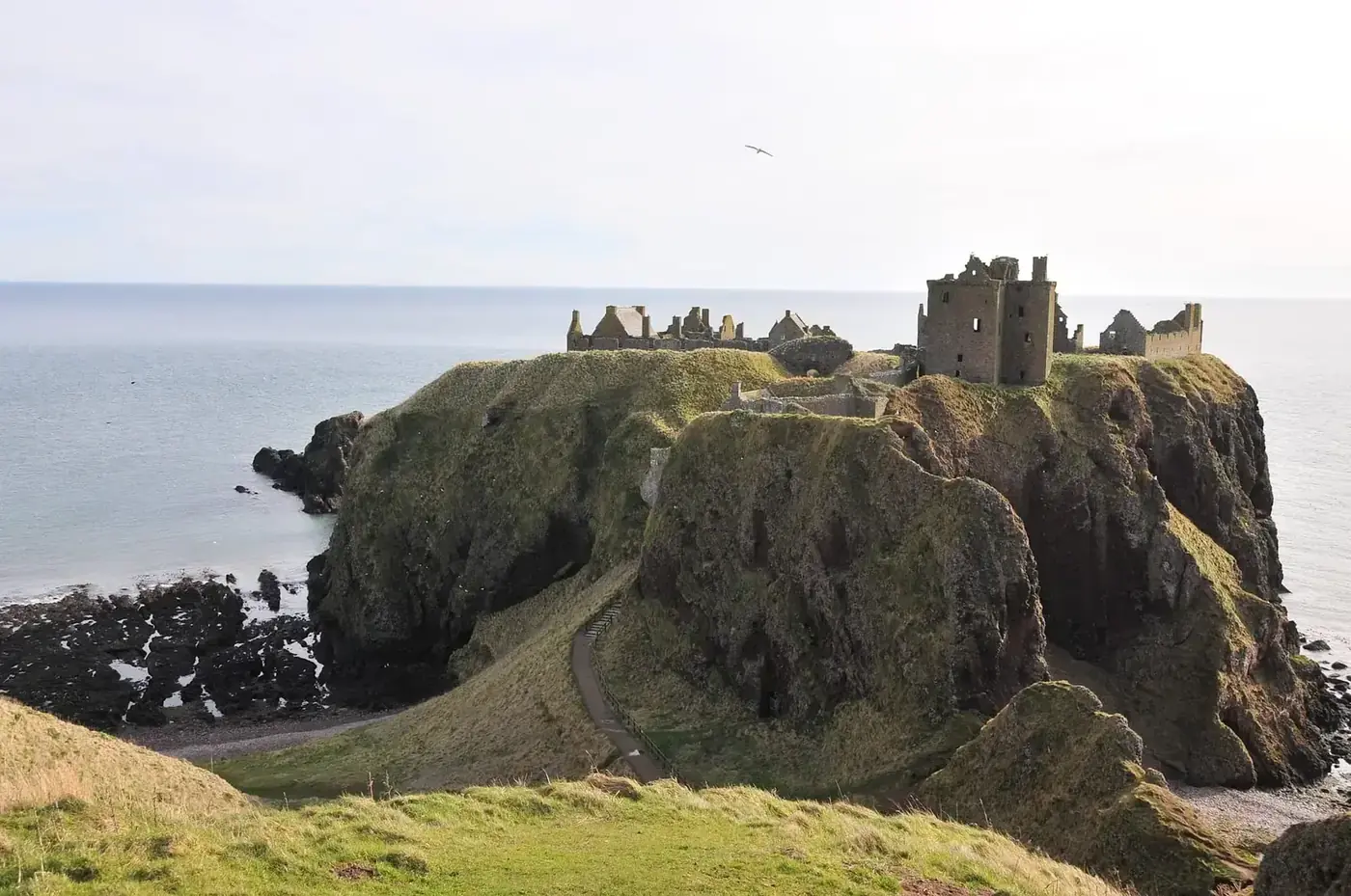
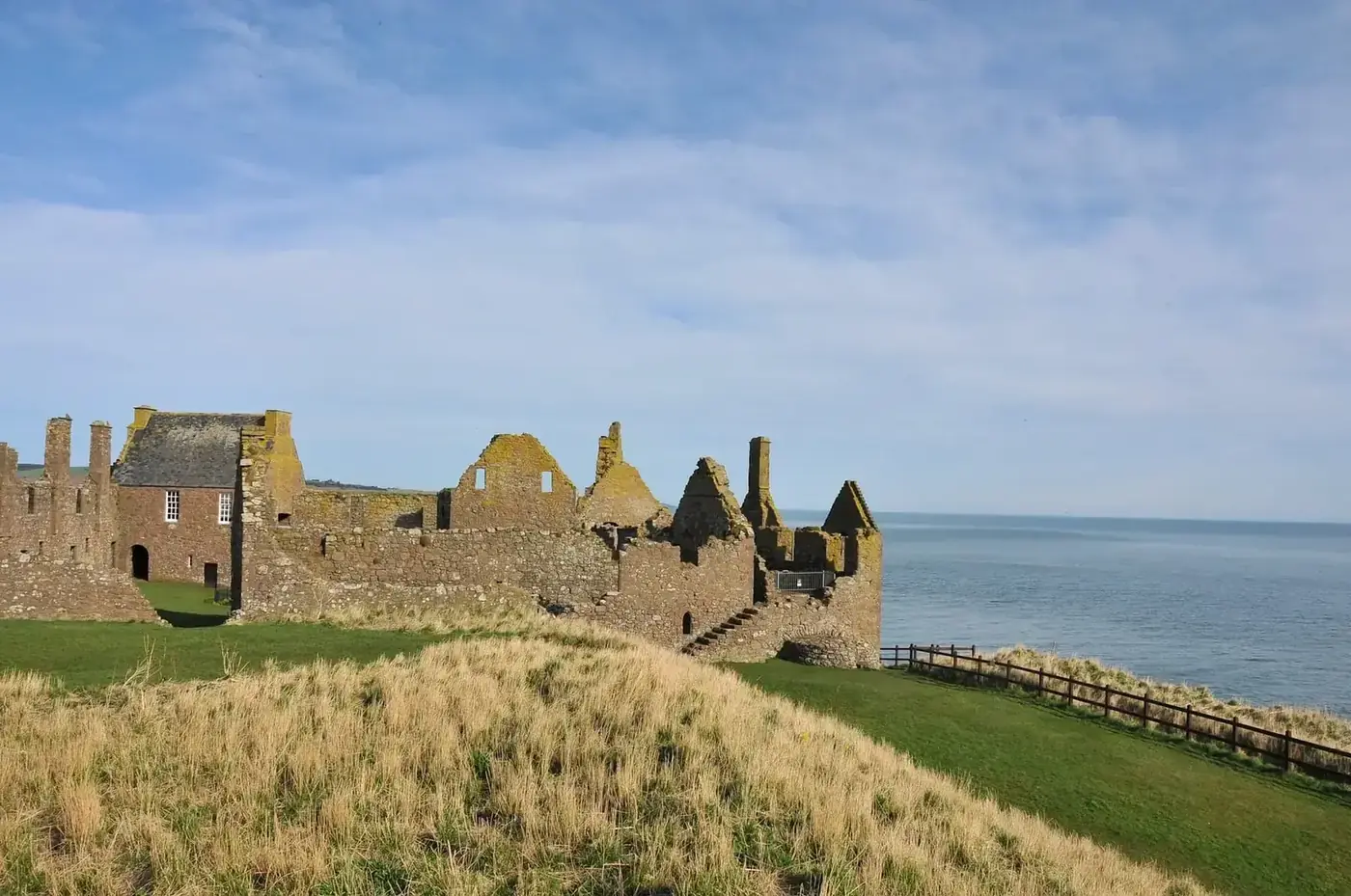
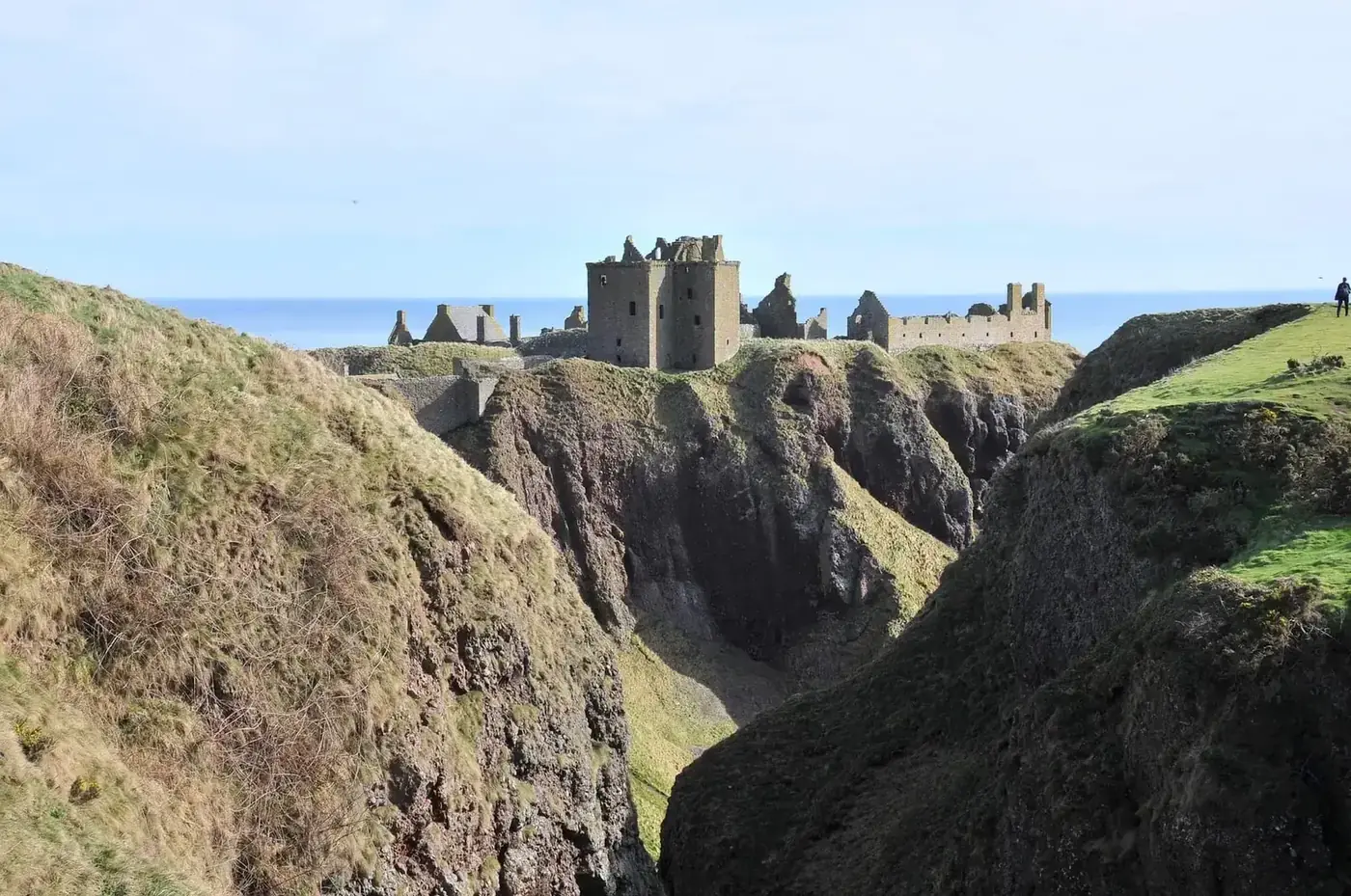
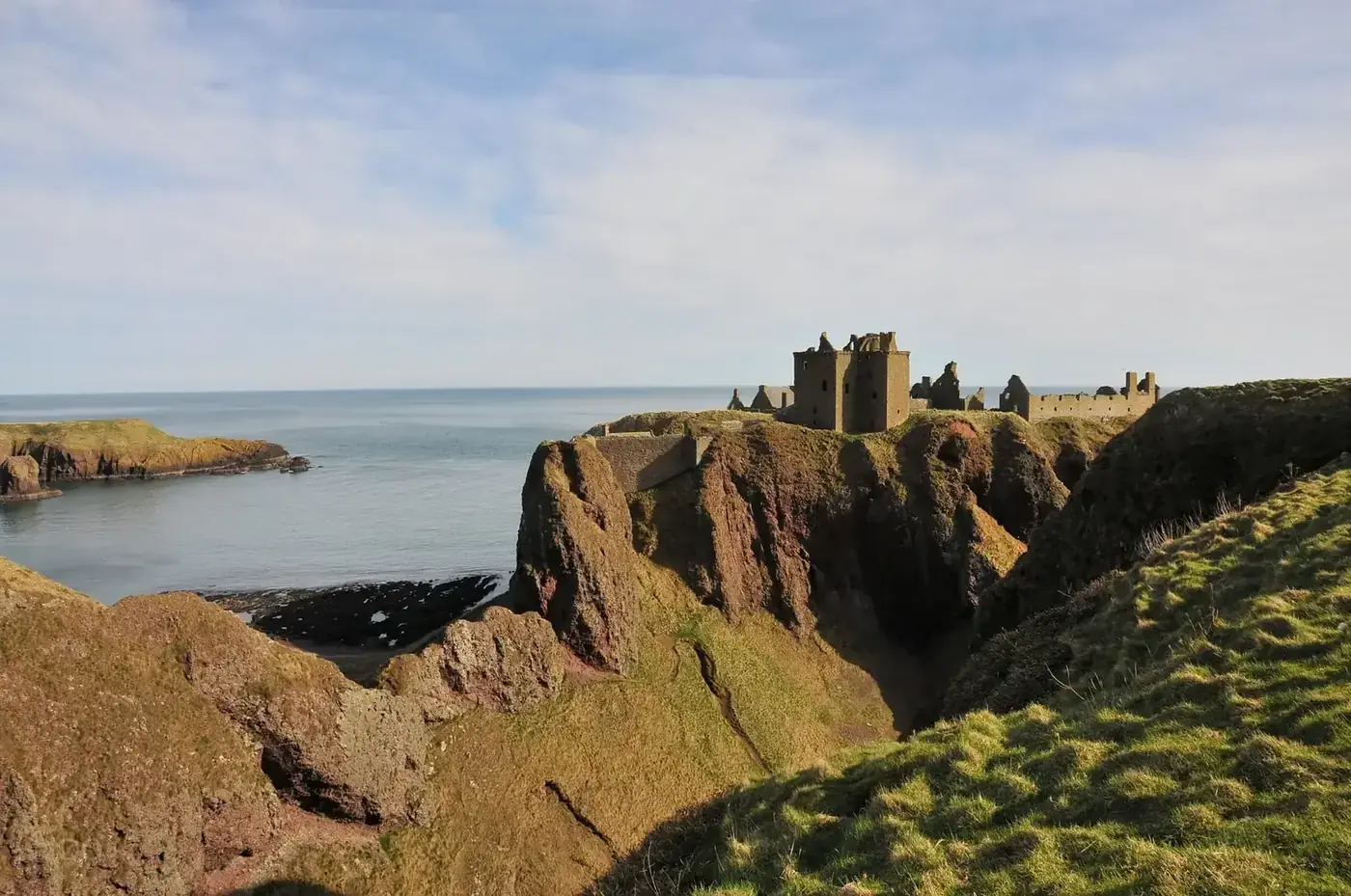
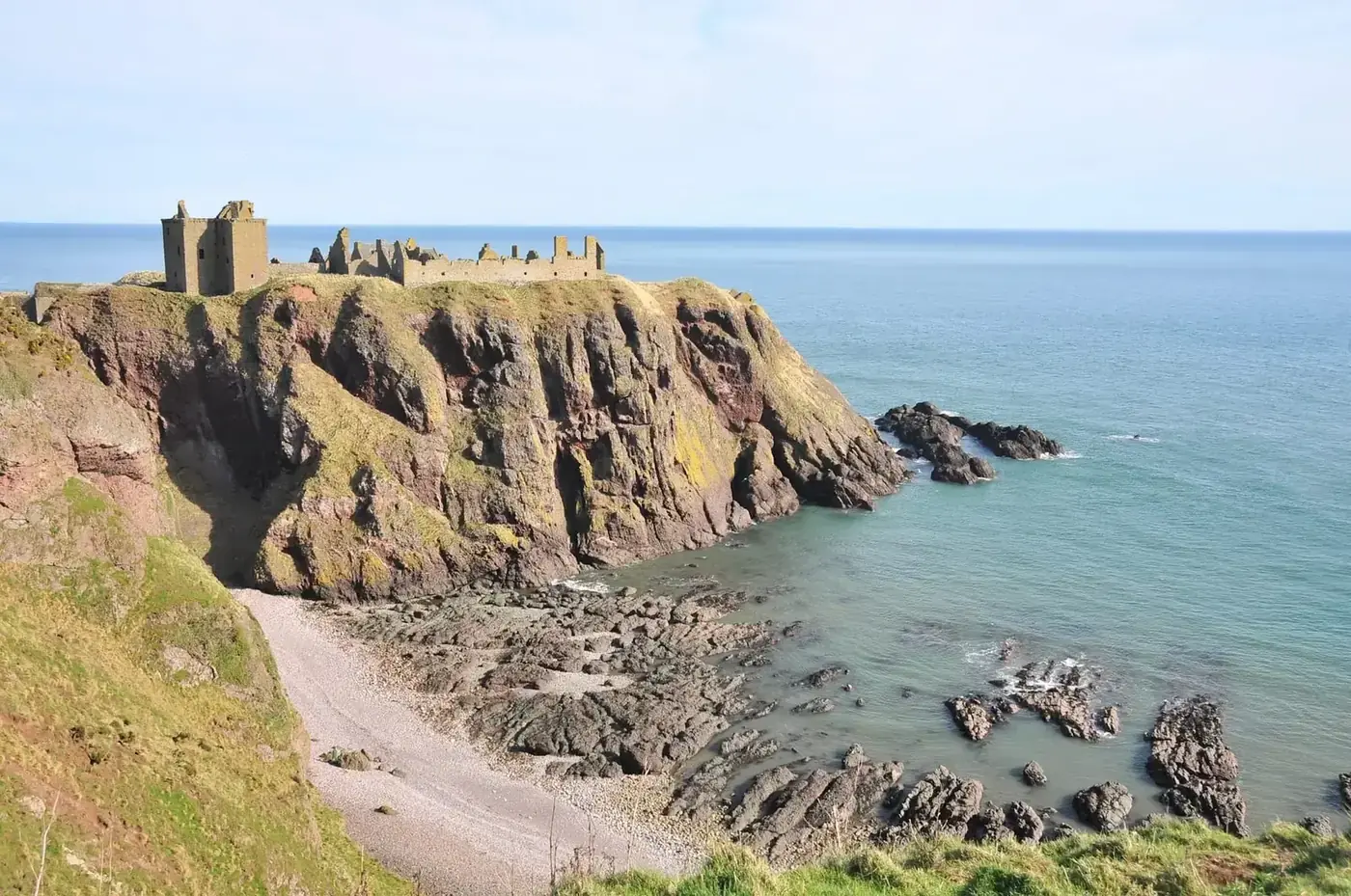
The path drops away, the sea opens up, and suddenly Dunnottar is standing on a rock that looks almost cut off from Scotland. Before you reach a doorway, the castle has already made its first impression.
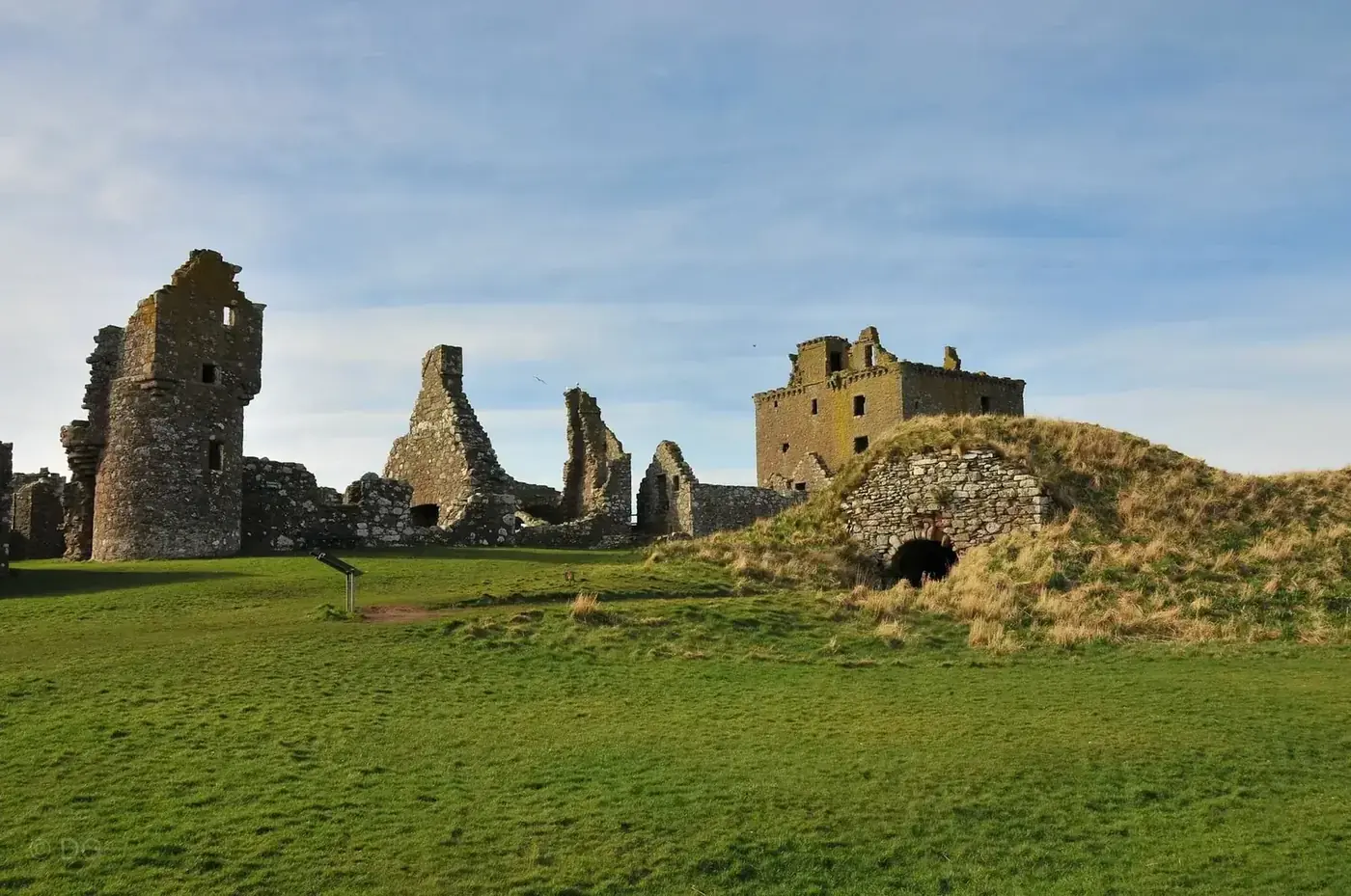
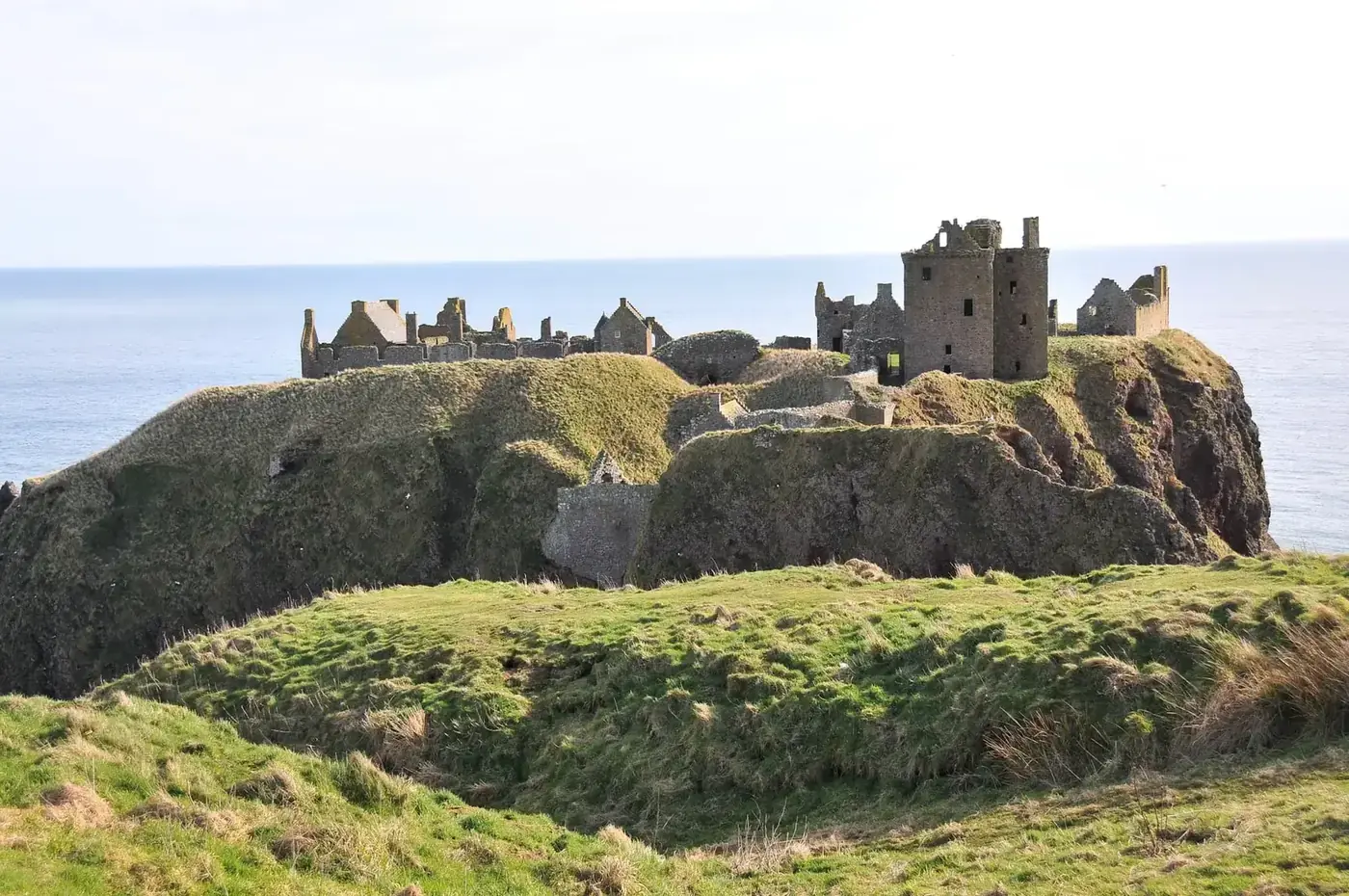
Inside are the remains of a small world: a tower, a chapel, lodgings and places where people cooked, stored supplies and waited out danger. Its best-known adventure involves Scotland’s royal treasures—and an escape that did not require the castle itself to survive.
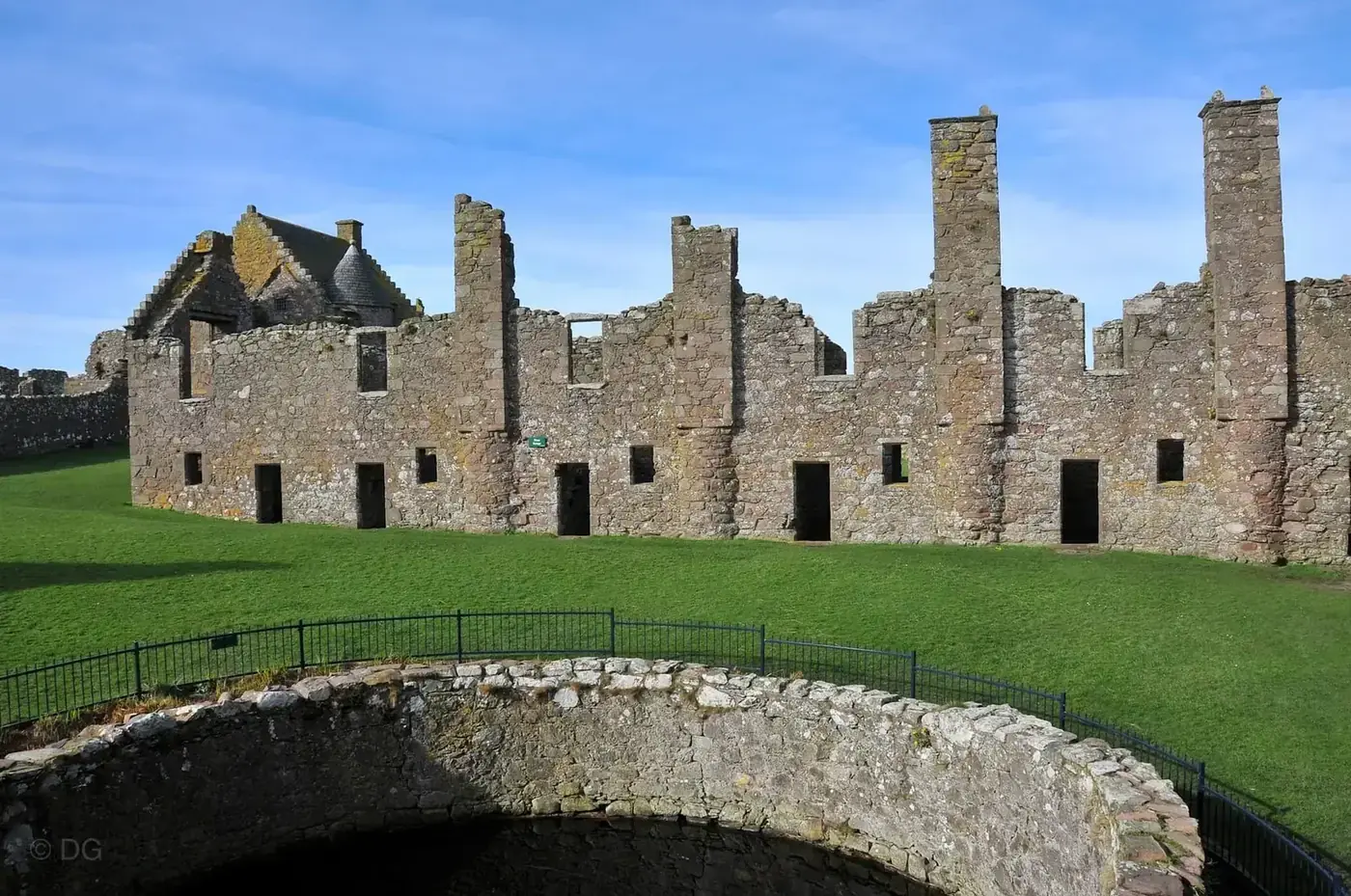
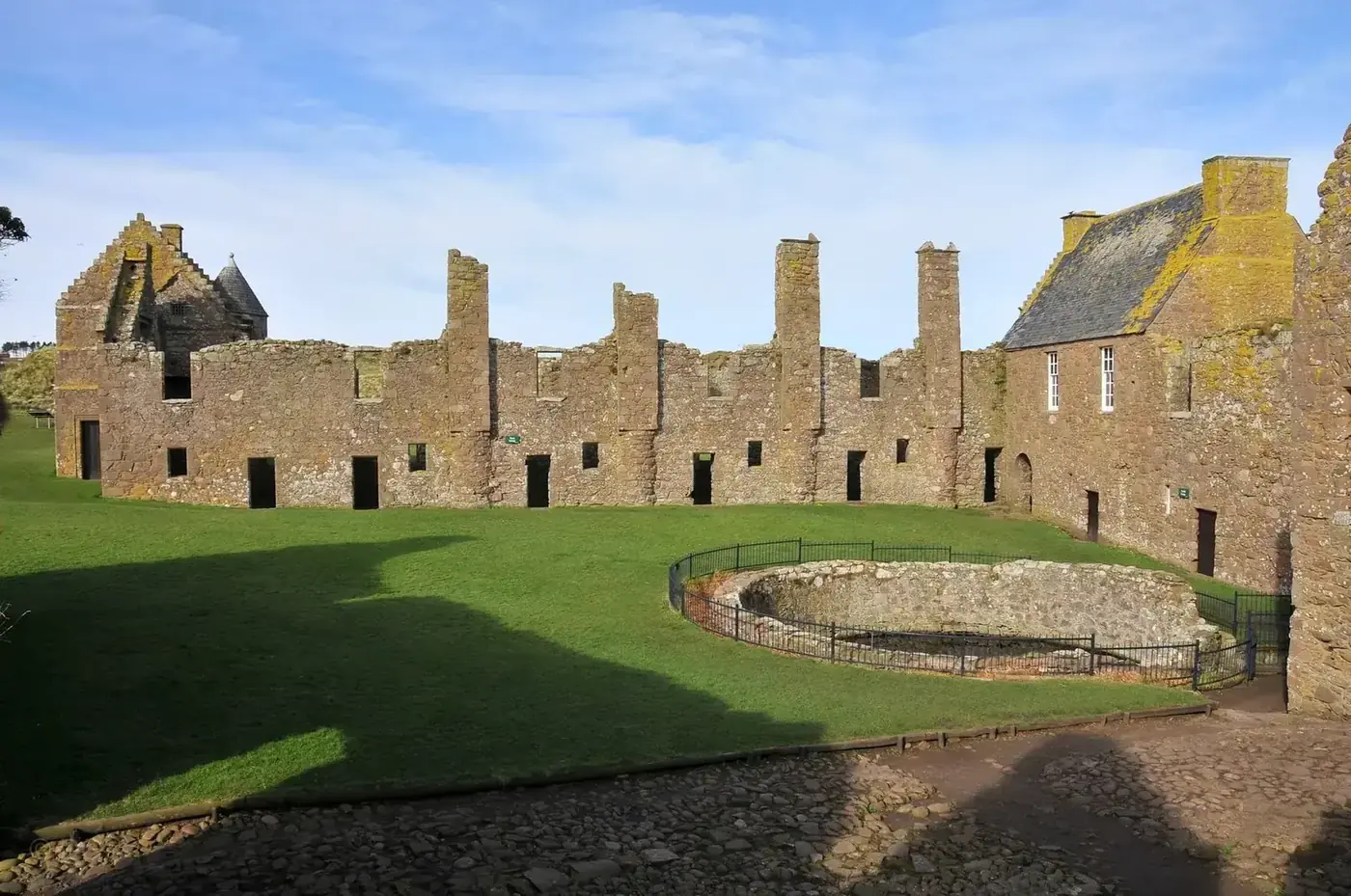
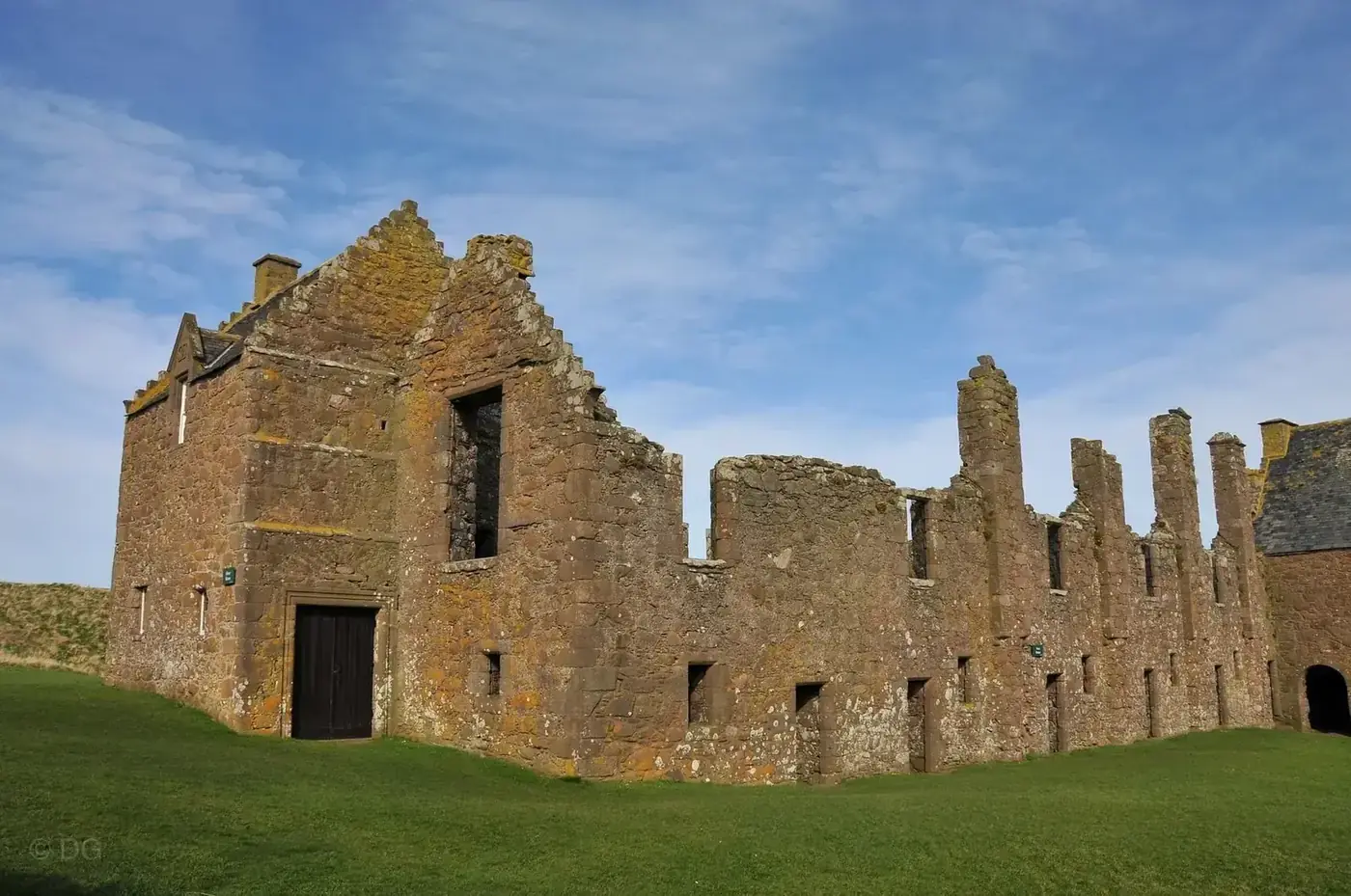
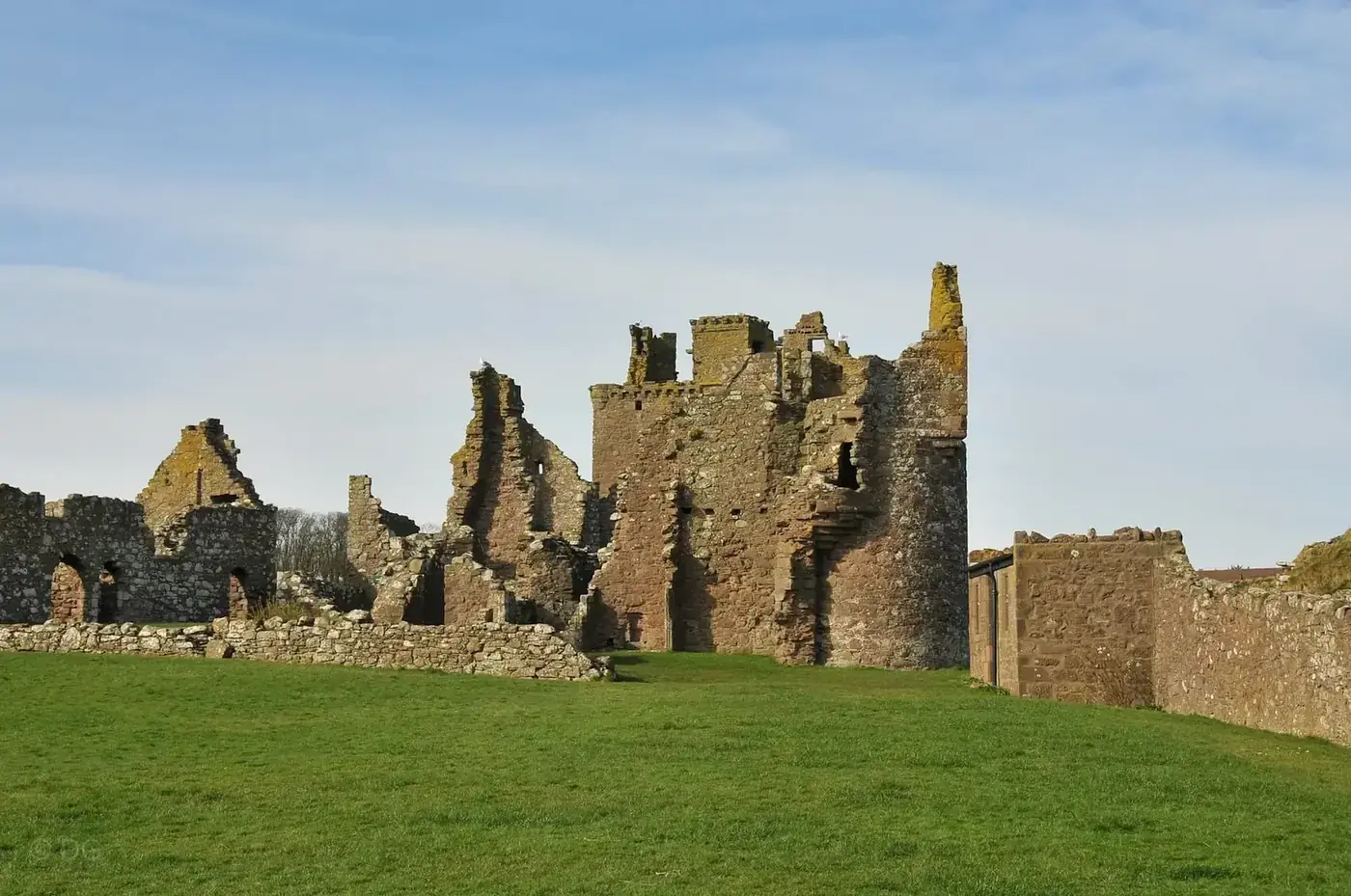
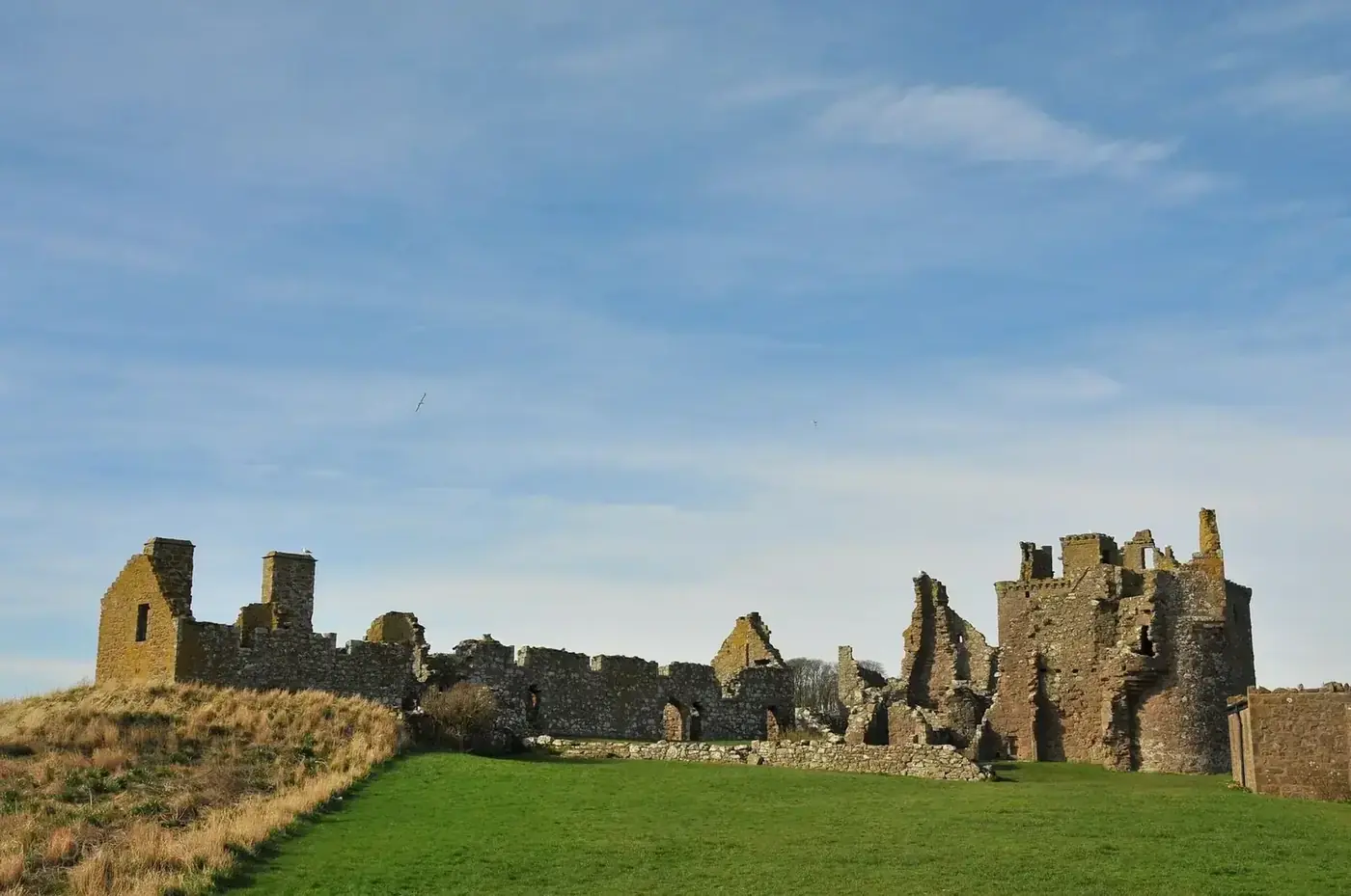
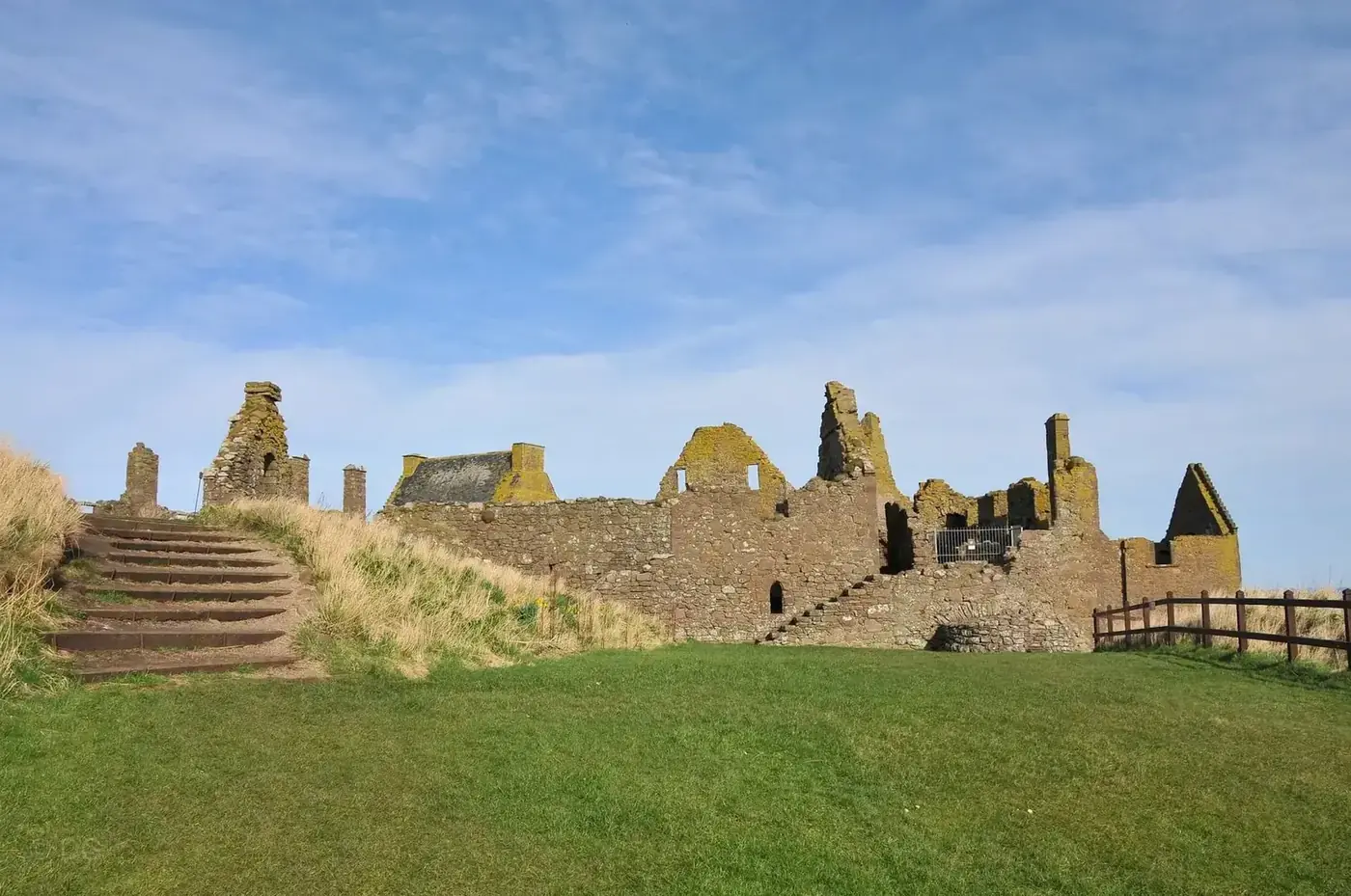
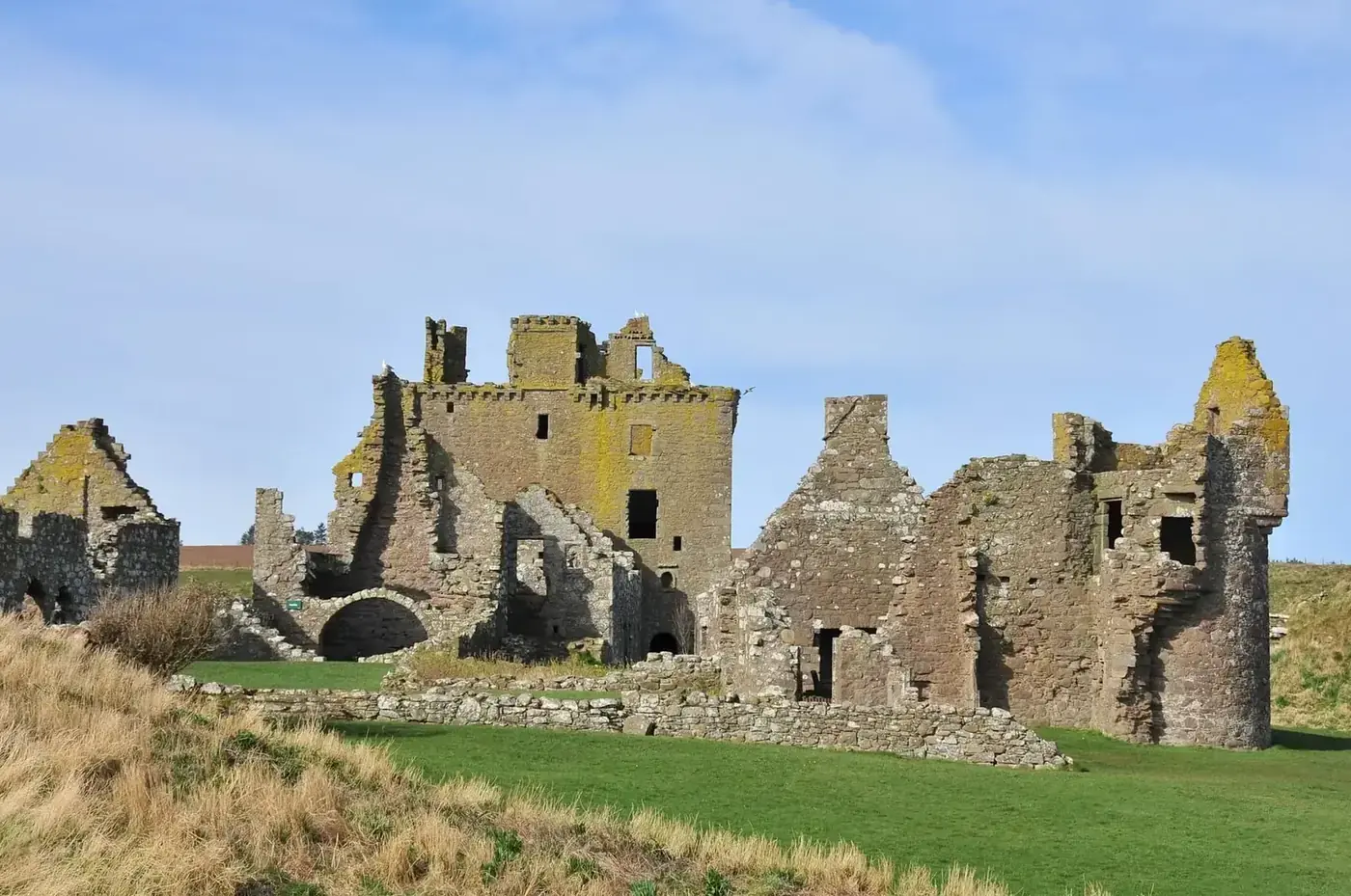
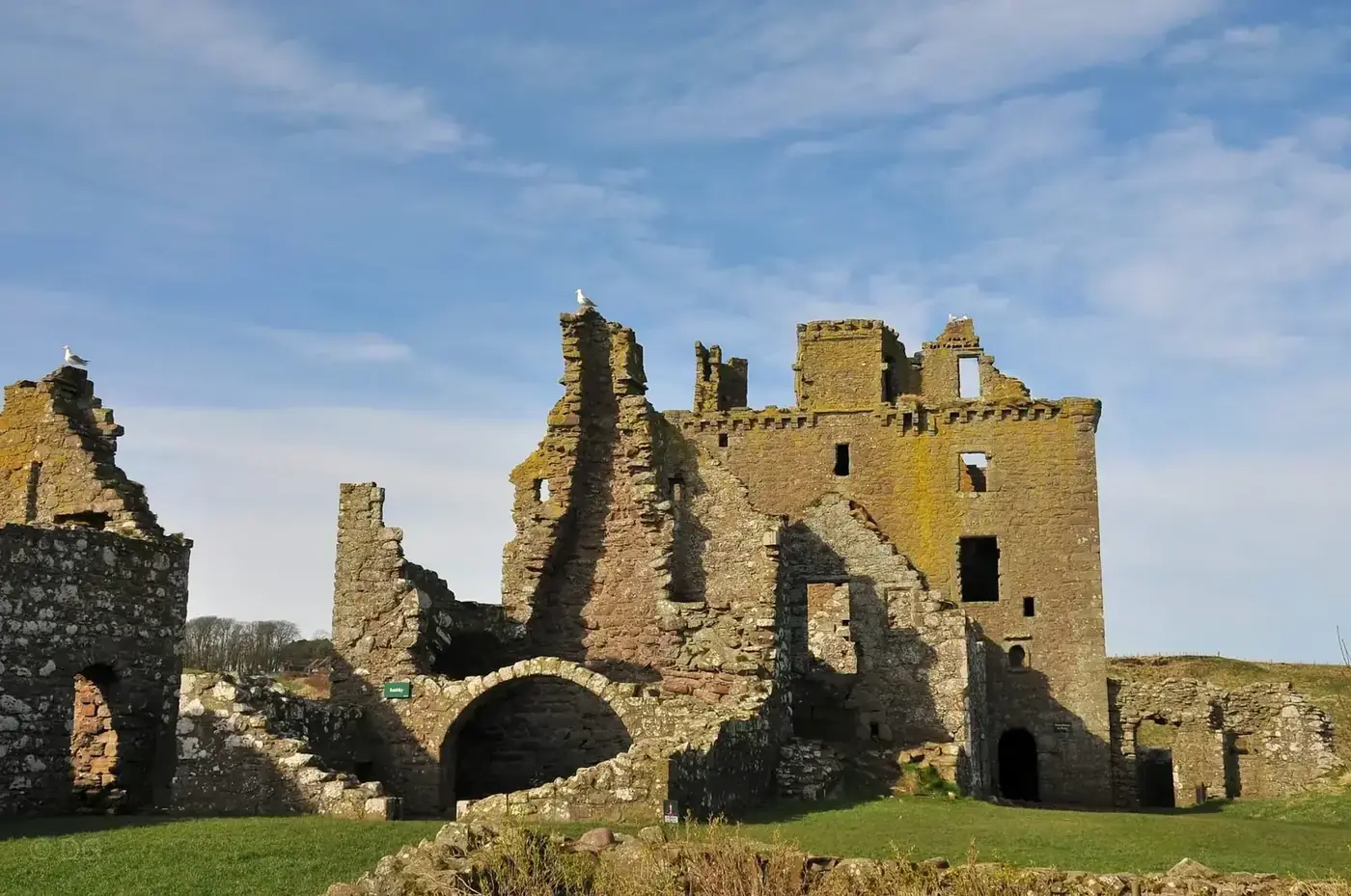
The view from the approach is magnificent, but it hides how much fits on the headland. Beyond the entrance, Dunnottar opens into a collection of buildings rather than a single tower. Doorways frame the sea; roofless rooms suddenly feel surprisingly domestic.
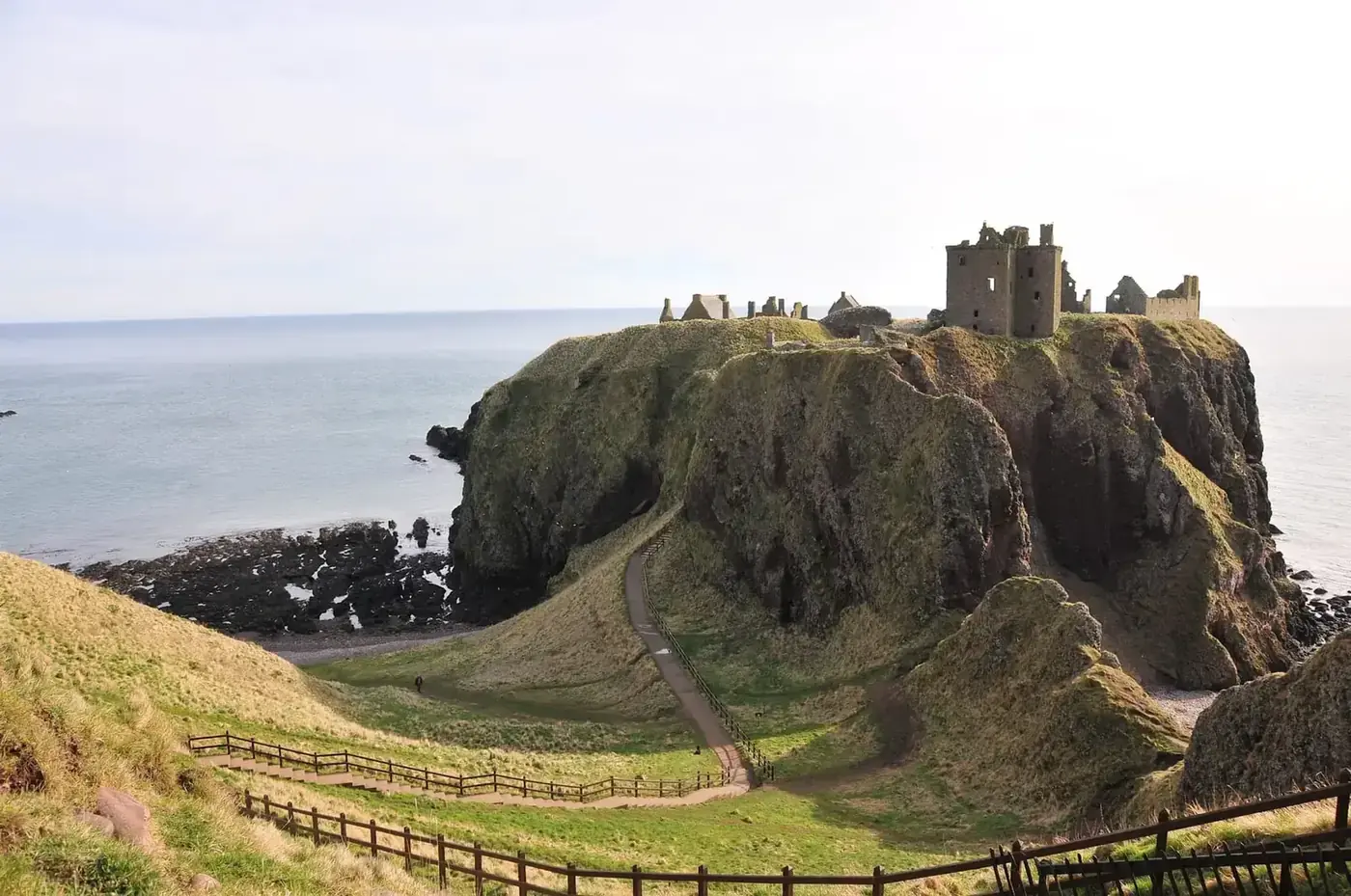
Come for the coastal drama and stay to explore. The climb back is part of the outing, so leave yourself enough energy to enjoy it rather than racing the clock.
In 1651–52, the Honours of Scotland were sheltered at Dunnottar while Cromwell’s forces threatened the country. Keeping the crown, sword and sceptre out of their hands became more important than defending any one room.
The regalia were secretly removed and hidden at Kinneff church. Elizabeth Douglas and Christian Fletcher are central to the rescue story. Accounts differ over exactly how the objects left the castle, so the famous escape is better told without pretending we can follow every step.
Look at the cliffs and narrow approach with that in mind. This was a place built to control movement, yet its most important cargo slipped away.
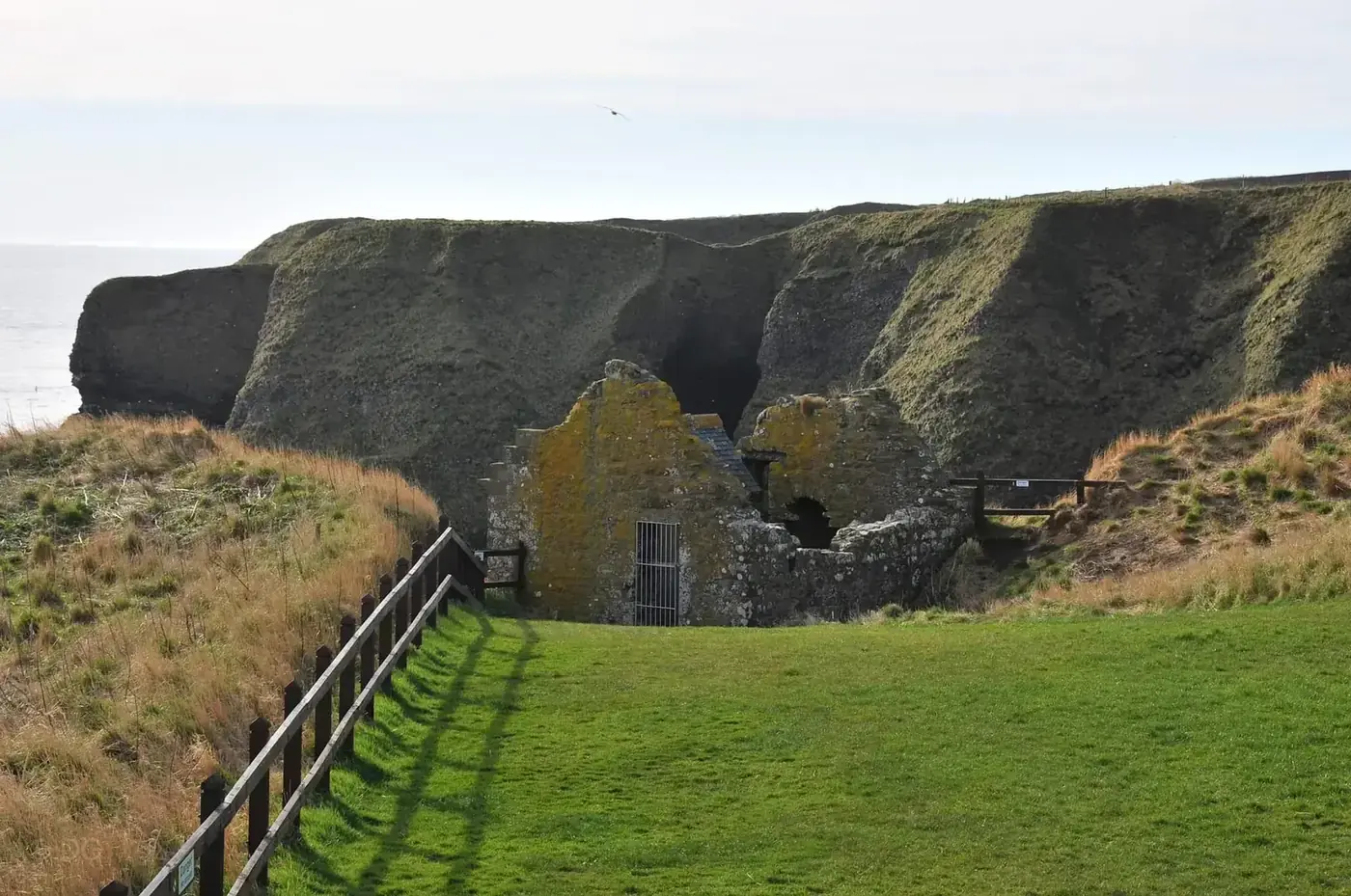
The castle’s own history records a pet lion associated with George Keith, the 5th Earl Marischal. The name Lion’s Den preserves that extraordinary connection.
It is an unexpected detail in a place of Scottish wind and salt spray. Powerful households collected more than fine furniture: an exotic animal could announce wealth and connections just as loudly as a grand building.
02 / VISUAL JOURNAL
Every photograph on this page was taken by CastleScotland during visits to the site.
10 of 21 photographs
01 / THE STORY CONTINUES
In 1685, Covenanter prisoners were confined here in dreadful conditions. The Whigs’ Vault recalls that episode, a sobering contrast to the freedom of the open headland.
Dunnottar rewards that change of pace. Enjoy the views, but allow a moment for the people who experienced these walls as a place they could not leave.
Take your wide photograph before heading down, then look again on the return. Sea mist, cloud and shifting light can change the whole scene during one visit.
Check the castle’s current opening notice before travelling, particularly in rough weather. Expect a steep approach and steps; the cliff setting is not a level stroll from the car park.
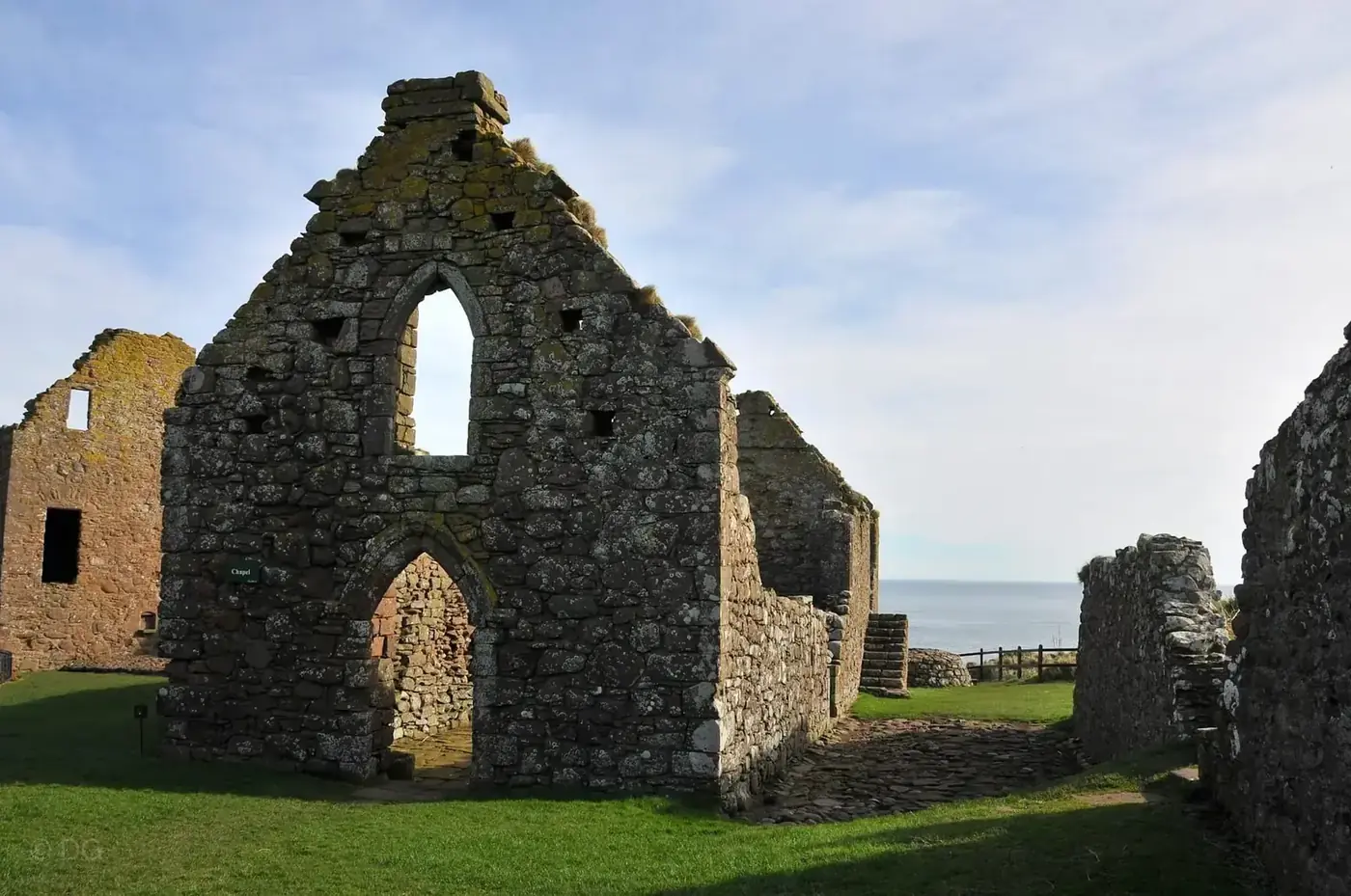
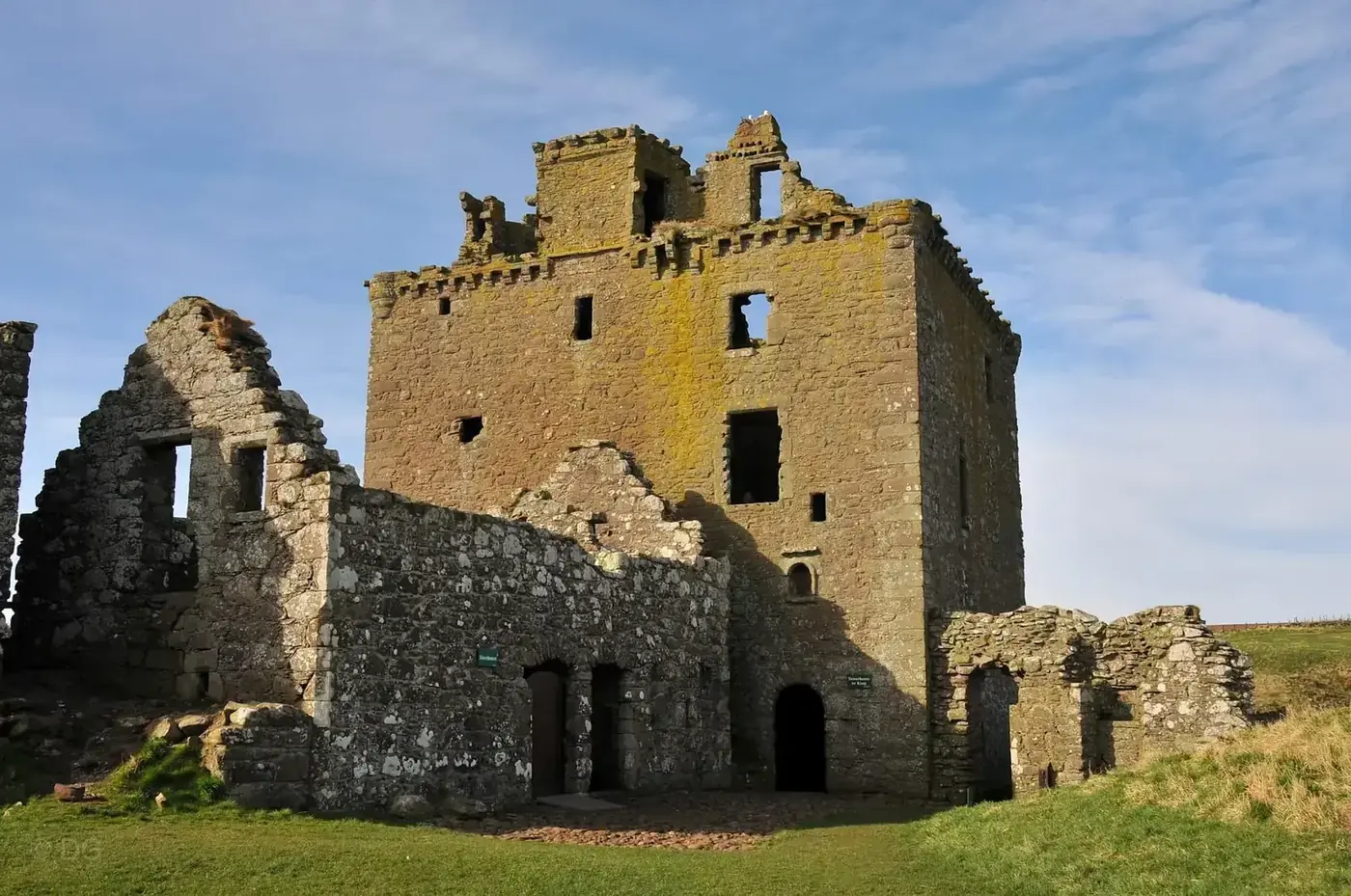
Sir William Keith built Dunnottar's stone keep on ground associated with a consecrated medieval chapel. The resulting church dispute became serious enough for Benedict XIII to intervene in 1395 over the fortifications.
The episode gives the keep an unusual history. It was not only a display of noble power and defence; its location also raised a question of sacred ground that could not be settled locally.
Dunnottar appears in Hamlet (1990), starring Mel Gibson. With the sea below and broken buildings spread across the rock, it is easy to see why filmmakers chose it for a story of power and unease.
The castle also names Disney–Pixar’s Brave (2012) among the productions it inspired. That is an animation connection, rather than a live-action filming credit: a real landscape helped shape an imagined one.
03 / MOMENTS IN STONE
George Keith, fifth Earl Marischal, remodels much of the complex. The rescue of the Honours of Scotland is the castle’s defining national story.
The Honours of Scotland are brought to Dunnottar after Charles II’s coronation. The cliffs do more than frame a picture; they explain the entire defensive plan.
During the Cromwellian siege, the Honours are removed and hidden at Kinneff Kirk. Look for the remains of domestic life among the towers and walls.
Dunnottar’s spectacular setting should not obscure its long, layered history. Archaeological and documentary evidence points to earlier occupation, but the visible complex is principally late medieval and early modern. The Keith family, earls Marischal, held great influence in north-east Scotland and shaped the site into a residence as well as a fortress. The seventeenth-century ranges are therefore not an afterthought to a cliff-top stronghold: they reflect household life, estate administration and the public display of rank.
The approach is itself an architectural argument. Sea defends three sides, while the route from land funnels arrivals through a restricted entrance. This made the headland defensible, but it also created a controlled ceremonial arrival. Look for the relationship between the entrance, open ground and larger ranges rather than treating every wall as a military feature. A castle could host guests, store supplies and provide space for worship and estate administration while remaining prepared for attack.
The Honours episode needs precise wording. The crown, sceptre and sword were moved to Dunnottar after Charles II’s coronation at Scone in 1651. HES confirms that they were smuggled out during the subsequent siege and hidden at Kinneff Kirk. The common dramatic details of the escape belong to later retellings and vary in emphasis, so this guide does not present each named participant or method as independently proved. The securely documented point is that the regalia survived outside Cromwell’s control.
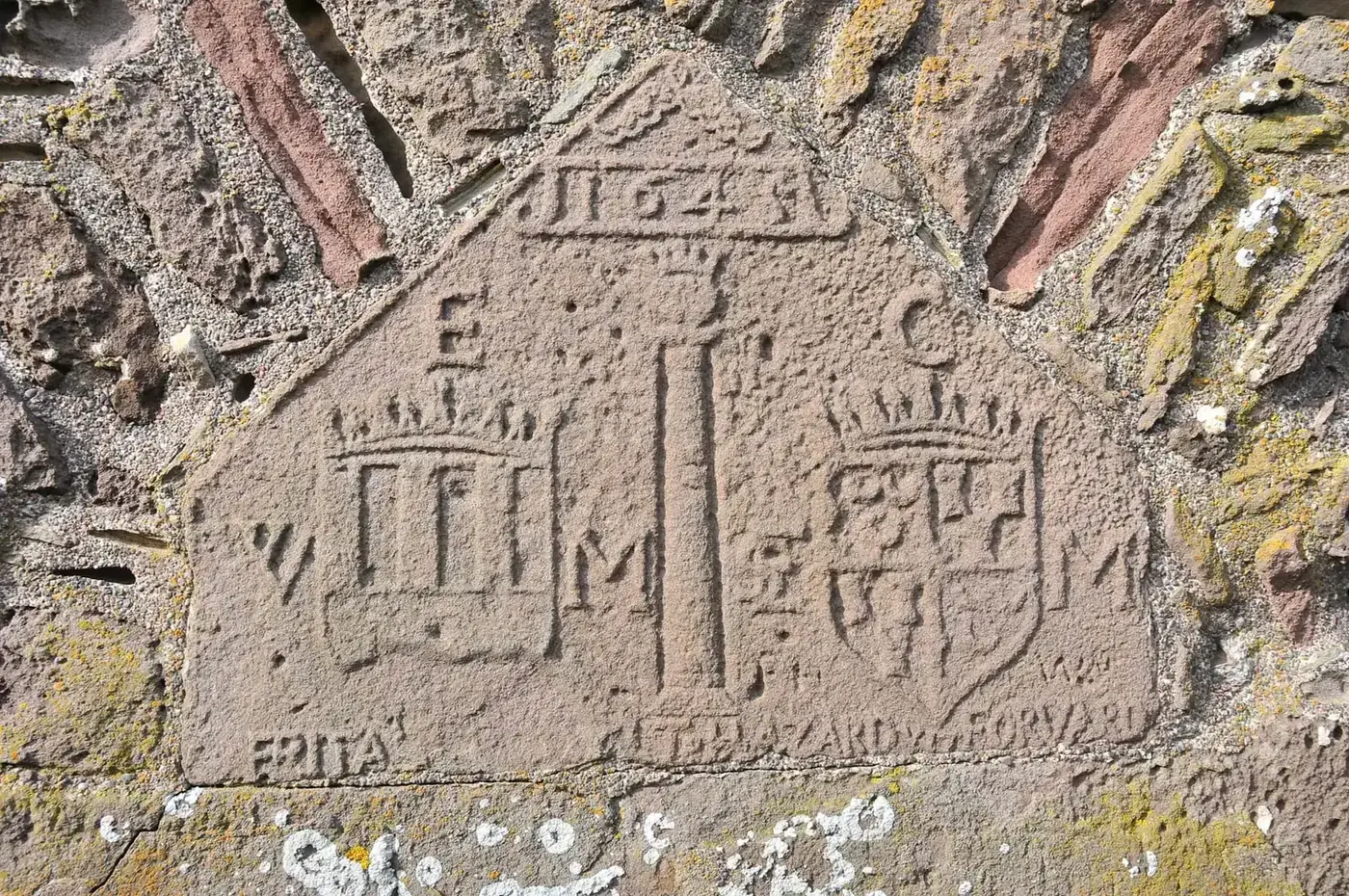
Dunnottar also connects to Mary, Queen of Scots, who visited in 1562, and to the rebuilding undertaken by the fifth Earl Marischal in the late sixteenth century. The latter programme created much of the imposing late-sixteenth-century character visitors now see. Date ranges are safer than implying that every surviving room belongs to one campaign; the building was adapted repeatedly and later uses altered its fabric.
Read the ruins from landscape to rooms. First take in the promontory and the constrained approach, then identify the different domestic, ceremonial and defensive spaces. The site is a scheduled monument, so its significance includes archaeological evidence beneath and around the standing walls. Dunnottar’s appeal lies in the tension between exposed coastal drama and a carefully organised noble household, with the rescue of the Honours giving one episode national importance.
A useful way to explore is to alternate between broad views and details of the domestic ranges. The landscape explains the difficult approach, but the arrangement of rooms explains why people chose to maintain a substantial home here. Look for the spaces between buildings as well as the walls themselves. A courtyard was part of the household’s organisation, not simply an empty interval in a photograph.
Conservation also belongs to Dunnottar’s history. The official estate account records the Cowdrays’ purchase in 1919 and subsequent work to protect the ruins. That intervention should remain distinct from the original building campaigns. A wall surviving today may owe its stability to much later care. Before travelling, check the operator’s access and weather information; an exposed headland can demand different arrangements from a sheltered inland property.
08 / EXPLORE NEXT
Find Scottish castles by region, landscape or the stories that bring them to life.
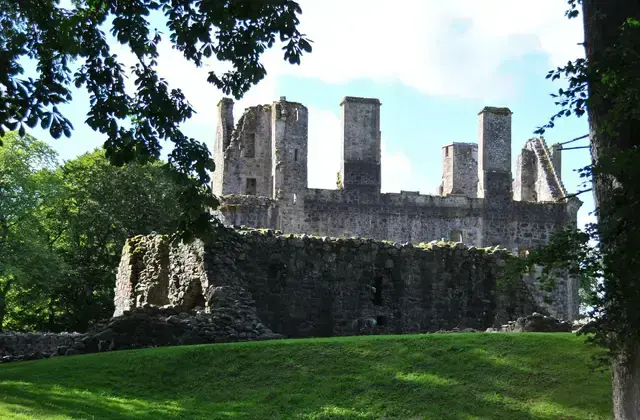 AberdeenshireHuntly Castle
 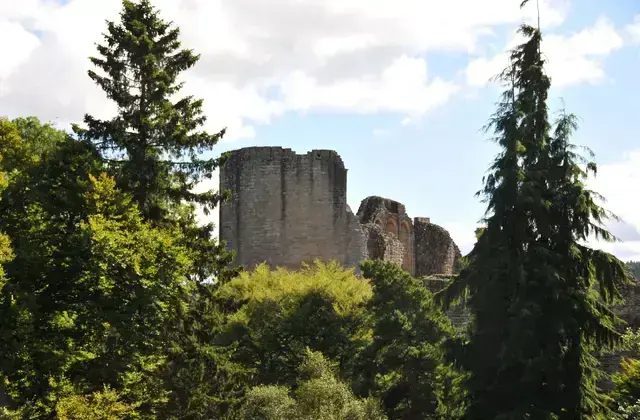 AberdeenshireKildrummy Castle
 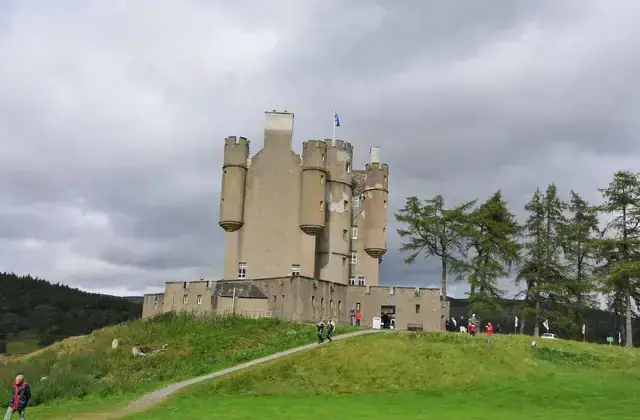 AberdeenshireBraemar Castle