TICKETSNo standard ticket; outdoor historic site.
Visitor conditions are stated conservatively from current official or local guidance; always confirm before travel.
View current prices
Free exteriorNo standard ticket; outdoor historic site.
 Castle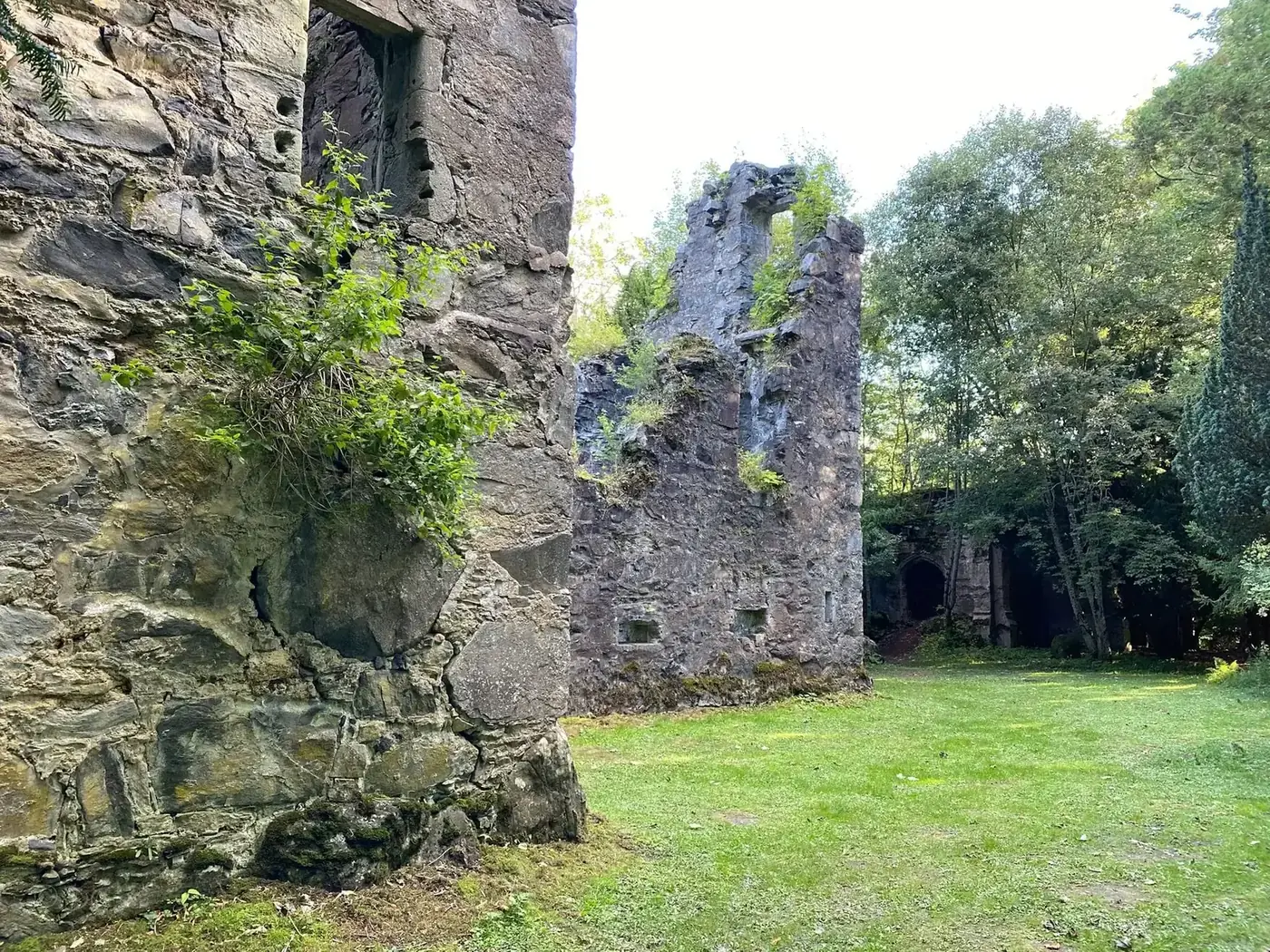
FIELD GUIDE · PERTHSHIRE
A Scottish castle story. Read through its landscape.
PLAN YOUR VISIT
Near Killin, Perthshire, FK21 8TN
Visitor conditions are stated conservatively from current official or local guidance; always confirm before travel.
Free exteriorNo standard ticket; outdoor historic site.
No standard ticket; outdoor historic site.
Parking information
The car park is a 2-minute walk from the castle. It's medium-sized, but we had no trouble finding a parking space.
Updated parking information
Woodland paths, steps and uneven ground require sturdy footwear.
An evocative Killin ruin for careful visitors, with a good lesson in how a memorable execution legend can overtake a more ordinary archaeological explanation.
WHAT TO EXPECT
01 / THE STORY
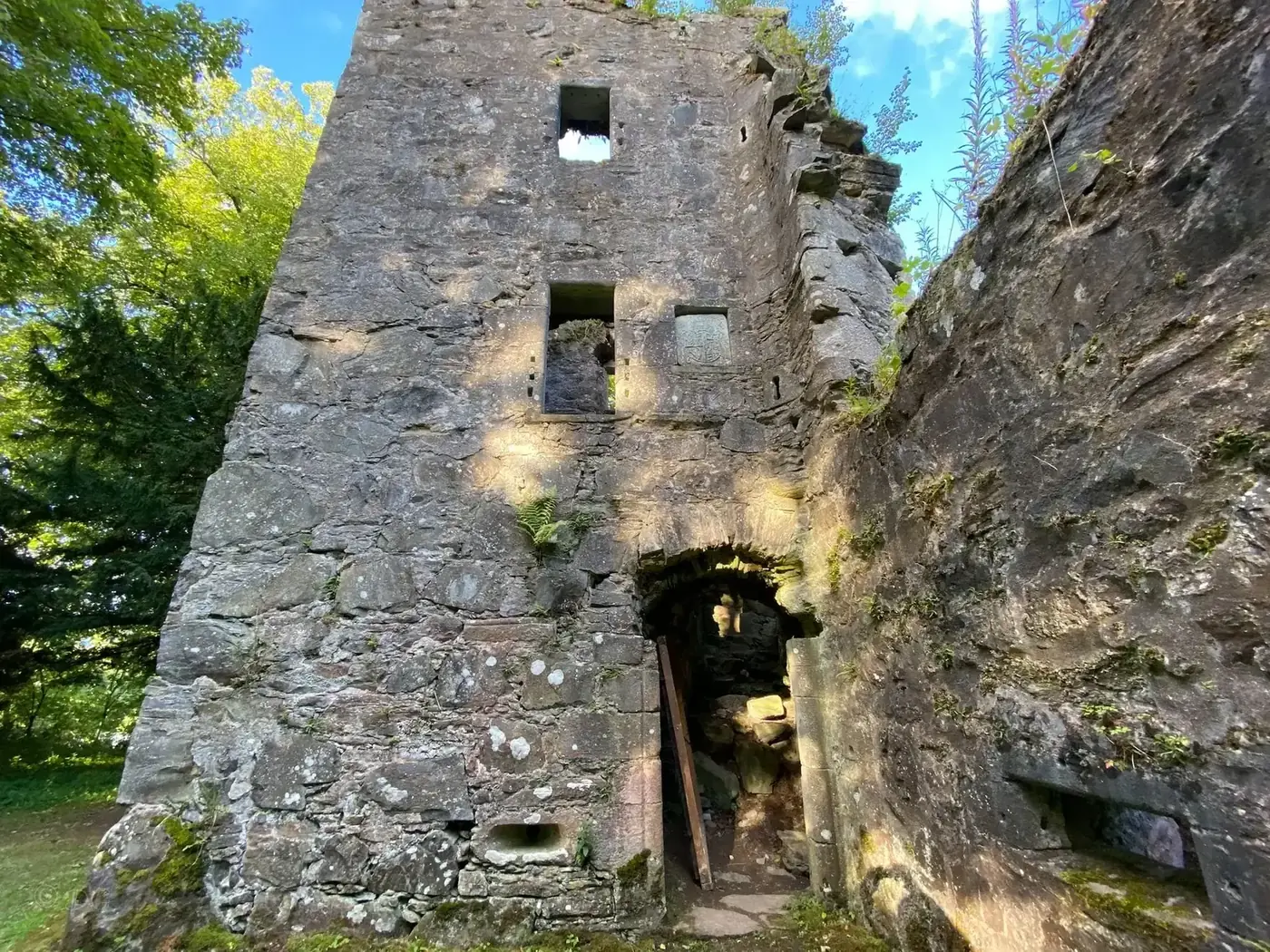
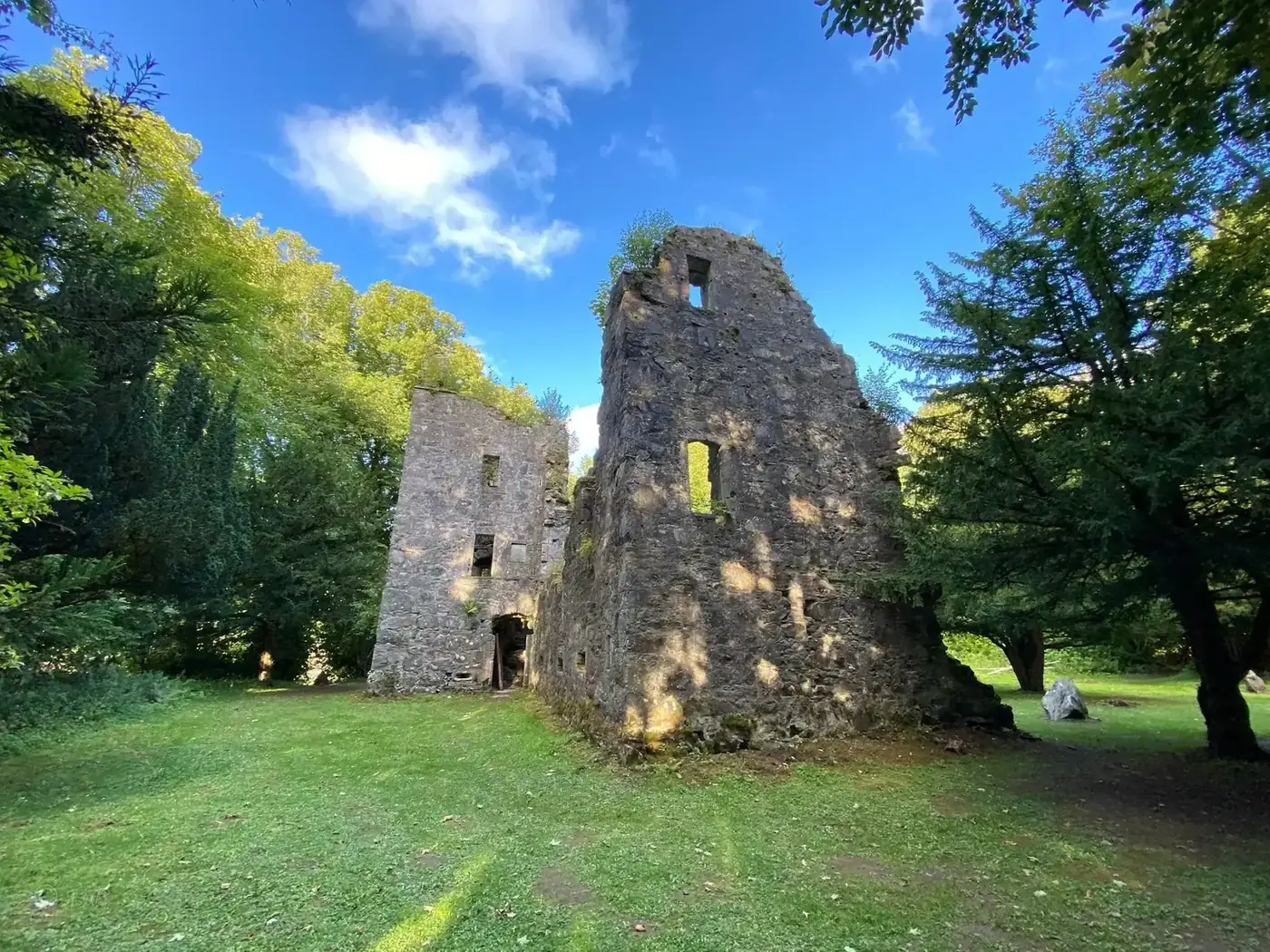
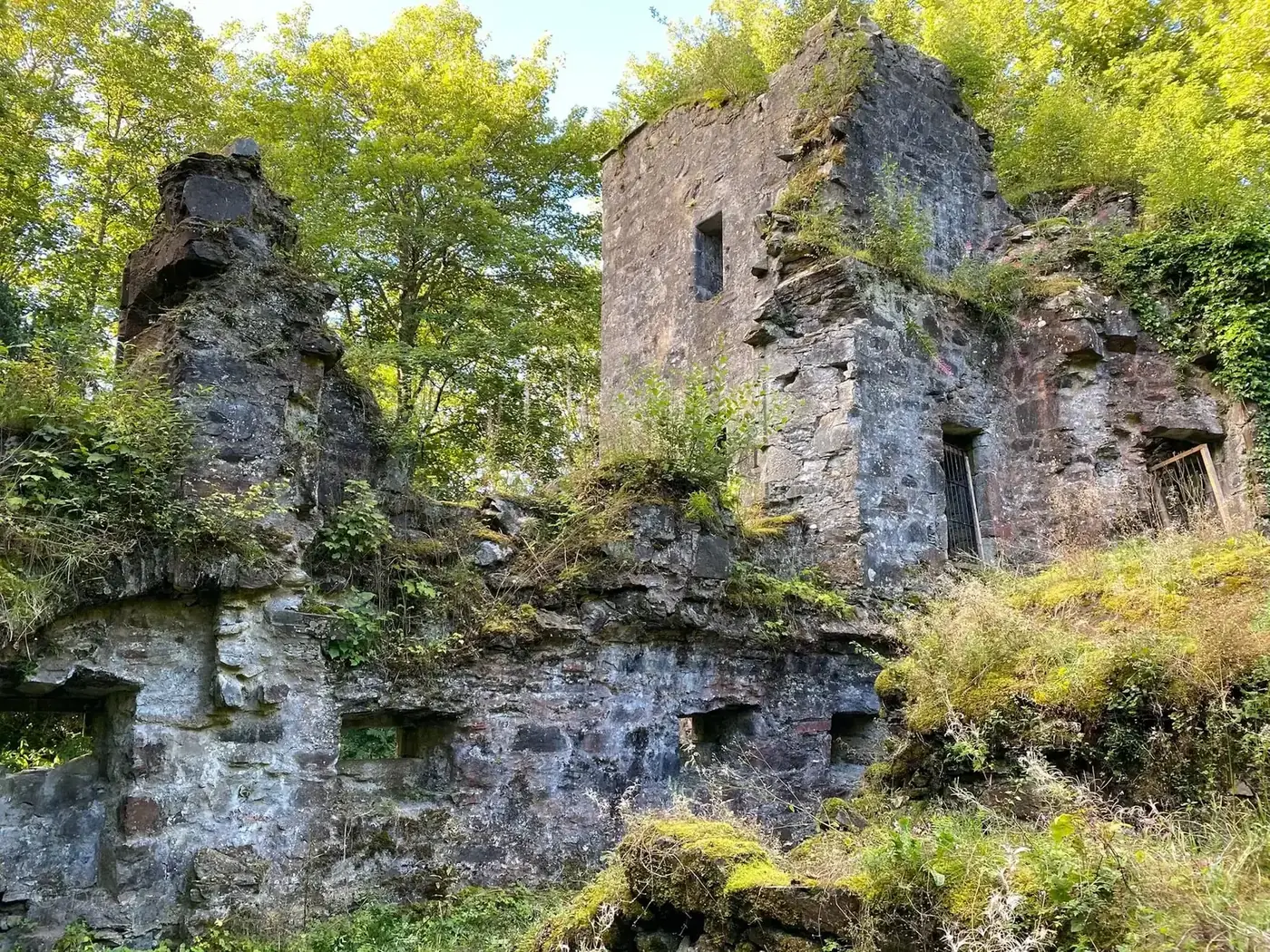
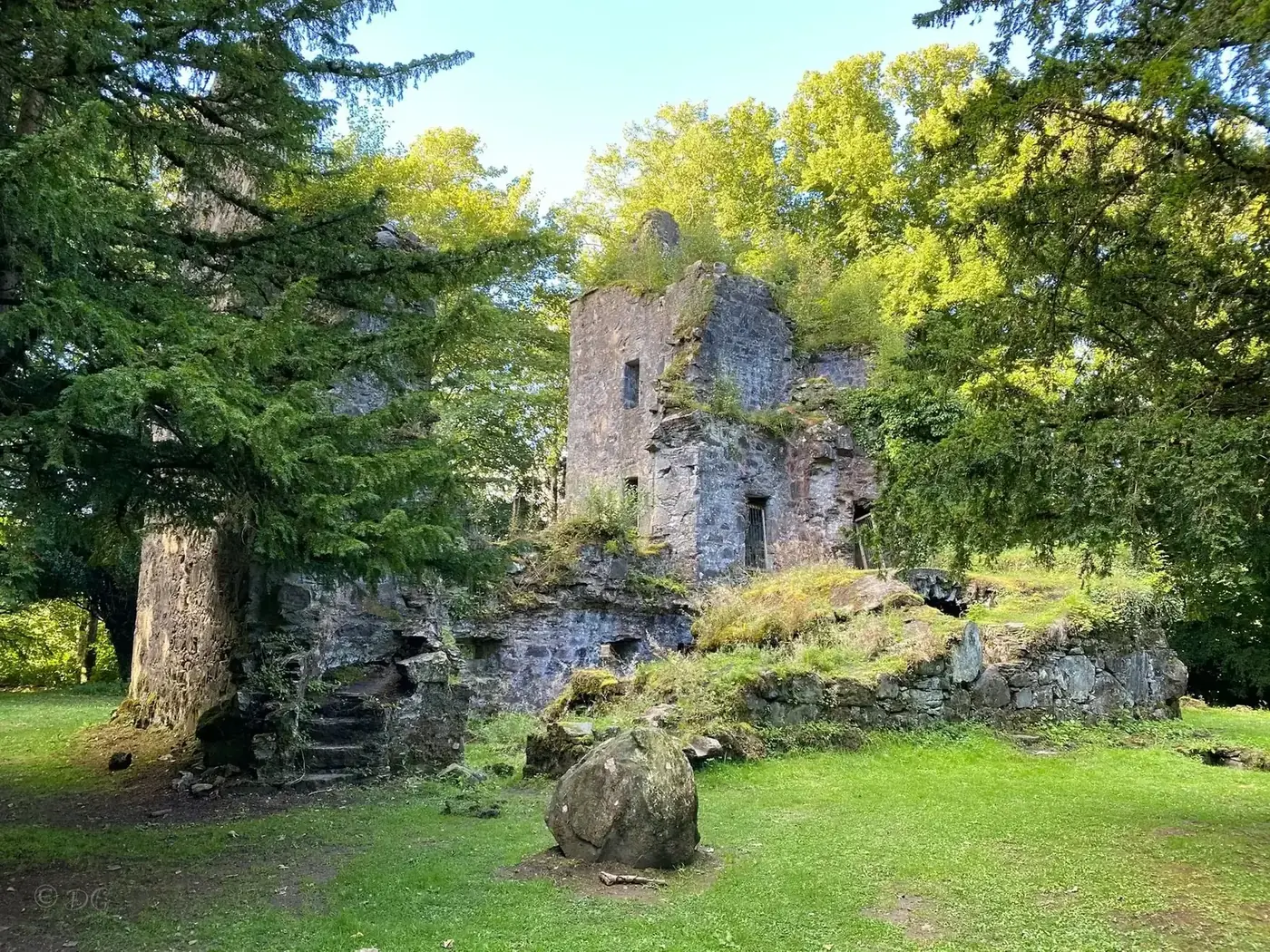
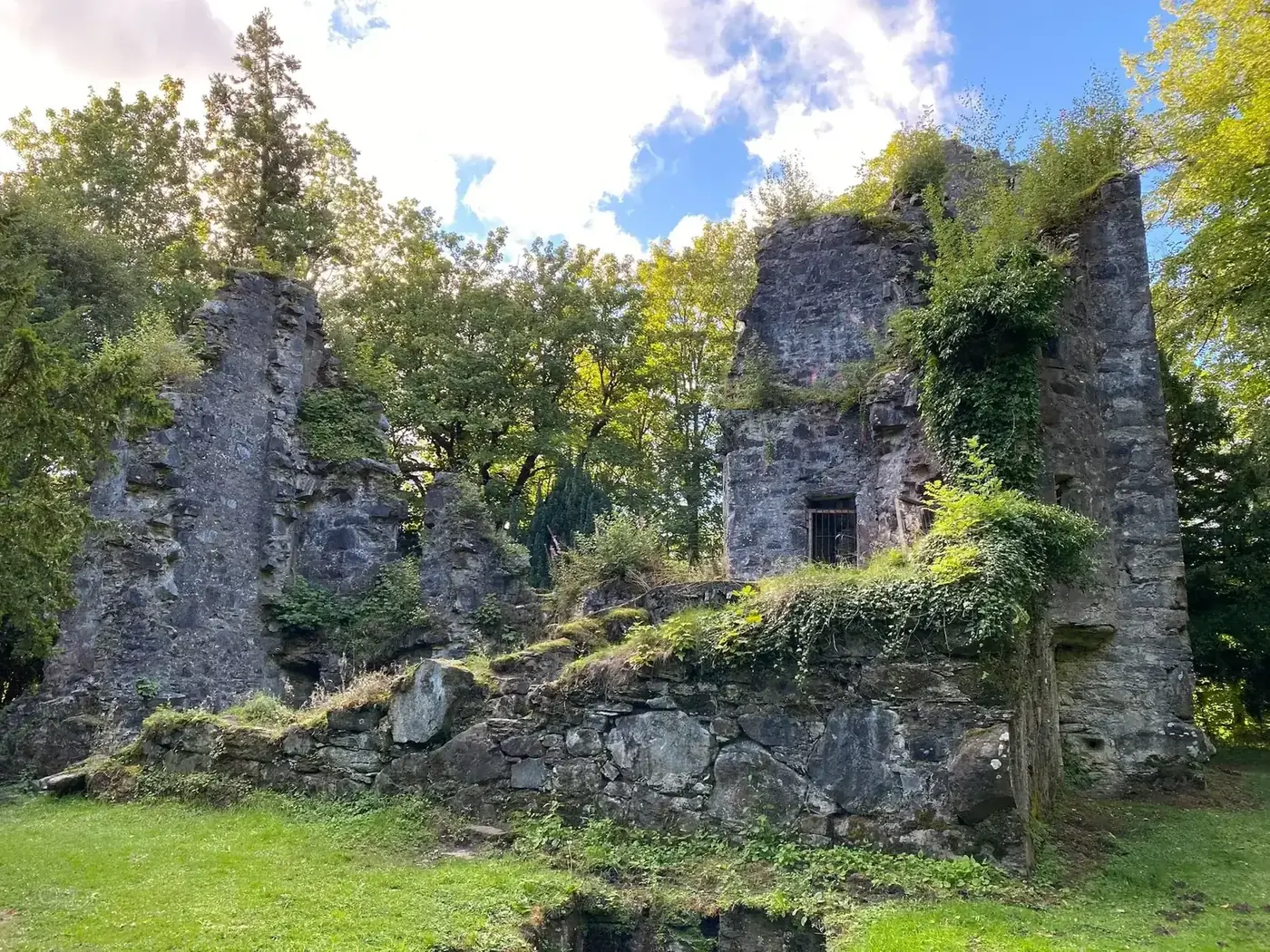
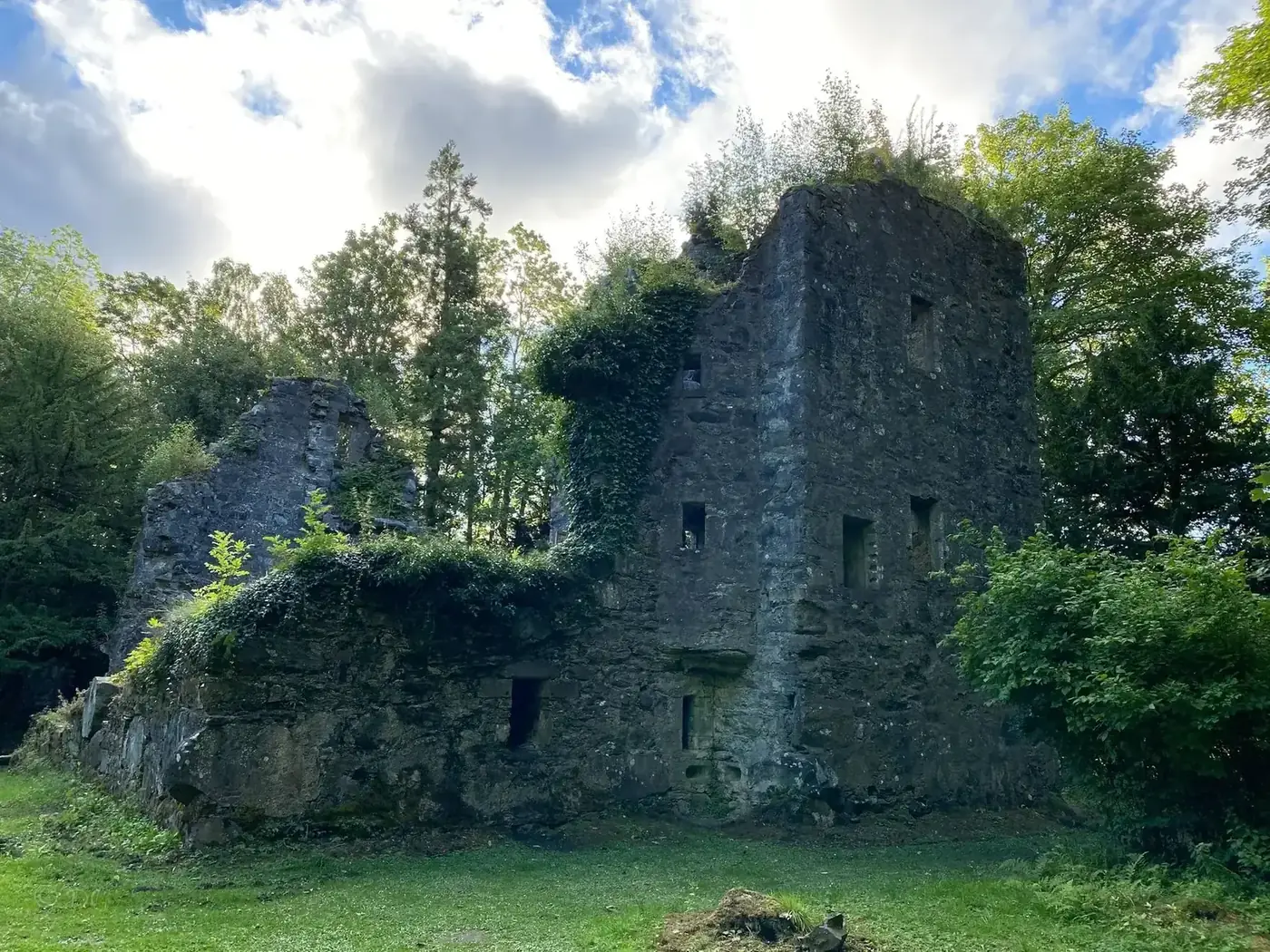
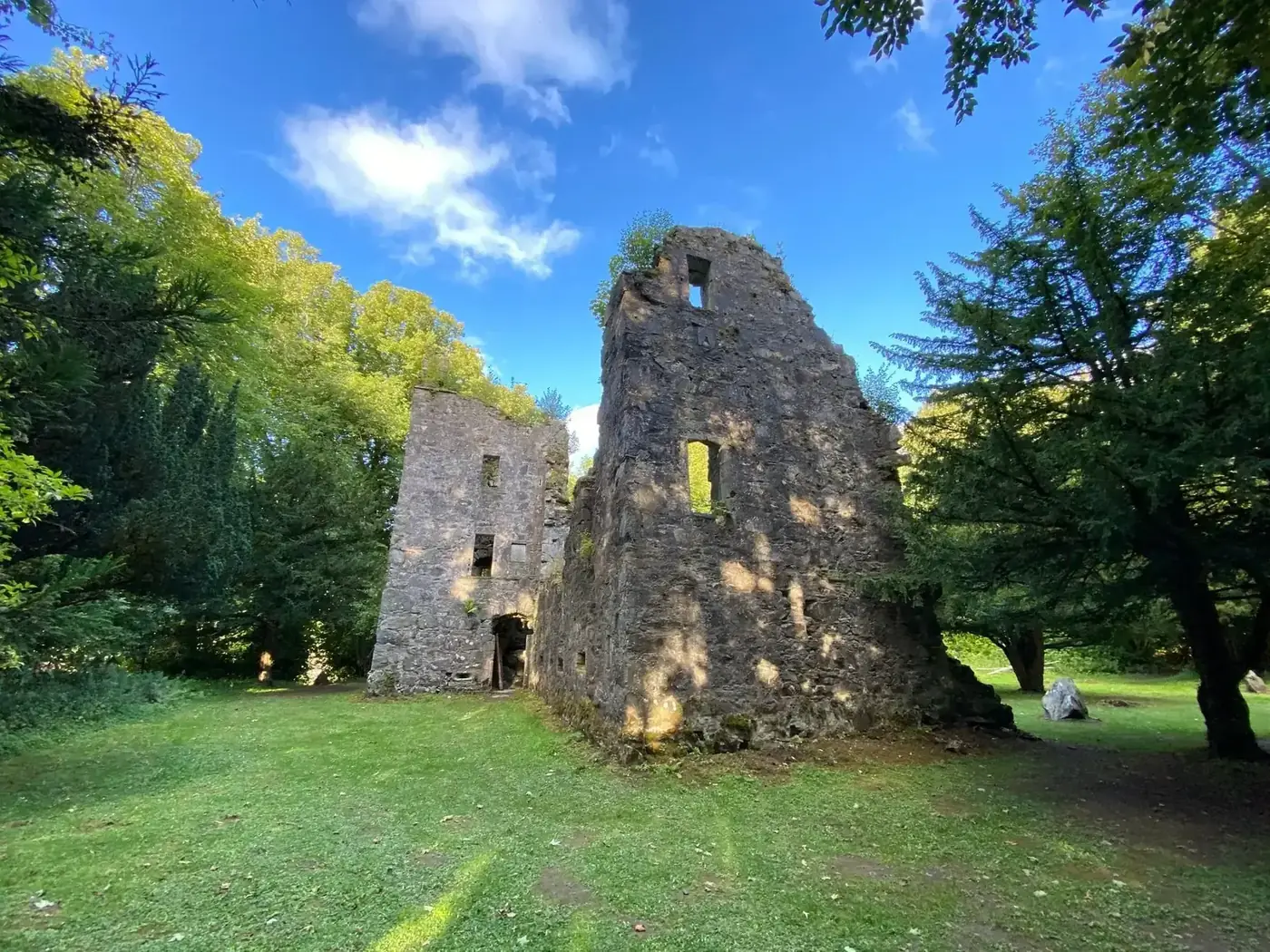
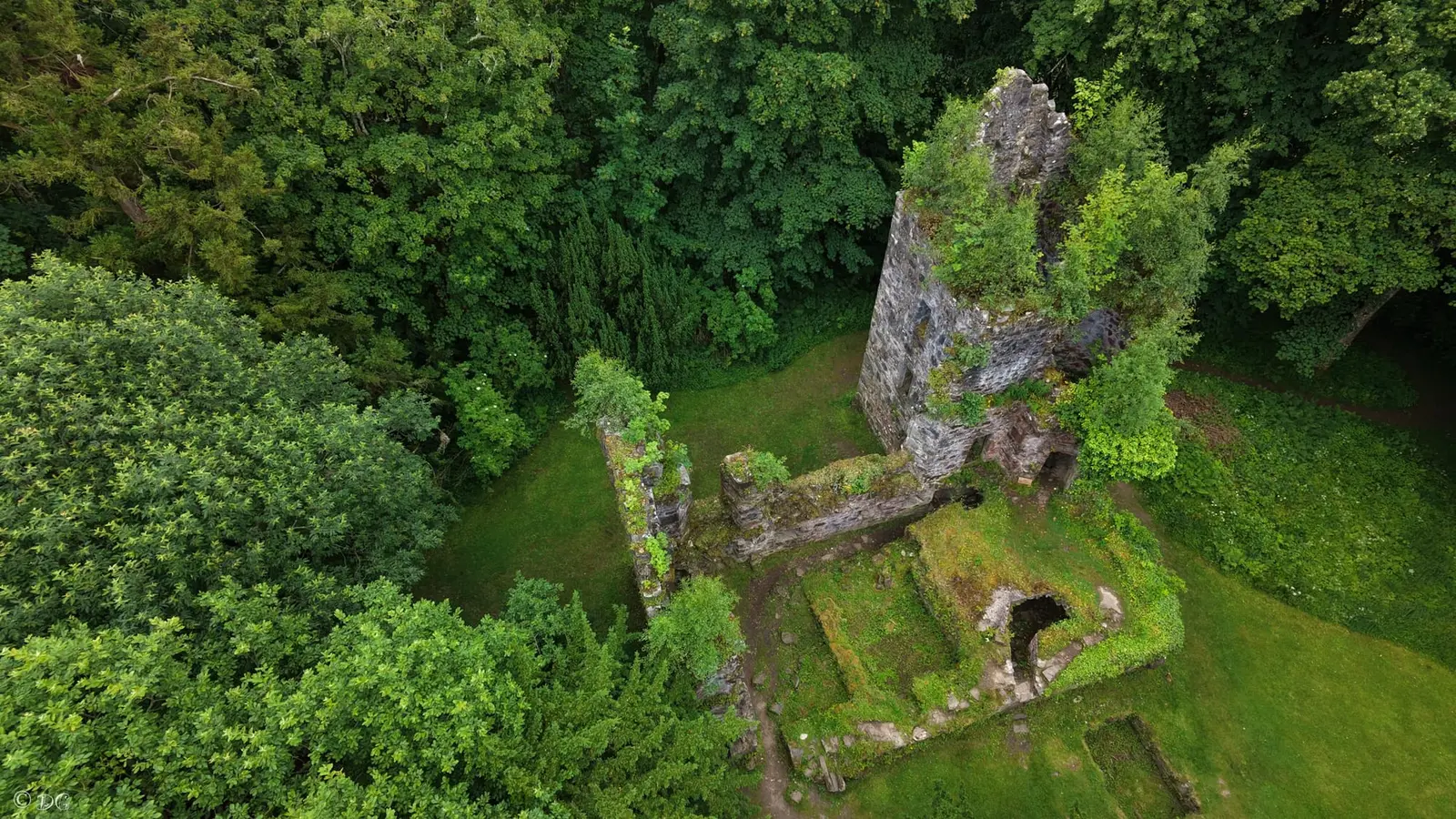
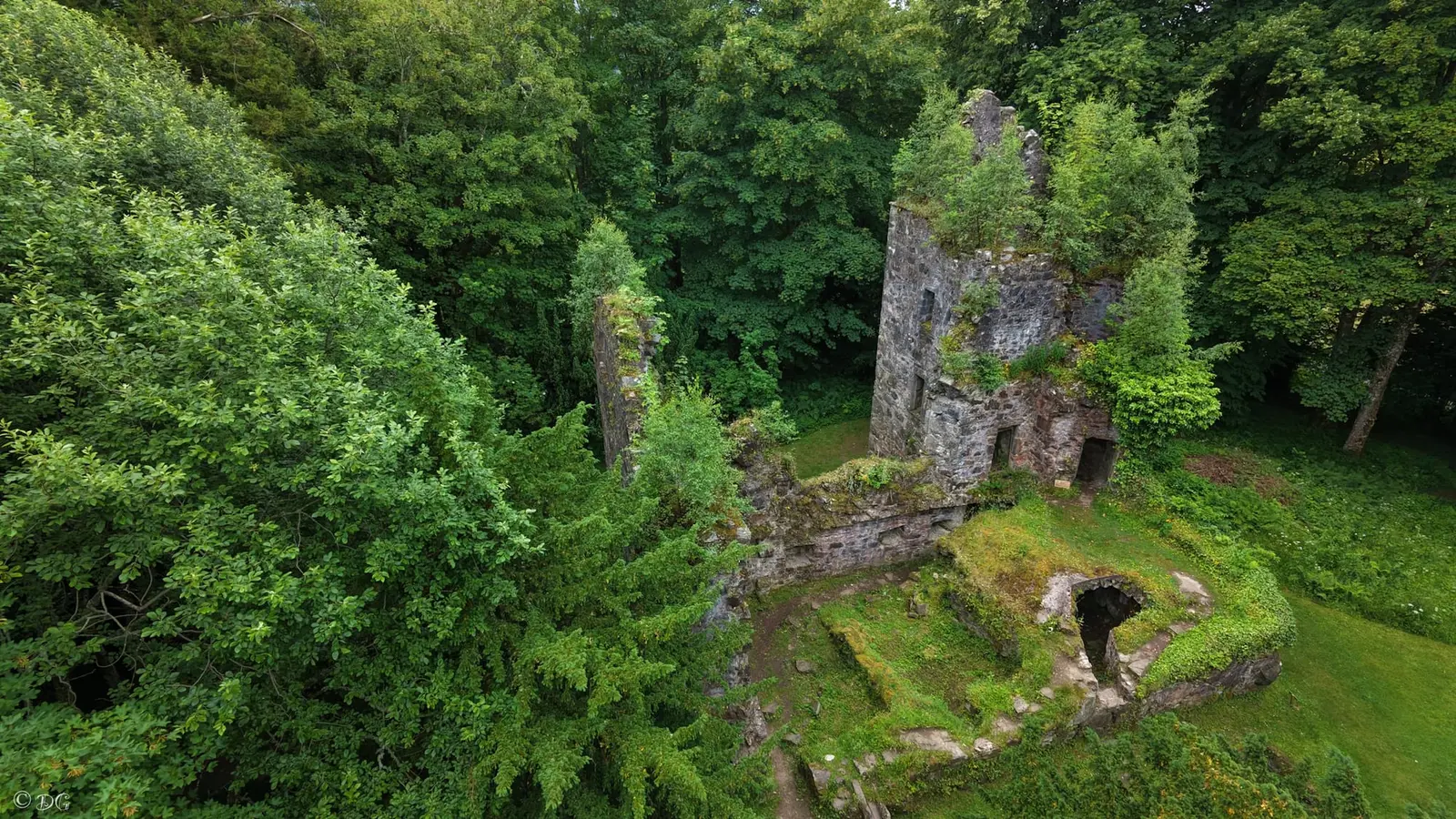
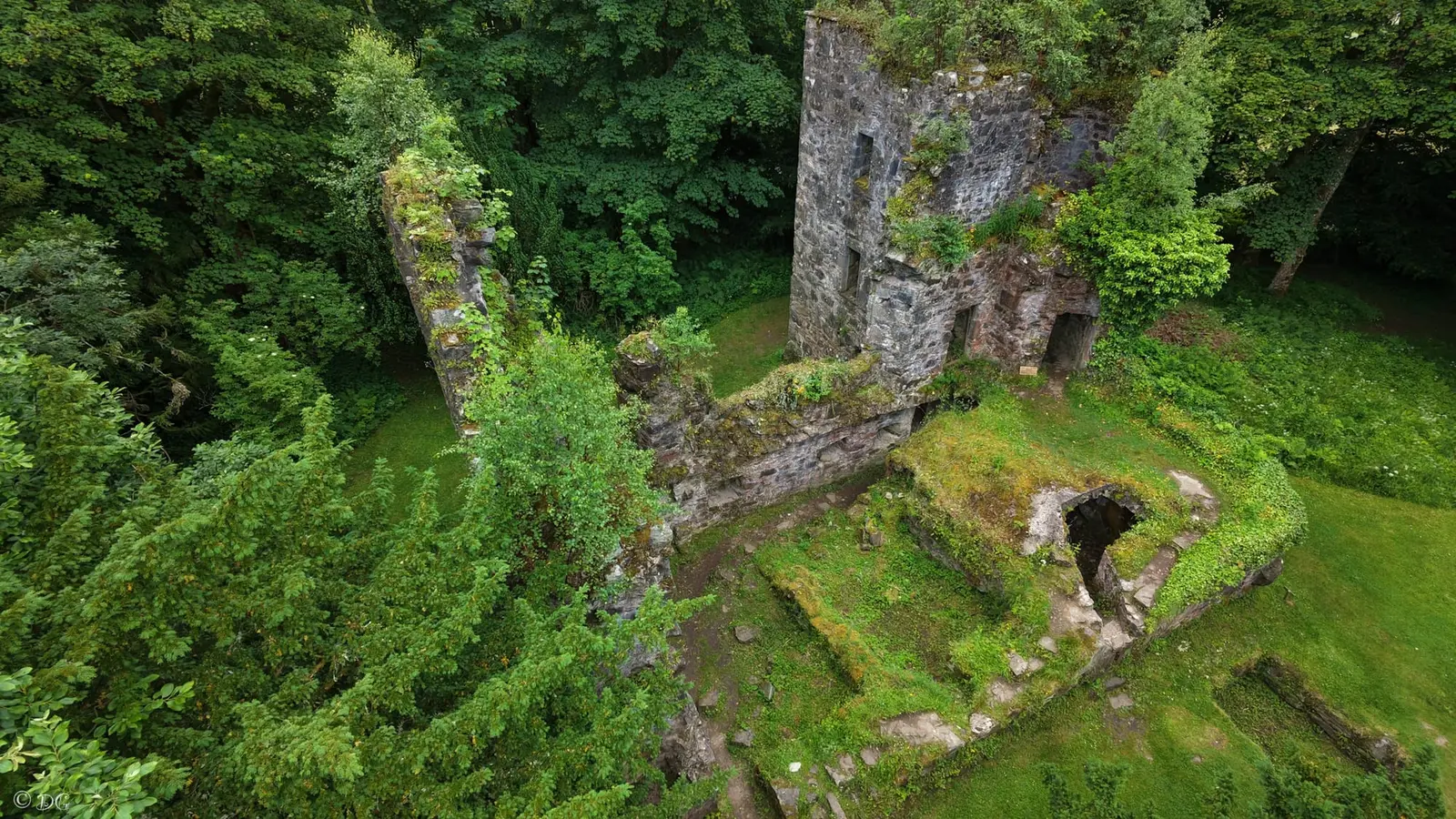
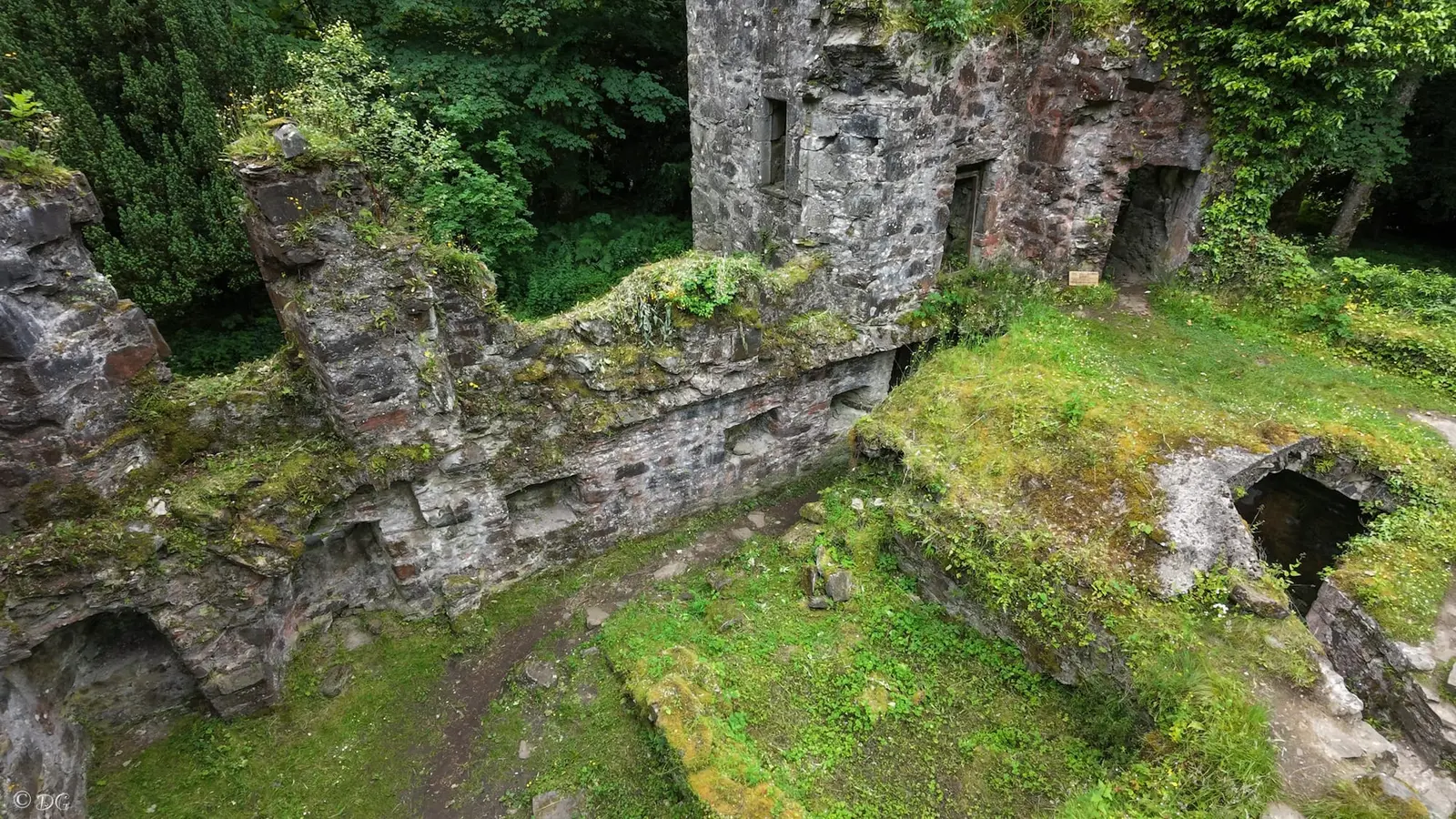
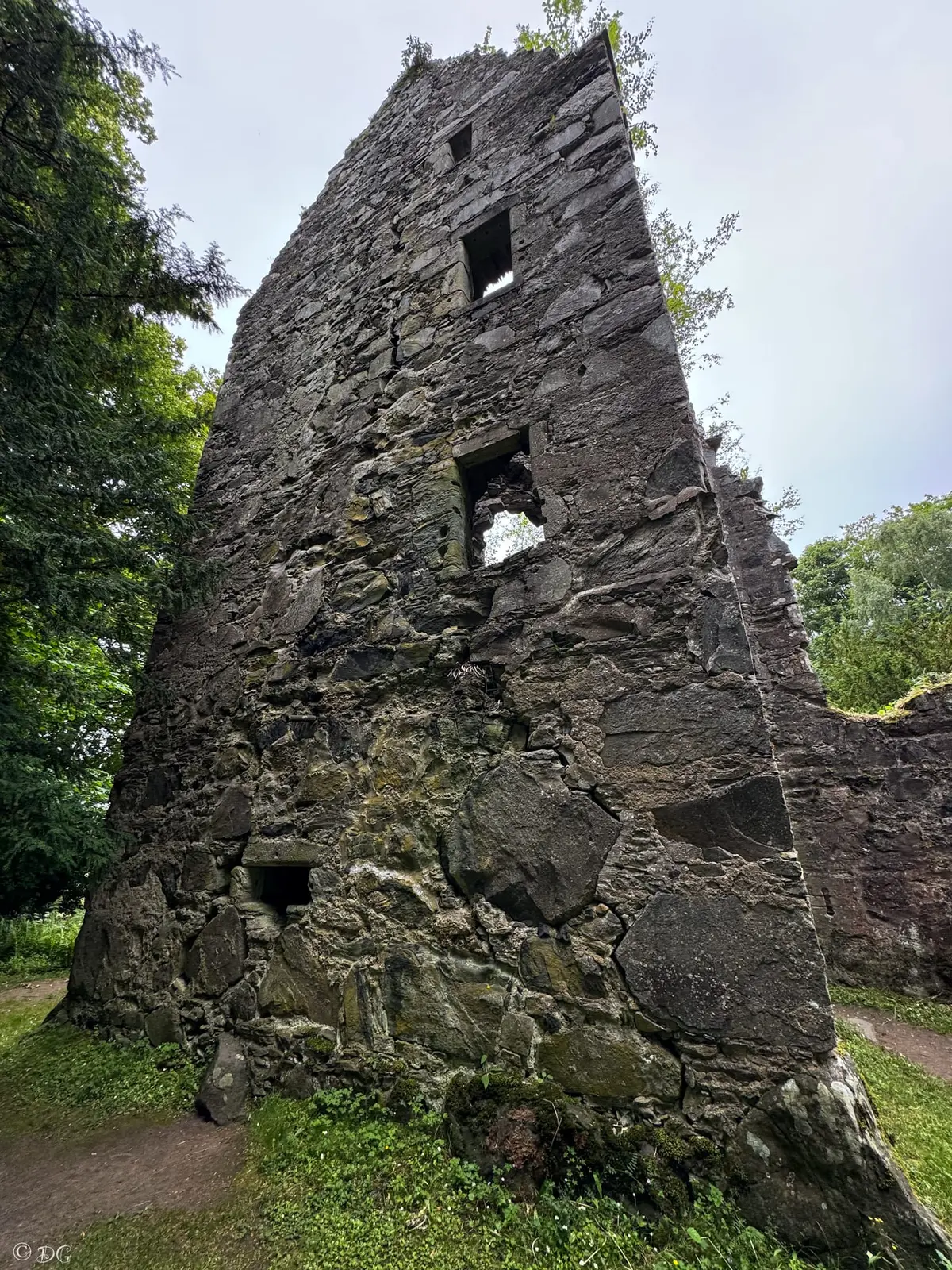
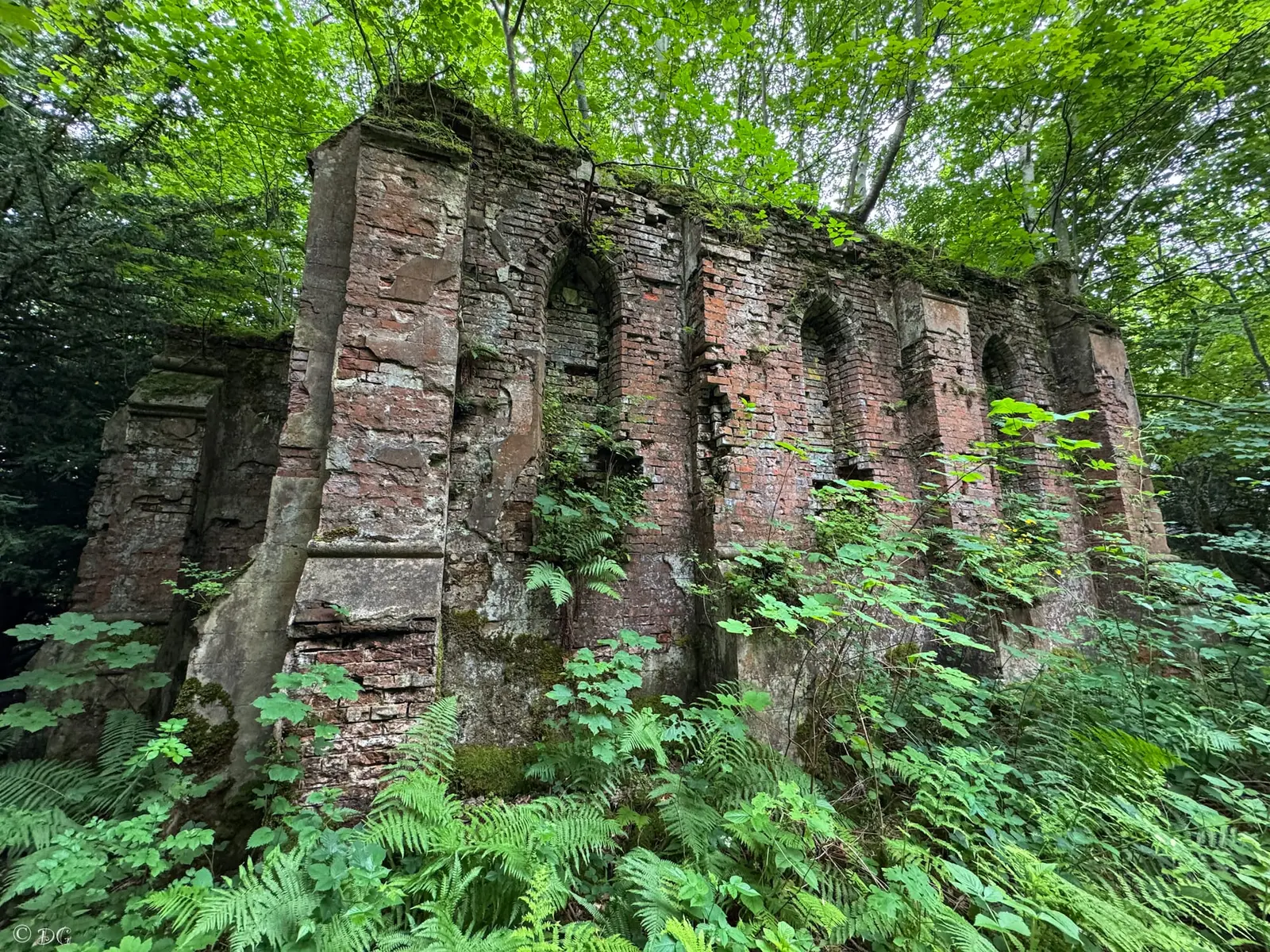
Finlarig hides among trees near Killin, its walls broken and green with age. The setting feels secretive enough to invite dark stories, and local tradition has supplied plenty of them.
The strongest visit balances that atmosphere with what the evidence actually shows: an early seventeenth-century Campbell residence, a later mausoleum and a stone-lined hollow more plausibly identified as a water cistern than an execution pit.
The woodland setting and proximity to Loch Tay make this a quiet, atmospheric stop. It rewards visitors who enjoy finding structure in a fragmented ruin.
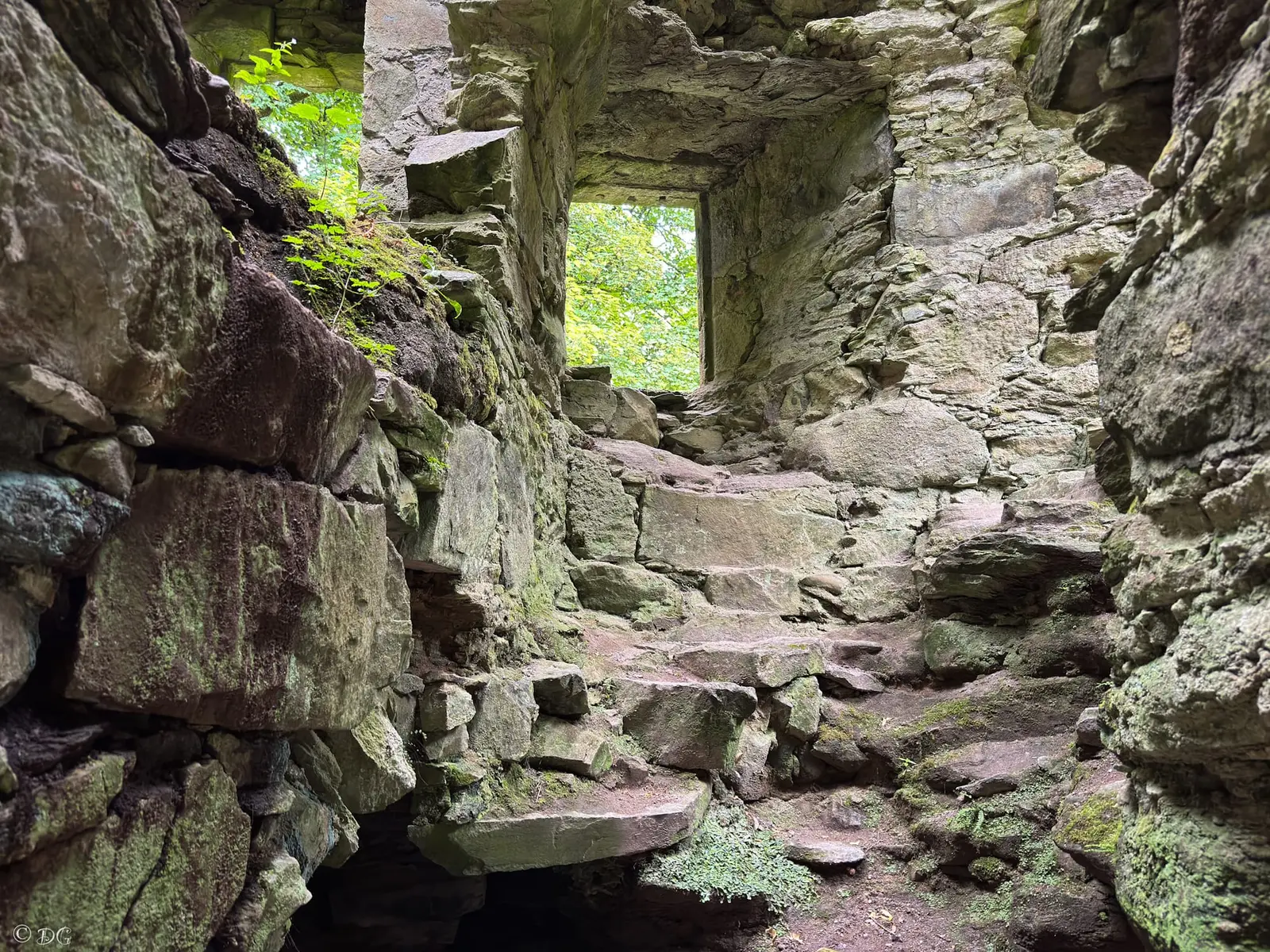
The masonry is fragile and the site is not a restored visitor attraction. Stay outside unsafe areas and treat the surrounding memorial landscape with respect.
The builders belonged to the Campbells of Glenorchy, the family line later associated with the earls of Breadalbane. Calling every early resident a Campbell of Breadalbane puts the later title too far back in time.
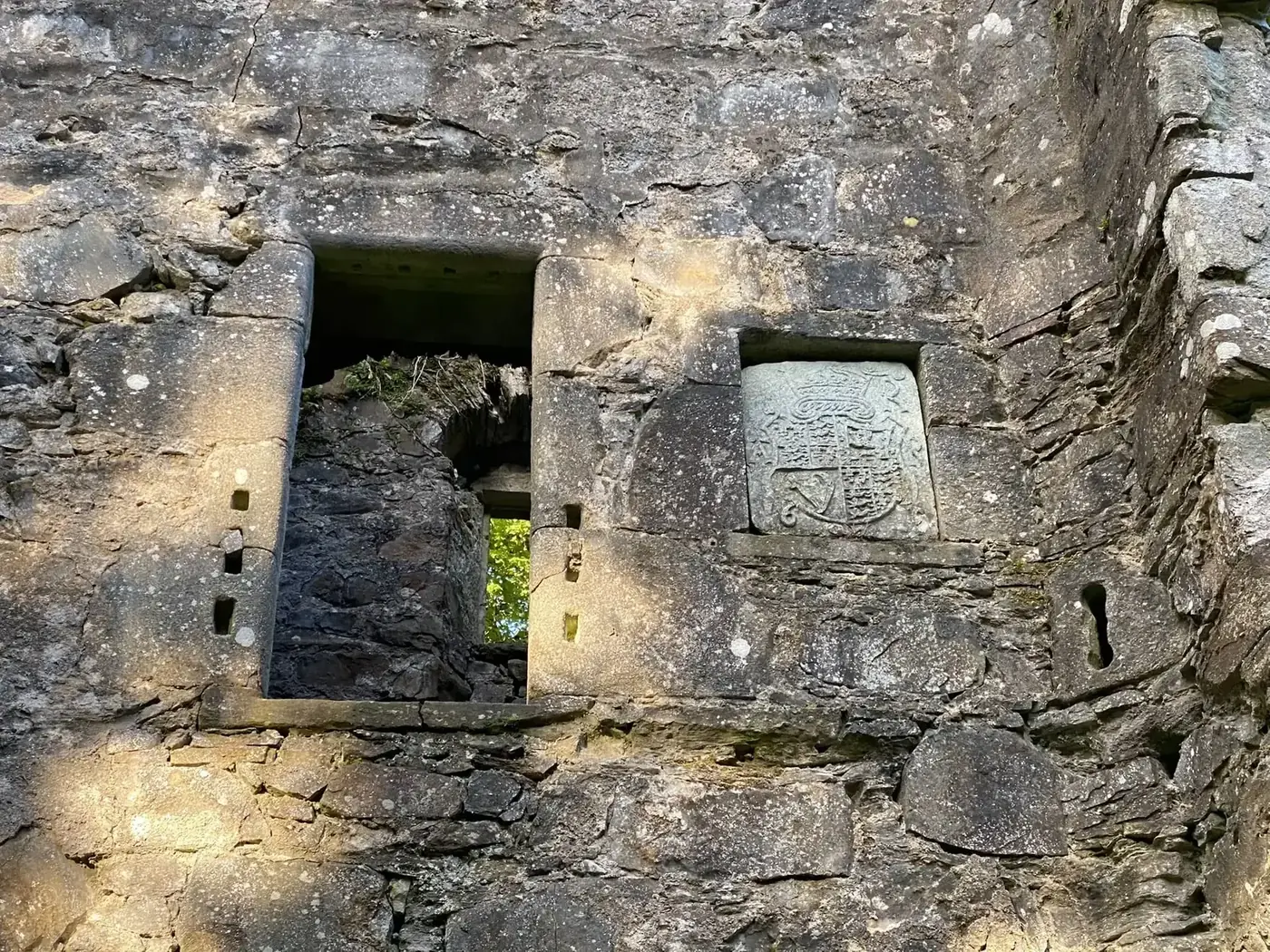
A dated panel of 1609 and evidence for later work show that the house developed in phases during the early seventeenth century.
02 / VISUAL JOURNAL
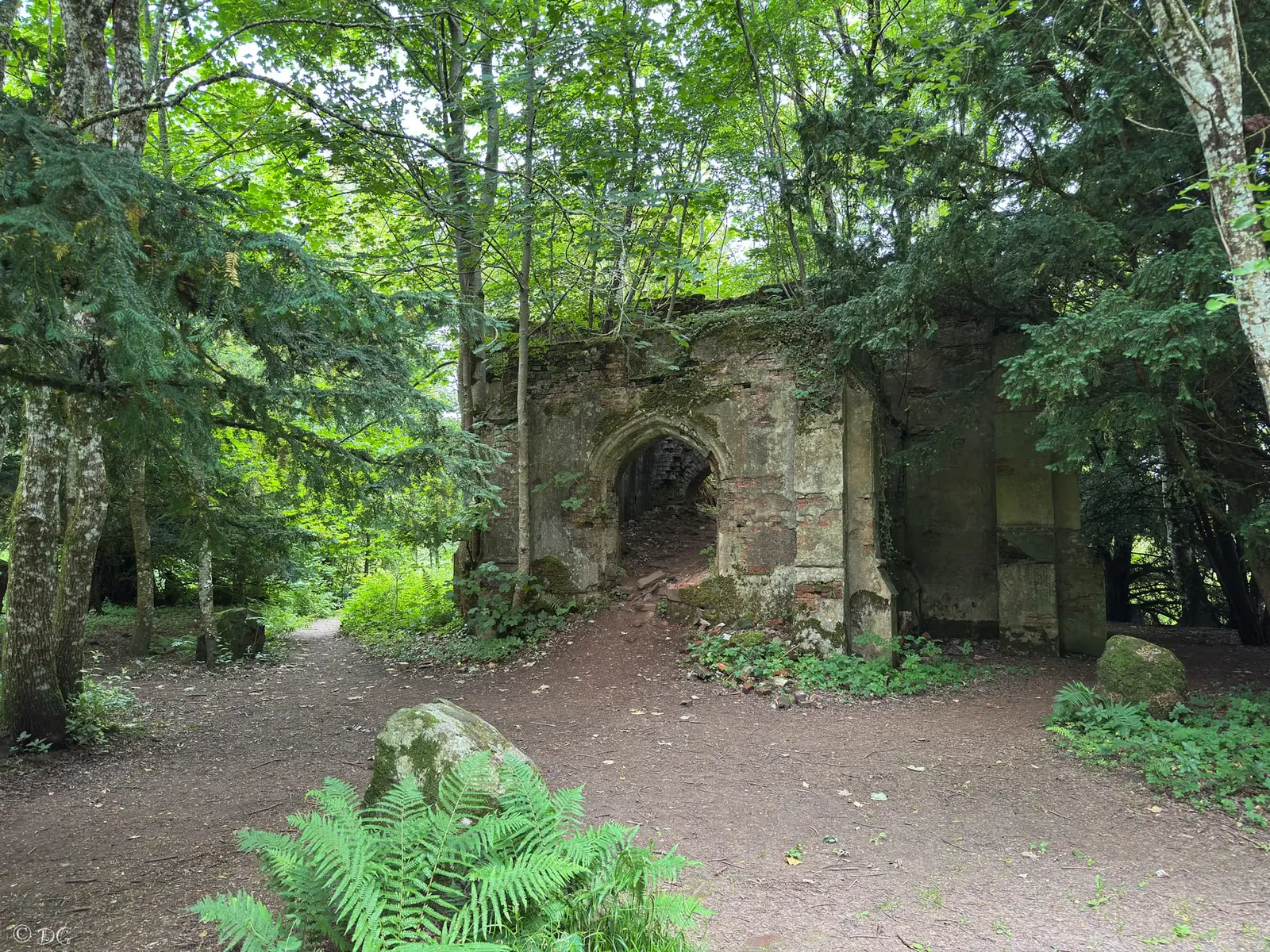
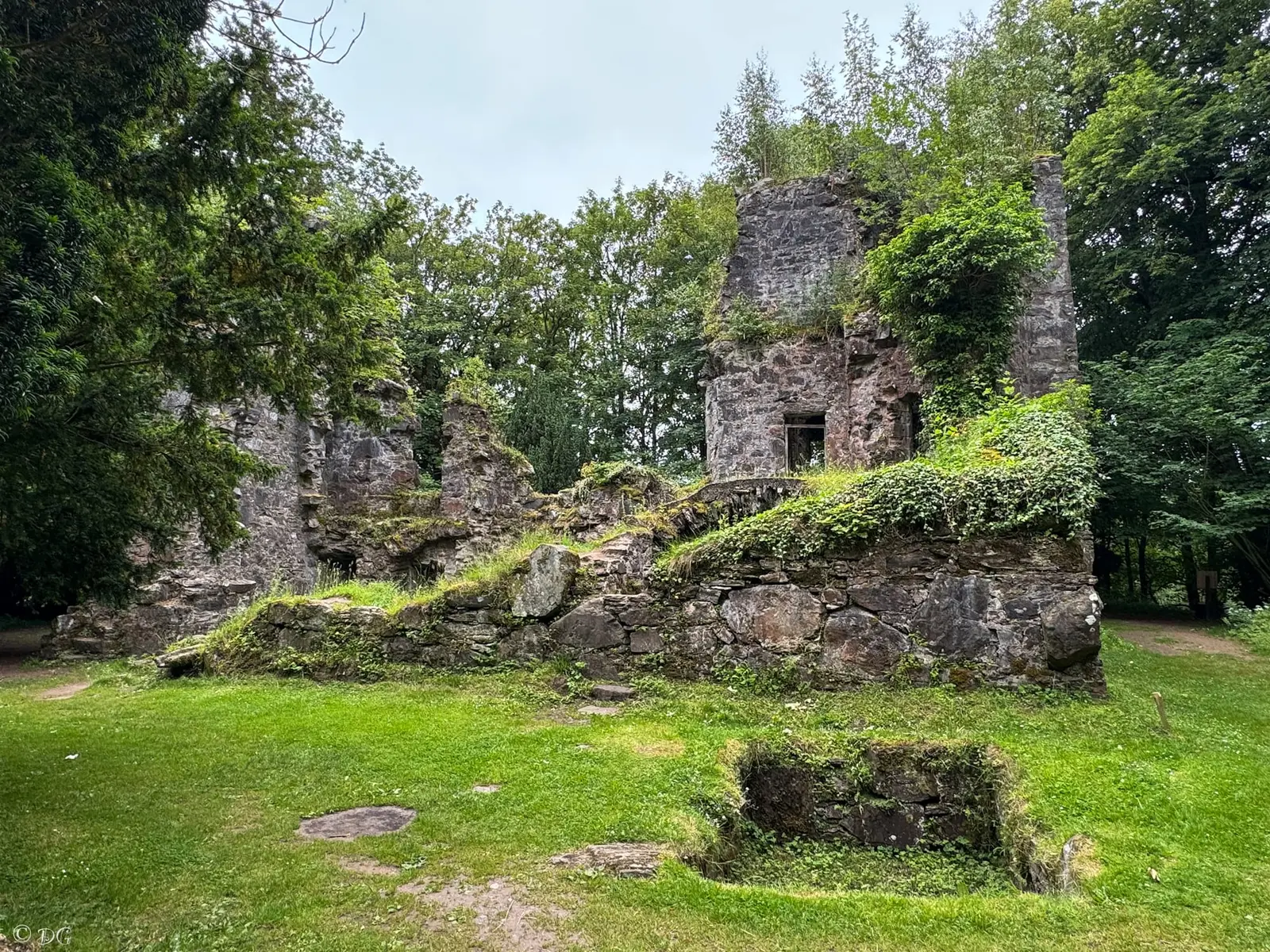
Every photograph on this page was taken by CastleScotland during visits to the site.
10 of 23 photographs
01 / THE STORY CONTINUES
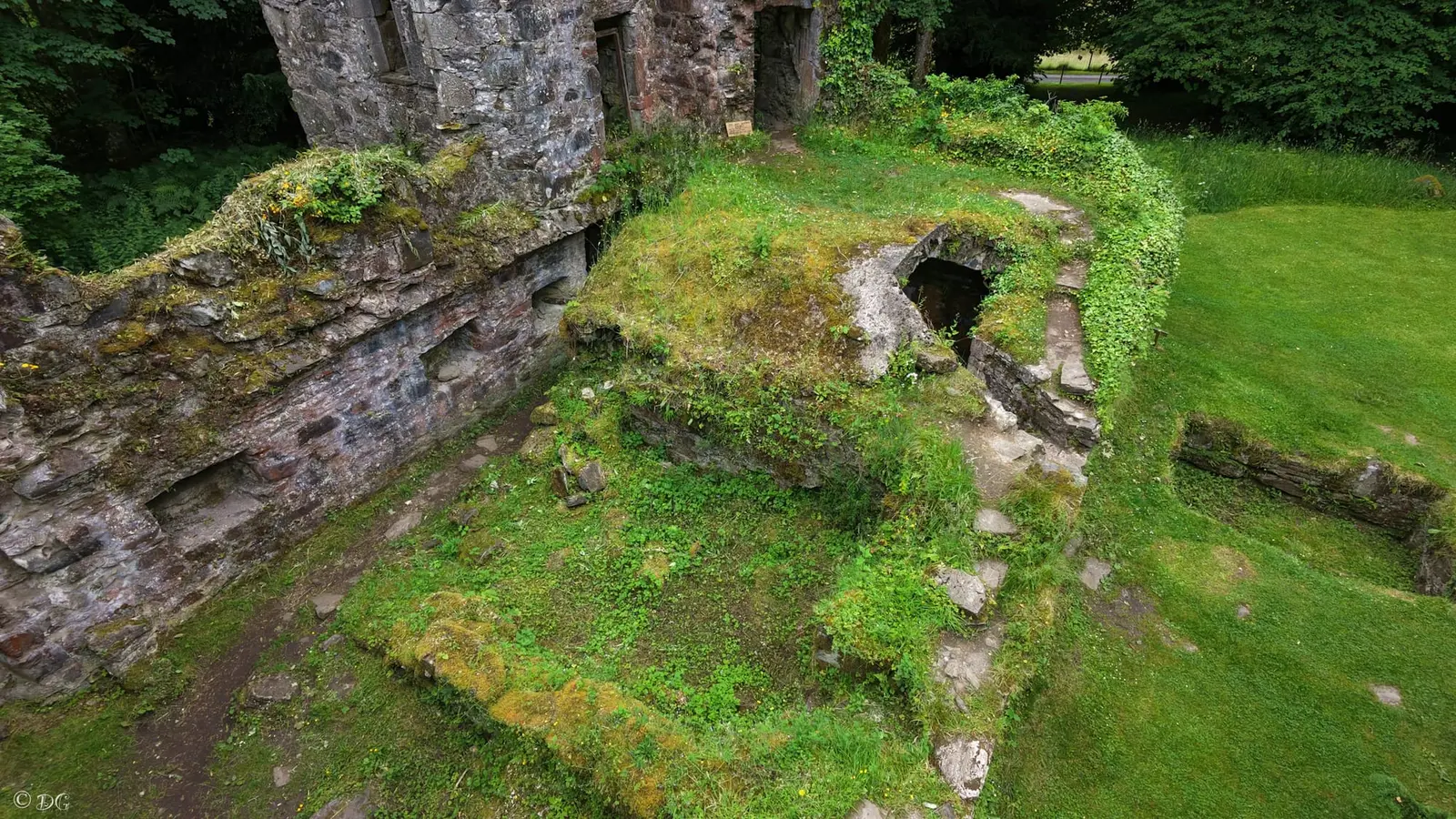
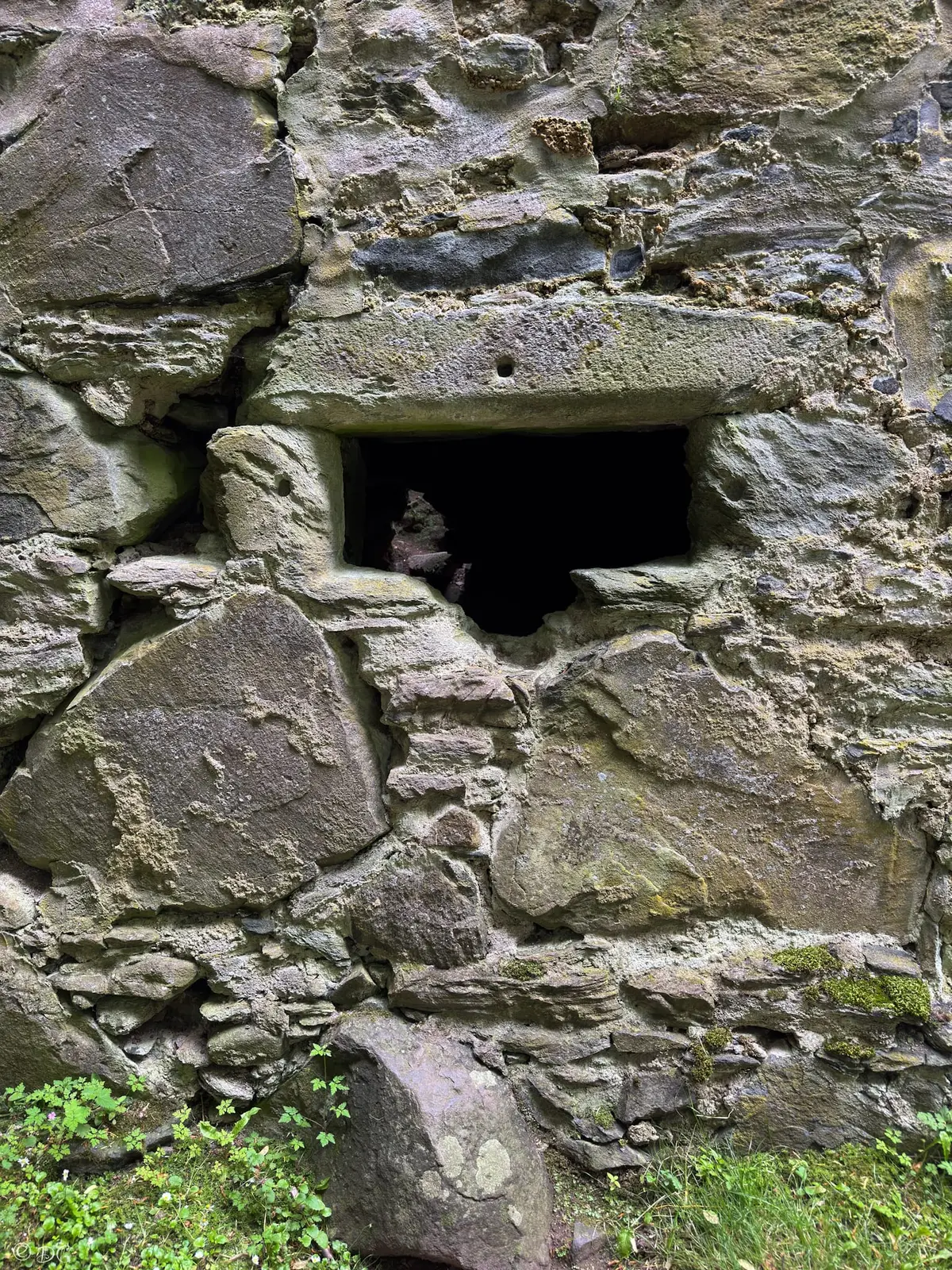
A local tradition associates a hollow near the castle with executions. Historic Environment Scotland identifies the stone-lined feature as a cistern.
That does not erase the folklore, but it changes the label. Presenting a water-storage structure as a proven beheading pit turns atmosphere into misinformation.
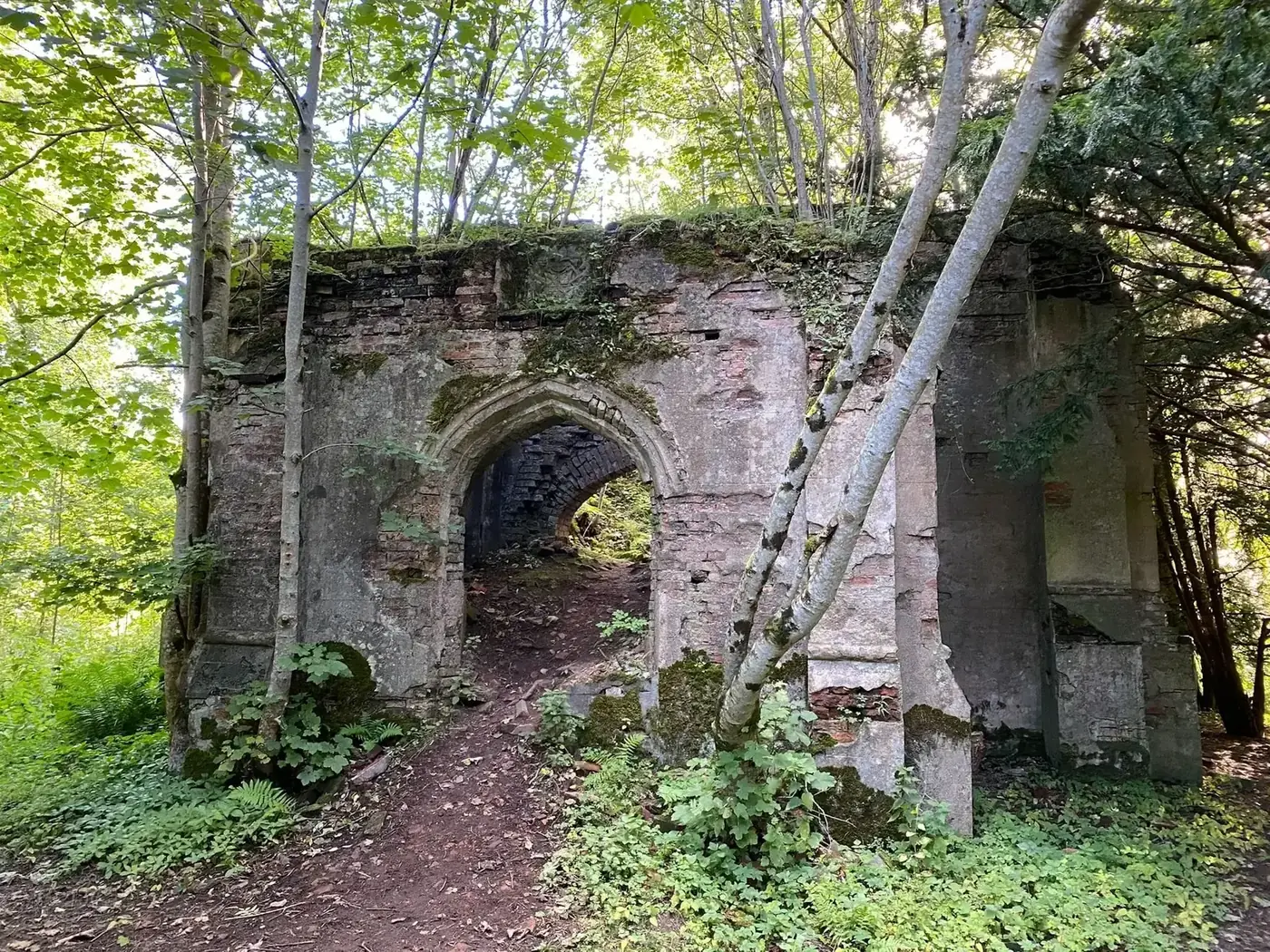
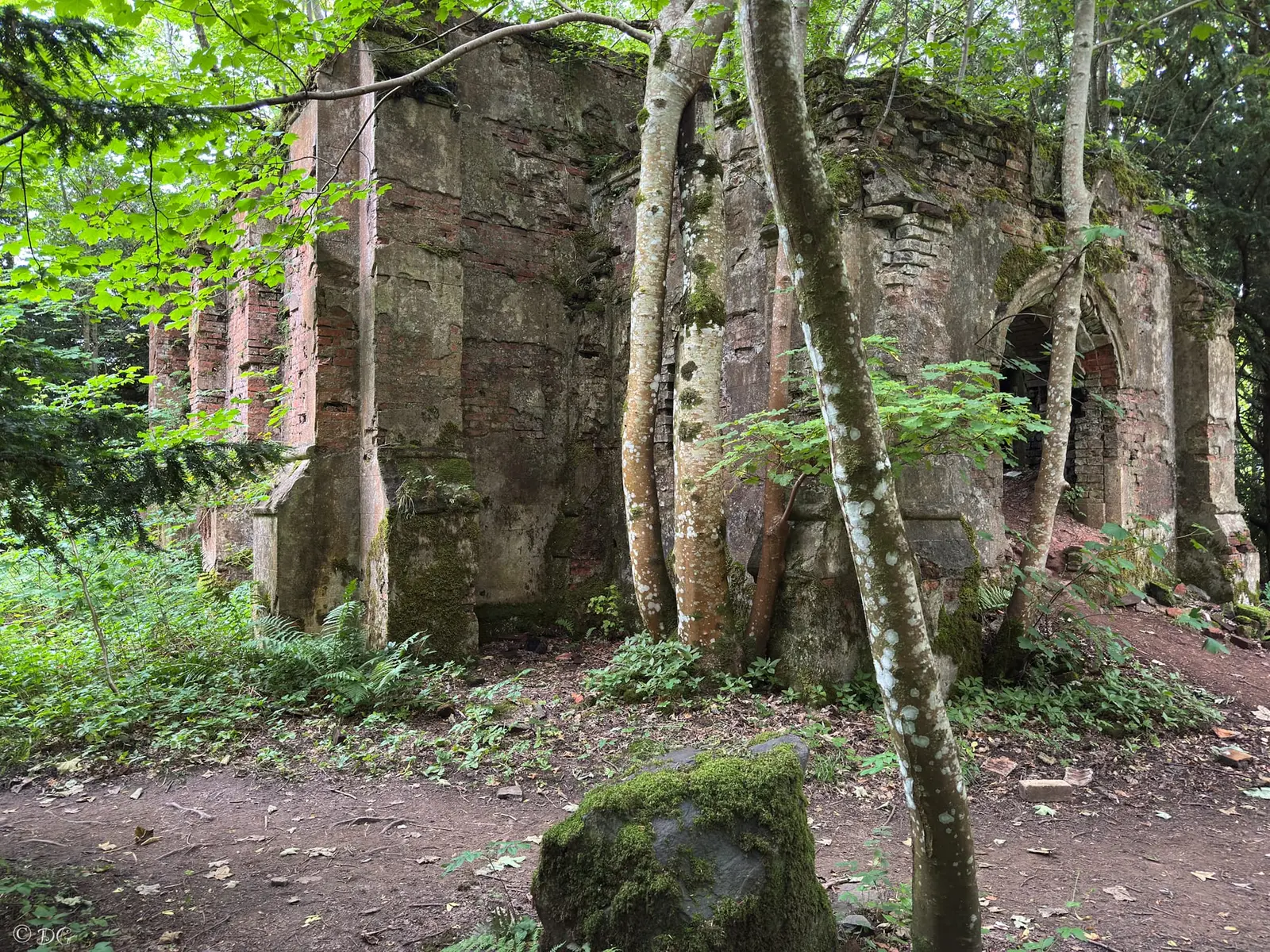
The documented neighbouring structure is the nineteenth-century Breadalbane mausoleum, probably built on or near the site of an earlier chapel. It should not be casually described as a castle doocot.
Together, castle, possible earlier earthworks and mausoleum form a layered place. They belong to different periods and purposes.
03 / MOMENTS IN STONE
The tower has a recorded 1609 panel; Coventry gives a later building phase of 1621–29. Local execution traditions survive, but HES identifies the stone-lined hollow as a cistern.
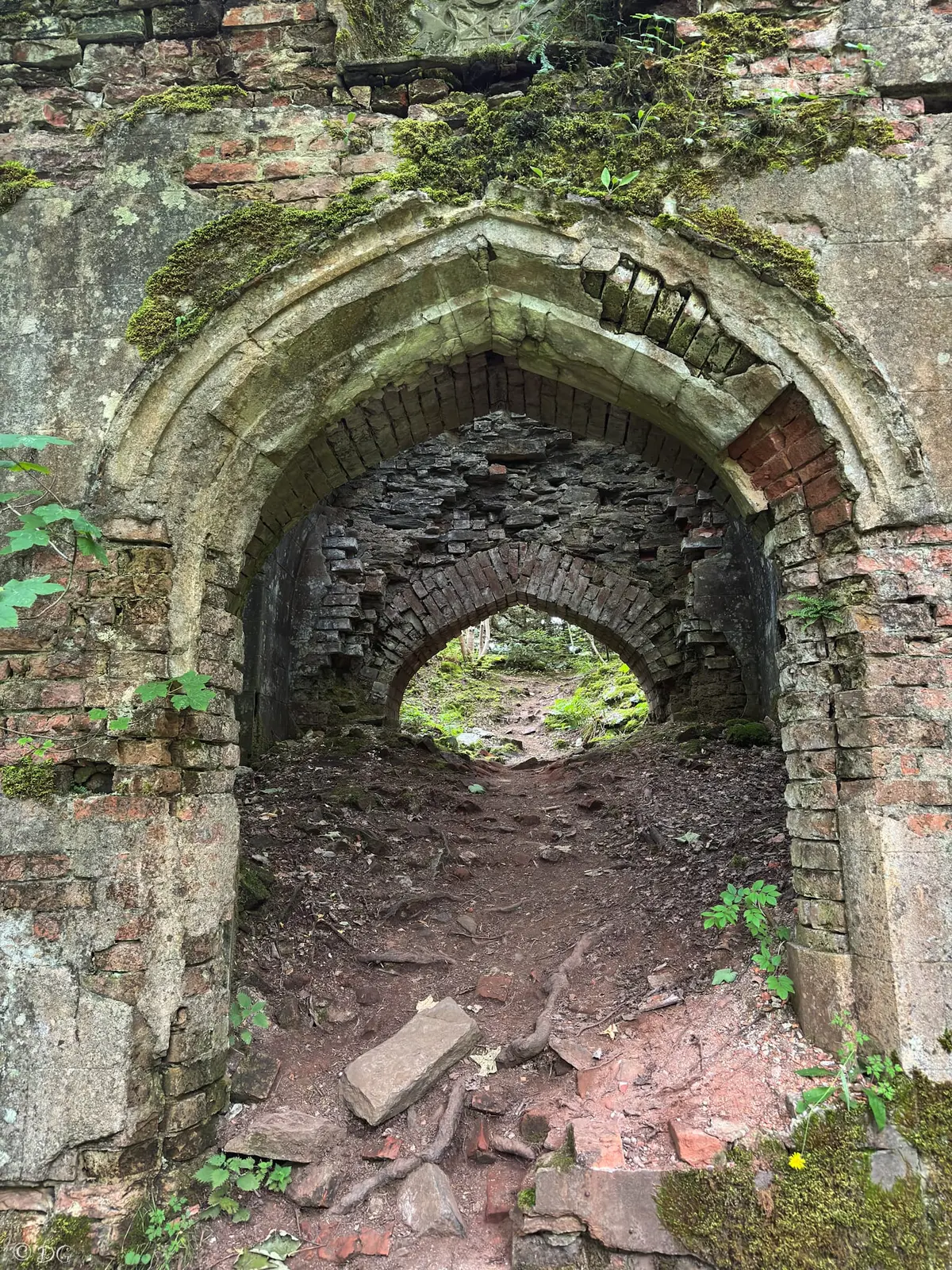
A brick mausoleum was built nearby, probably on an earlier chapel site. The builders belonged to the Campbells of Glenorchy, the family line later associated with the earldom of Breadalbane.
A historic building survey recorded the castle remains. The tower, possible earlier earthworks and later mausoleum should be read as distinct phases.
The date 1609 was recorded on a heraldic panel over the entrance. HES uses that inscription in dating the tower, while Martin Coventry gives a later building period of 1621–29 and associates it with Duncan Campbell, known as Black Duncan. These accounts should not be silently merged into a precise completion date. Early seventeenth century is secure; 1609 is the recorded inscription, and the extent of any later building campaign remains a question requiring fuller documentary comparison.
The plan also deserves qualification. Older architectural discussion allowed either an L-plan or a Z-plan, depending on whether another corner tower had disappeared. Ordnance Survey fieldwork favoured a Z-plan because traces of a spiral stair remained, and HES describes the monument that way. The castle can therefore be described as probably a Z-plan tower house, with a missing component, rather than an entirely intact example whose original arrangement is beyond debate.
The mound and surrounding earthworks suggest earlier occupation. HES considers that they may represent an earlier castle, but they do not establish an exact foundation date or a named medieval builder. The standing tower and the possible earlier works are separate layers of evidence. A walk through the setting should distinguish what can be seen from what archaeological investigation might yet explain.
Finlarig’s so-called beheading pit is the best-known story attached to the place. Local tradition links the stone-lined hollow with executions of noble prisoners, and a nearby tree with the hanging of commoners. However, HES identifies the hollow as a cistern. The physical feature exists; its alleged use for execution is not thereby proved. The traditional name can be retained while making clear that the institutional interpretation is water storage, not a securely identified execution installation.
The neighbouring brick mausoleum belongs to a different period. HES dates its construction to 1829–30 and places it probably on the site of an earlier chapel. Its presence extends the story from residence to family commemoration. The national record also lists documents concerning repairs and occupation of Finlarig across the seventeenth and eighteenth centuries. These references show an evolving property rather than a building whose entire history can be reduced to a construction date and sudden abandonment.
There is archaeological work as well as folklore to consider. A building survey undertaken in 2004–05 is recorded in the national inventory, and the whole scheduled complex has potential to illuminate the history of the local family and settlement. That potential should not be confused with discoveries already made. For visitors, the ruin’s condition makes an exterior reading the appropriate starting point. Look at the relationship between tower, mound and mausoleum without climbing or entering unstable areas. The wooded approach and layered remains give Finlarig its atmosphere; accurate interpretation lets that atmosphere remain compelling without treating every inherited tale as a documented event.
08 / EXPLORE NEXT
Find Scottish castles by region, landscape or the stories that bring them to life.
 PerthshireHuntingtower Castle
 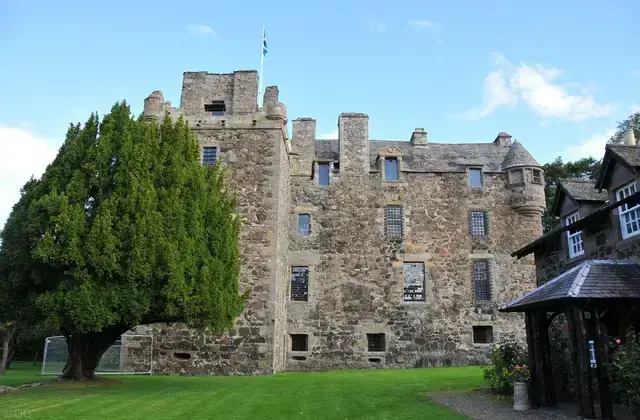 PerthshireElcho Castle
 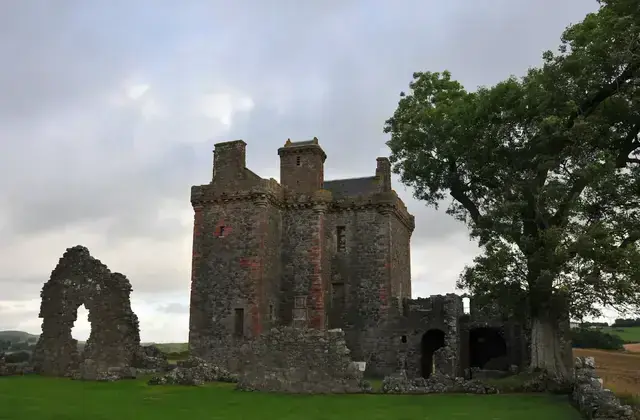 PerthshireBalvaird Castle