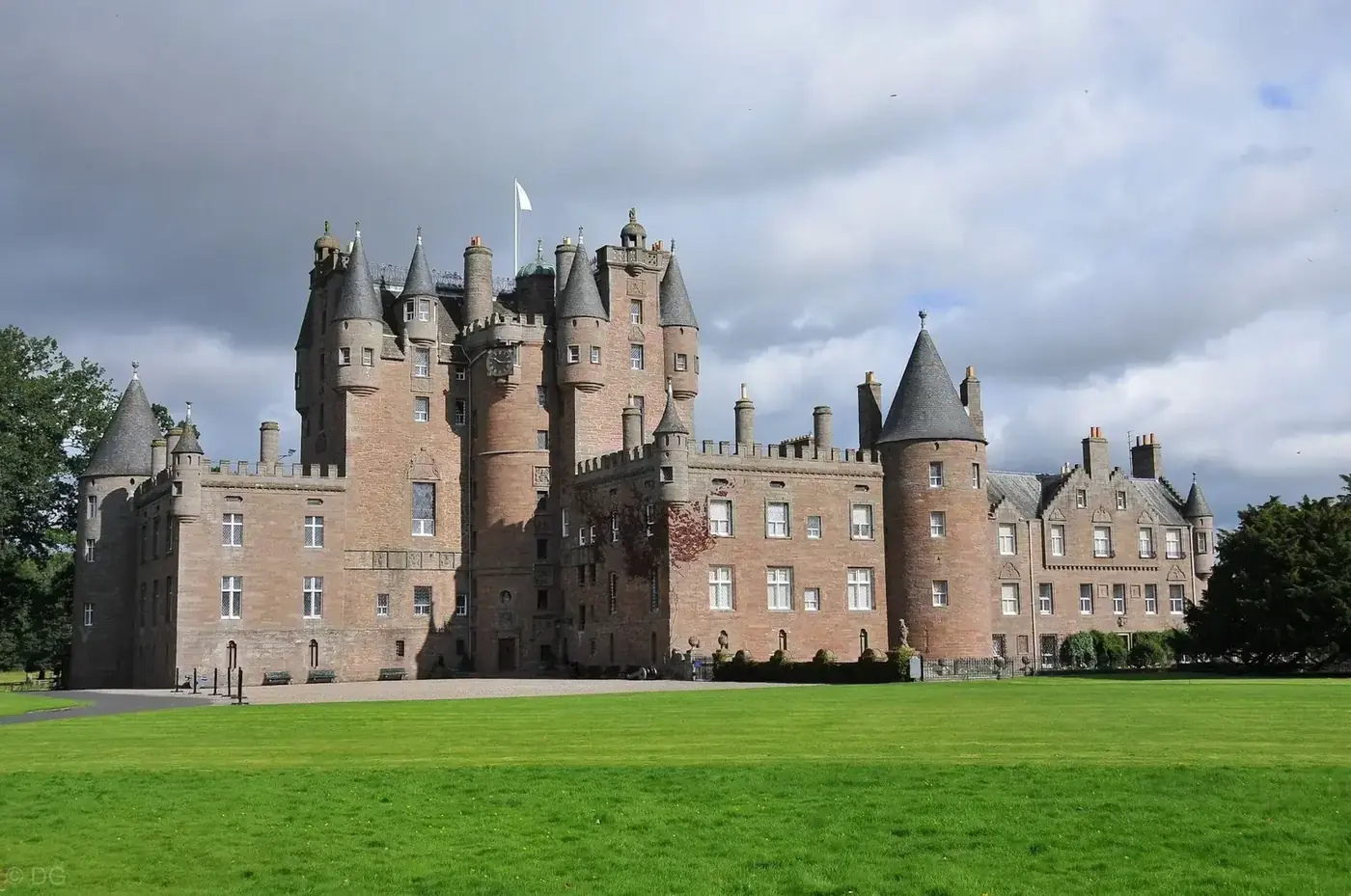
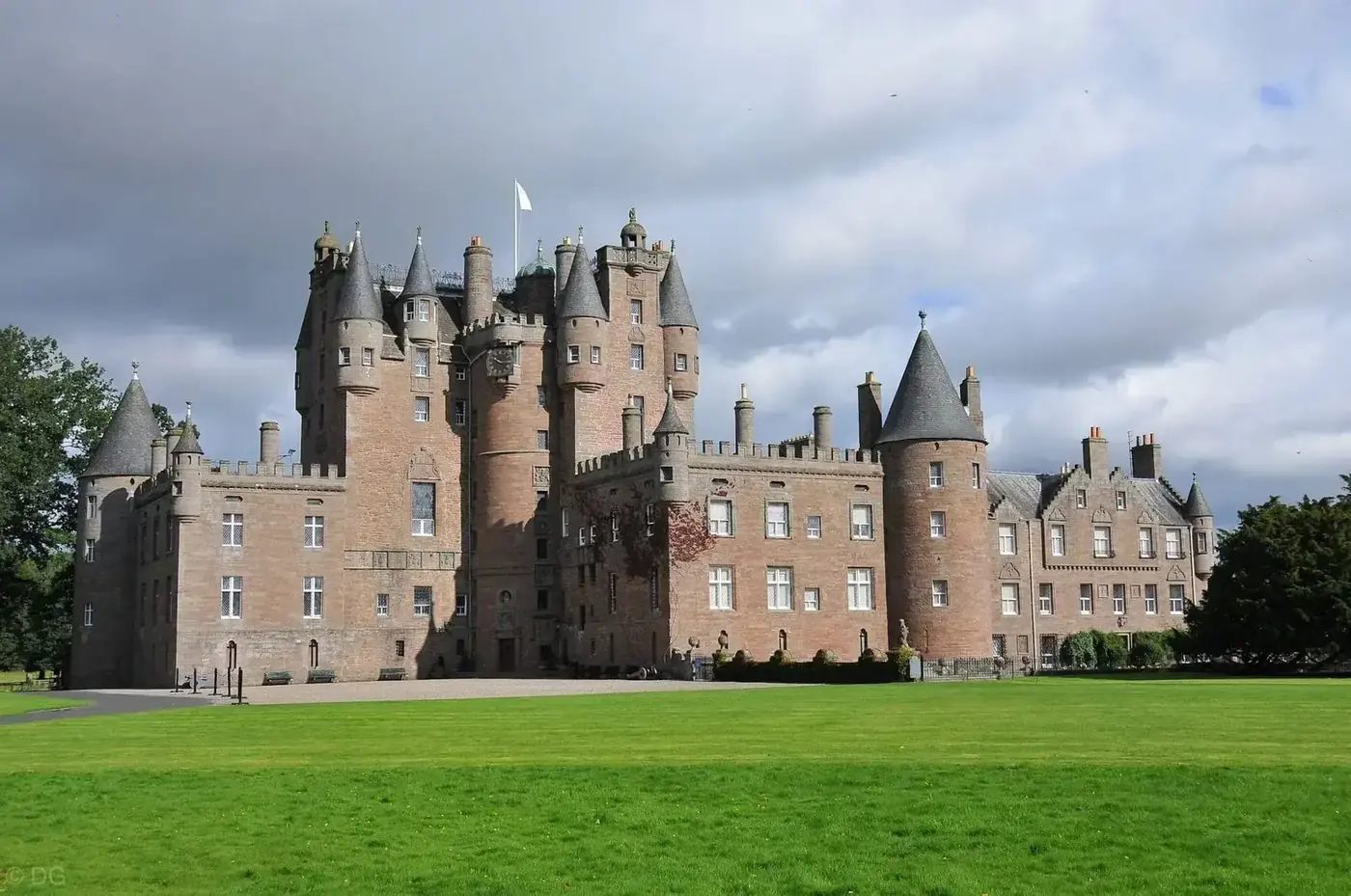
King Robert II granted the thanage of Glamis to Sir John Lyon in 1372. The estate’s later earldom titles should not be projected backwards onto that grant: the family’s own account identifies Patrick Lyon as first Earl of Kinghorne in 1606, and the extension to Strathmore and Kinghorne in 1677. Surnames, titles and the ownership of an estate are related histories, but they are not interchangeable labels.
The building also accumulated layers. Medieval fabric survives within a house substantially reshaped in the seventeenth century. HES protects Glamis as a category A listed building, and its architectural record identifies the drawing room’s elaborate plasterwork with the date 1621. Looking at a furnished room therefore involves more than deciding whether it feels old: its masonry, ceiling and later use may belong to different moments in the history of the house.
Patrick Lyon’s extensive later-seventeenth-century renovations are documented in his Book of Record. The family’s account places the works between 1670 and 1689. This is a useful counterweight to the impression of a timeless fairytale castle: building and maintaining such a residence required decisions, resources and sustained work. The great silhouette was made and remade, not simply inherited unchanged from the Middle Ages.
The best-known modern association is with Elizabeth Bowes-Lyon, the future Queen Mother. Glamis was one of her childhood homes. During the First World War the castle served as a convalescent hospital, and the estate’s account describes her helping the wounded soldiers there. This gives the rooms a different human scale: the story of a grand house includes care and temporary changes of use as well as ceremony.
Princess Margaret, her younger daughter, was born at Glamis on 21 August 1930. That birth is confirmed by the Royal Family’s biography of the Queen Mother. It must not be confused with the Queen Mother’s own birth in 1900. The distinction is small on a timeline but fundamental to the history: childhood home and birthplace describe different connections, and neither can be substituted for the other.
Glamis also has a life in folklore. A popular legend claims that a concealed room held a hidden member of the family, the so-called Monster of Glamis. Historian Mike Dash traces the changing story through later accounts rather than demonstrating the existence of such a captive. There is no reliable evidence here to support that claim. The legend can remain part of the visit without being presented as an authenticated episode in the family’s history.
The same care applies to the atmosphere of the place. A dramatic silhouette does not prove a dramatic story, and repeated retelling does not turn a rumour into a document. Try to enjoy the legends alongside the evidence: ask which part of an account comes from a record, which from a later recollection, and which from imagination. That distinction makes the castle more interesting rather than less mysterious.
Give the gardens time as well as the interiors. HES recognises Glamis’s designed landscape separately from the listed house, and the approach helps frame the architectural experience. Compare the whole composition with details inside, then return to the wider setting. Glamis rewards visitors who want to understand how a family residence acquires many identities over centuries. Check current tour arrangements with the estate, and treat the folklore as folklore while enjoying the very tangible building around it.
 Castle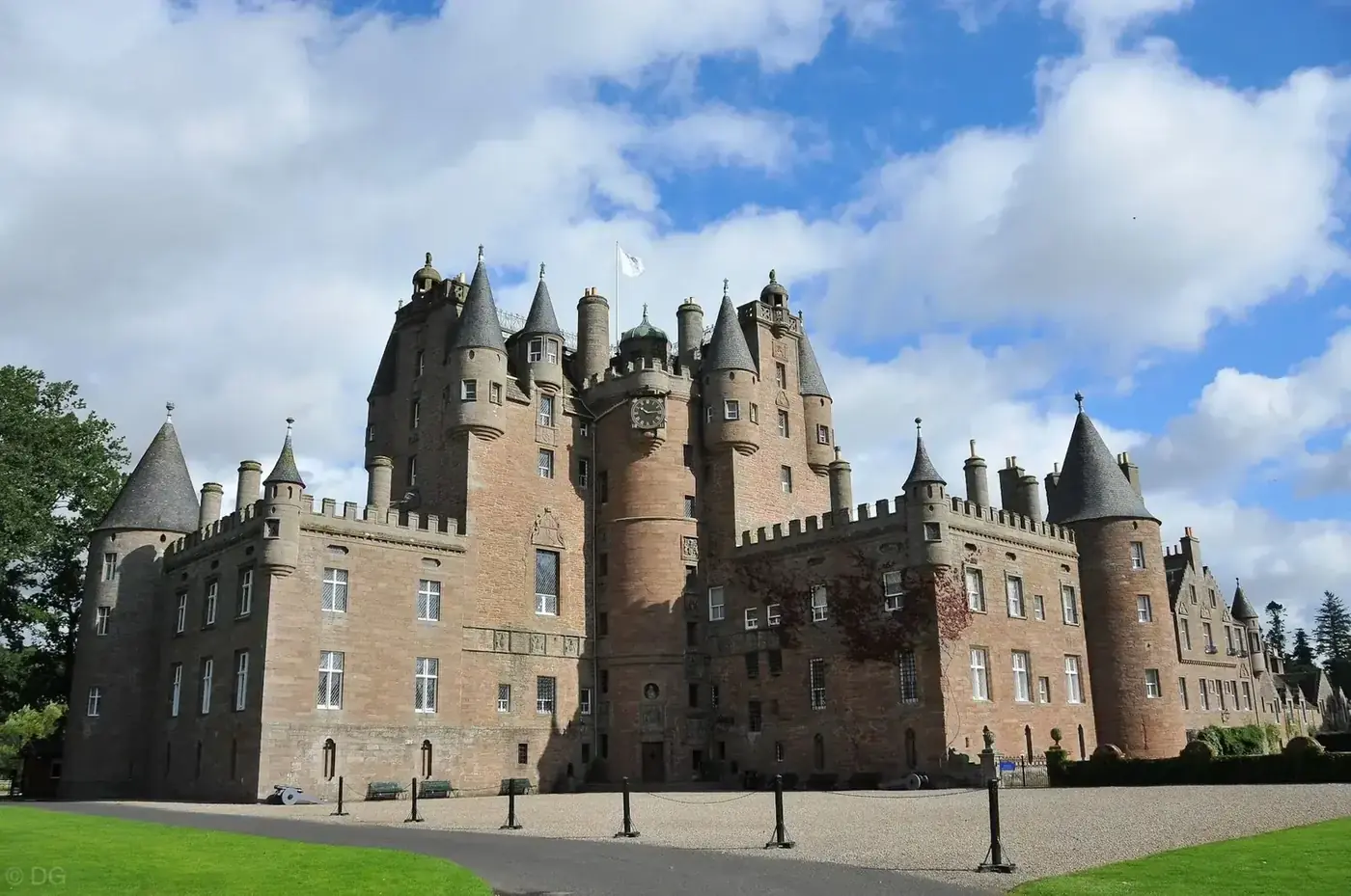
 The HighlandsSpynie Palace
  Loch Lomond, Stirling & ForthCastle Campbell
  The HighlandsOld Inverlochy Castle