TICKETSFree
Free admission and seasonal arrangements checked on the official operator page.
View current prices
EntryFree
DonationsWelcome
OpeningSeasonal: check live notice
 Castle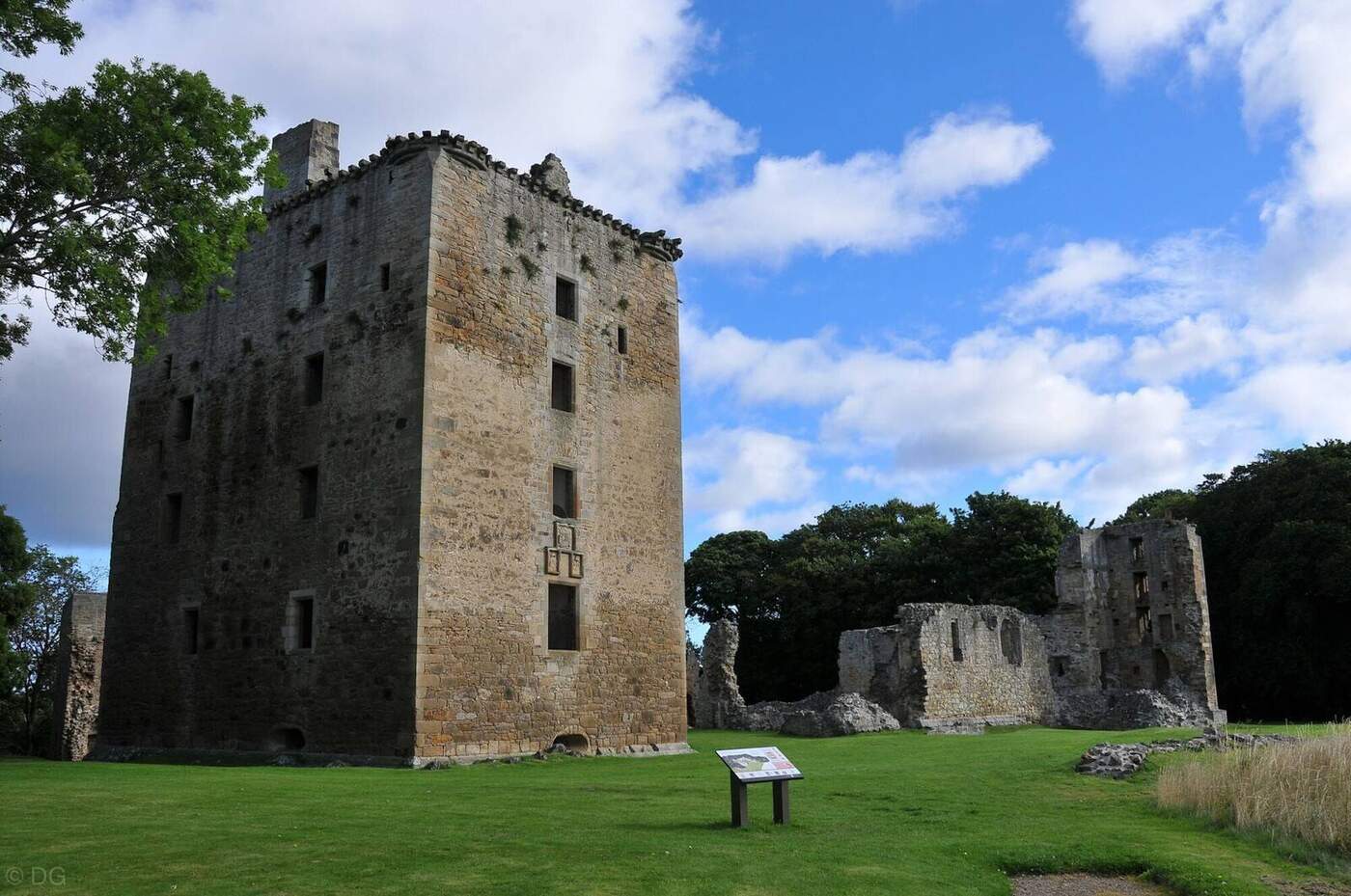
BISHOPS’ PALACE · MORAY
Five centuries of bishops. One vast tower above Elgin.
PLAN YOUR VISIT
Spynie Palace, near Elgin, Moray, IV30 5QG
Free admission and seasonal arrangements checked on the official operator page.
EntryFree
DonationsWelcome
OpeningSeasonal: check live notice
Spynie Palace is free to enter, with donations welcome. Historic Environment Scotland lists April–September opening and the address Spynie Palace, near Elgin, Moray, IV30 5QG.
Parking information
Level gravel parking, followed by about 40 m of gravel path with a slight uphill section.
Parking sources checked · 11 October 2026
There is parking, a visitor centre and an adapted toilet. Gravel, cut grass and historic spiral stairs mean accessibility varies across the site.
A surprisingly imposing Moray visit, ideal for seeing how medieval bishops lived as powerful territorial lords beside a landscape once shaped by water.
WHAT TO EXPECT
01 / THE STORY
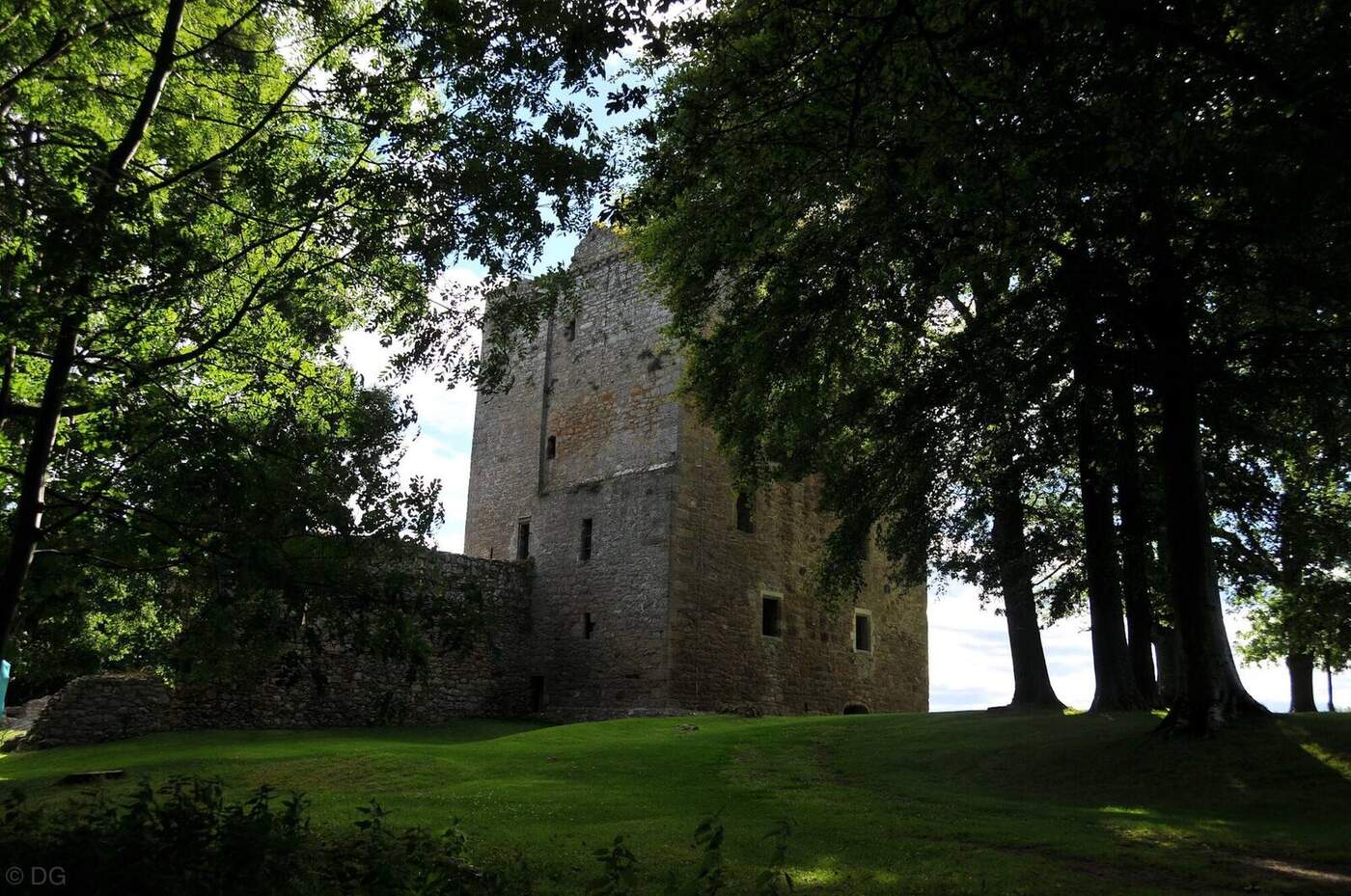
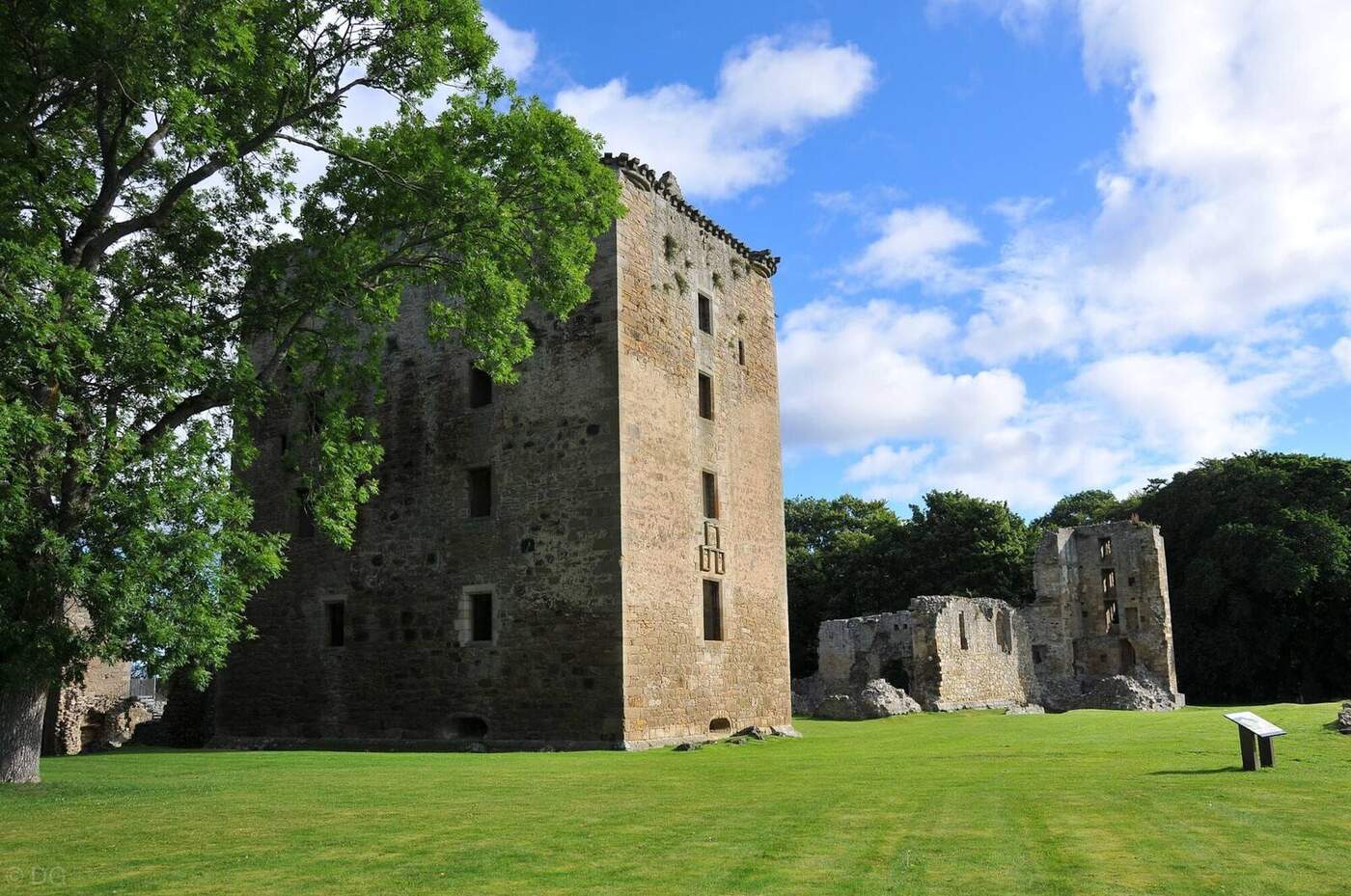
Spynie Palace was a bishop's home built on the scale of a secular lordship. David's Tower rises above the courtyard remains, announcing wealth and authority before any church history is explained.
The landscape now feels landlocked and quiet. In the Middle Ages a much larger loch linked Spynie with the sea, changing how people, supplies and important visitors approached.
Spynie replaces the usual clan story with medieval church power. Bishops needed rooms for administration, hospitality, household service and display as well as worship.
The surviving tower gives the site a castle-like silhouette, but its primary identity was an episcopal residence.
Spynie once stood beside a much larger loch with navigable links towards the coast. Modern farmland hides that watery approach.
Imagine the palace from a boat rather than only from the road. The lost shoreline changes the logic of the entire setting.
Bishop David Stewart began the great tower in the later fifteenth century, and Bishop William Tulloch completed it. Its scale made authority visible across the surrounding landscape.
Rooms stacked inside provided more than defence. This was high-status accommodation for a household at the centre of a wealthy diocese.
02 / VISUAL JOURNAL
Every photograph on this page was taken by CastleScotland during visits to the site.
01 / THE STORY CONTINUES
Episcopal residence ended in the later seventeenth century, though published accounts differ over the precise endpoint. Buildings then entered a long afterlife of reuse and decay.
Keep that uncertainty intact. A palace rarely becomes an empty ruin on one perfectly documented day.
Royal accounts preserve an unusually human detail from James IV's visit to Spynie in October 1503. Fourteen shillings were paid to maidens who sang for the king, and another forty-two shillings were recorded for his card playing.
The account does not tell us what game was played or who won, so it would be tempting—but unsafe—to turn the payment into proof of a royal gambling loss. What it does show is a bishop's palace briefly functioning as a stage for music, games and courtly entertainment.
03 / MOMENTS IN STONE
Spynie becomes associated with the bishops of Moray; the earliest standing work is fourteenth-century. The palace shows how church office could command real territorial power.
David Stewart begins the great tower; William Tulloch completes it. Its height and plan are the clearest expression of Spynie’s ambition.
Episcopal residence ends; published accounts differ over the precise endpoint. The former loch helps explain why the palace once had a very different setting.
Spynie also had a cathedral church before the bishop’s seat moved to Elgin around 1224. That transfer did not make the residence redundant. The cathedral and the bishop’s household performed different functions, and Spynie continued to develop as a substantial seat. The church site and the palace should not be treated as one surviving building: their connected histories explain why the district once formed a much busier centre of religious and secular activity.
The earliest standing elements include fourteenth-century work, followed by major changes around the courtyard in the fifteenth and sixteenth centuries. David’s Tower incorporated part of an earlier round tower at its base. Bishop David Stewart commissioned the great tower during his episcopate of 1462–1476, but it remained unfinished when he died. His successor William Tulloch, whose episcopate lasted from 1477 to 1482, completed it. Those dates describe successive bishops’ terms, not a securely measured start-to-finish building timetable.
At roughly twenty-two metres high, the tower dominates without explaining the entire household on its own. It contained accommodation on several levels, while the wider courtyard complex provided halls, chapel and service spaces. Around 1500 a great hall was built along the north side, with kitchens and bakehouse nearby. Look between the low foundations and the tall surviving walls to recover the relationship between formal hospitality and the practical work that supported it.
Gun openings added under Bishop Patrick Hepburn show that the palace adapted to changing security concerns. Religious office did not exempt its occupants from political conflict, but neither does a gunloop prove that every room was designed primarily for warfare. The entrance, halls and private accommodation also expressed rank and organised access to the bishop. The building balanced protection with the everyday demands of governing estates and receiving visitors.
The end of episcopal residence is not described consistently in modern summaries. Historic Environment Scotland’s visitor account gives 1682, while specialist accounts identify Colin Falconer, who died at Spynie in 1686, as the last resident bishop. The wider episcopal system ended later in the revolutionary settlement. The safest outline is that the residential role faded in the later seventeenth century, rather than that all occupation stopped on one undisputed date. Stripping and decay then helped create the ruin seen today.
Spynie is now protected as a scheduled monument in the care of Historic Environment Scotland. Its significance includes buried remains as well as the great tower, and current interpretation benefits from archaeological investigation of the wider site. Walk slowly through the courtyard and imagine its relationship with the former loch, not just today’s fields. The contrast between the immense tower and the lower household buildings is the key to the visit. Spynie makes church power visible in domestic architecture, and rewards attention to construction, service and landscape as much as to the names of its bishops.
08 / EXPLORE NEXT
Find Scottish castles by region, landscape or the stories that bring them to life.
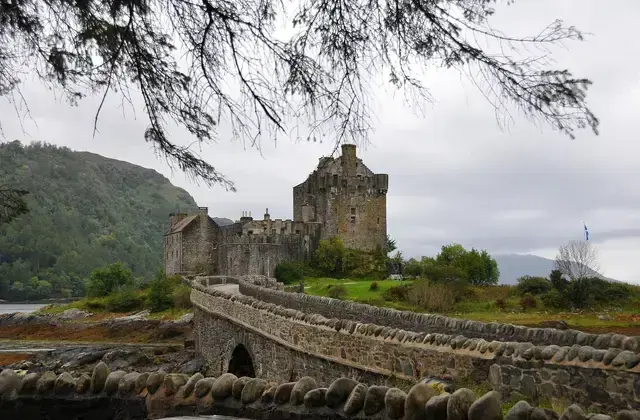 The HighlandsEilean Donan Castle
 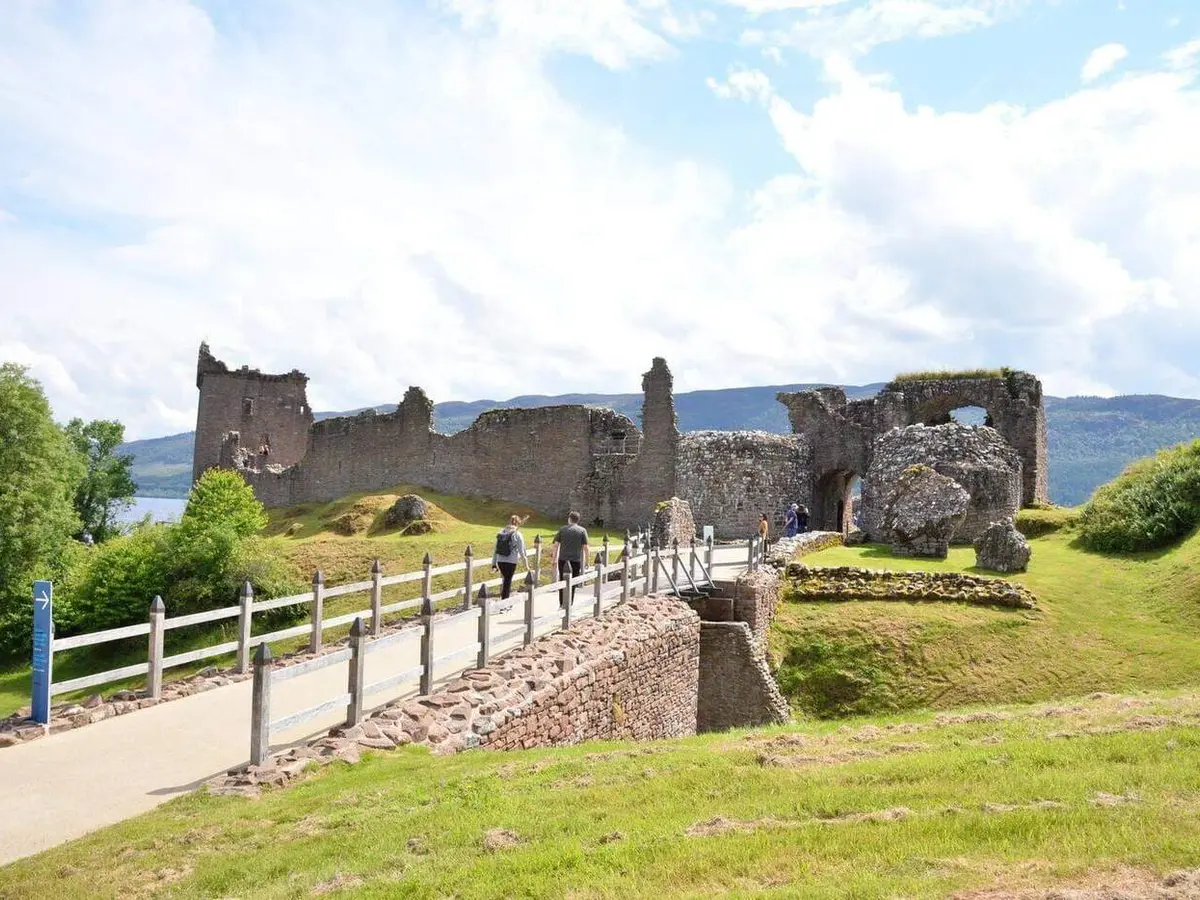 The HighlandsUrquhart Castle
 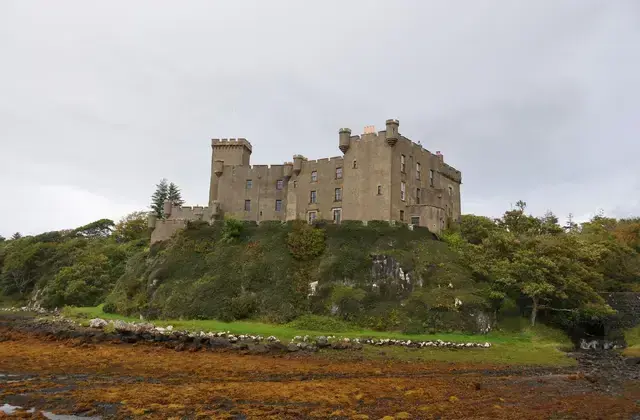 The HighlandsDunvegan Castle