TICKETSFree
Free access and visitor conditions checked with Historic Environment Scotland; wear suitable footwear.
View current prices
EntryFree
OpeningOpen all year
ParkingAvailable near the site
 Castle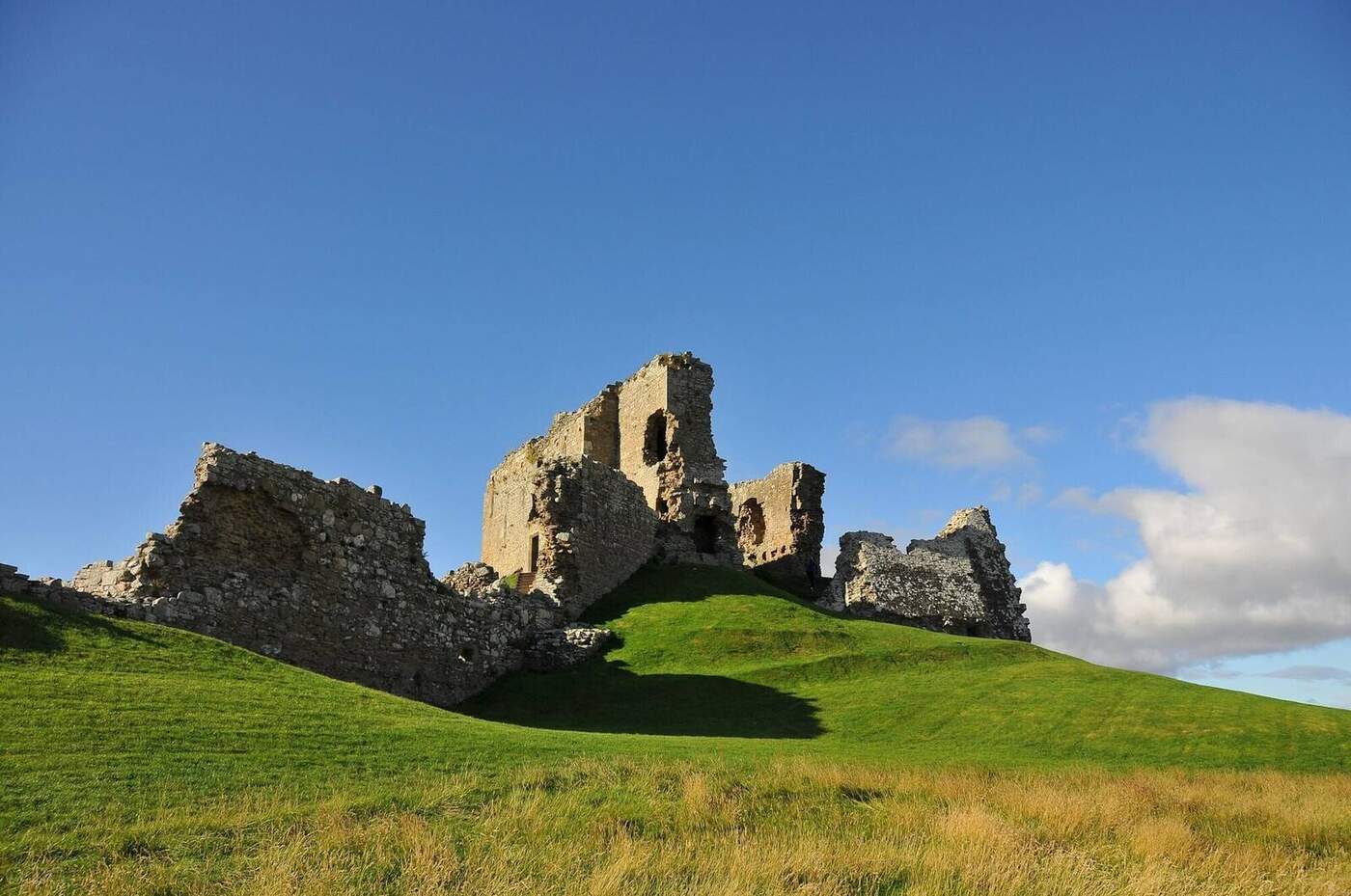
MOTTE & BAILEY · MORAY
A giant earthwork. A stone castle sliding into history.
PLAN YOUR VISIT
Near Elgin, Moray
Free access and visitor conditions checked with Historic Environment Scotland; wear suitable footwear.
EntryFree
OpeningOpen all year
ParkingAvailable near the site
Duffus is free and open all year. Historic Environment Scotland directs visitors to the B9012 between Elgin and Burghead; parking is available, but the old bridge route around the moat adds distance.
Parking information
Visitor parking is about 15 m from the entrance. Charges and capacity are not confirmed.
Parking sources checked · 11 October 2026
Expect long grass, steep and uneven ground on the motte. There are no toilets and the site is not a step-free ruin visit.
An excellent free stop for understanding motte-and-bailey castles, with a fallen keep wall that makes medieval engineering unexpectedly dramatic.
WHAT TO EXPECT
01 / THE STORY
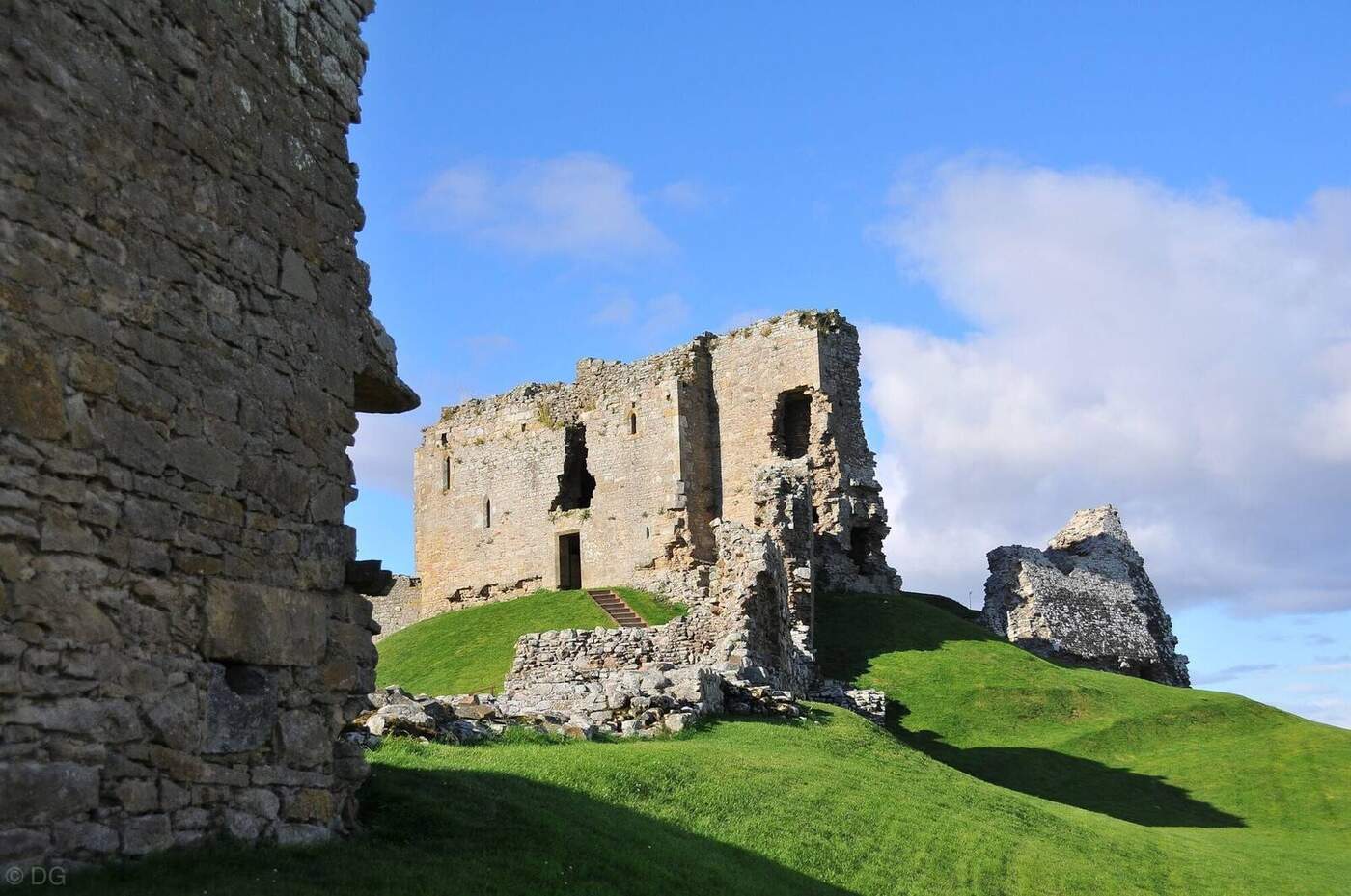
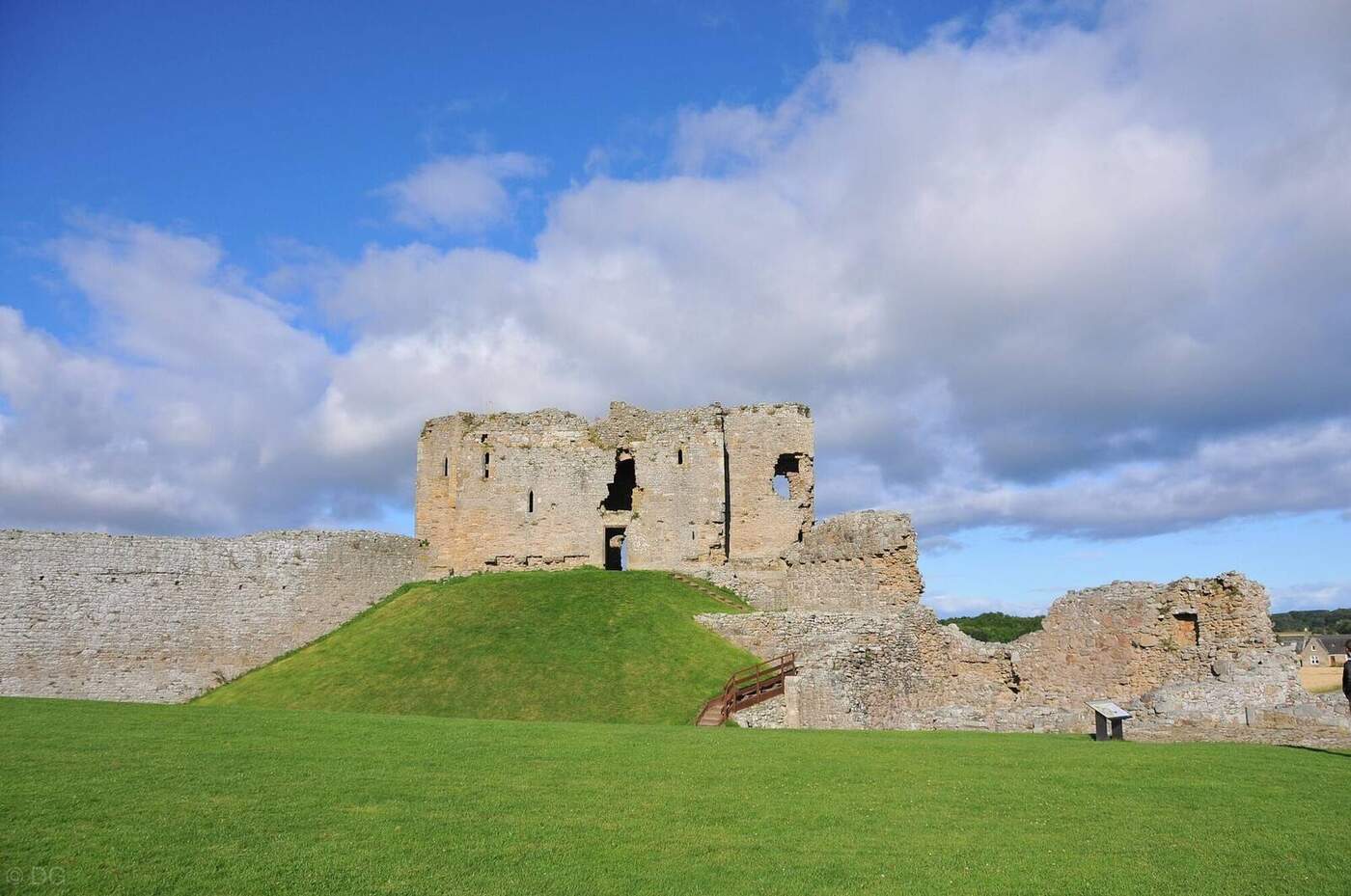
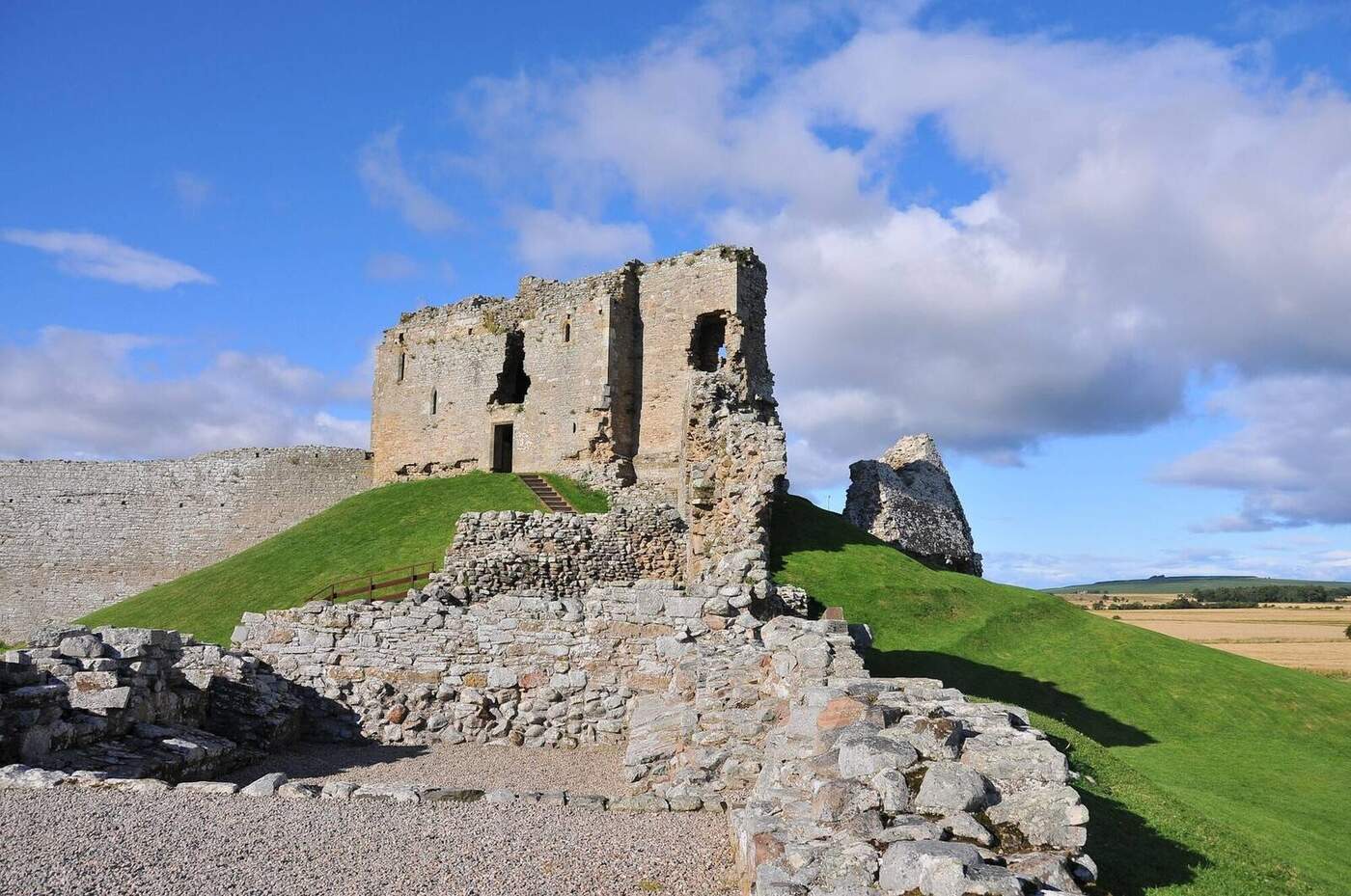
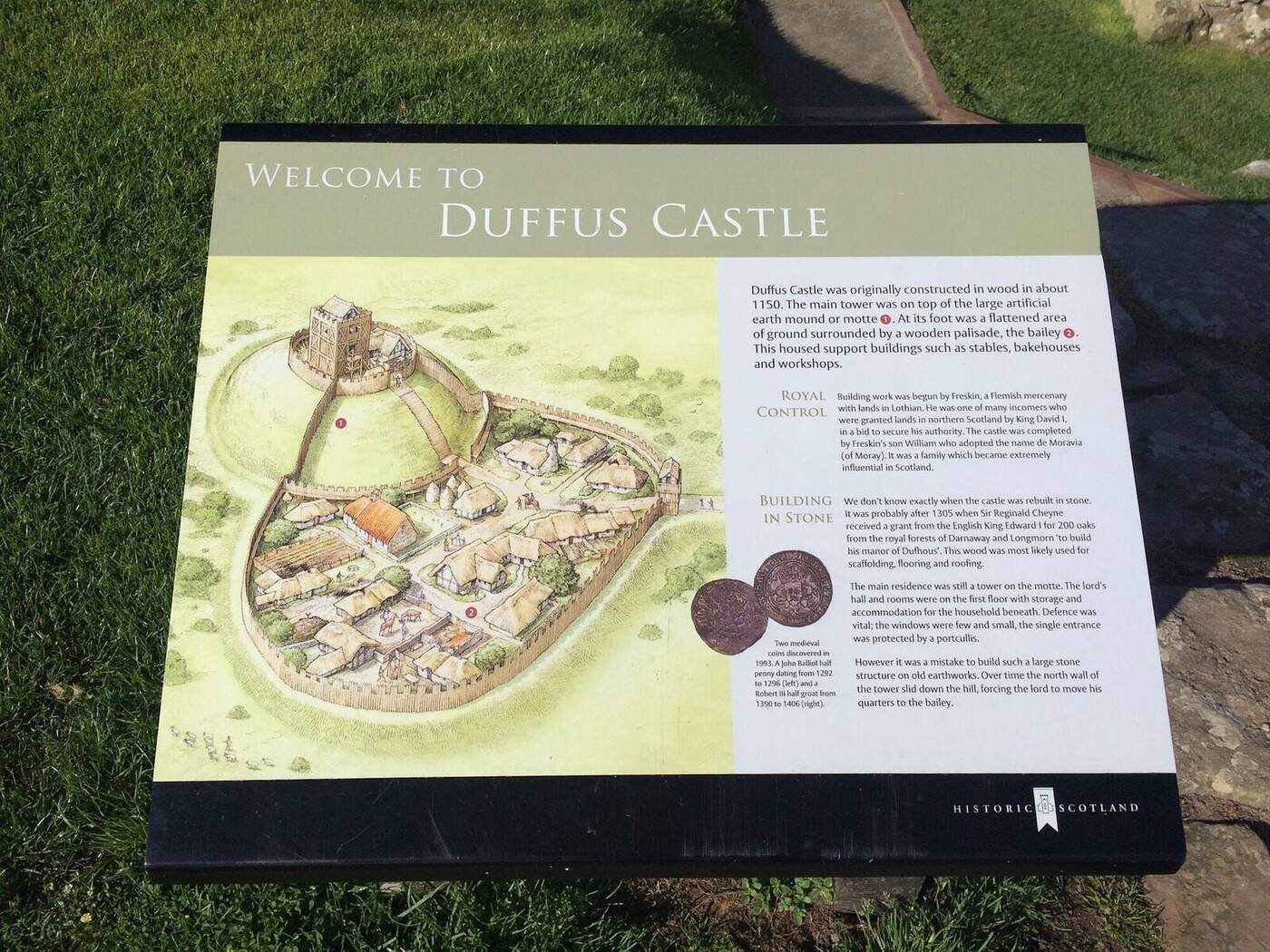
Duffus Castle appears to sit on a hill, but the hill is part of the castle. Its huge artificial motte rises from the flat Moray landscape, carrying broken stonework that tells a wonderfully visible story of structural failure.
Before the stone keep, a timber stronghold occupied the mound. Few places make the evolution—and risk—of building on an old motte so easy to grasp.
The height gives wide views and a clear relationship between the upper mound and lower bailey. Walk the earthwork before concentrating on the masonry.
That simple circuit reveals two castles in one place: an earlier timber layout and the later stone residence that reused it.
Around 1150, the Flemish settler Freskin established a motte-and-bailey castle here. His descendants adopted the name de Moravia and became an important northern family.
The first castle was mainly timber. The absence of stone walls from that phase does not make the mound a natural hill or an empty prehistory.
02 / VISUAL JOURNAL
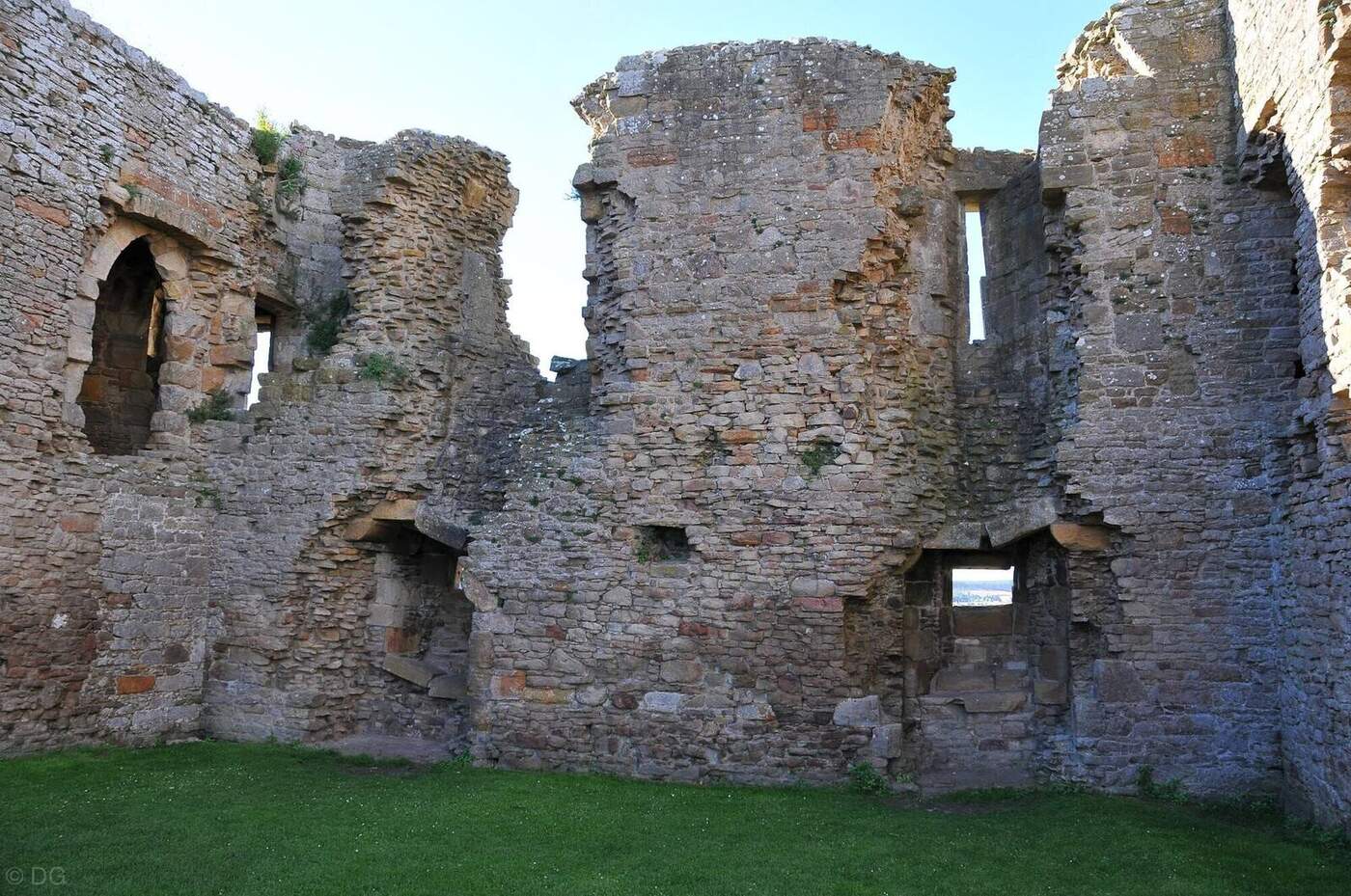
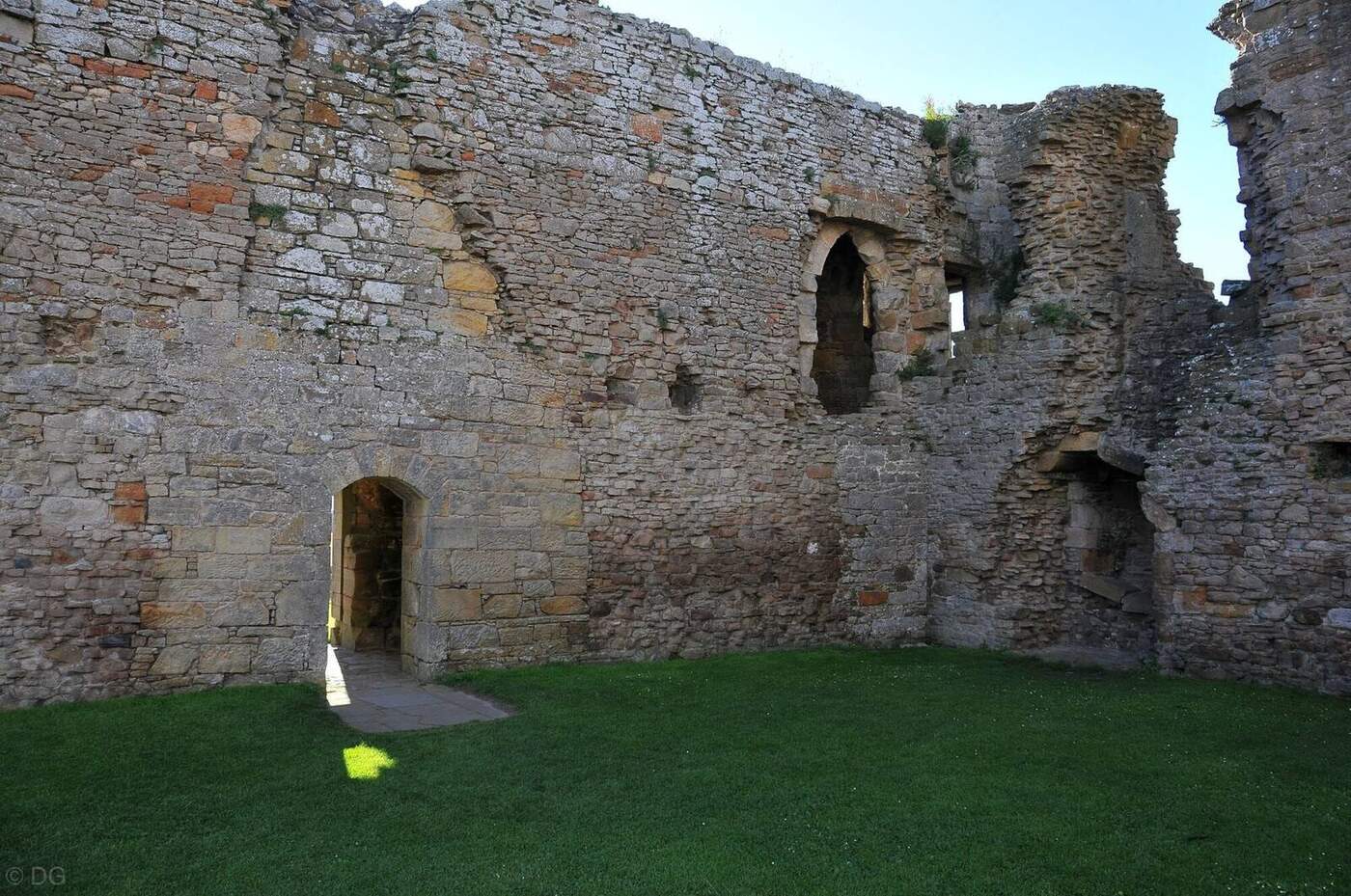
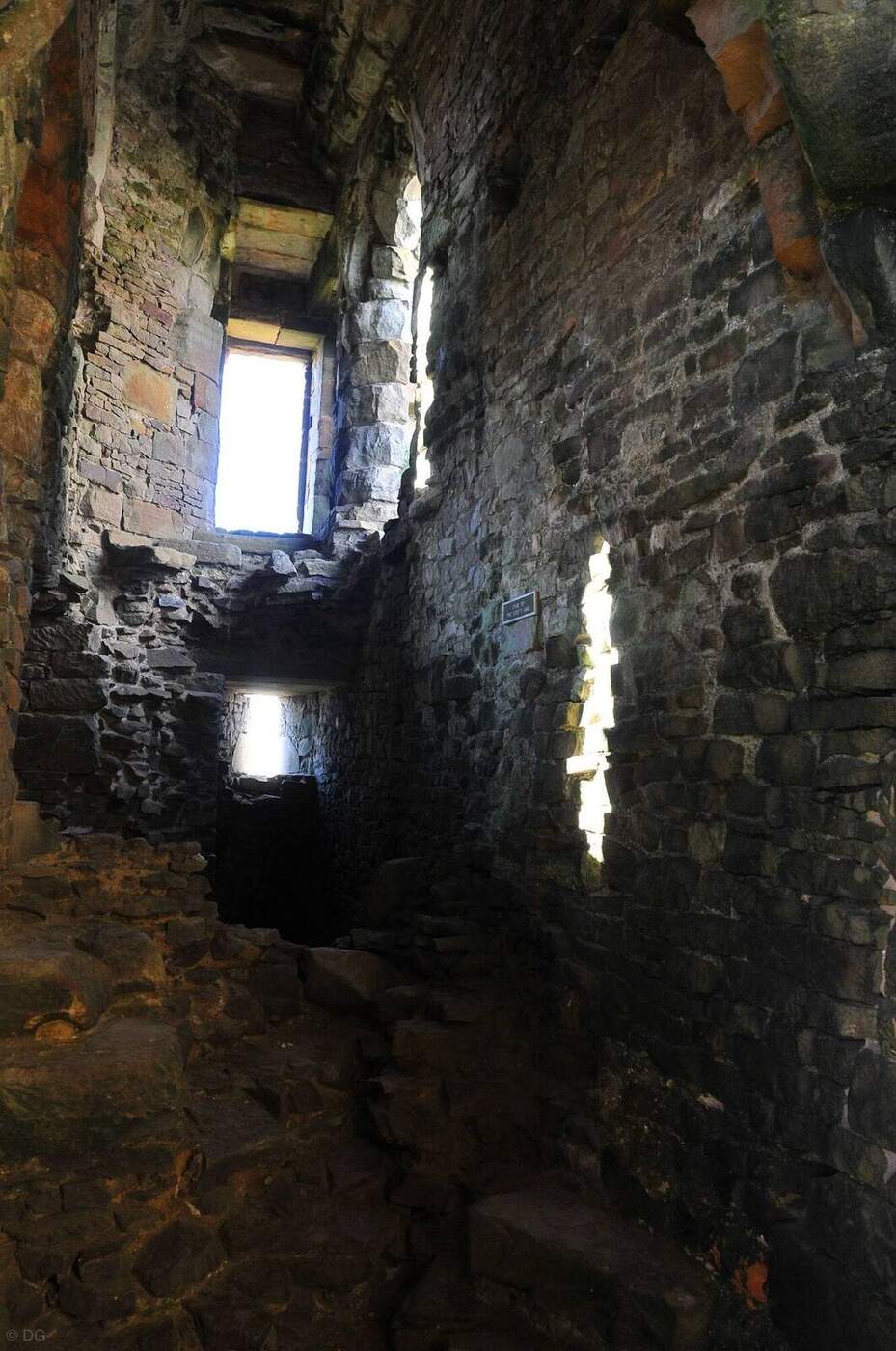
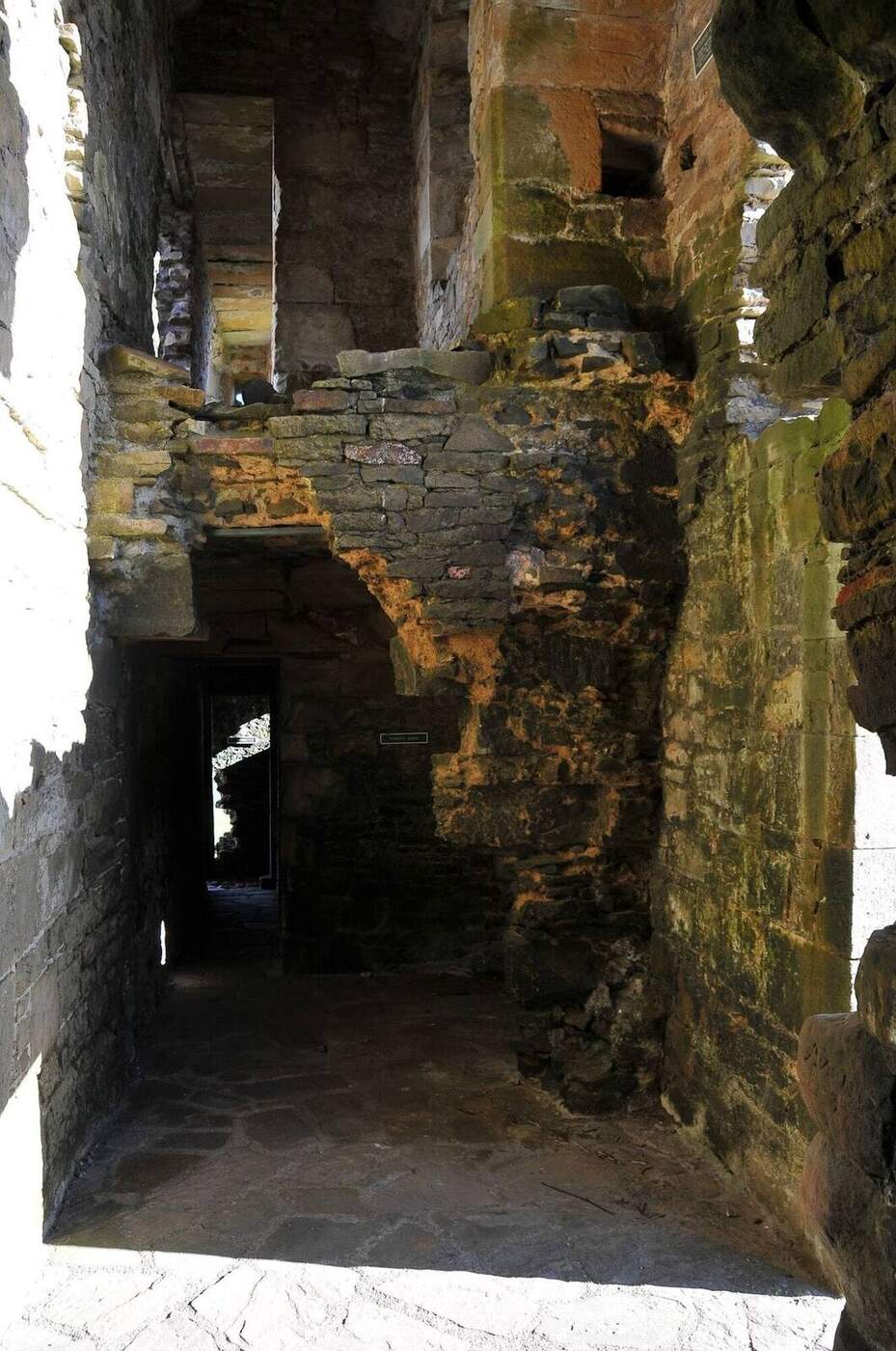
Every photograph on this page was taken by CastleScotland during visits to the site.
01 / THE STORY CONTINUES
During later Cheyne ownership, a stone castle replaced the timber stronghold. Part of the keep eventually slipped down the side of the motte.
The fallen wall makes a building problem visible at full scale. Masonry brought permanence and weight; the earlier artificial mound did not always provide the support its builders hoped for.
A later domestic range in the bailey provided a hall and cellars. Living space was no longer concentrated solely on top of the mound.
That move turns Duffus from a simple tale of collapse into one of adaptation. The residents worked around the limitations of the old earthwork.
03 / MOMENTS IN STONE
Freskin establishes a timber motte-and-bailey castle. Part of the stone keep slipped down the motte; the later hall stood in the bailey.
A stone castle replaces the timber stronghold during Cheyne tenure. The mound and bailey preserve the layout of the earlier timber stronghold.
A domestic range in the bailey provides a hall and cellars. Duffus makes the timber phase of medieval fortification unusually easy to imagine.
The stone phase belongs to the late thirteenth or early fourteenth century. The castle had passed to the Cheyne family around 1270, so attributing all stone construction to the de Moravias is misleading. Equally, the dating should not be made more exact than the evidence permits. HES notes a documentary reference to timber supplied for building work, but that is not a complete account of the stone castle’s construction.
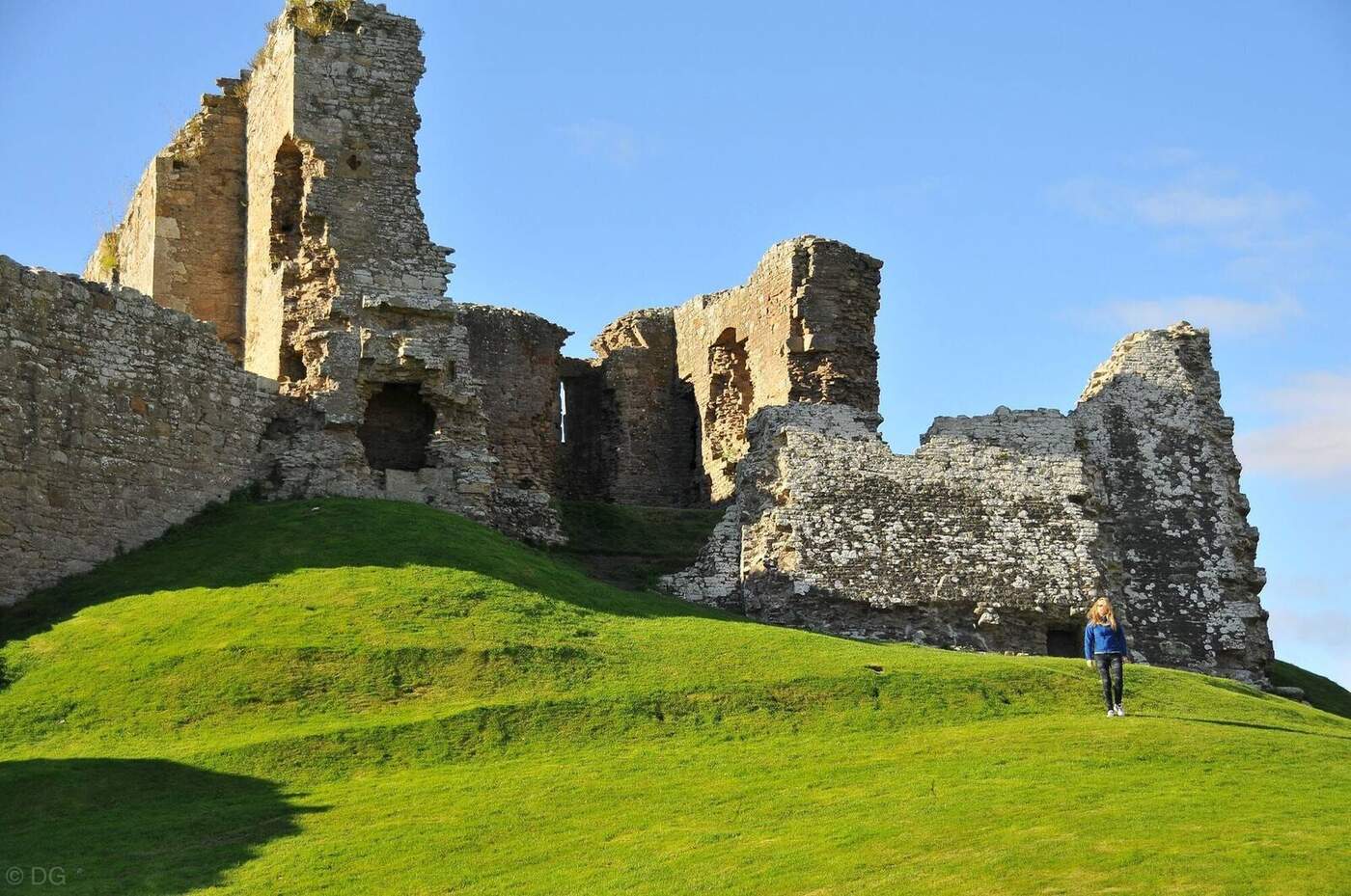
The memorable fallen structure is part of the keep, not the later great hall. The mound proved unstable beneath the heavy tower, and a section of its north wall slipped down the slope. This is a physical failure rather than evidence of an otherwise undocumented siege. When looking at the detached masonry, keep those possibilities separate: the appearance of destruction cannot by itself identify an attacker or a battle.
A later domestic range developed in the bailey, including a hall and cellars. That distinction explains the site more clearly than saying that the great hall slid downhill. The upper keep and lower residential buildings represent different parts of the castle’s story. The household adapted its accommodation as the earlier tower became impractical, and the useful centre of the residence shifted within the enclosure.
Seen from below, the relationship of mound, ditch and bailey is especially clear. Try to include all three in your first view before approaching individual walls. The earthwork gives scale to the surviving stone, and makes the contrast between the early castle and its successor easier to understand. A close photograph of the fallen keep is dramatic, but an overall view better explains why that fragment rests where it does.
The name motte-and-bailey describes the arrangement rather than the ethnicity of every person who lived here. It should not be explained as a castle introduced after a vague Scottish ‘Norman period’. Duffus belongs to a twelfth-century landscape of changing lordship, and its later history continued long after the timber phase. The surviving remains give evidence of adaptation rather than a single moment of architectural failure followed by immediate abandonment.
Compare the fallen stone with the surviving tower above it before looking towards the bailey. That sequence makes the distinction between the keep and the later residential range easier to retain.
Duffus is protected as scheduled monument SM90105. The designation recognises both the visible structures and the archaeological potential of the surrounding ground. Preservation therefore includes spaces that may look empty to a visitor. Conclude the walk by looking back from a distance: the height of the mound, the lower enclosure and the detached stone together tell the story. Avoid climbing unstable masonry, and check the official access information before travelling. The strongest impression is of a residence repeatedly adjusted to its ground, where the medieval earthwork remains as important as the later walls.
08 / EXPLORE NEXT
Find Scottish castles by region, landscape or the stories that bring them to life.
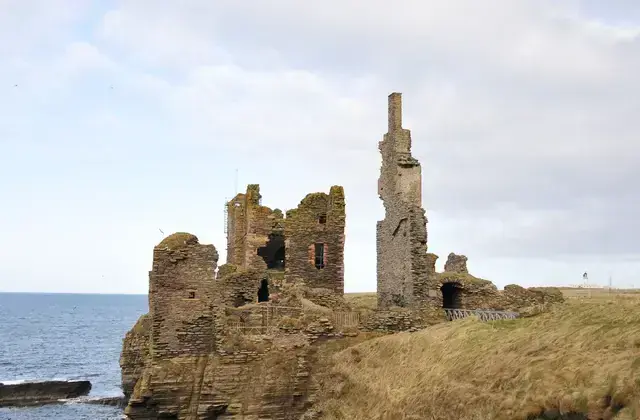 The HighlandsSinclair Girnigoe Castle
 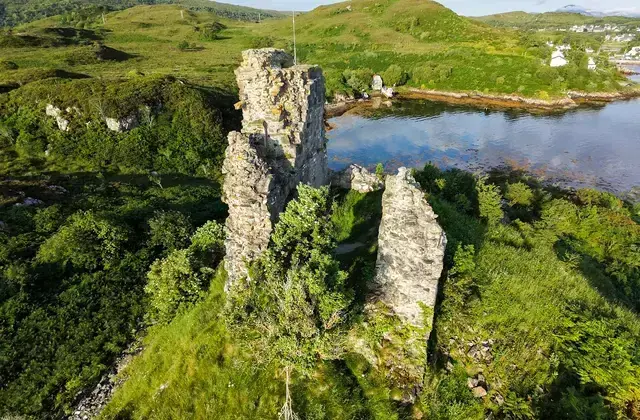 The HighlandsCaisteal Maol
 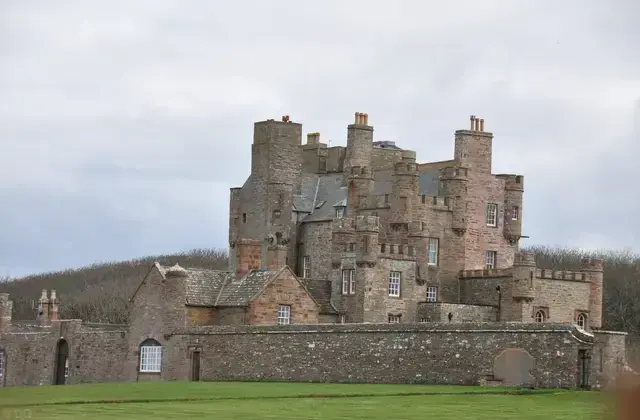 The HighlandsCastle of Mey