TICKETS£7.50
Prices checked with the official visitor page; confirm the live calendar before travel.
View current prices
Adult online£7.50Gate £8.50
Concession online£6.00Gate £6.80
Child 7–15 online£3.50Gate £4.00
Historic Scotland membersFree
 Castle
COURTYARD & GARDENS · FIFE
Eight centuries of rooms. One quiet Fife garden.
PLAN YOUR VISIT
Aberdour, Fife, KY3 0SL
Prices checked with the official visitor page; confirm the live calendar before travel.
Adult online£7.50Gate £8.50
Concession online£6.00Gate £6.80
Child 7–15 online£3.50Gate £4.00
Historic Scotland membersFree
The official HES page lists daily seasonal opening. The address is Aberdour, Fife, KY3 0SL.
Parking information
Use Aberdour station car park, about 500 m from the castle. Spaces by the visitor centre are for mobility needs; contact the castle first.
Parking sources checked · 11 October 2026
There are historic stairs and uneven surfaces. Parking, shop, toilets and a picnic area are listed by the operator; check the live access guidance for garden routes.
A rich, varied visit for architecture, gardens and Outlander, with enough surviving layers to make the disputed early date a beginning rather than the whole story.
WHAT TO EXPECT
01 / THE STORY
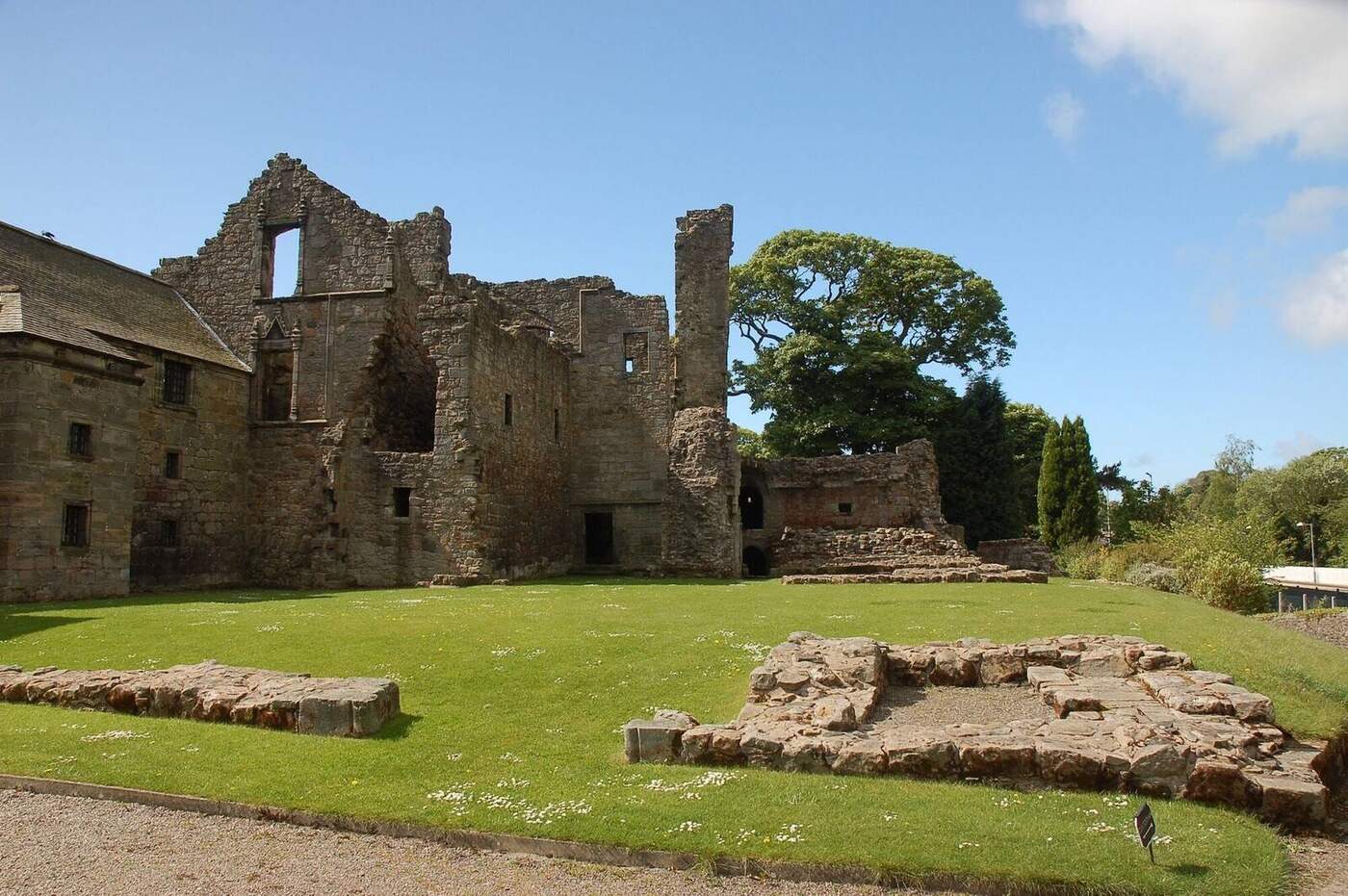
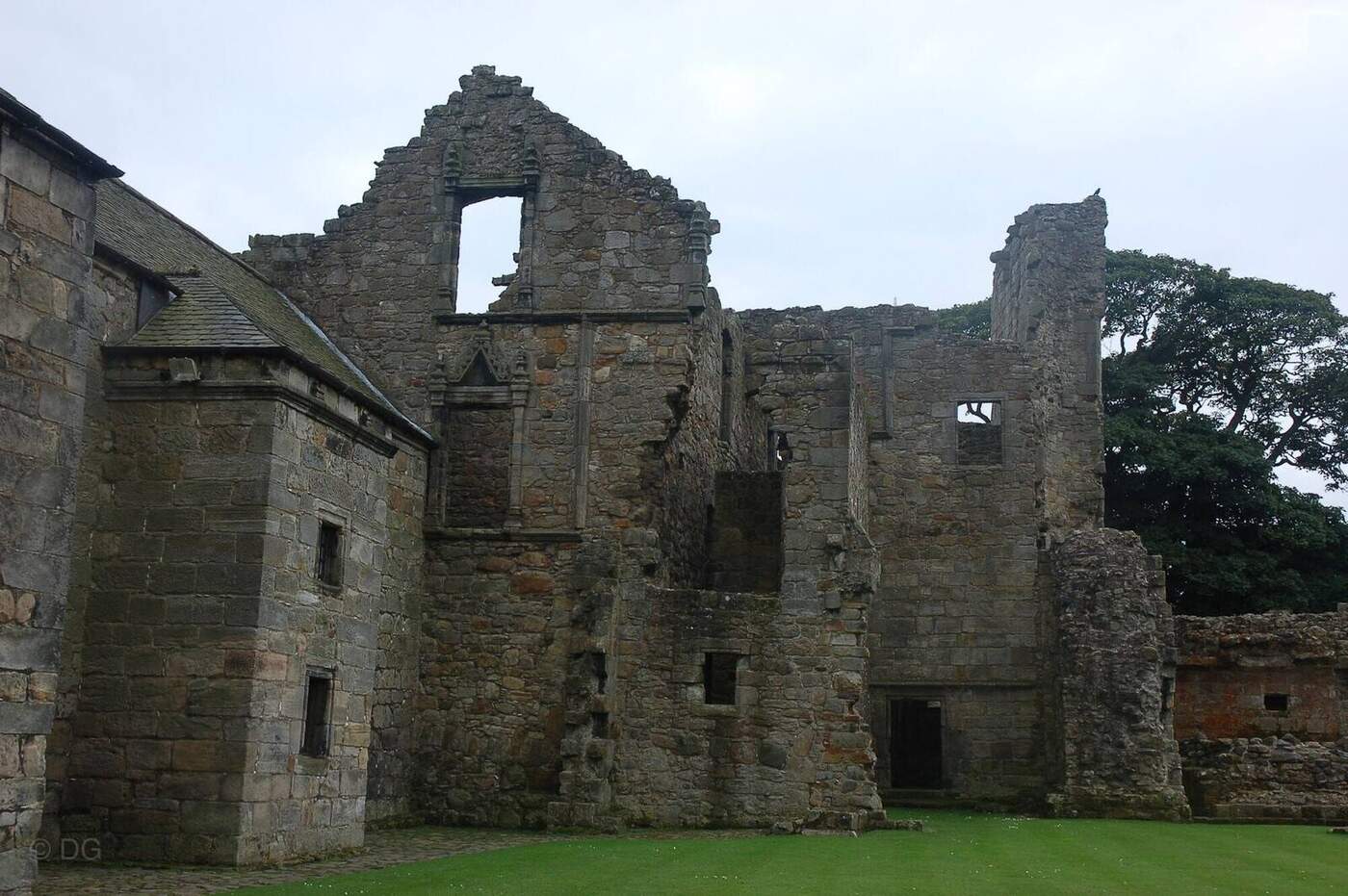
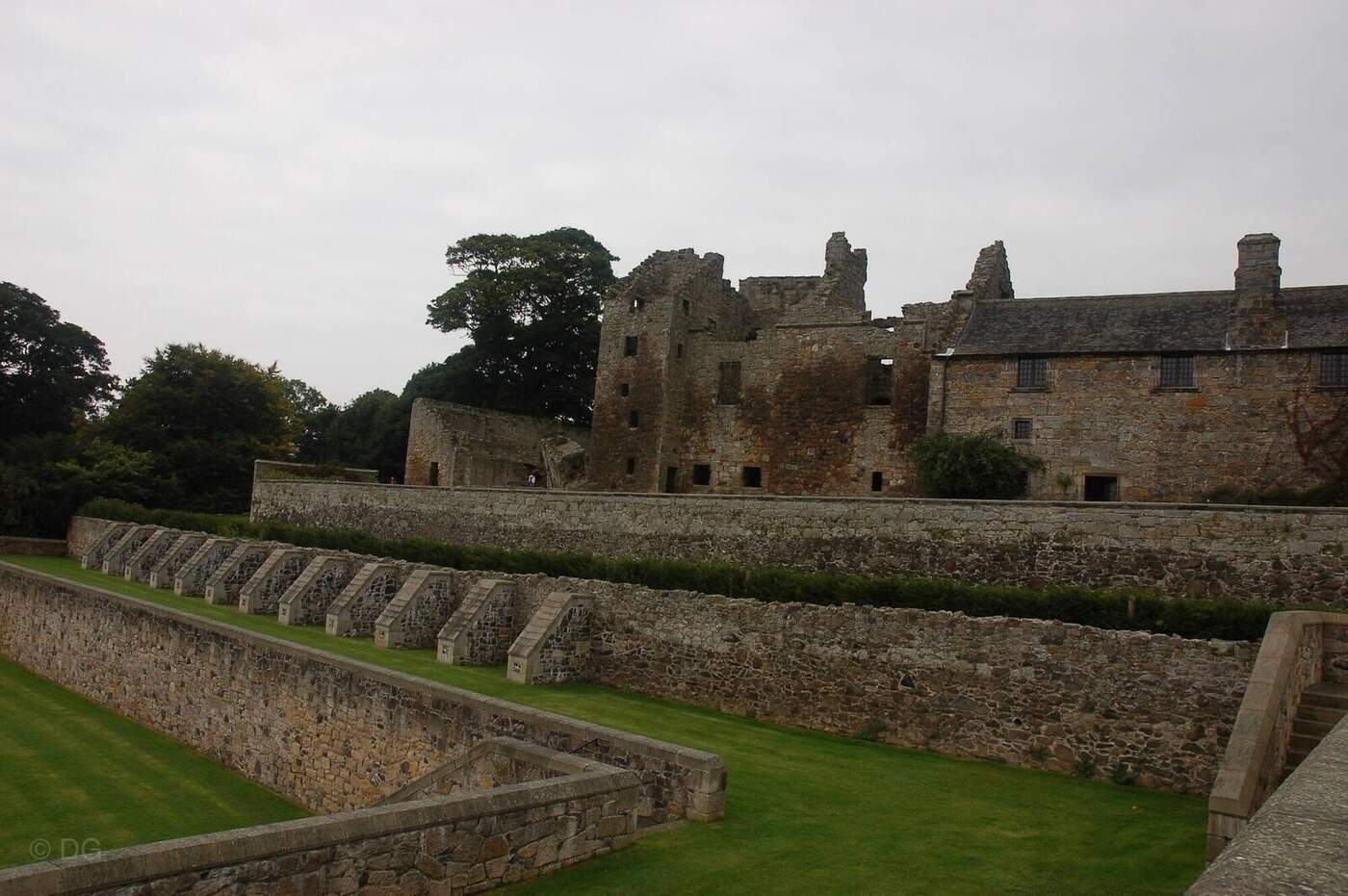
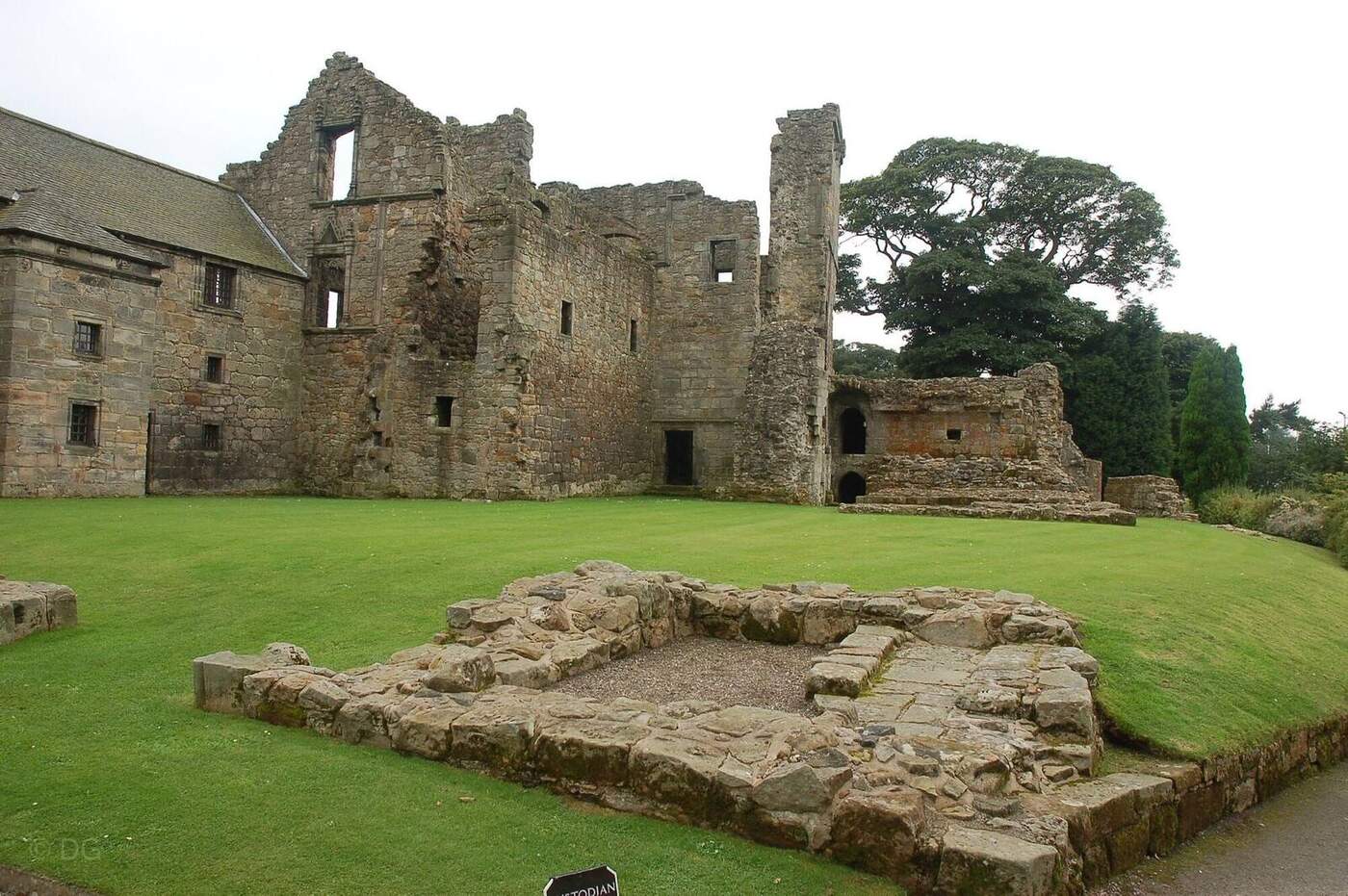
Aberdour does not look like one castle because it was never one fixed idea. An early stone hall, later rooms, terraces, gardens and a great doocot show centuries of changing expectations about noble life.
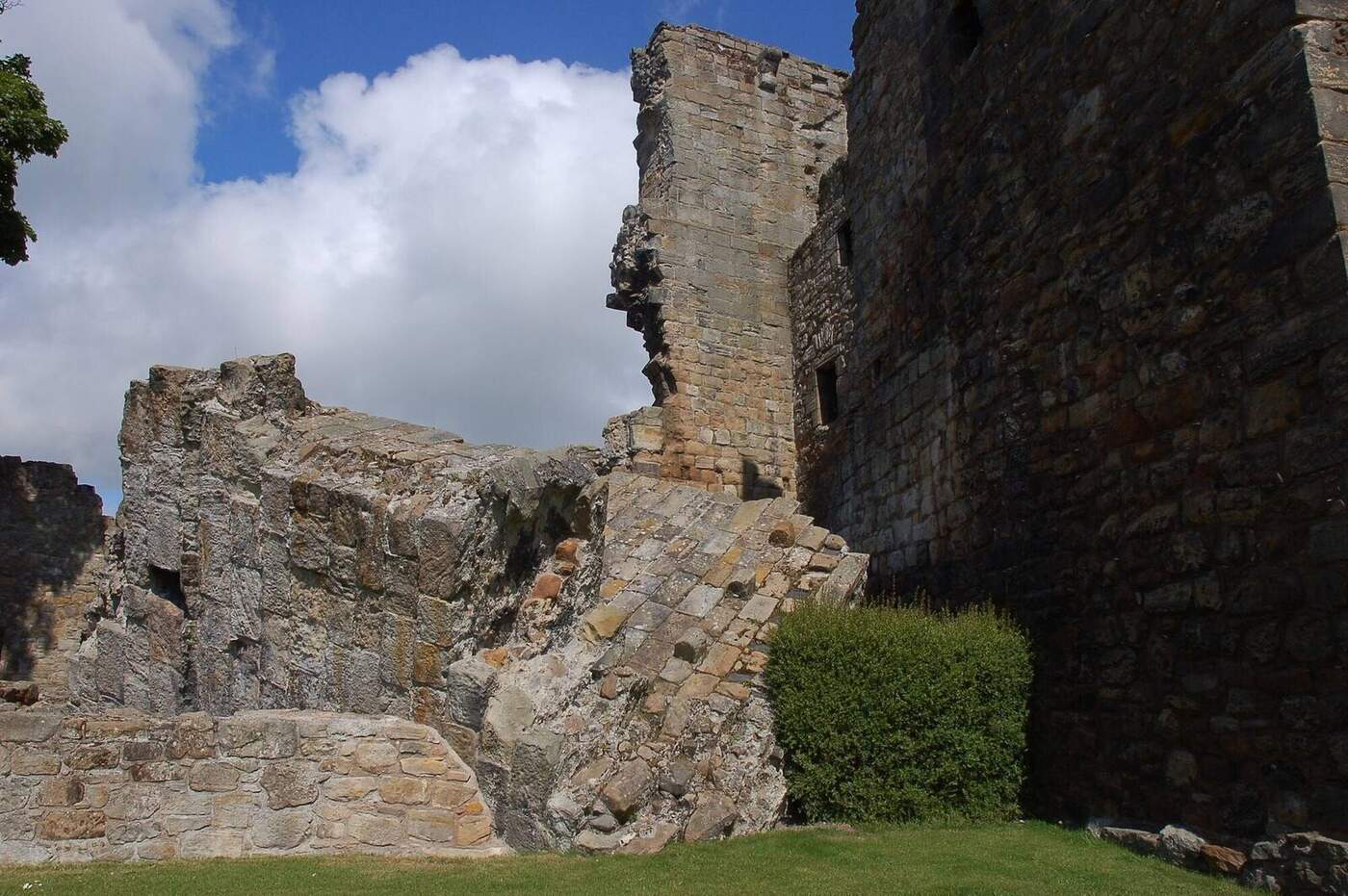
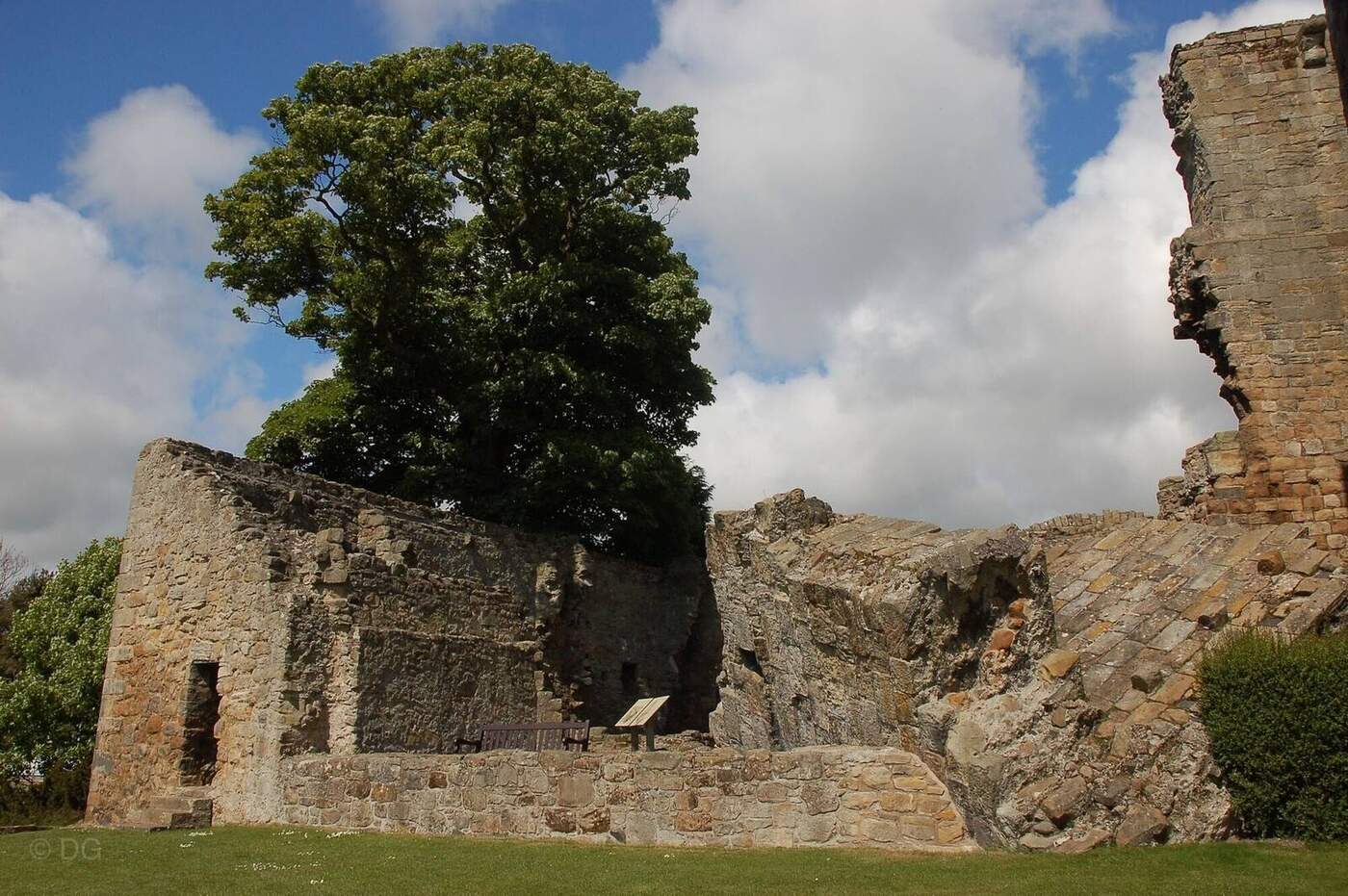
It may contain some of Scotland's oldest surviving castle masonry. The exact date is debated, which makes the layers more interesting than a race for the single oldest title.
The pleasure comes from contrast: bare early masonry beside more complete later interiors, then formal grounds opening towards the Forth.
Follow the sequence instead of searching for one perfect façade. Each part shows a different answer to the question of how a powerful household should live.
Historic Environment Scotland allows an early or mid-twelfth-century origin for the hall-house, while the monument record uses around 1200.
Calling it one of Scotland's oldest surviving stone castles is defensible. Giving it an exact foundation year—or an uncontested first place—is not.
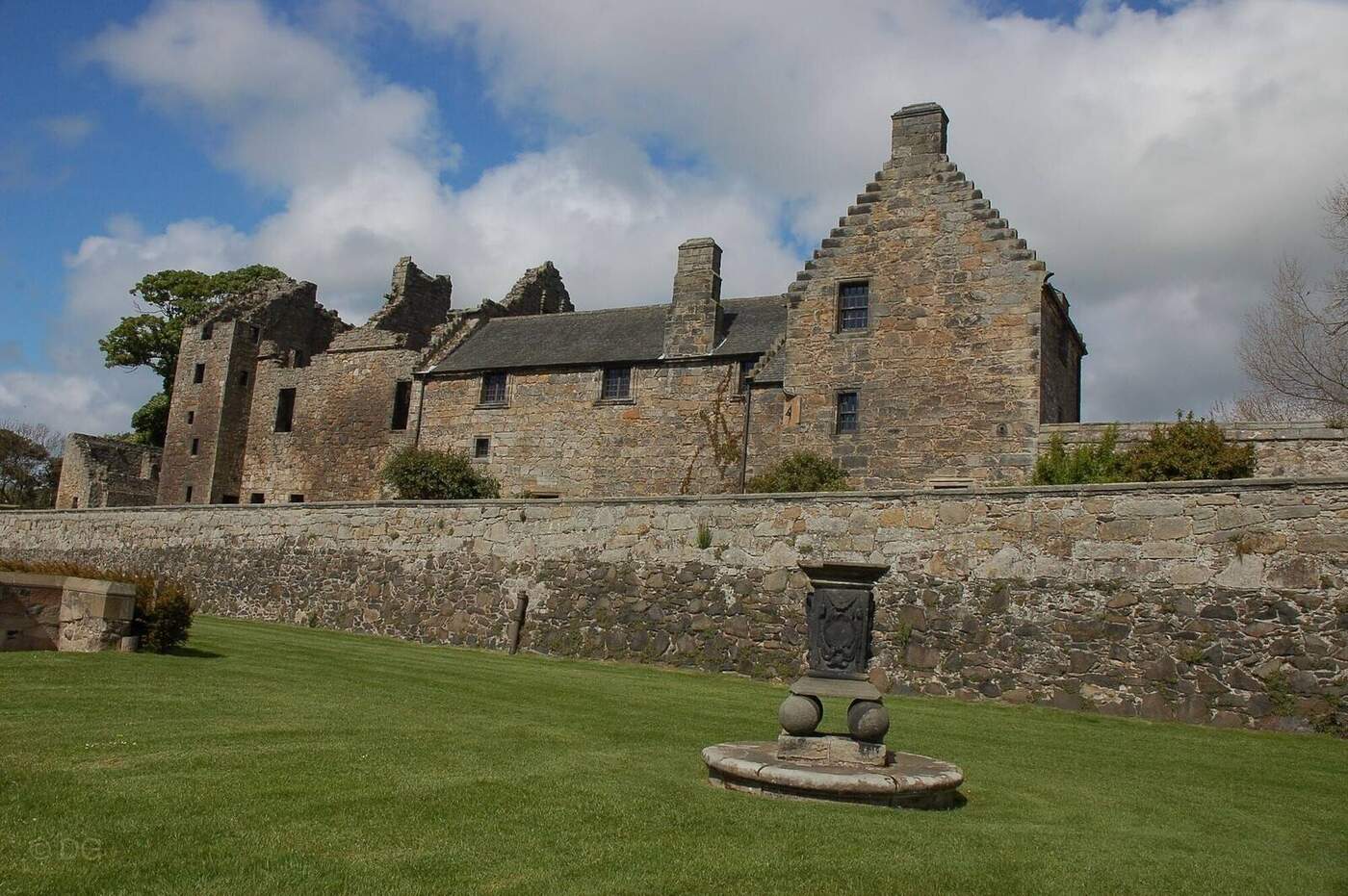
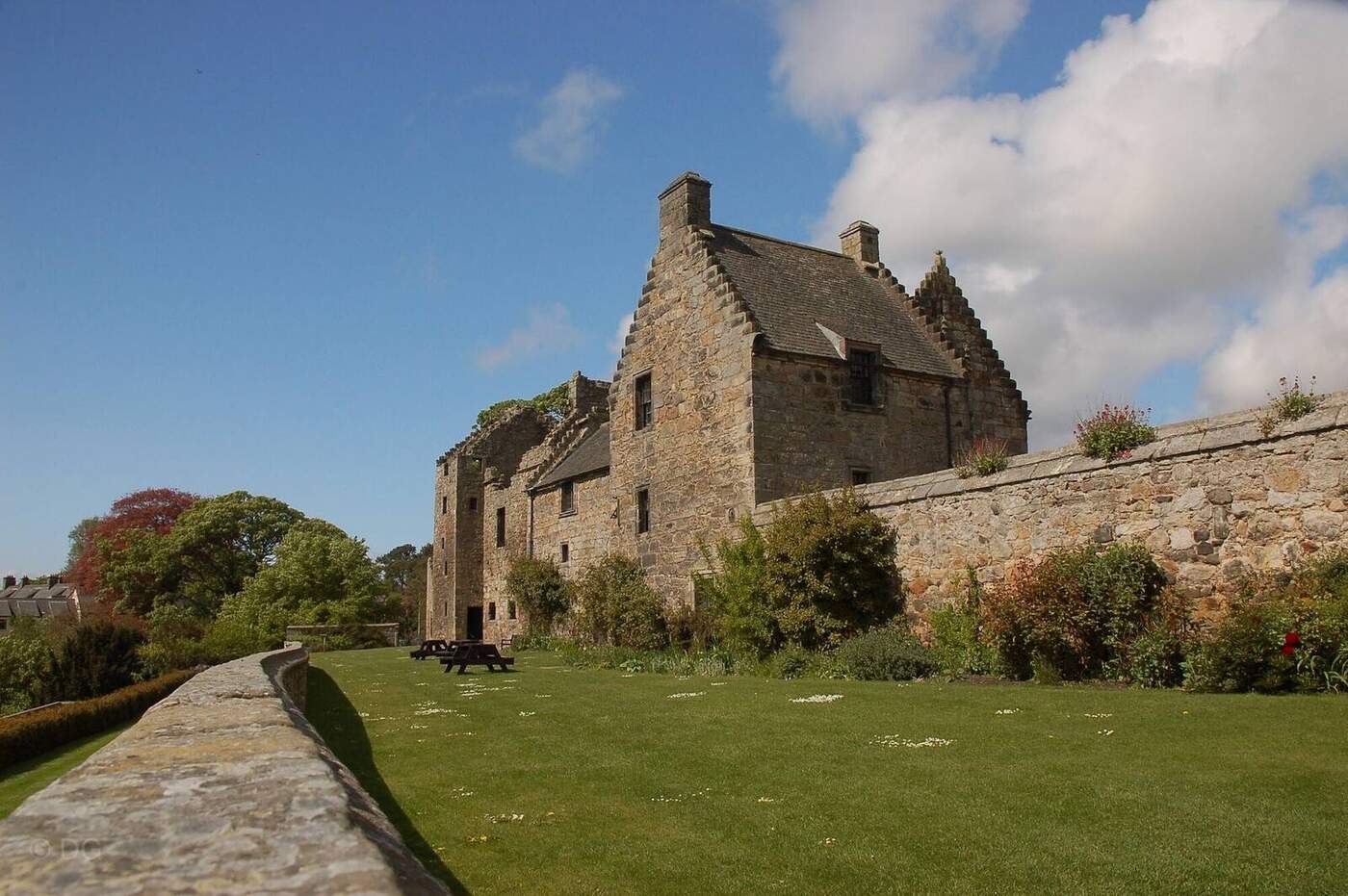
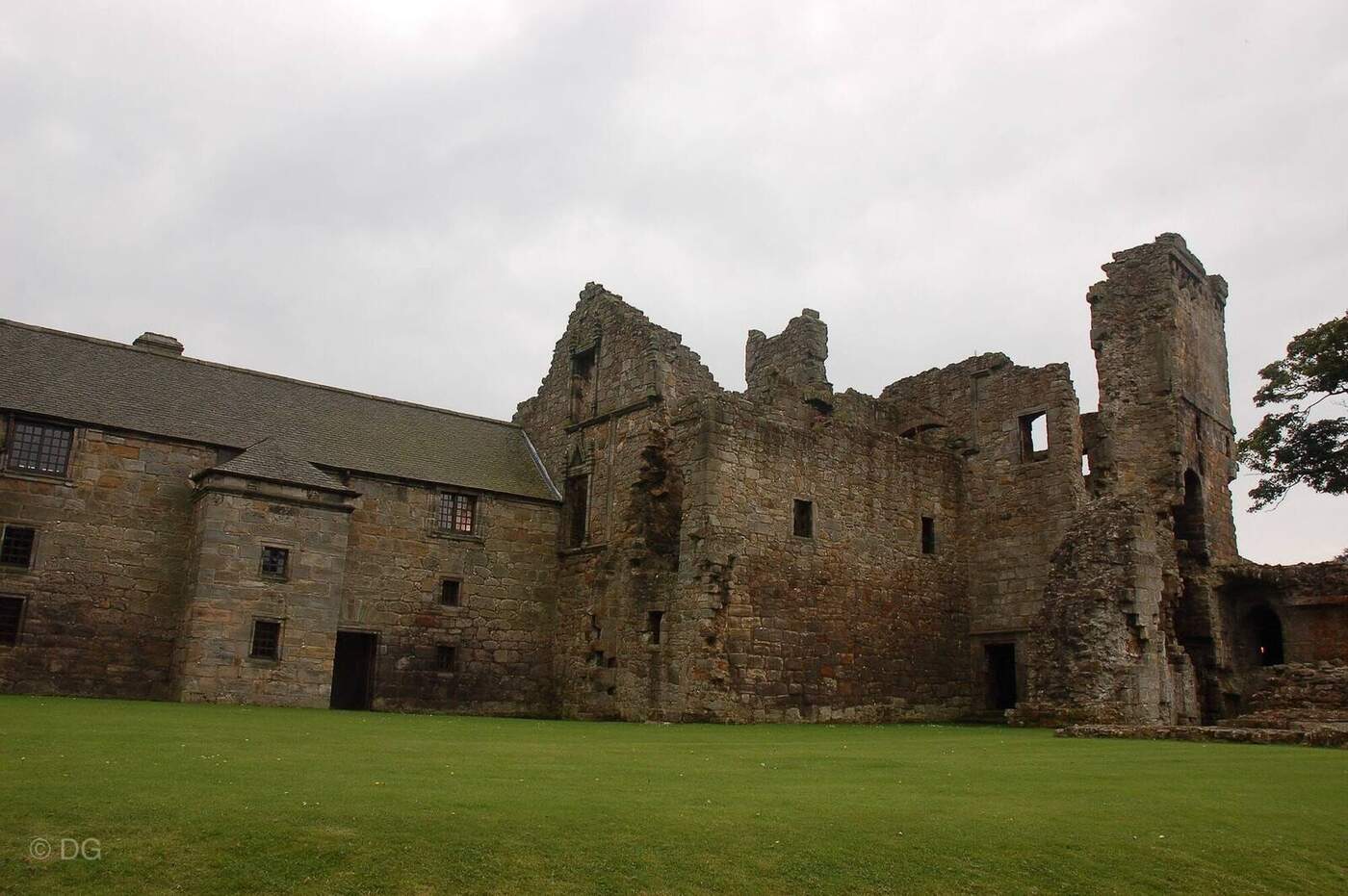
The early hall-house was joined by later Douglas and Morton accommodation. The more comfortable eastern range kept the old core inside an evolving residence.
Look for changes in window size and circulation. They reveal domestic priorities more clearly than a list of owners.
02 / VISUAL JOURNAL
Every photograph on this page was taken by CastleScotland during visits to the site.
10 of 12 photographs
01 / THE STORY CONTINUES
Painted decoration in the later apartments offers an unusually intimate contrast with the roofless western ruin. Colour once belonged inside Scottish castles alongside stone and timber.
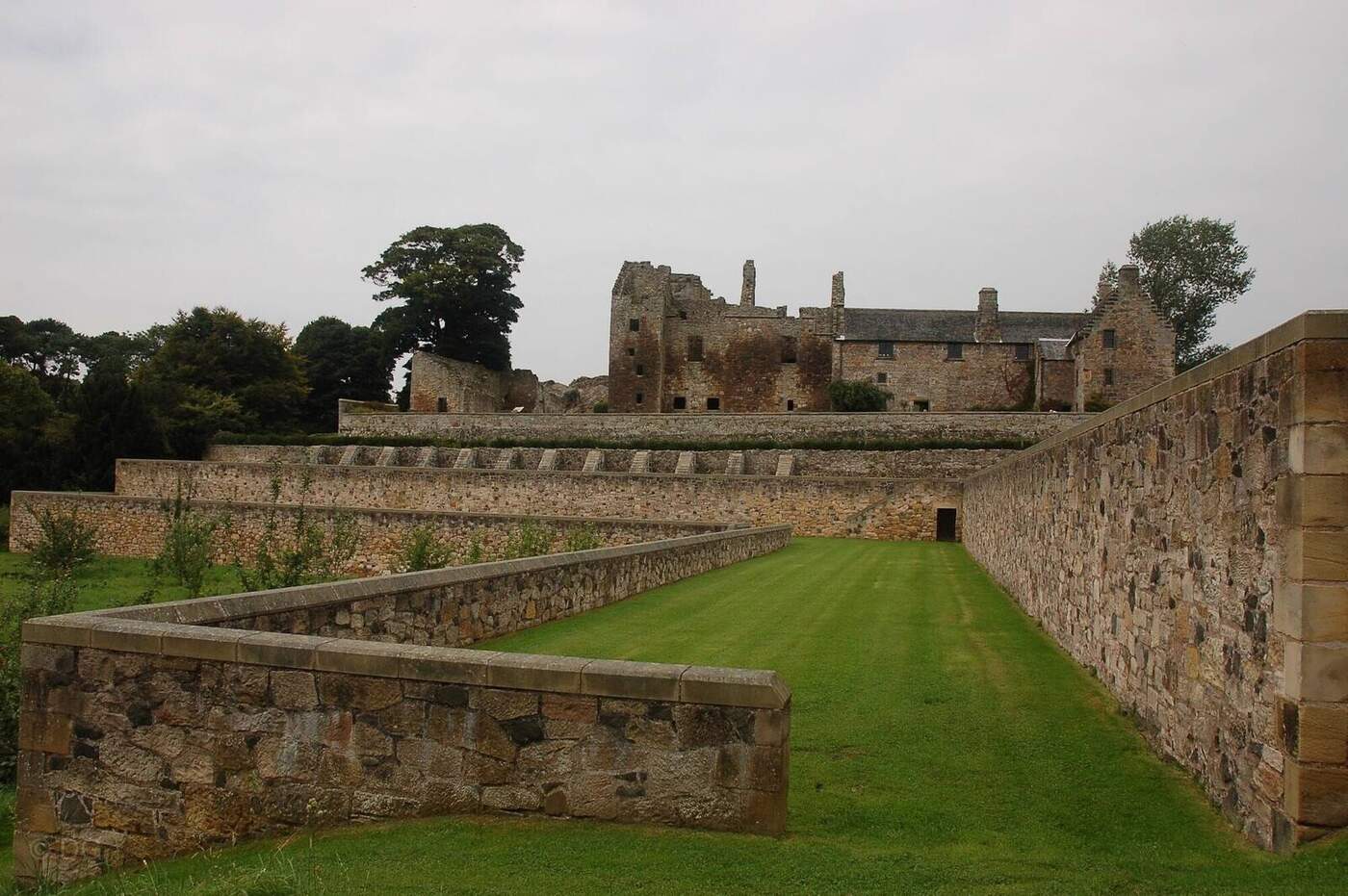
The terraces, gardens and beehive-shaped doocot widen the household story from private rooms to food, display and landscape.
Outlander used Aberdour for the monastery of Sainte Anne de Beaupré, where Jamie recovers after Wentworth Prison. The screen location is Scottish even though the story has moved to France.
When you visit, notice how framing turns domestic castle spaces into a religious retreat—and how much of the real site remains outside the shot.
03 / MOMENTS IN STONE
The hall-house forms the early core; its precise date remains debated. Successive ranges record changing ideas of home.
The property passes to the Douglases, whose descendants develop the residence. Historic terraces and later conservation both shape today’s garden.
The castle enters state guardianship after a long history of residence and reuse. The surviving painted ceiling adds an intimate view of the later residence.
The Mortimer, Randolph and Douglas families all belong to Aberdour's story. The Douglases acquired the property in the fourteenth century, and later generations transformed its appearance. They did not build everything visitors see in one campaign. Raising and adapting the early hall-house created a taller residence, while additional ranges provided new accommodation. Walking between them gives a sense of ambitions accumulating around an inherited building rather than replacing it completely.
James Douglas, fourth earl of Morton and regent during James VI's minority, was associated with the later-sixteenth-century central range. His career places the house within the politics of the period, but it does not prove every royal anecdote attached to it. A claimed visit by Mary, Queen of Scots in 1564 cannot currently be treated as established here. Aberdour's connection to powerful people is substantial enough without presenting an unverified stay as fact.
The early-seventeenth-century east range continued the movement towards more expansive domestic space. Its long gallery and surviving painted ceiling offer a different impression from the broken medieval core. Look at the scale of the rooms and the relationship between decorative finishes and everyday circulation. The contrast is a reminder that a castle could remain an inherited symbol of authority while its owners pursued changing expectations of comfort and hospitality.
The gardens deserve the same attention as the buildings. Sixteenth-century terraces descend southwards, and the later walled garden adds another enclosed space. Their appearance today includes conservation and replanting rather than an untouched historic planting scheme. Excavations in 1977–80 identified the remains of lower terrace walls. Their reconstruction made the arrangement readable again, allowing visitors to appreciate how levels, views and boundaries extended the residence into the landscape.
Fire and changing residential priorities gradually reduced the castle's role. The garden history records damaging fires in 1688 and 1715, followed by the family's move to the neighbouring property renamed Aberdour House in 1725. This did not mean that every room immediately fell silent. Parts of the east range continued in other uses, including as accommodation and a schoolroom, before the castle entered state guardianship in 1924. Decline and reuse overlapped rather than forming a single abrupt ending.
Aberdour is protected as scheduled monument SM90002, with its designed landscape separately recognised in the national inventory. For a satisfying visit, compare the oldest masonry with the later rooms, then step outside to understand their relationship to the terraces and dovecot. Let the garden slow the pace. The site's domestic character is not a lack of history; it is the clearest route into a long story of adaptation, status, work and changing taste. The surviving sequence rewards attention to small details as much as a photograph of the whole.
Compare this stop with the best castles in and near Edinburgh, including city landmarks and coastal day trips. Use our map of Scottish castles to check locations before choosing your route.
08 / EXPLORE NEXT
Find Scottish castles by region, landscape or the stories that bring them to life.
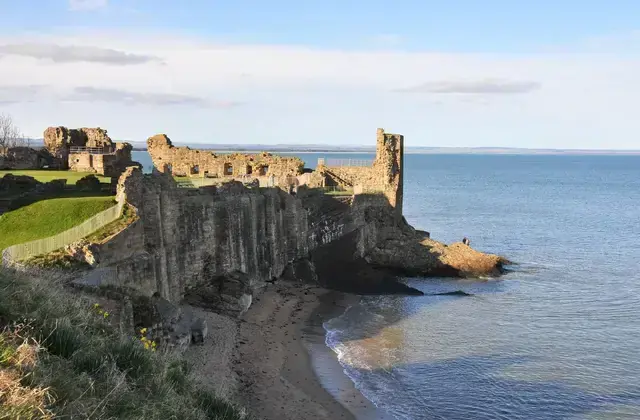 The Kingdom of FifeSt Andrews Castle
 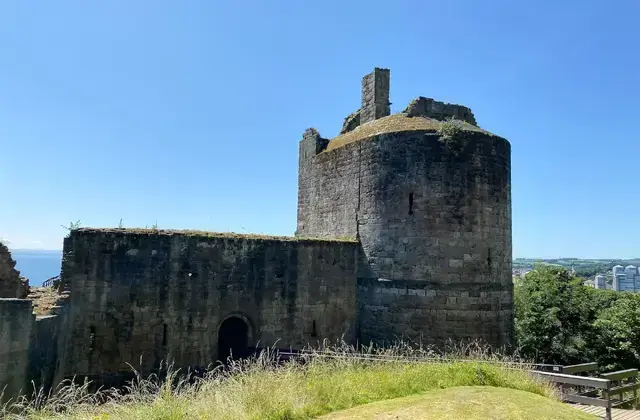 The Kingdom of FifeRavenscraig Castle
 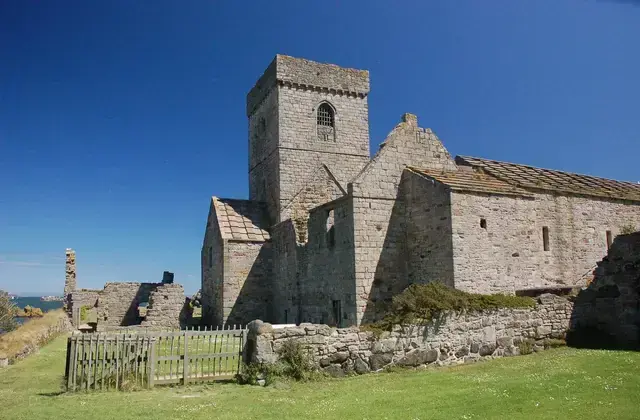 The Kingdom of FifeInchcolm Abbey