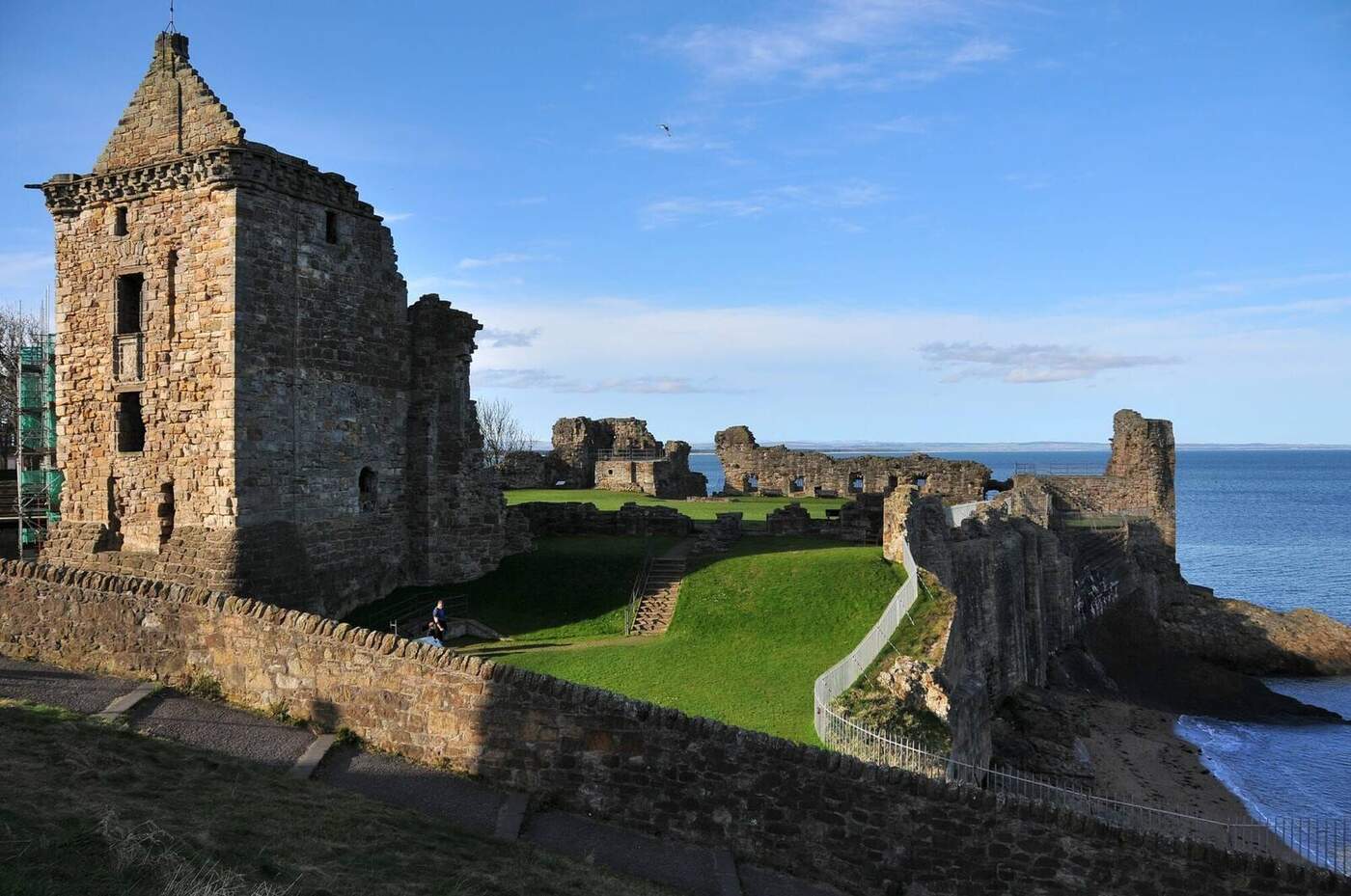
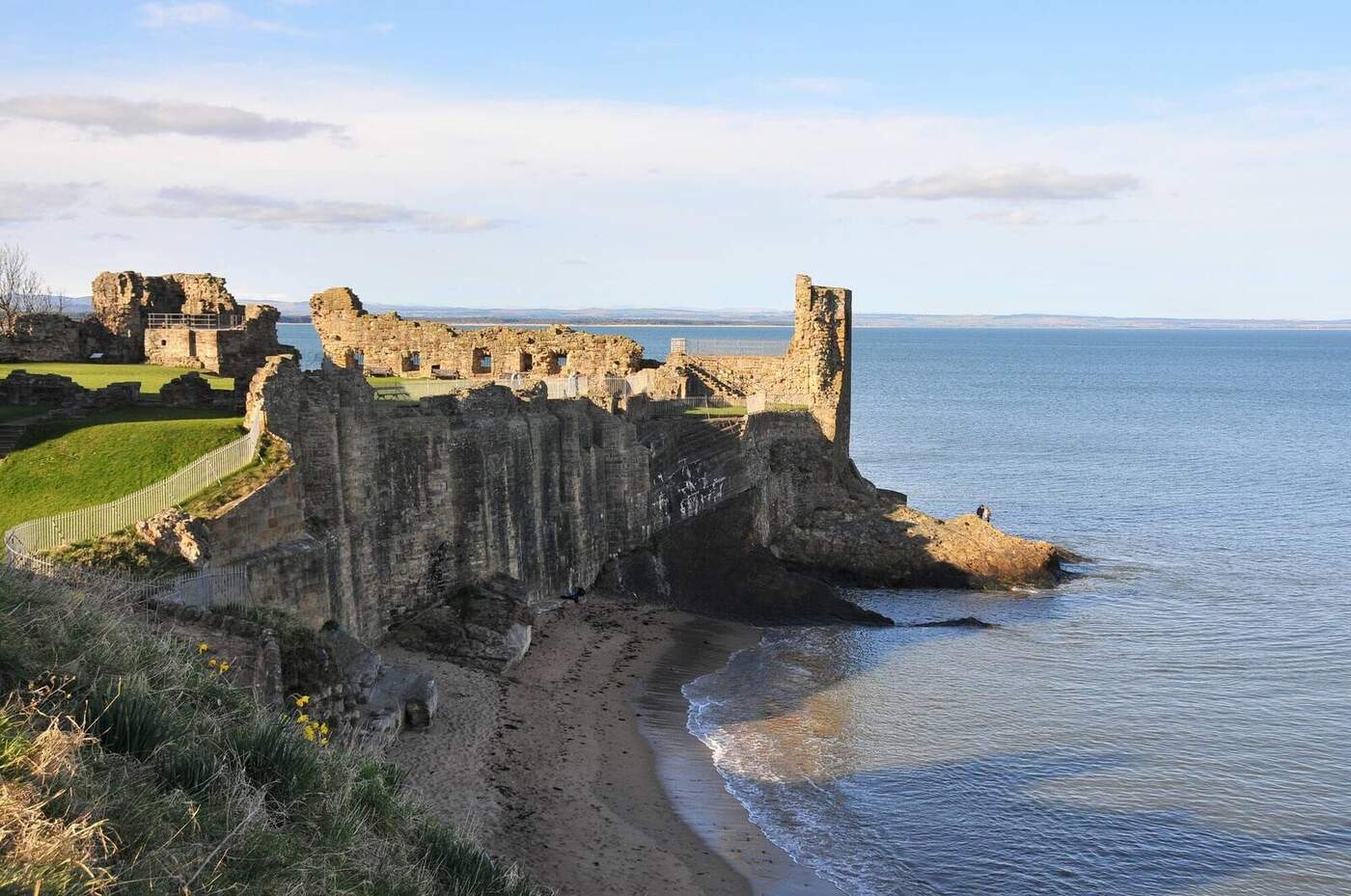
The first castle developed around 1200. Much of the visible courtyard arrangement, however, belongs to rebuilding under Bishop Walter Traill around 1400, after destruction during the Wars of Independence. These dates describe different stages. Treating every standing wall as part of the first foundation would flatten a complicated building history into a single, misleading moment.
The most dramatic crisis began in 1546. The Protestant preacher George Wishart was executed outside the castle in March; in May, opponents of Cardinal David Beaton entered the stronghold and murdered him. The violence involved both religious conflict and personal hostility. The murderers and their supporters then occupied the castle, creating a stronghold that the Scottish government sought to recover.
Regent Arran’s besieging troops dug the mine towards the castle. The Protestant defenders dug the countermine to intercept it. That distinction is essential: the attackers wanted to undermine or penetrate the defences, while the men inside were trying to prevent their success. The surviving passages offer an unusually direct encounter with the physical work of a siege, rather than simply a story of cannon and surrender.
The siege ended in 1547 after French intervention and bombardment. John Knox, who had joined the garrison, was among those taken into French galley service. His presence connects this small coastal stronghold with the wider history of the Reformation, but he should not be confused with the men who murdered Beaton the previous year.
Archbishop John Hamilton subsequently repaired the castle and created its Renaissance entrance range in the 1550s. The building therefore continued to change after the siege. The Reformation of 1560 transformed its circumstances, but did not instantly turn the whole residence into an abandoned ruin. Its decline was a longer process; later removal of stone and losses at the sea cliff also shaped what survives.
The bottle dungeon belongs to the Sea Tower. It is a prison cut into the rock, not a device organising the landward defences. Separating these functions makes the plan easier to understand: rooms and towers could accommodate a household, enforce authority or defend an approach without all serving exactly the same purpose. Some of the eastern range has been lost over the cliff.
Today the castle is a scheduled monument in Historic Environment Scotland’s care. Begin with the courtyard and the changing masonry, then consider where the siege passages lie in relation to the walls. Access to particular areas can change, so consult the official visitor information before travelling. Even when an interior route is unavailable, the contrast between the open sea and the enclosed residence remains powerful. Allow the story to unfold in stages: an episcopal home, a contested stronghold, an attempted renewal and finally the ruin facing the bay.
 Castle
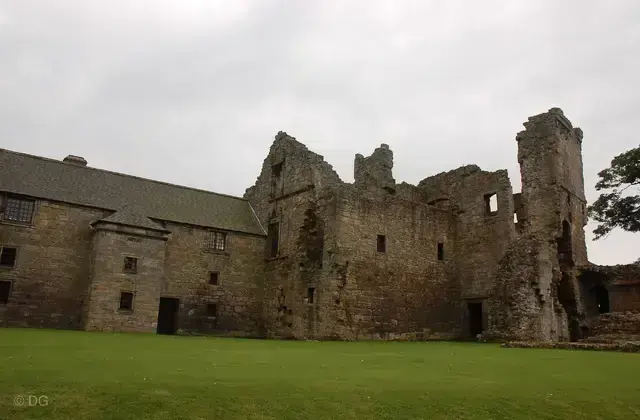 The Kingdom of FifeAberdour Castle and Gardens
  The Kingdom of FifeRavenscraig Castle
  The Kingdom of FifeInchcolm Abbey