Visitor conditions are stated conservatively from current official or local guidance; always confirm before travel.
View current prices
Free exteriorFree exterior viewing from public shoreline routes.
Castle
FIELD GUIDE · THE HIGHLANDS
A Scottish castle story. Read through its landscape.
PLAN YOUR VISIT
Kyleakin, Isle of Skye, IV41 8PL
Visitor conditions are stated conservatively from current official or local guidance; always confirm before travel.
Free exteriorFree exterior viewing from public shoreline routes.
Free exterior viewing from public shoreline routes.
Parking information
Walking guidance starts at Kyleakin village car park, opposite the village green. The coastal approach to Caisteal Maol is affected by high tide. Current parking charges and restrictions are not confirmed; check the signs.
Parking sources checked · 11 October 2026
Rocky shore and tides require care; do not enter the unstable ruin.
A short, scenic Skye walk with a real MacKinnon connection and one of the island’s most memorable toll-collecting legends.
WHAT TO EXPECT
01 / THE STORY
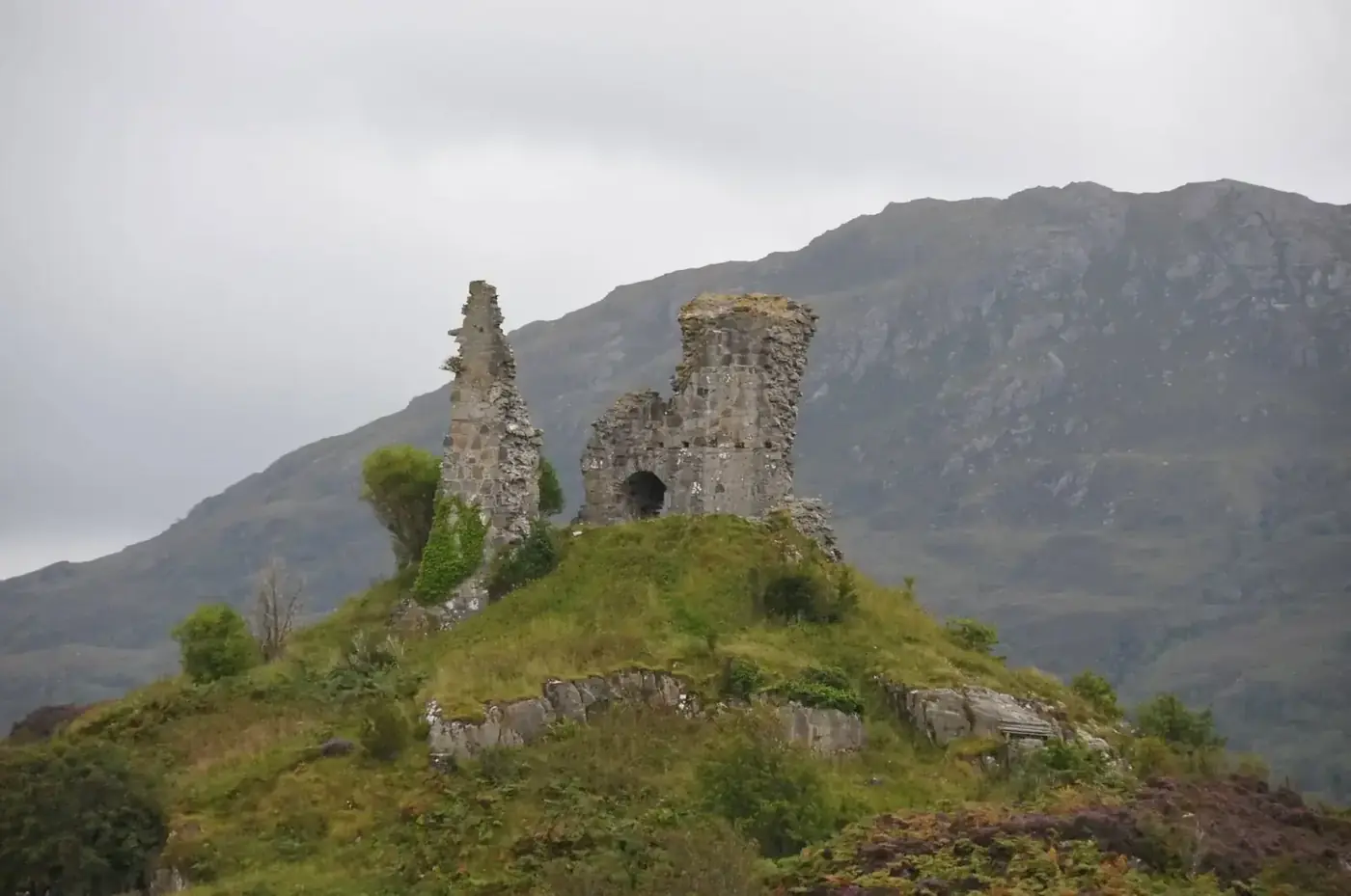
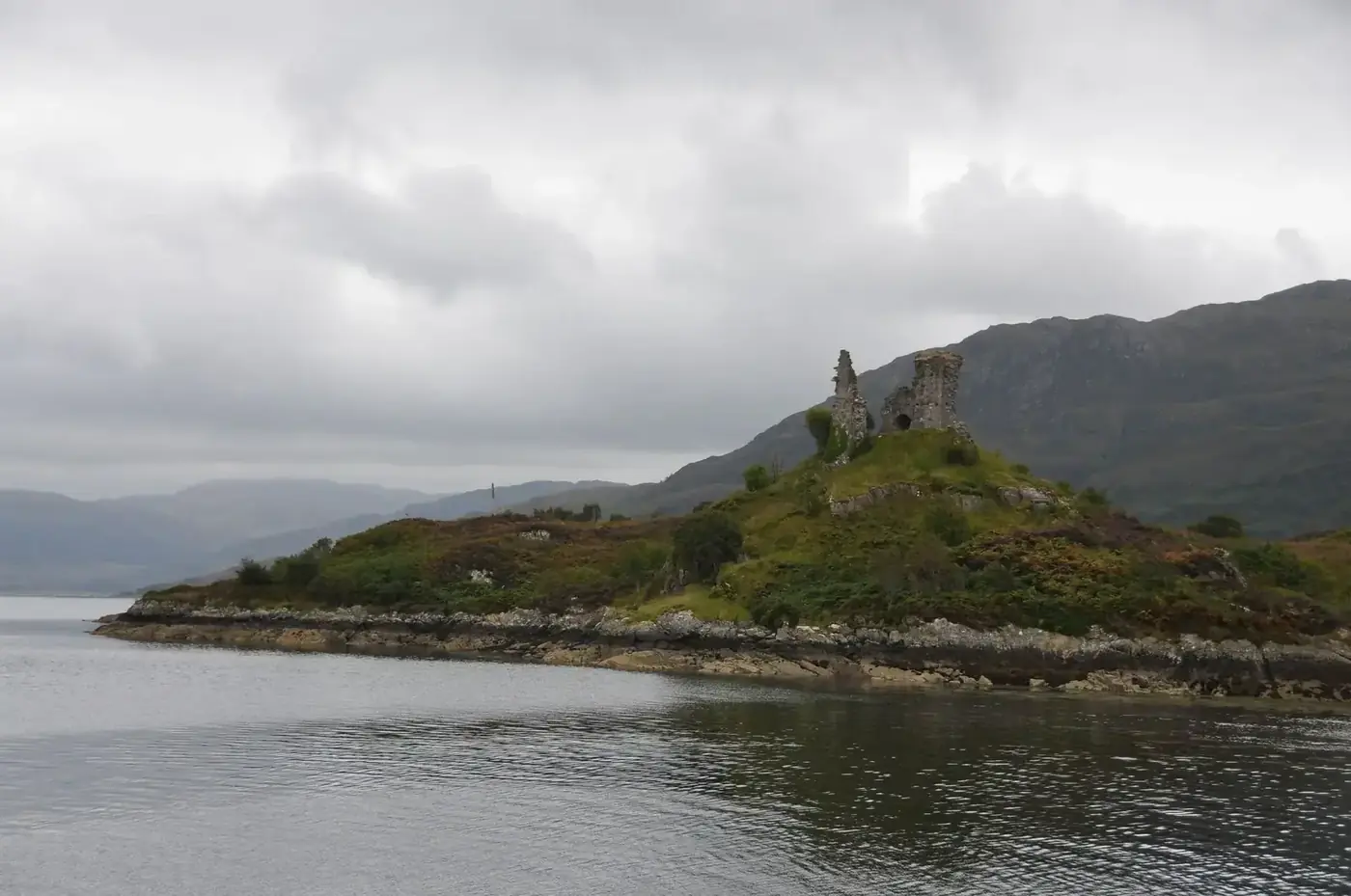
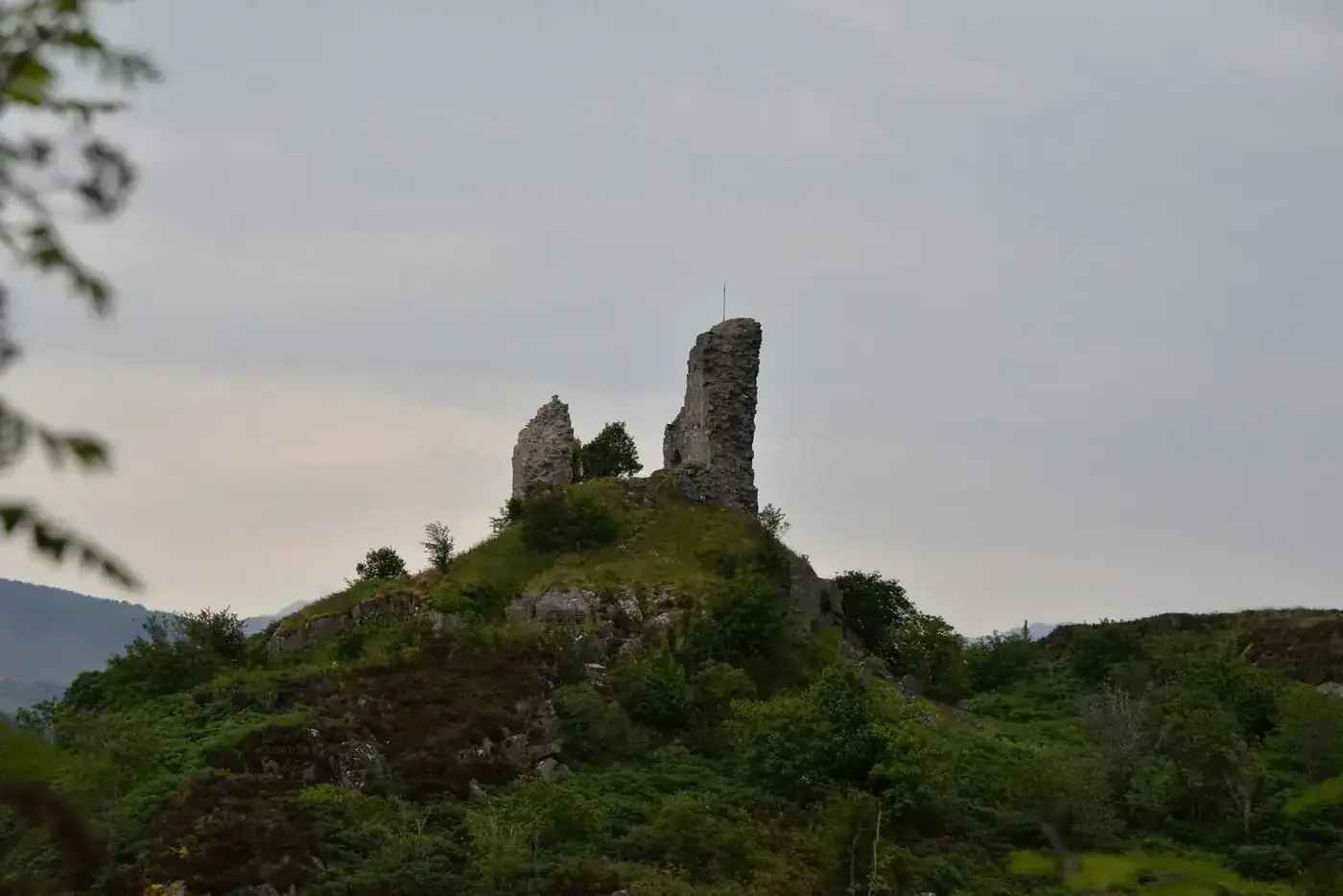
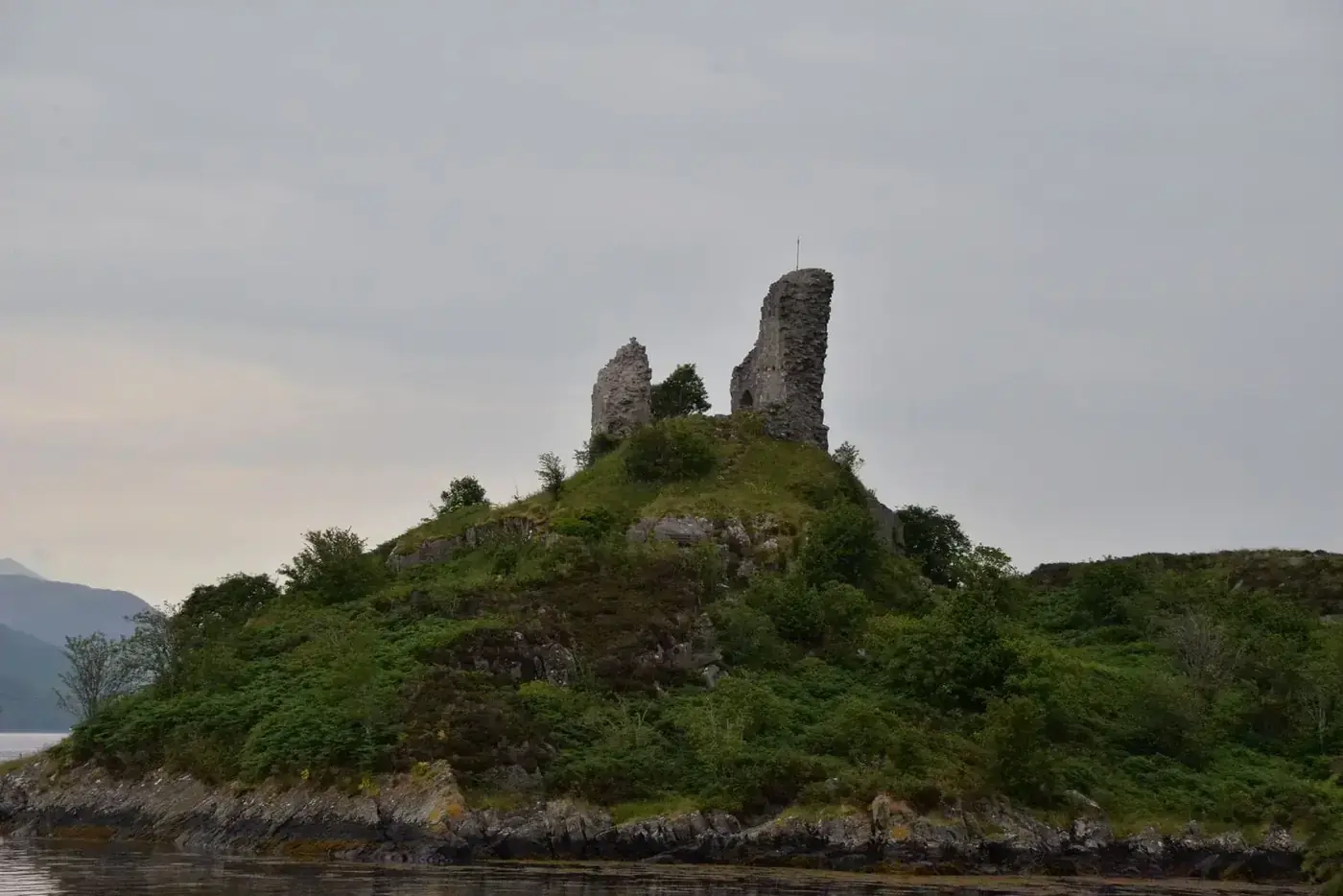
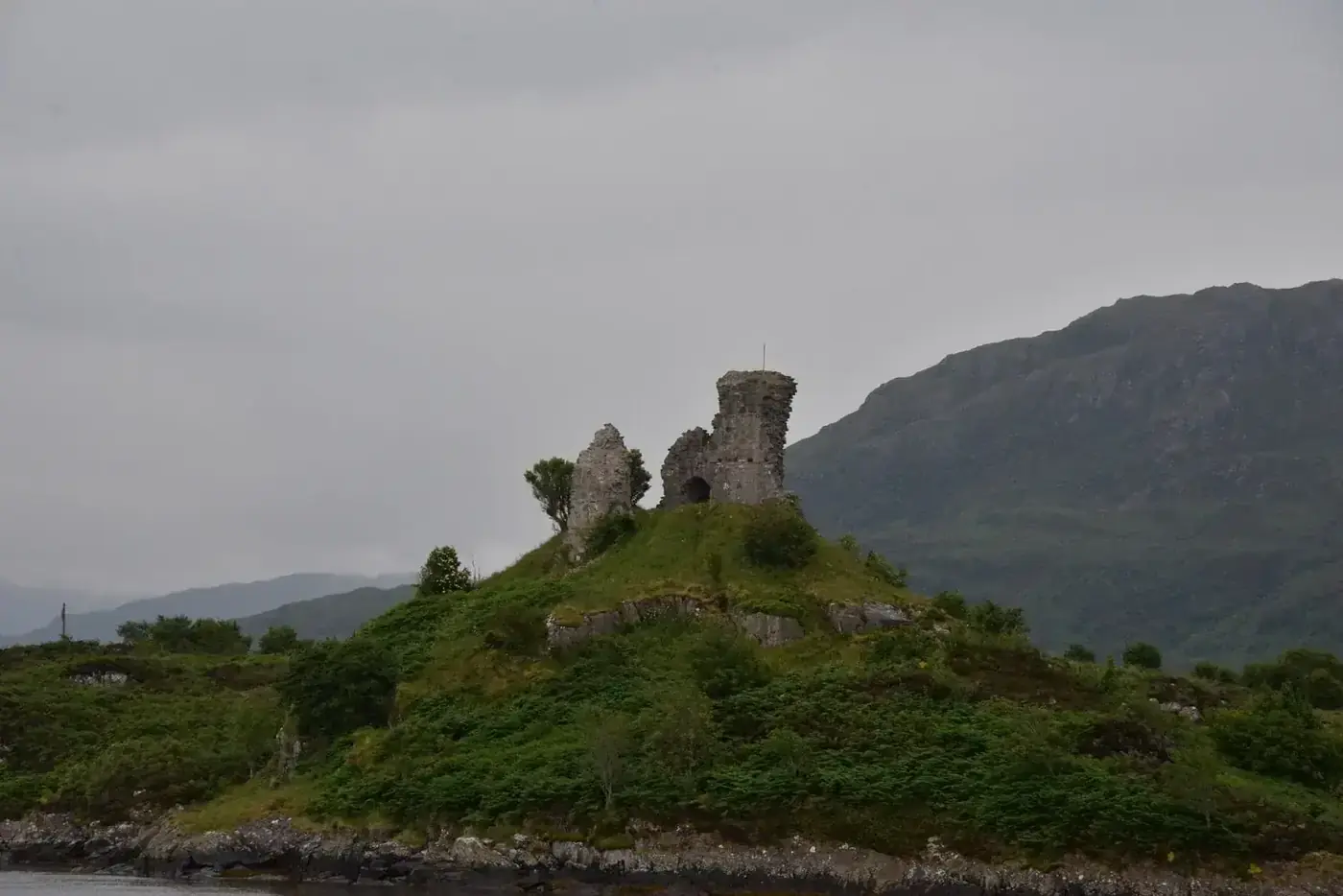
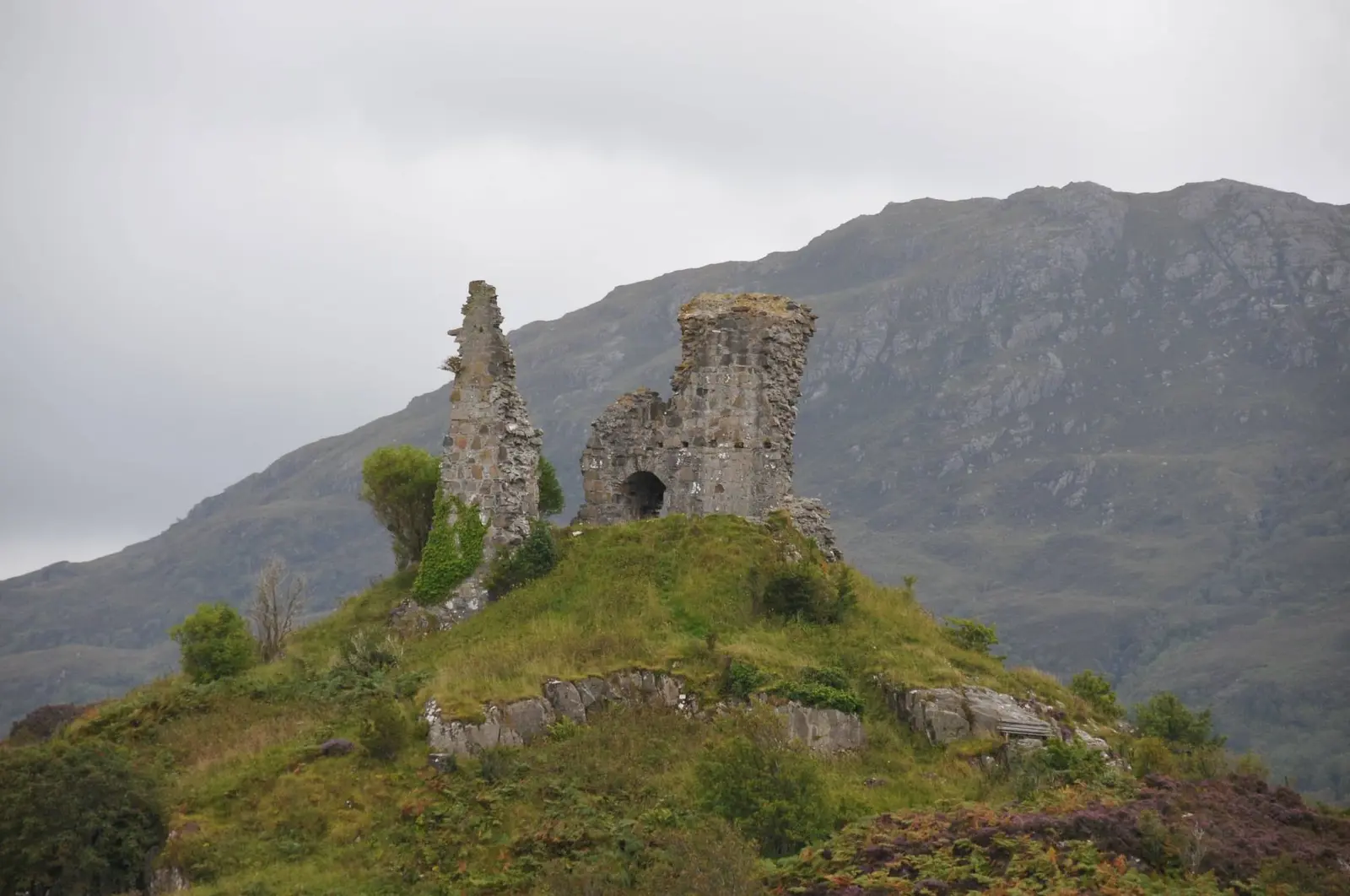
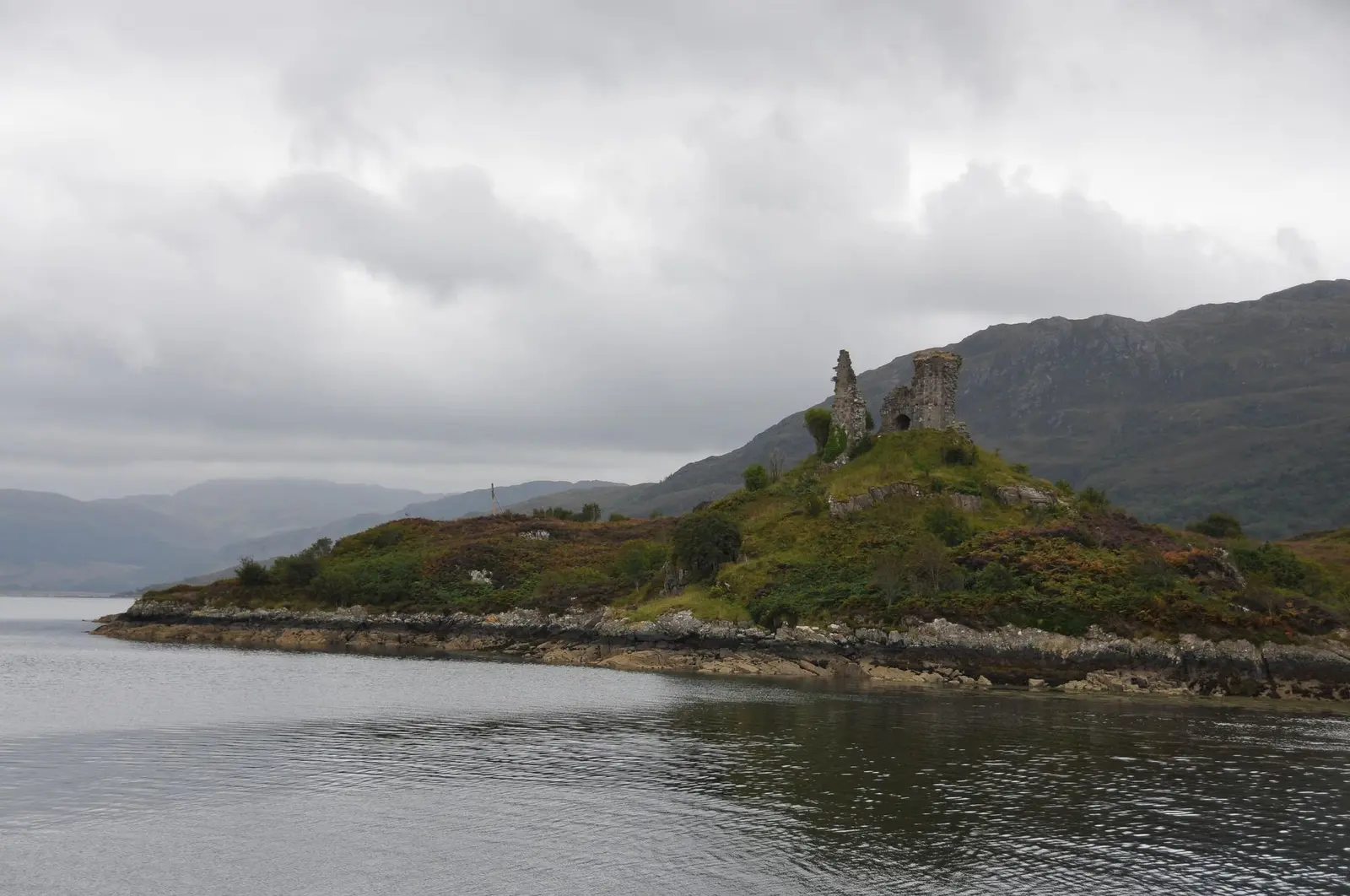
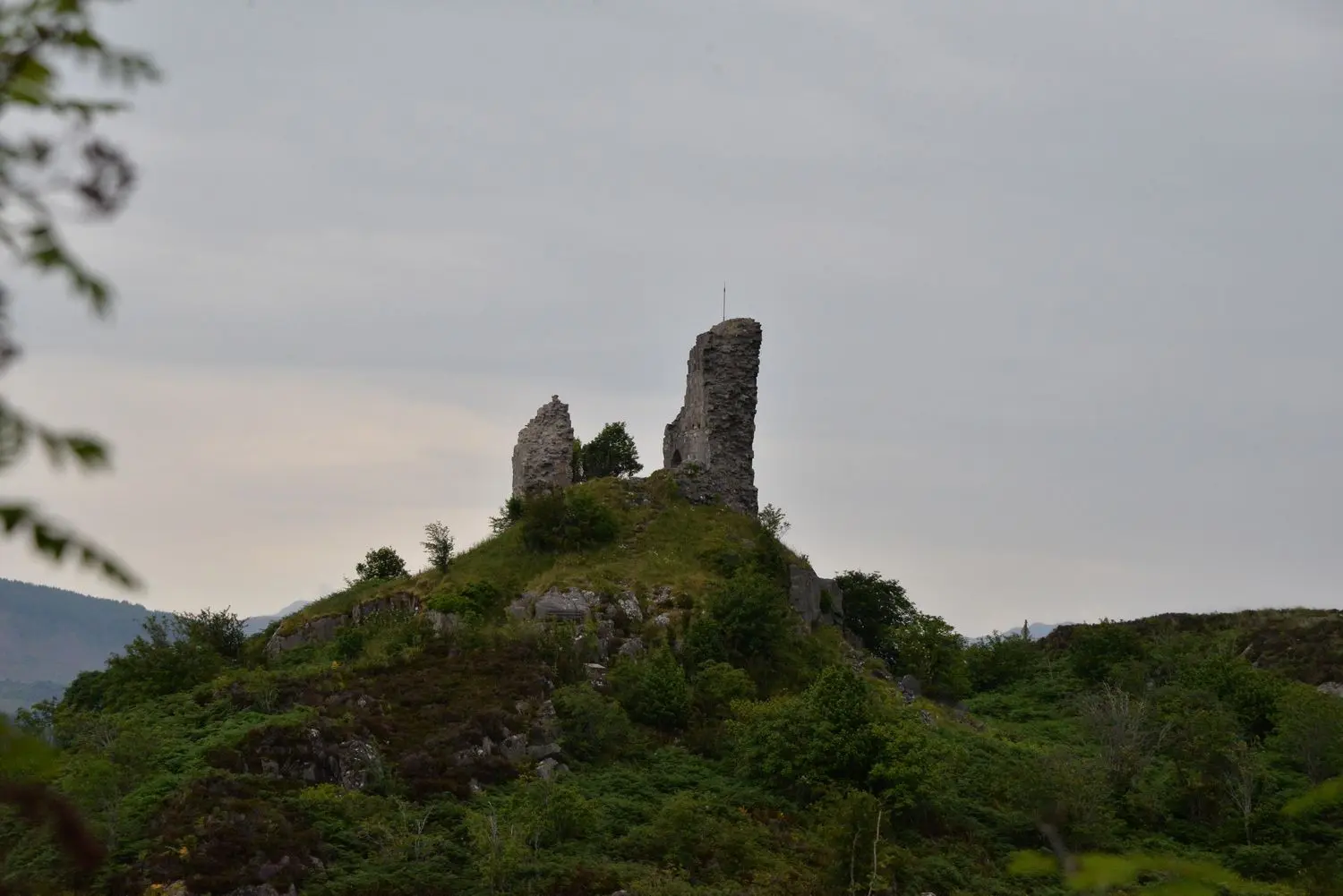
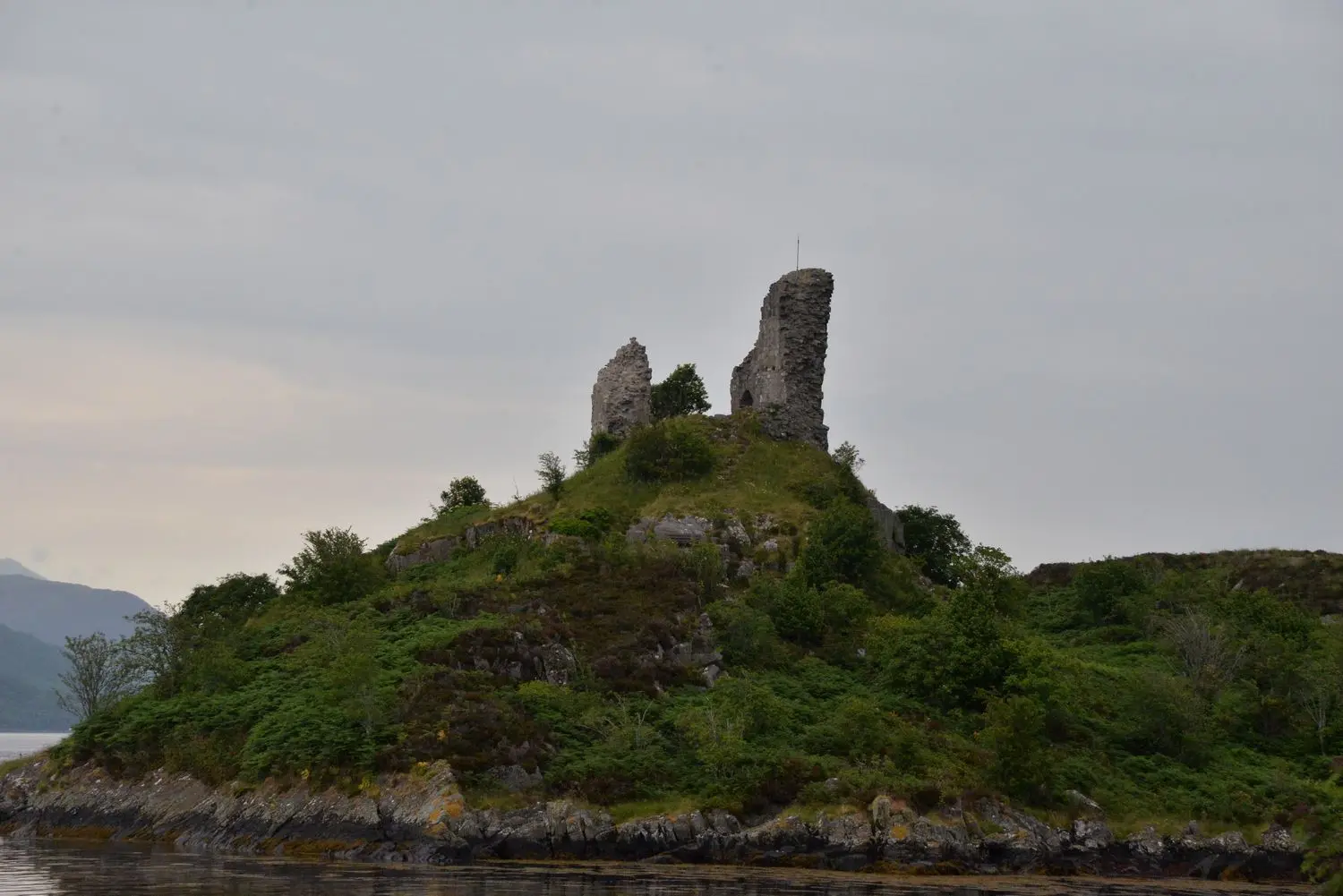
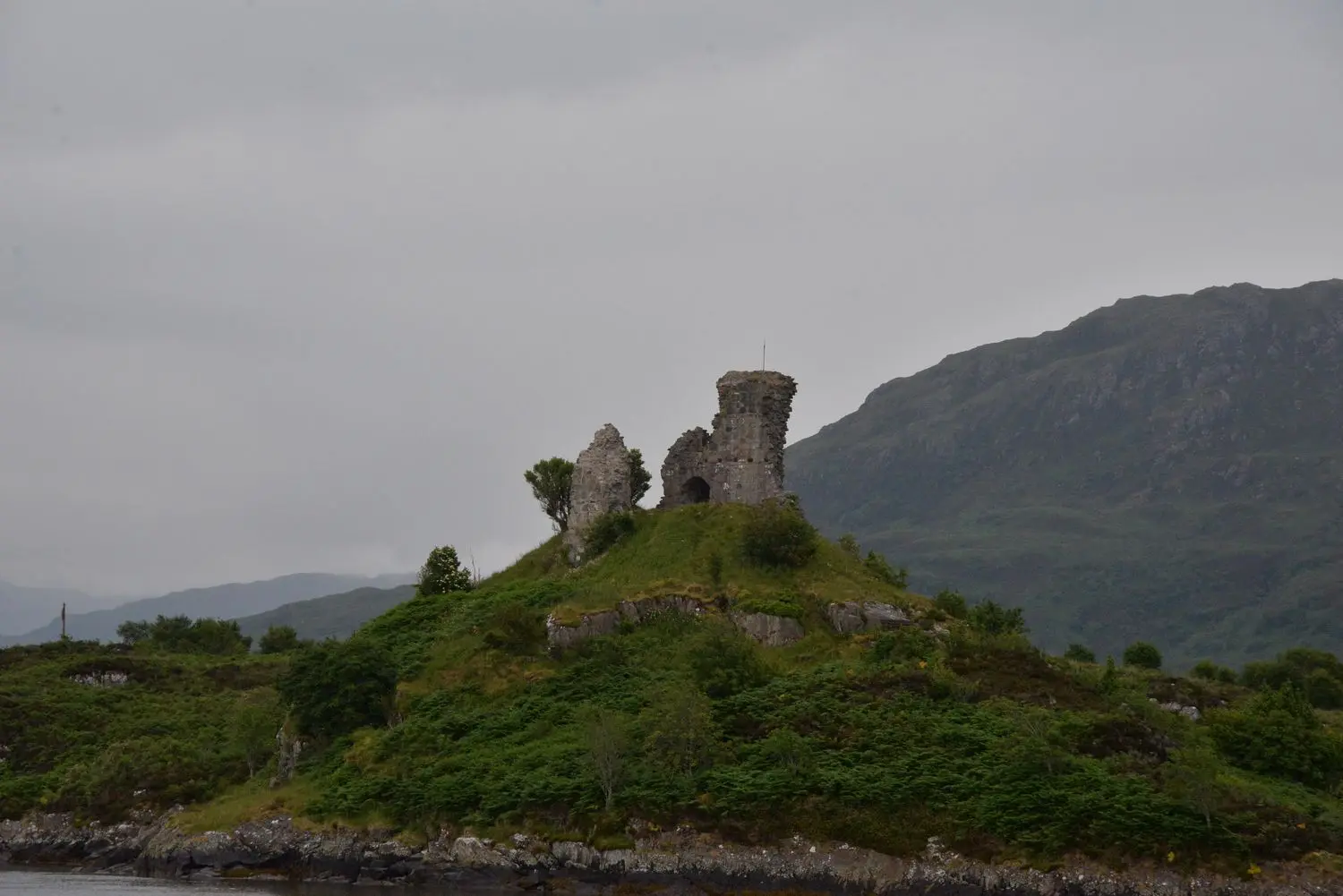
Caisteal Maol watches the narrow water at Kyleakin from a rocky rise. The broken tower is modest, but its position beside a historic crossing makes it feel like a gatekeeper to Skye.
The MacKinnon connection is documented. The most famous keeper, Saucy Mary, belongs to legend—along with the chain she supposedly stretched across the water to collect tolls.
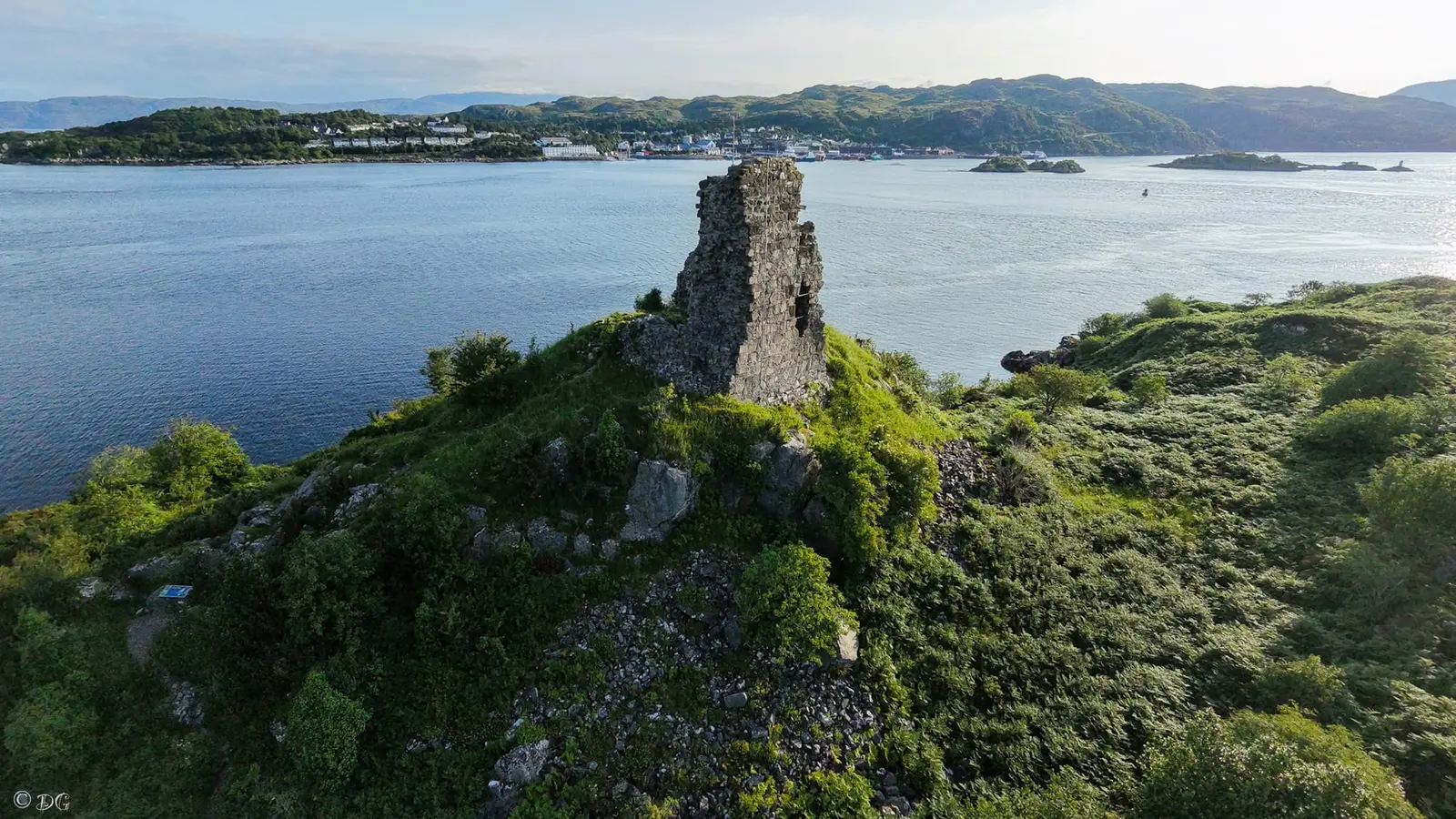
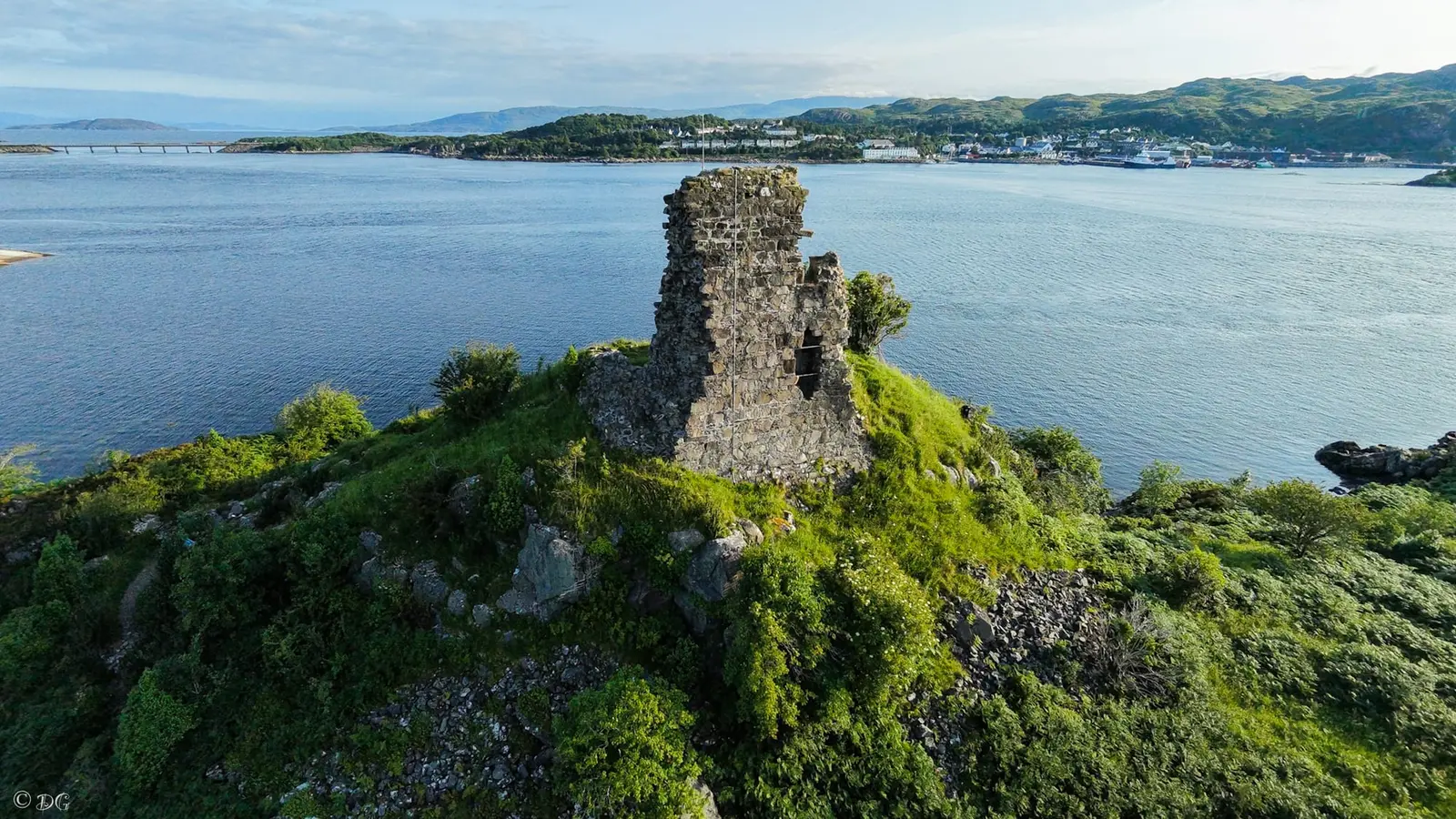
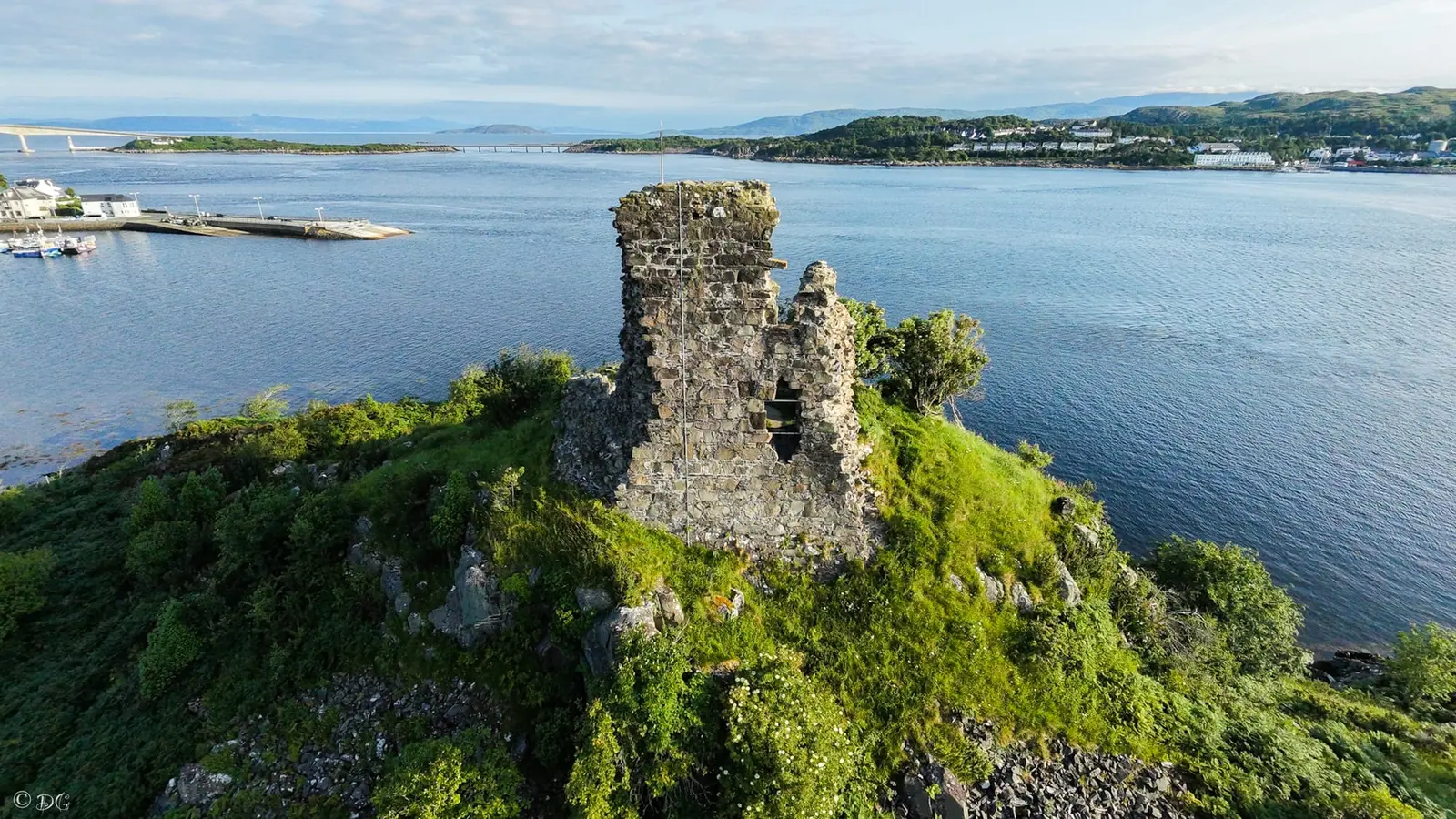
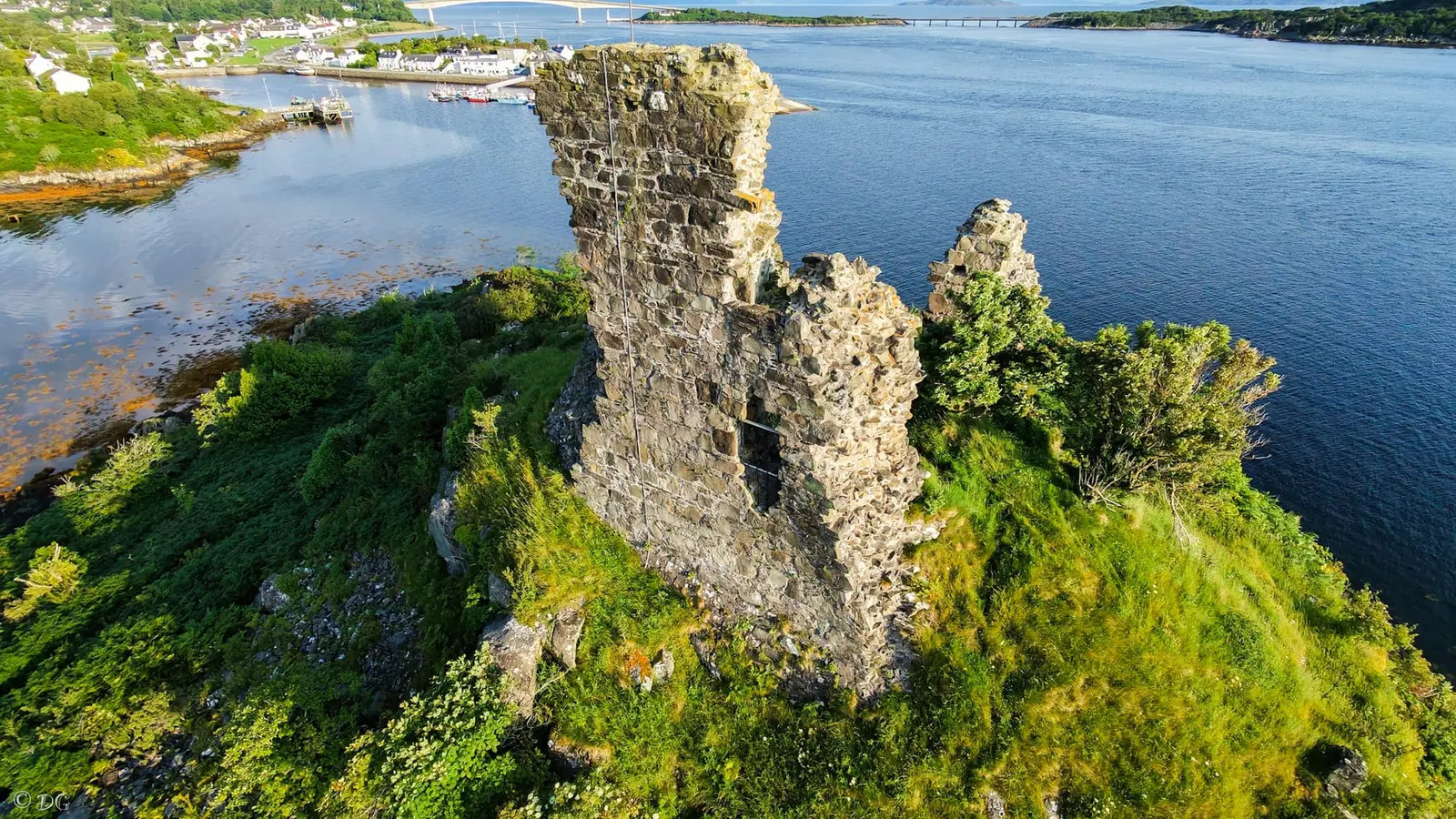
The reward is the relationship between tower, strait and Skye Bridge. From a distance, the strategic position is immediately clearer than the internal plan.
The ruin is fragile and the ground can be rough. Treat it as an exterior landscape walk, following local access advice rather than attempting to climb the walls.
Donald Monro’s description of 1549 records Dunna-Kyne as belonging to MacKinnon. The surviving tower is late medieval, but its exact foundation remains unresolved.
That written link is valuable without inventing a named builder or a construction year the masonry cannot provide.
Local tradition describes a Norse princess known as Saucy Mary who levied tolls on passing ships with a chain stretched across the channel. Ships that refused faced the longer and more dangerous route around Skye.
Some versions say Norwegian vessels were allowed through without paying. They also claim that Mary rewarded crews who paid by lifting her skirts as they sailed past—an explanation traditionally offered for her memorable nickname.
It is a wonderful story for the castle’s position, but not verified medieval administration. Saucy Mary and her chain belong to folklore, not to the secure documentary history of the standing tower.

02 / VISUAL JOURNAL
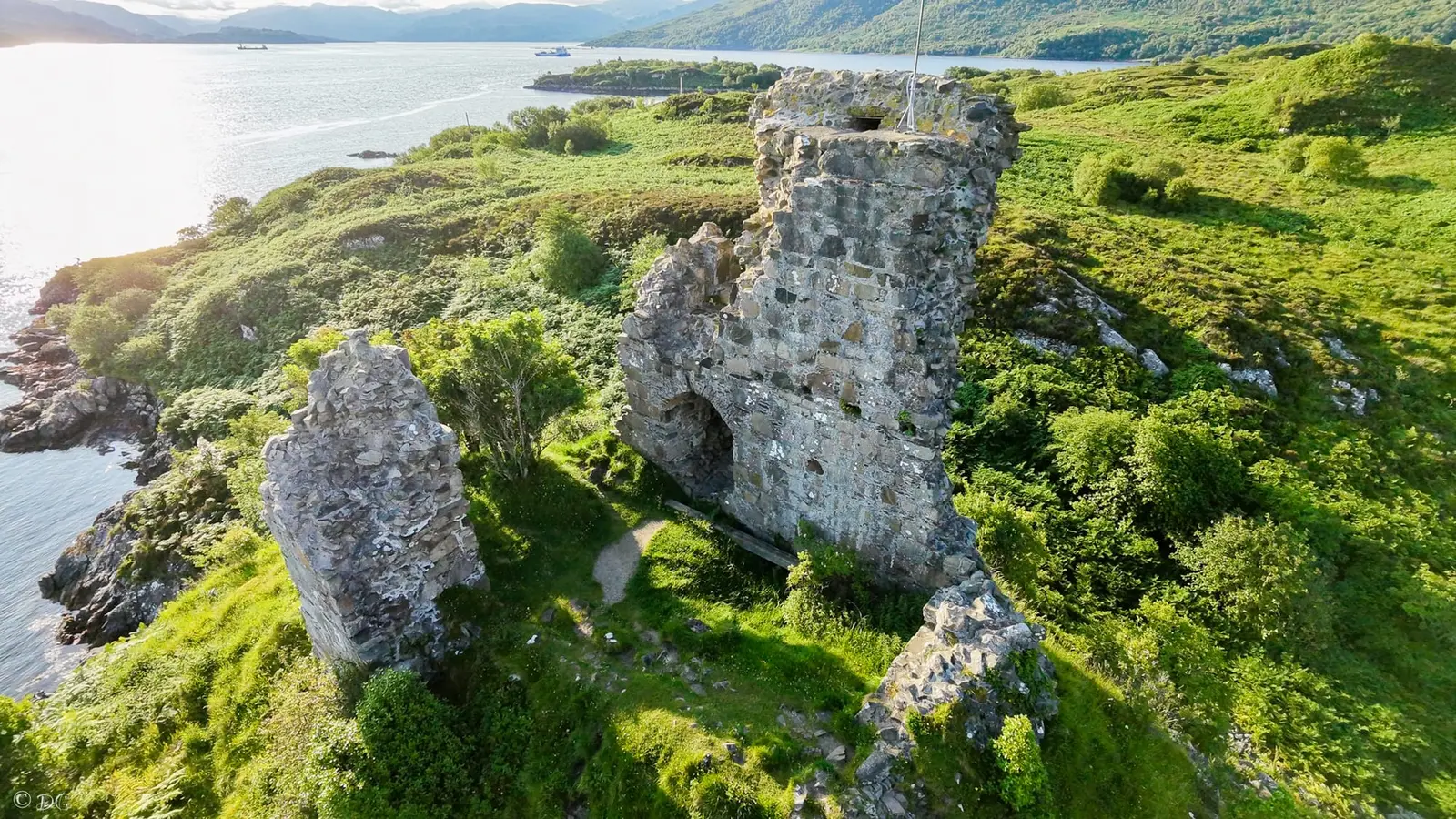
Every photograph on this page was taken by CastleScotland during visits to the site.
10 of 16 photographs
01 / THE STORY CONTINUES
A coin hoard was discovered in the castle masonry in 1951. The identity and motive of the person who concealed it are unknown.
That unanswered question is more compelling than a forced solution. Money may be hidden during danger, for safekeeping or simply because its owner expects to return—and sometimes does not.
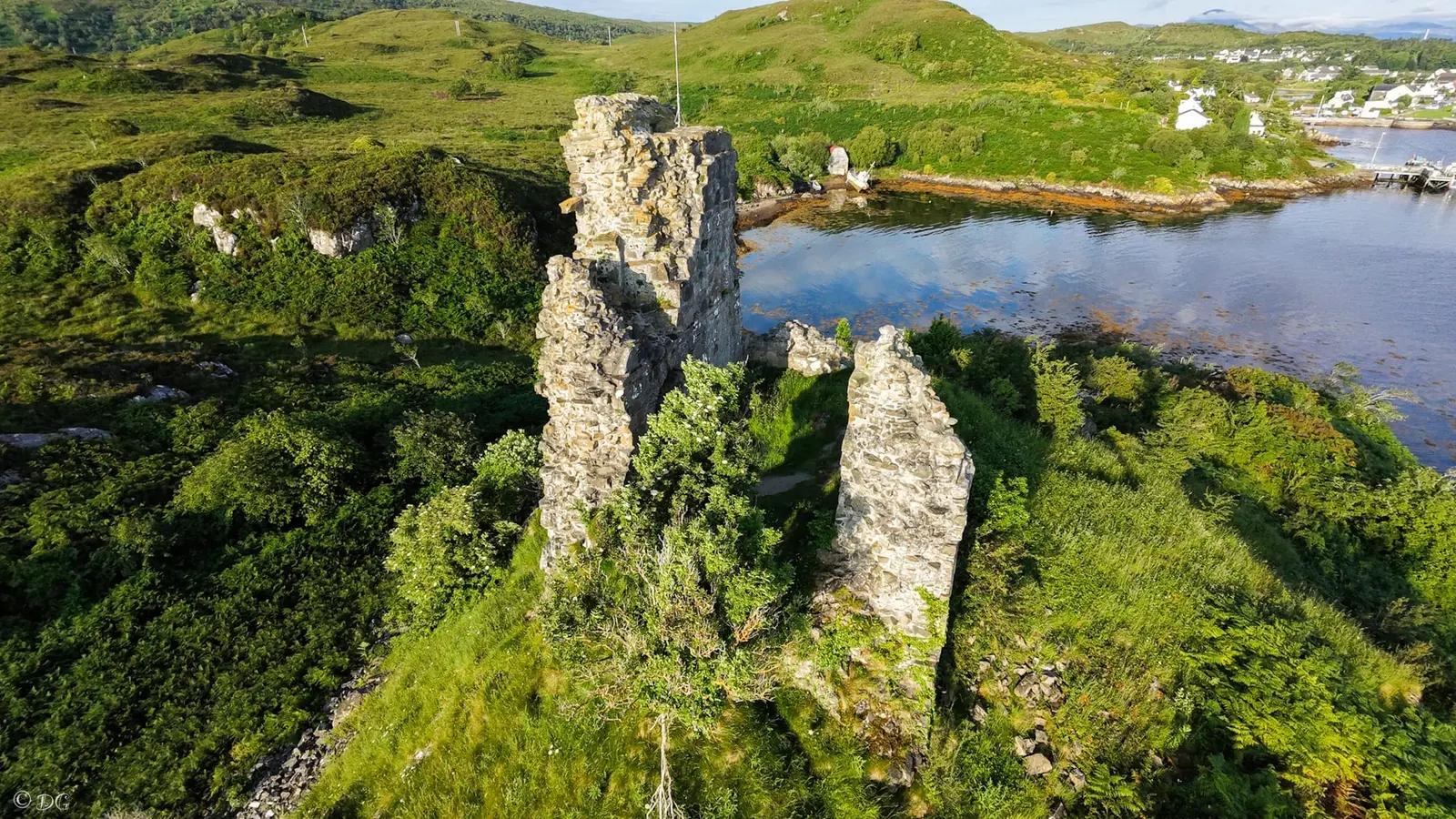
High water had covered the easier shoreline approach, so we tried to reach the castle through the bushes. We disturbed a wasps’ nest we could not see, and the swarm came at us before we understood what had happened.
Fortunately, we escaped with only one sting between us. Once we had retreated to a safe distance, we abandoned the approach and sent the drone towards the ruins instead. Sometimes the wisest castle adventure is the one you decide not to finish on foot.
03 / MOMENTS IN STONE
The surviving tower belongs to the later medieval period; its exact foundation is unresolved. Donald Monro’s 1549 description links the castle with MacKinnon.
Donald Monro records Dunna-Kyne as belonging to MacKinnon. According to local tradition, a Norse princess used a chain to levy tolls on passing ships. This remains folklore.
A coin hoard is discovered in the castle masonry. A coin hoard was found in 1951, but the identity of its depositor is unknown.
The tower is generally assigned to the later medieval period. Highland’s Historic Environment Record reports radiocarbon results suggesting that a surviving pine joist came from a tree felled after 1490. This is evidence about one timber, not a foundation date for every wall. A description placing the whole castle precisely in a single year would claim more than the evidence allows.
Who commissioned it is less straightforward. Historic Environment Scotland attributes the building to the MacKinnons, while the Clan MacKinnon Society describes a foundation by a Lord of the Isles followed by MacKinnon acquisition. These accounts agree on the clan’s later association but differ over the beginning. The guide therefore leaves the individual founder unresolved rather than silently selecting the more attractive version.
A firmer documentary point comes in 1549, when Dean Donald Monro described Dunna-Kyne as belonging to MacKinnon. Later charters recorded in the historic environment record include ferry privileges. This places the castle within a real history of movement through the narrows, without proving every tale about the control of shipping. A stronghold overlooking water need not have operated exactly as a later legend describes.
According to local tradition, the Norse princess “Saucy Mary” stretched a chain across the water and charged passing vessels a toll. Another part of the tradition places her burial on Beinn na Caillich. The stories preserve a memorable association with Norway, but reliable contemporary evidence confirming the princess or her chain has not been established here. They should be enjoyed as folklore, not used to date the standing tower.
The building itself was a rectangular residence rising above a cellar. The surviving structure suggests an entrance at the first-floor level, with upper accommodation above. Its fragmentary condition limits reconstruction: the number and arrangement of lost rooms should not be confidently invented. Imagining the household can enrich a visit, but the visible stonework sets boundaries on that imagination.
Material evidence adds a quieter story. A hoard discovered in the masonry in 1951 contained coins extending into the reign of James VI. Such a find connects the site with later use, but does not identify the person who concealed it or explain why. The same caution applies to the end of the castle’s occupation: a precise destruction story cannot be supplied simply because the building is now roofless.
Caisteal Maol is protected as a scheduled monument. Look first at its relationship with the crossing, then at the surviving corners and openings from a responsible viewpoint. The shoreline and weather affect the experience, so check local conditions and keep away from unstable masonry. This is a place where a modest amount of surviving fabric carries an unusually rich mixture of documentary history, archaeological evidence and tradition. Its appeal is strongest when those strands remain distinct: the late medieval tower, the recorded MacKinnon connection and the legendary princess watching the water.
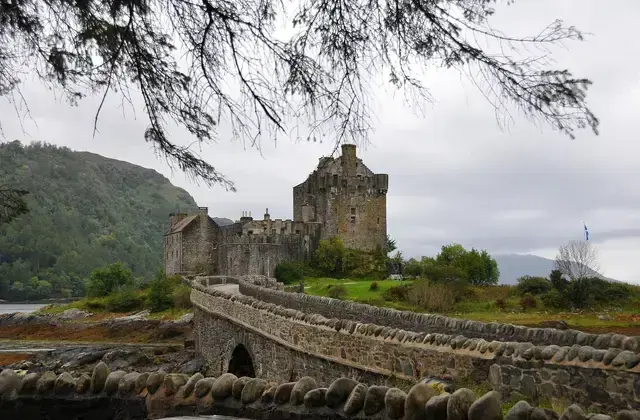
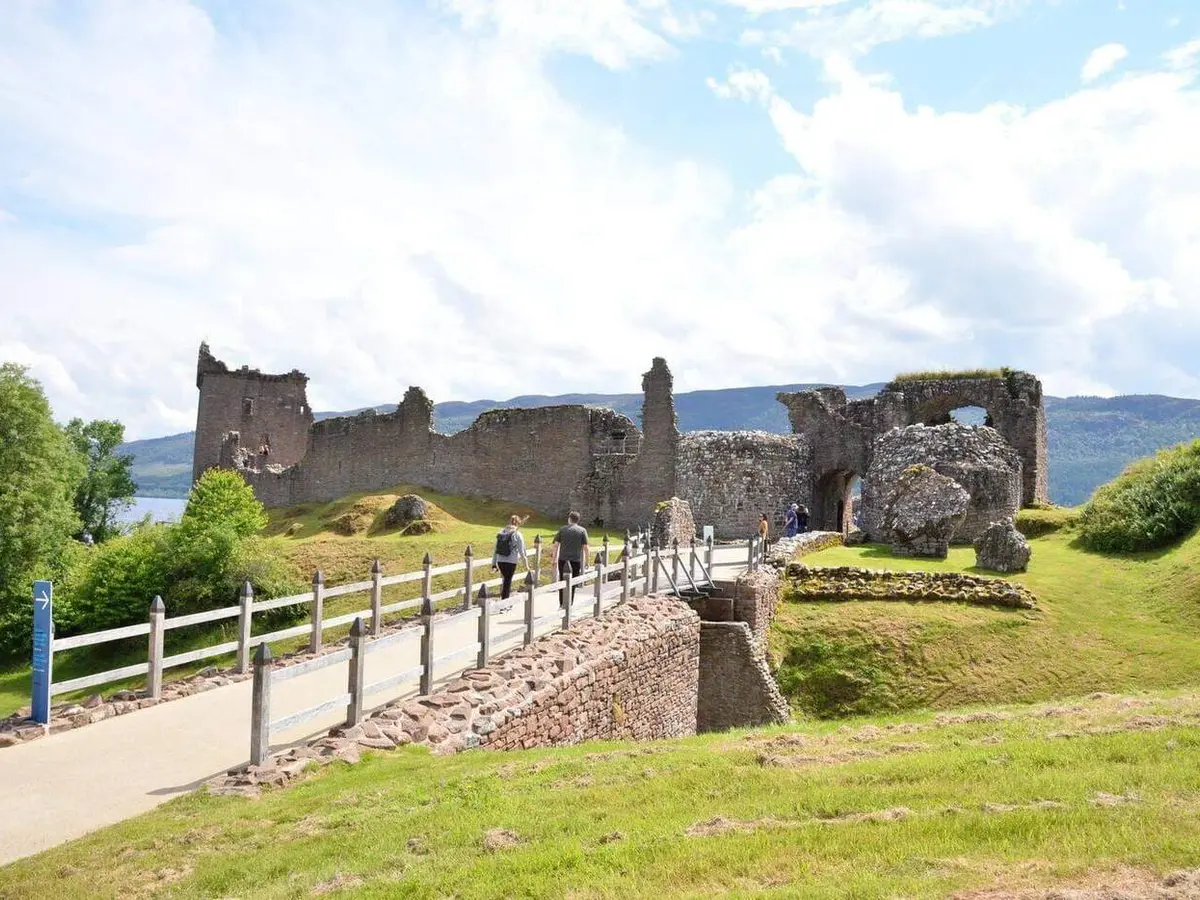
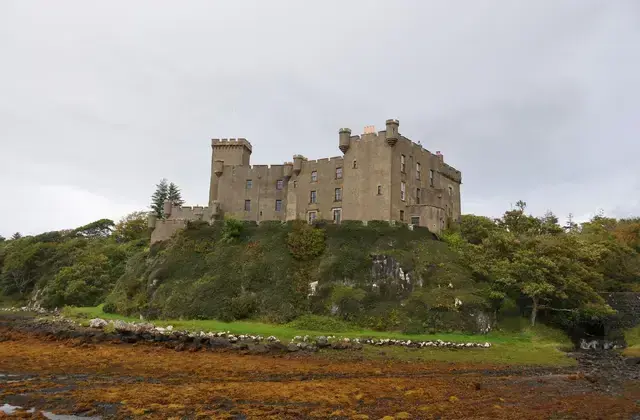
Compare Dunvegan Castle and Gardens with Armadale Castle and the island setting of Caisteal Maol. Check locations on our map of Scottish castles before planning your day.
Find Scottish castles by region, landscape or the stories that bring them to life.