TICKETSFree entry; donations support conservation.
Visitor conditions are stated conservatively from current official or local guidance; always confirm before travel.
View current prices
Free entryFree entry; donations support conservation.
 Castle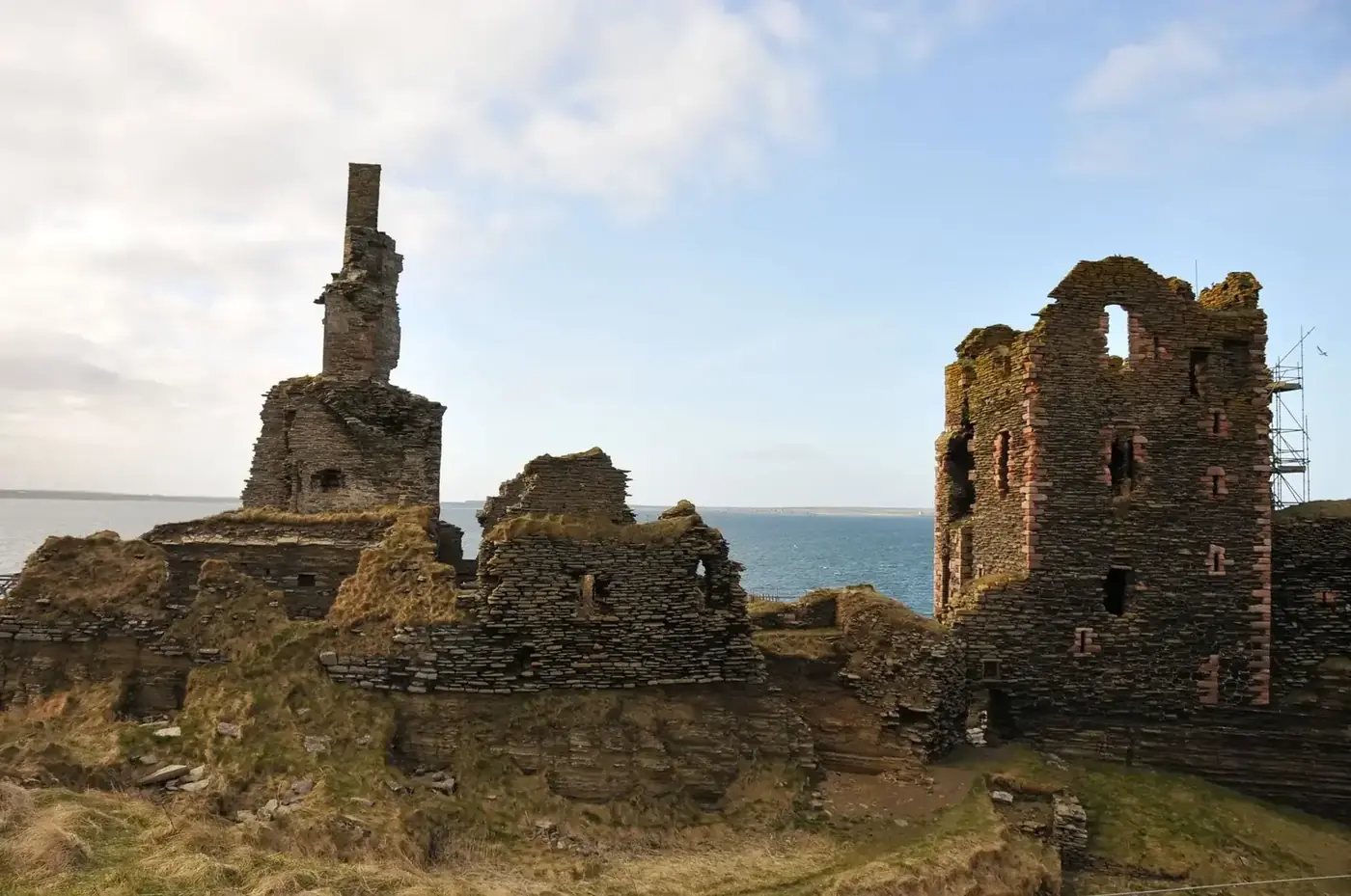
FIELD GUIDE · THE HIGHLANDS
A Scottish castle story. Read through its landscape.
PLAN YOUR VISIT
Near Wick, Caithness, KW1 4QR
Visitor conditions are stated conservatively from current official or local guidance; always confirm before travel.
Free entryFree entry; donations support conservation.
Free entry; donations support conservation.
Parking information
Local guidance lists a small Noss Head car park and about 200 m to the castle. Council information describes voluntary contributions; check current signs.
Parking sources checked · 11 October 2026
Clifftop paths, steps and weather exposure require care; check the trust’s live notice.
A spectacular northern coastal ruin with evolving archaeology and a grim family tradition that is best told with its uncertainty intact.
WHAT TO EXPECT
01 / THE STORY
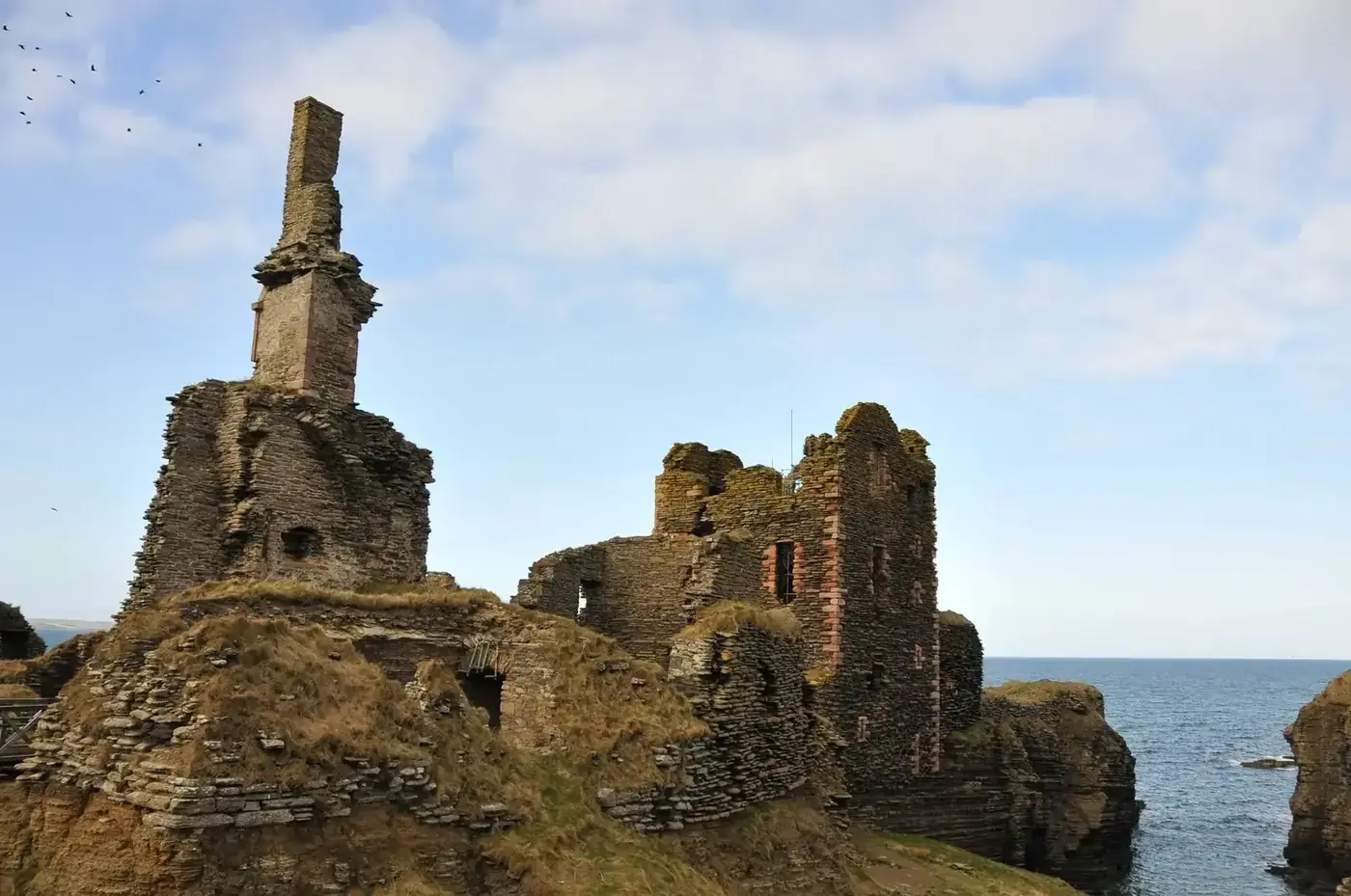
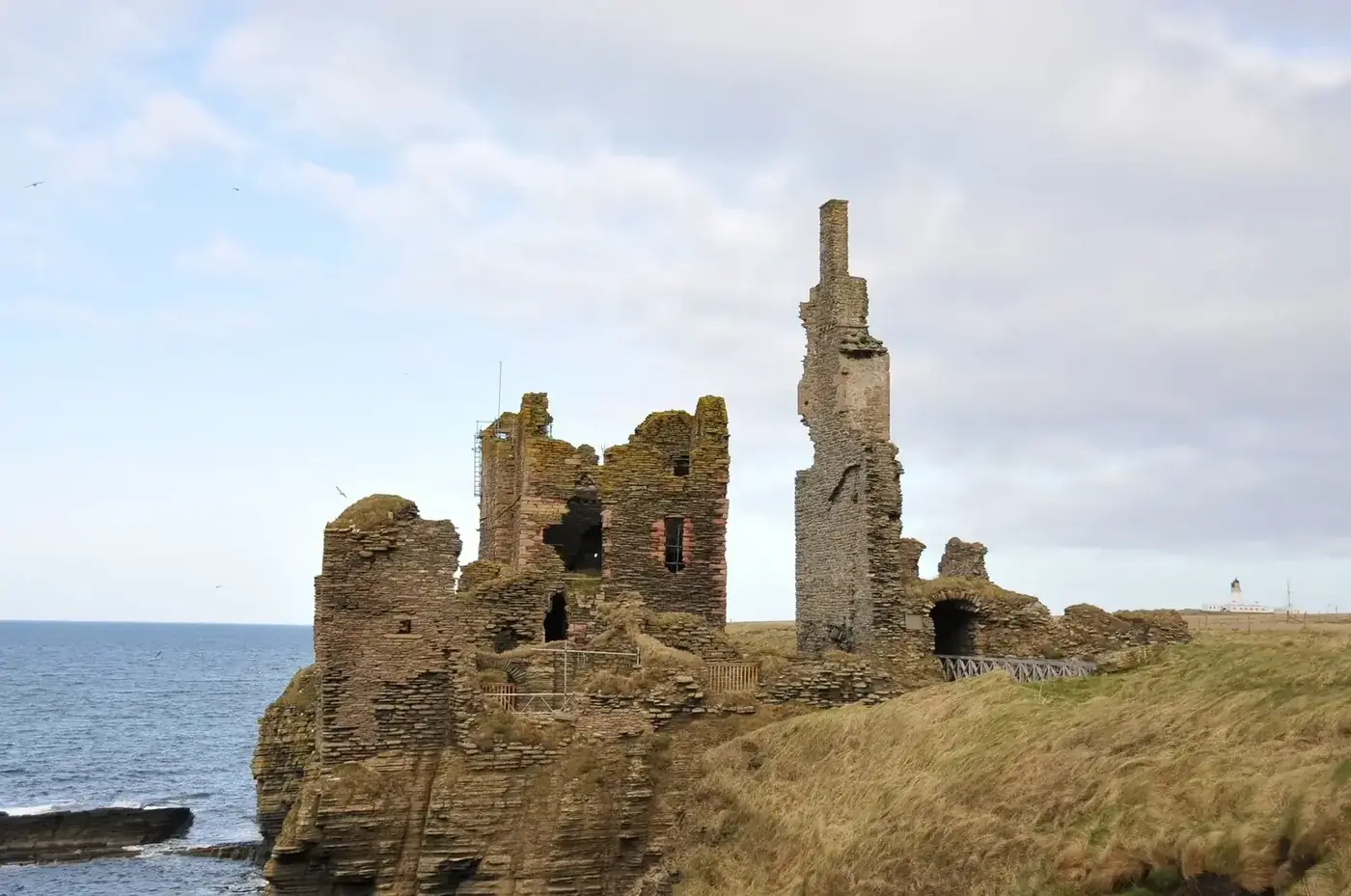
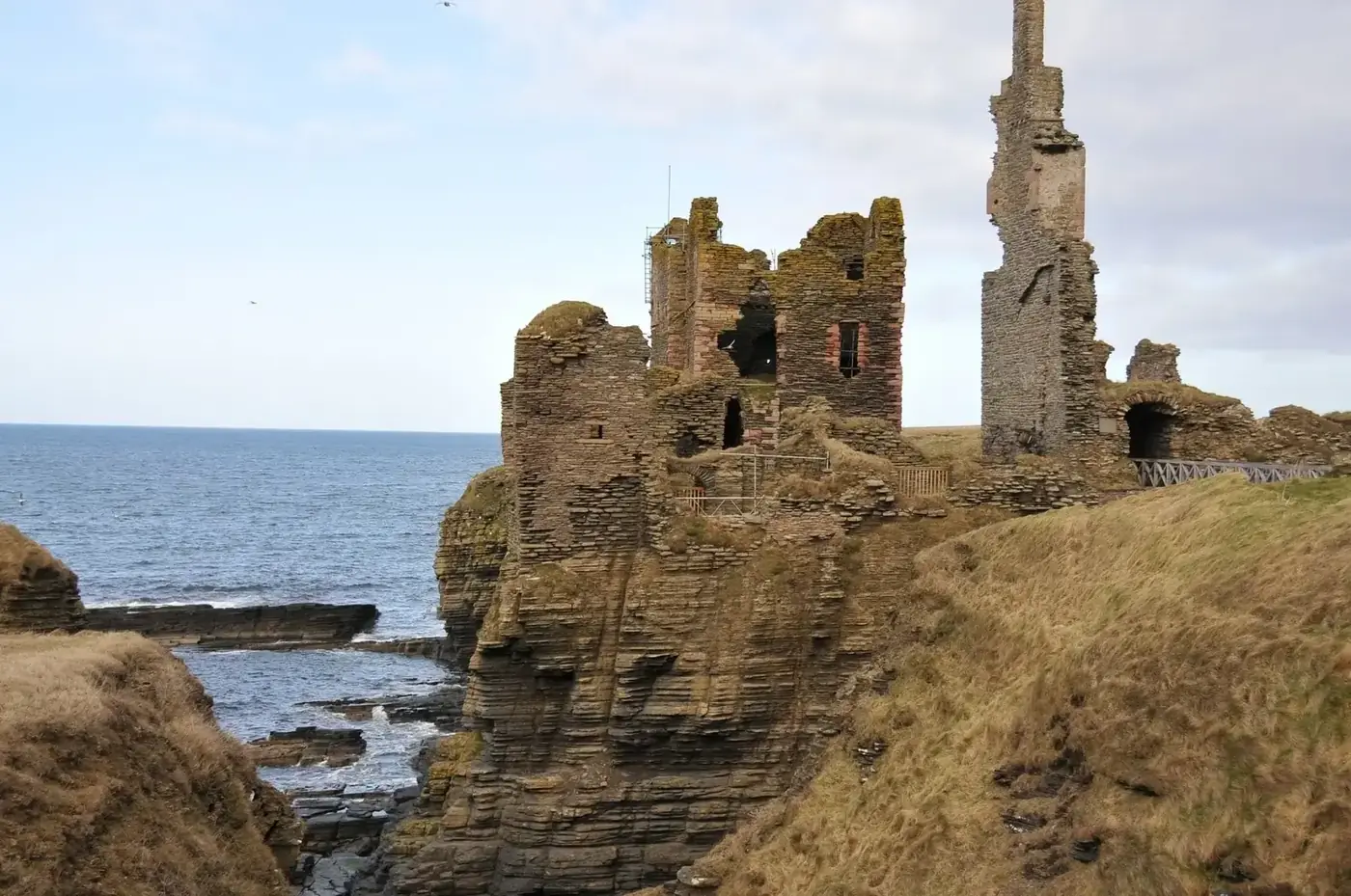
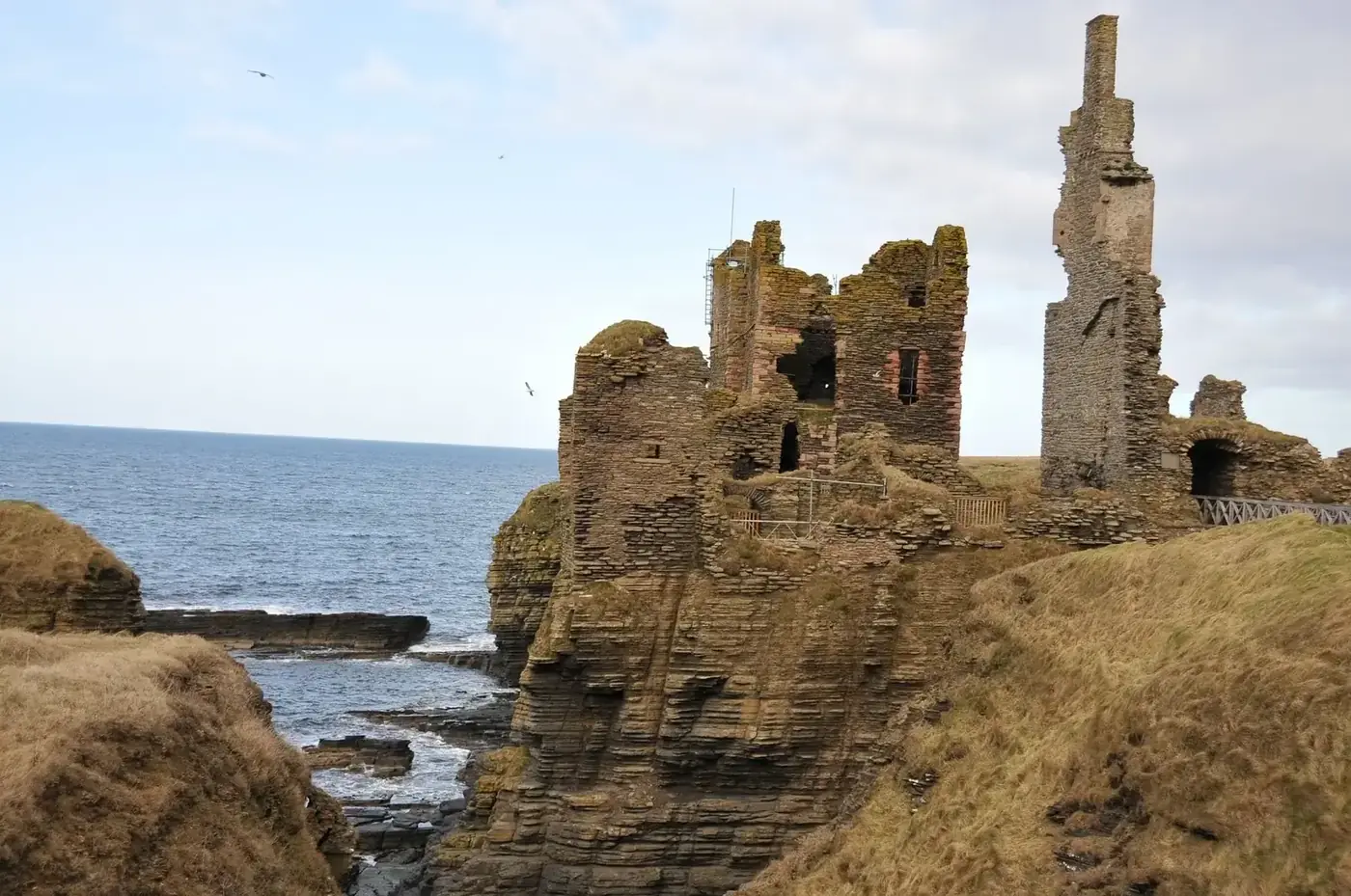
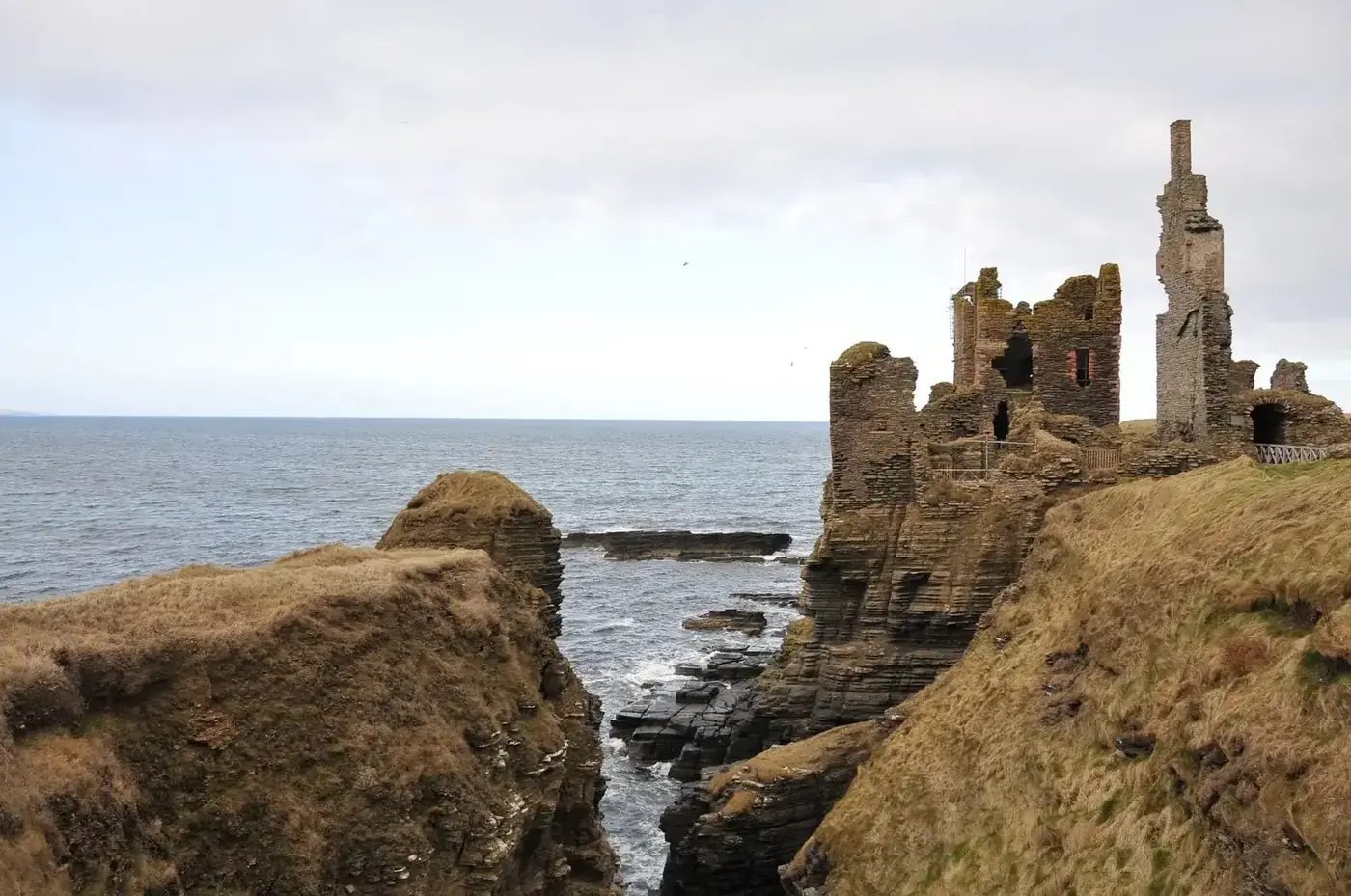
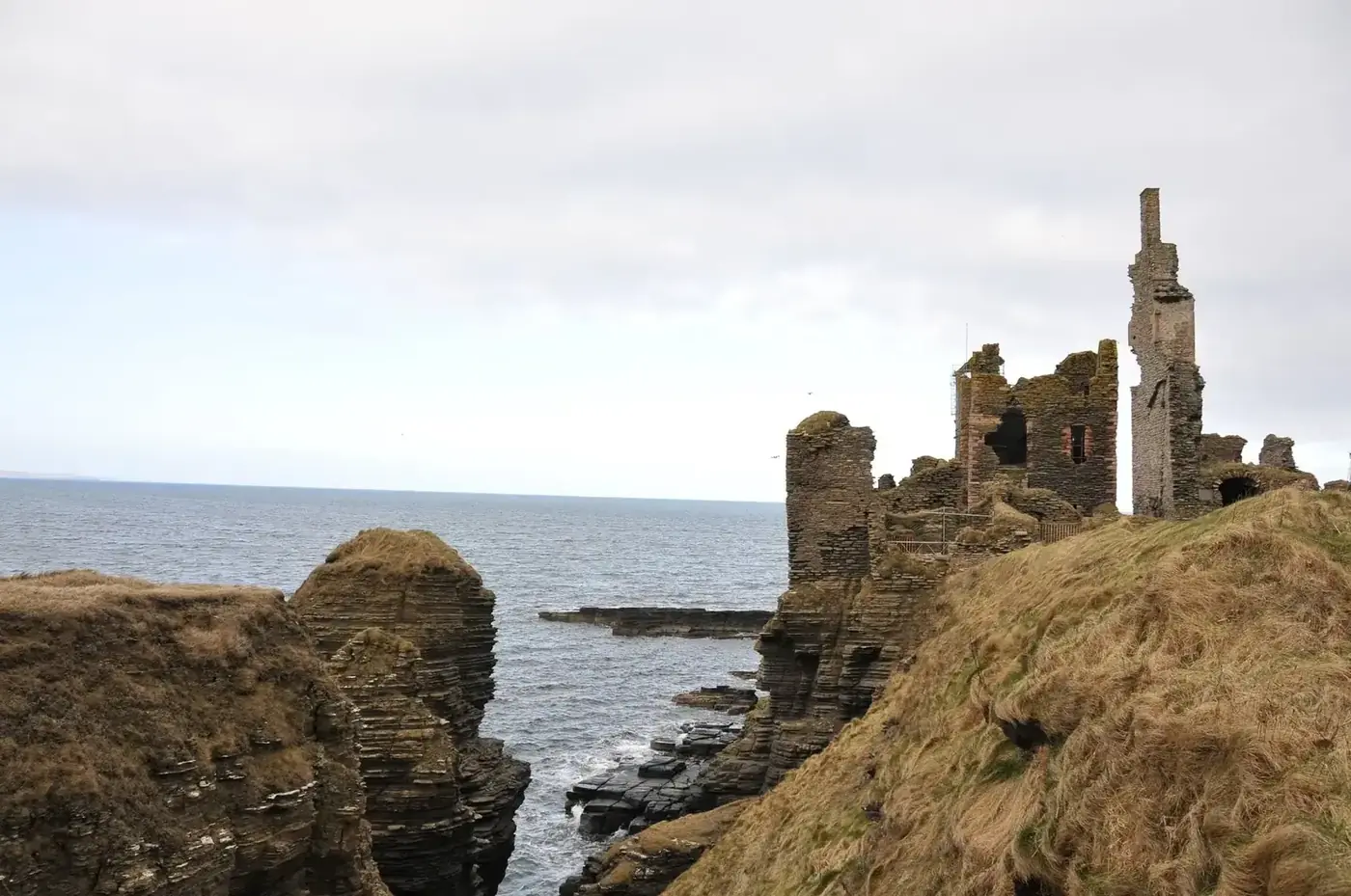
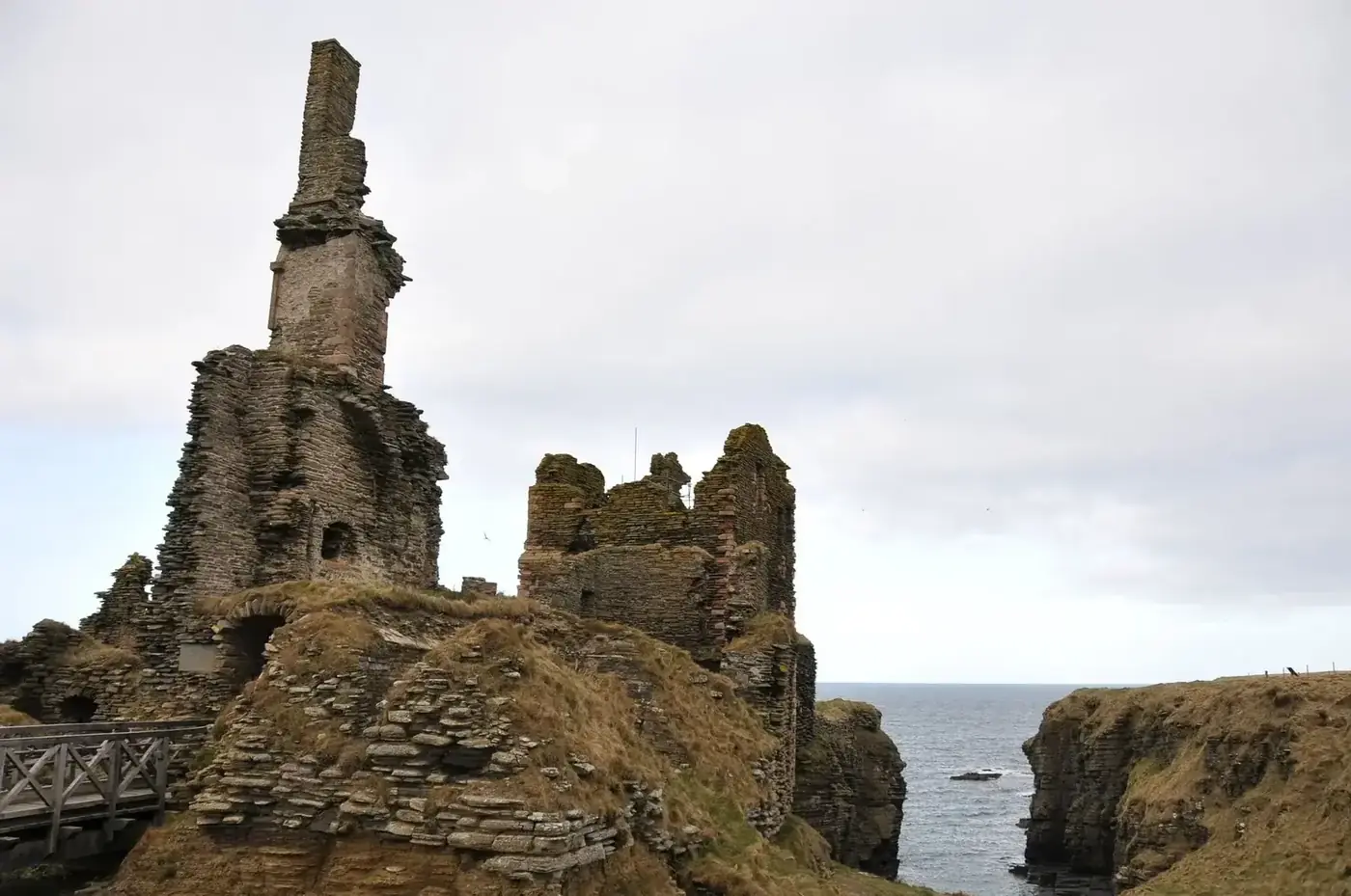
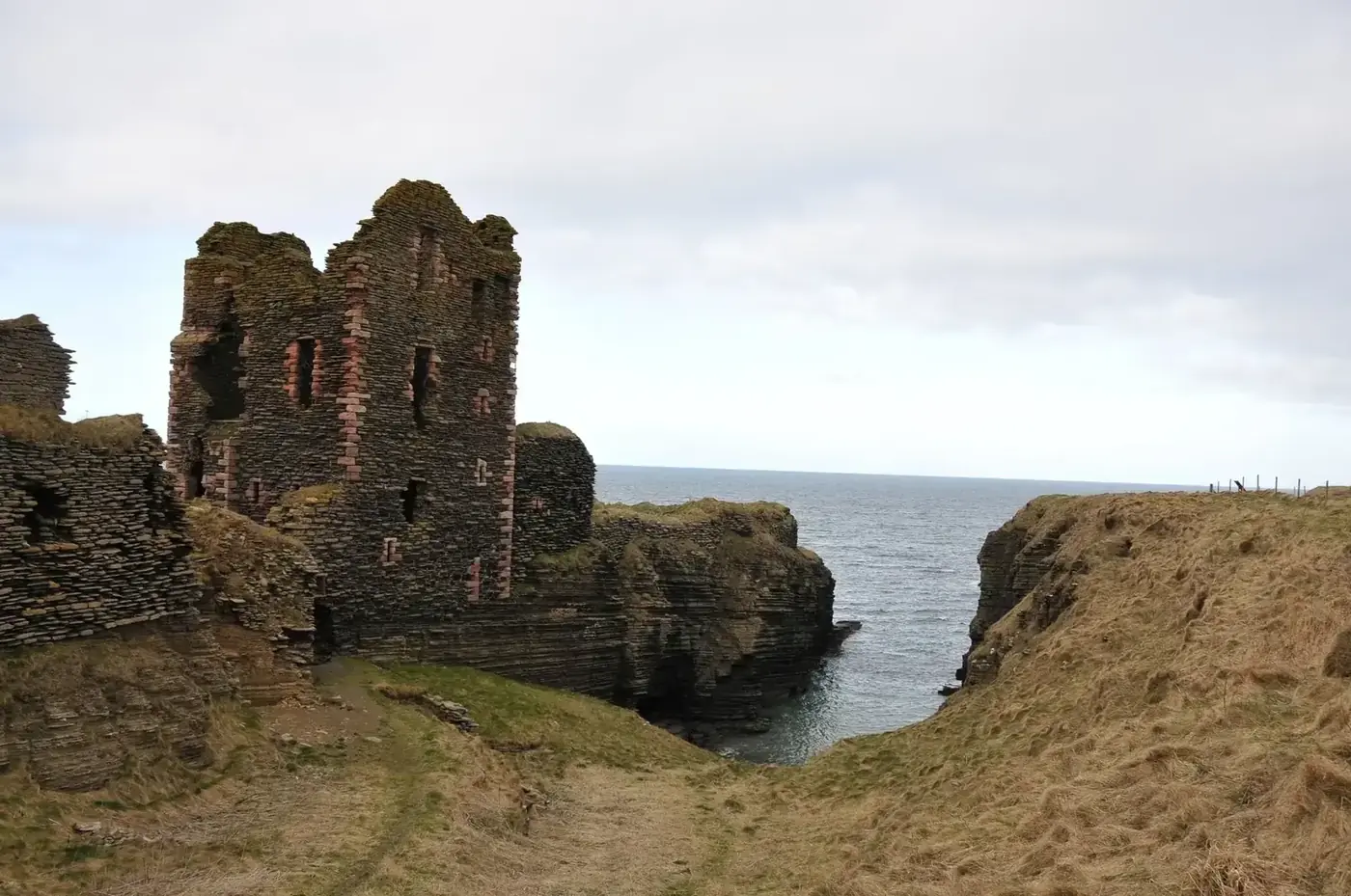
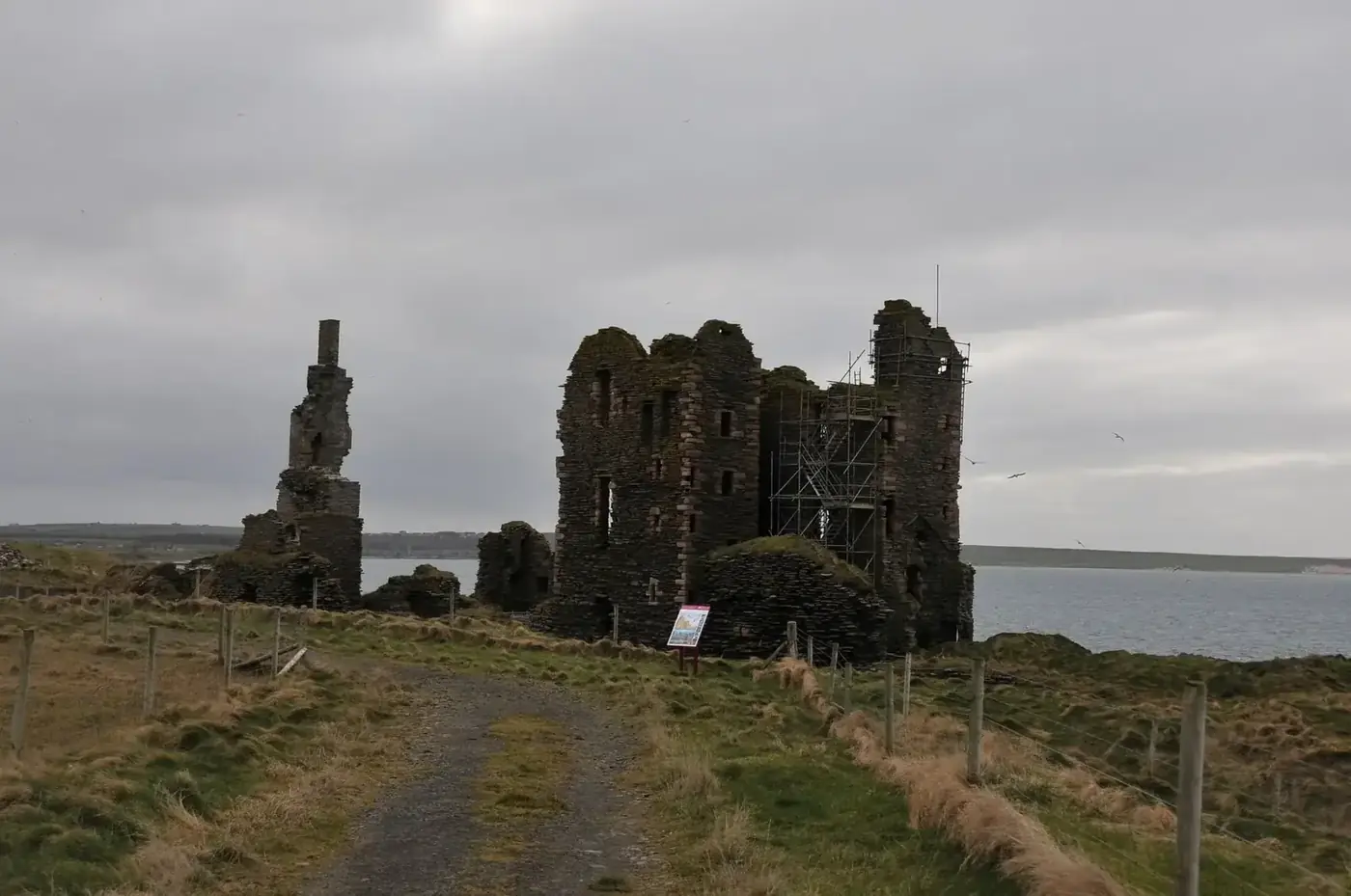
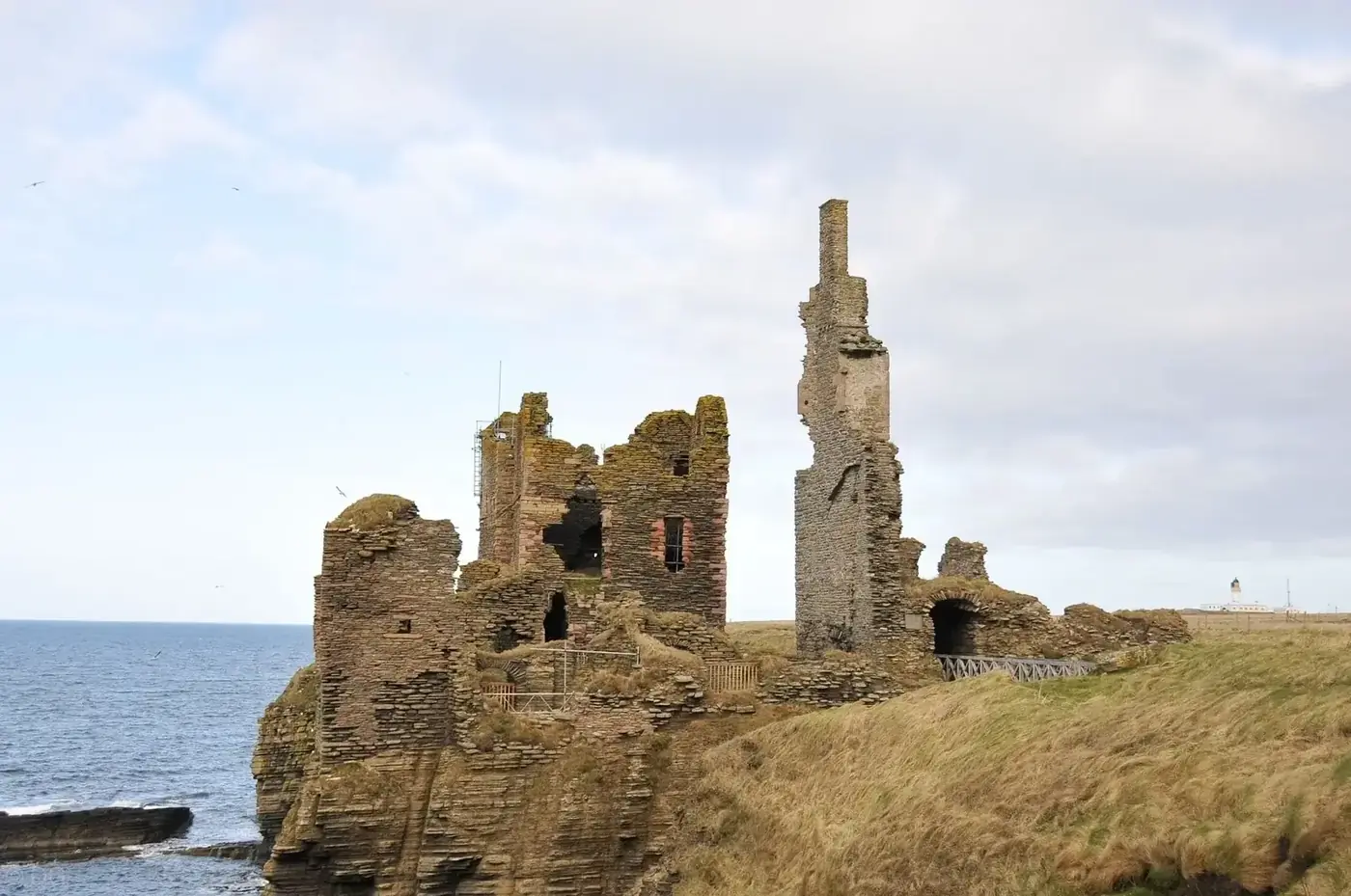
Castle Sinclair Girnigoe occupies one of Caithness’s most dramatic pieces of rock. Narrow cliffs carry towers and broken ranges out towards Sinclair Bay, while sea fills the gaps below.
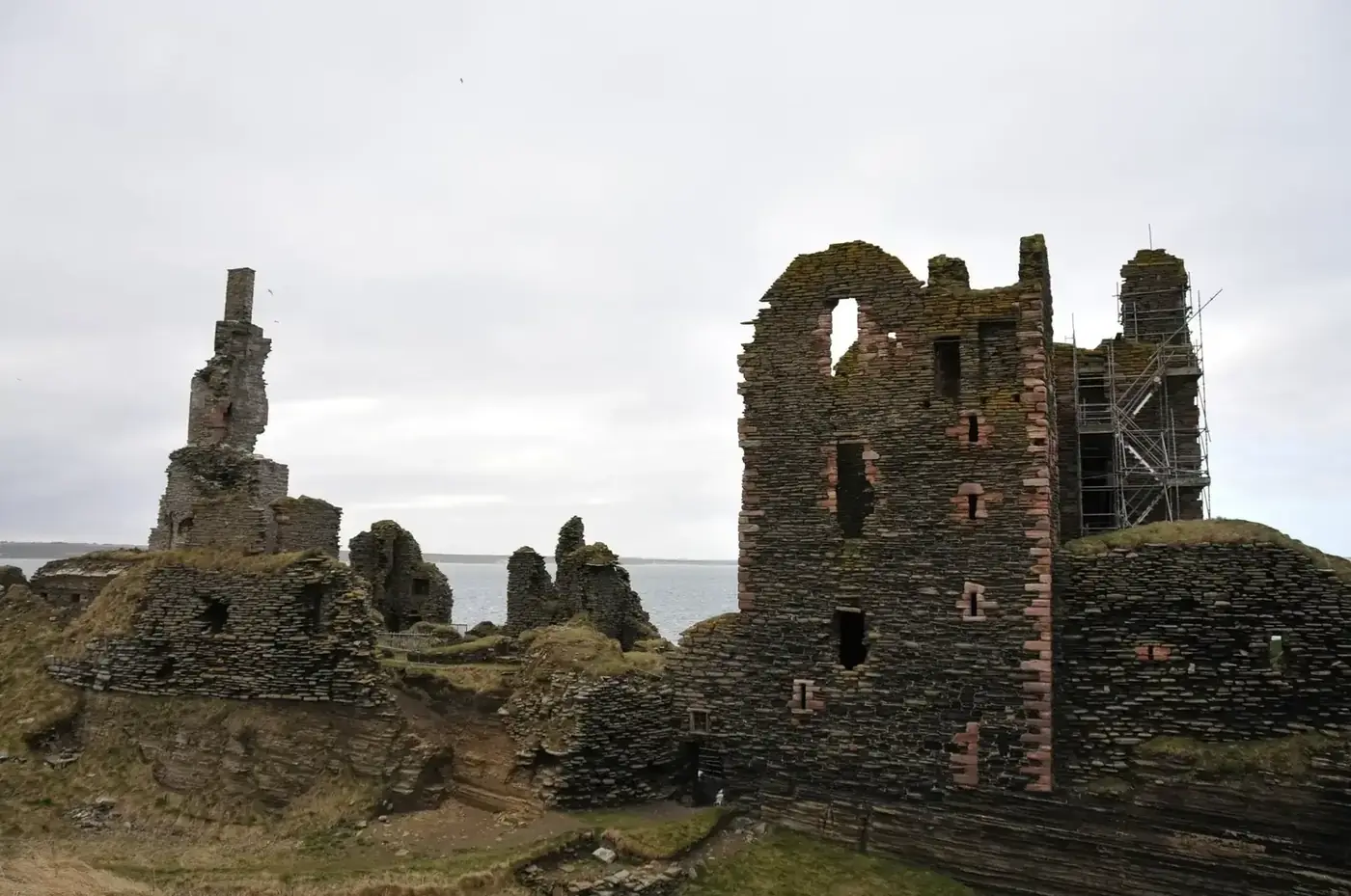
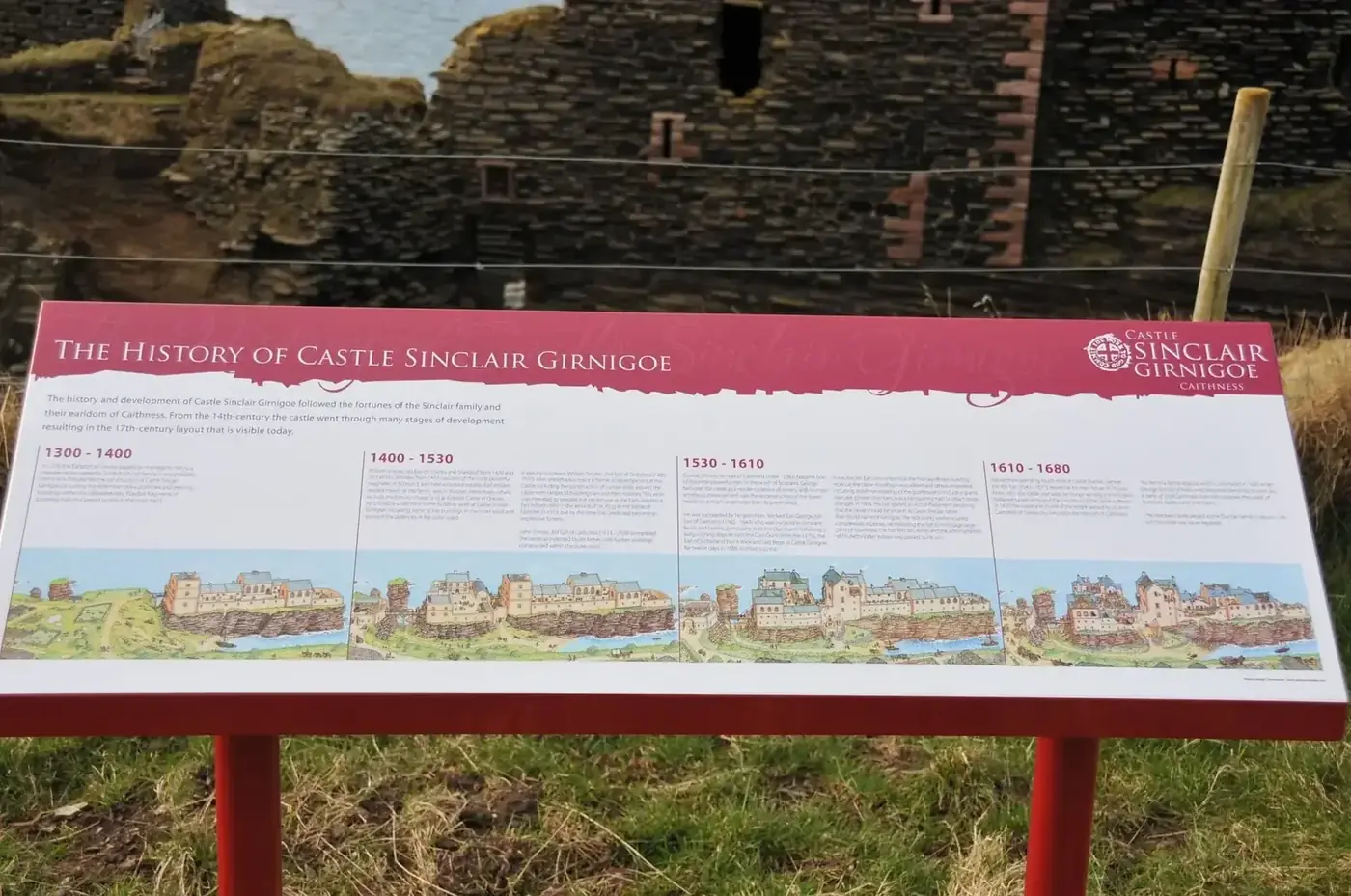
The double name once encouraged a simple story of two separate castles. Modern archaeological work instead reads the remains as one complex that grew and changed over centuries.
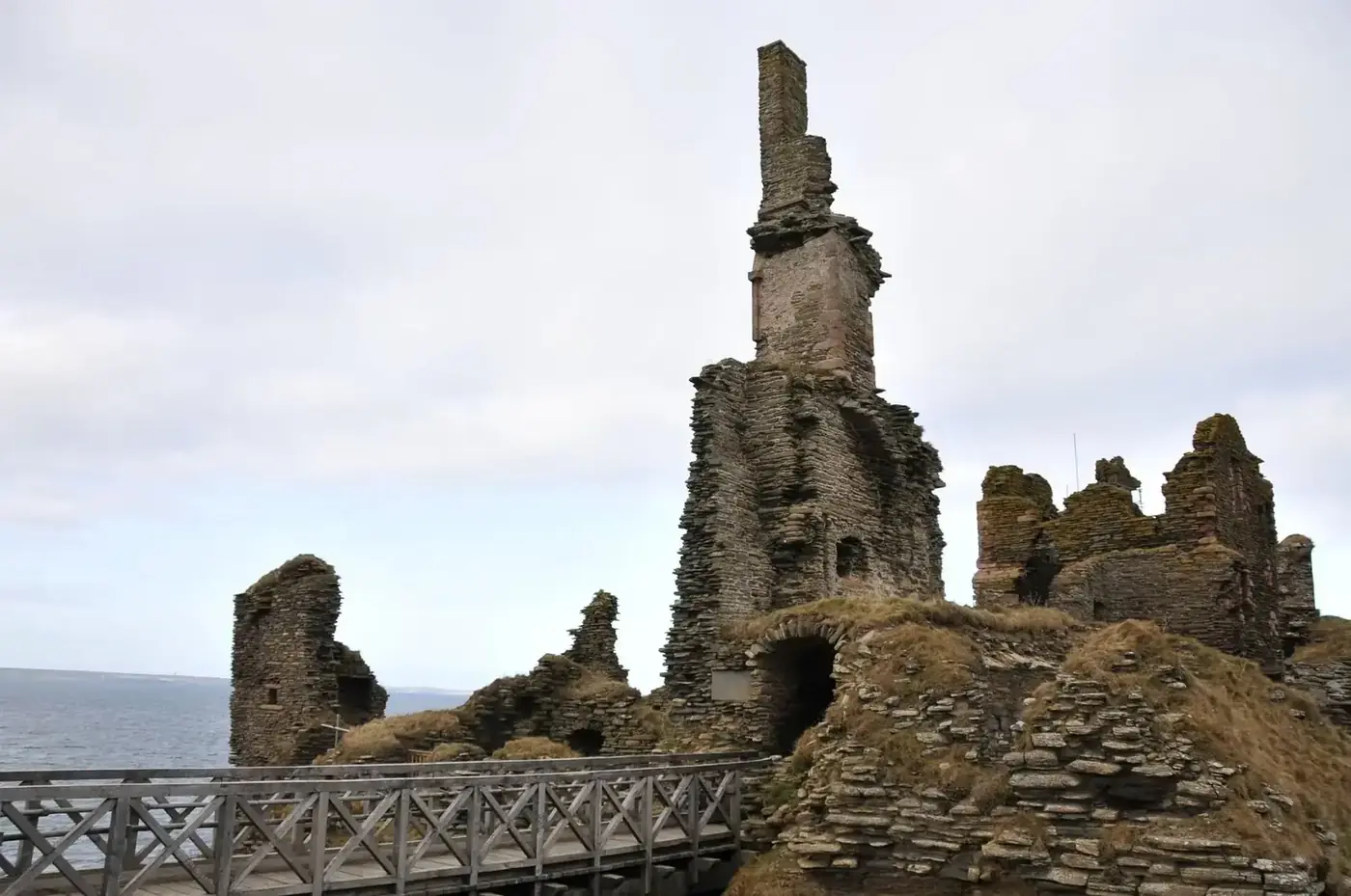
The approach reveals the castle a little at a time: rock, bridge, walls and sea stacked into one narrow view. It is as much a landscape experience as an architectural one.
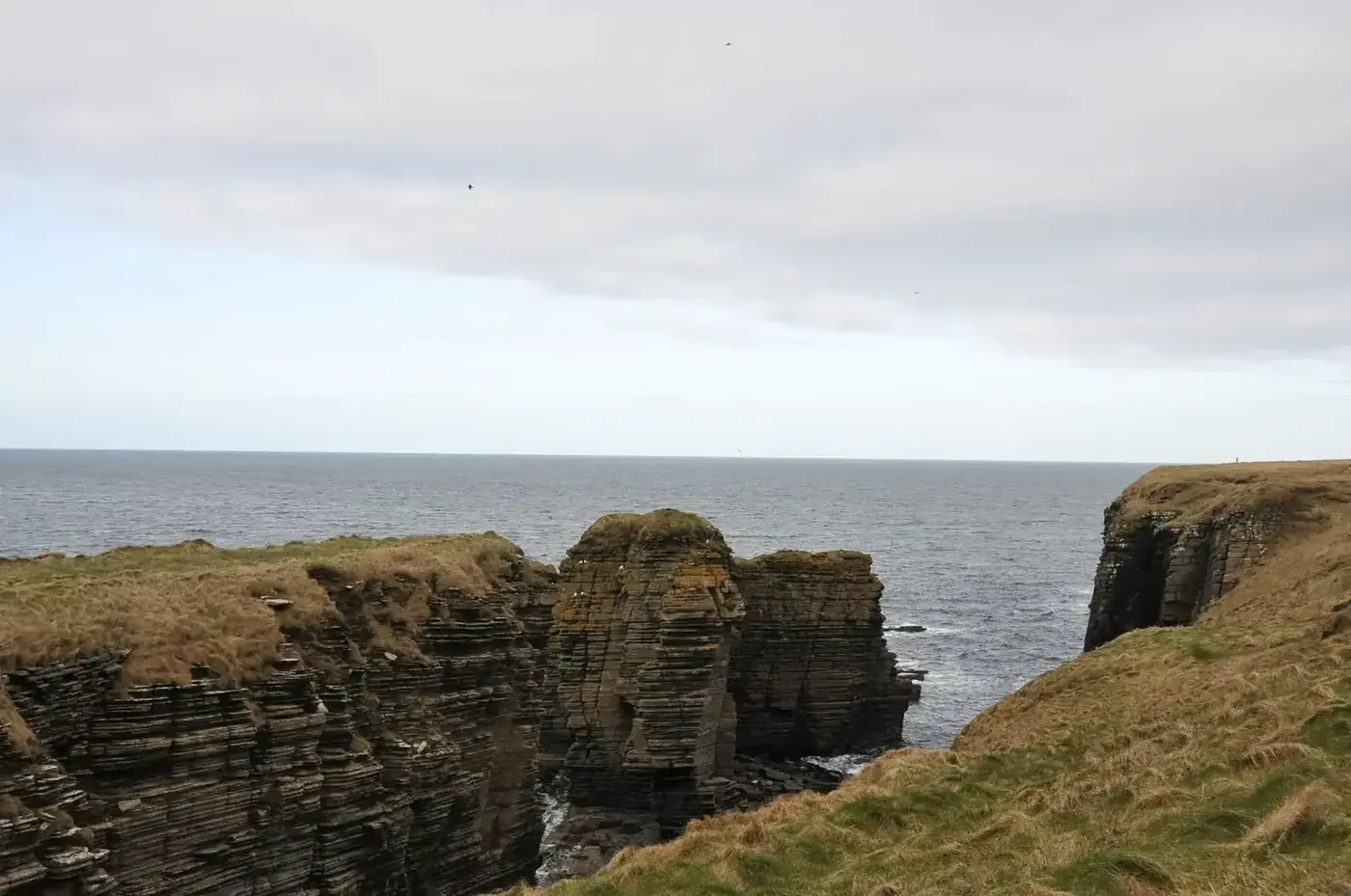
Use the maintained route and respect closures. The cliffs are essential to the photograph and a serious hazard beyond the barriers.
Older accounts separated medieval Girnigoe from a later Castle Sinclair. Research by FAS Heritage identified a more complicated sequence within one developing complex.
Architectural evidence suggests a castle existed by the end of the fourteenth century, but this is not a precise documentary foundation date for every surviving wall.
02 / VISUAL JOURNAL
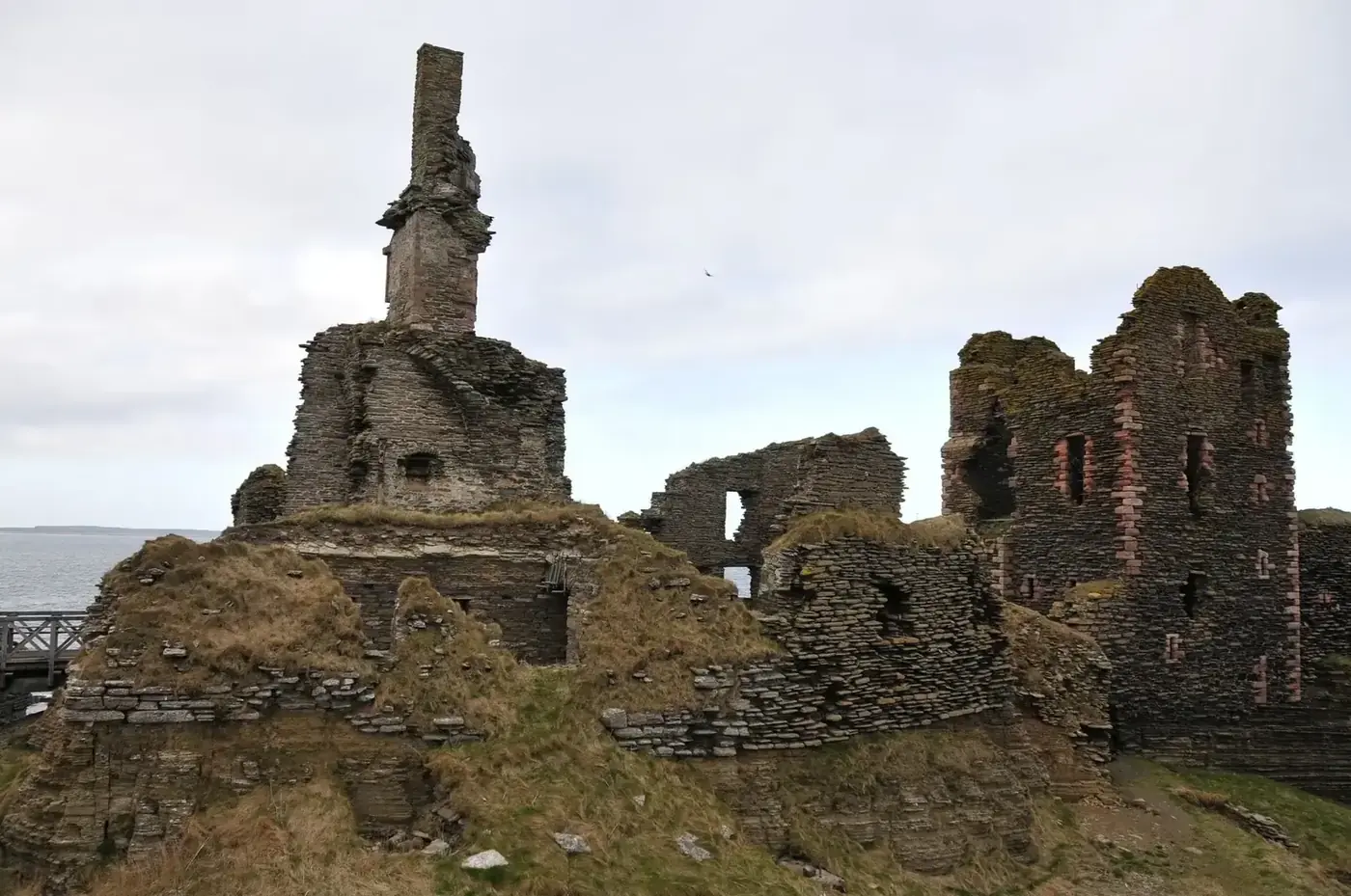
Every photograph on this page was taken by CastleScotland during visits to the site.
10 of 16 photographs
01 / THE STORY CONTINUES
John Sinclair, Master of Caithness, was imprisoned here by his father. That confinement has documentary support.
A gruesome tradition says he was fed salted beef and denied water until he died. The detail is not securely established, so it belongs to the castle’s folklore rather than the confirmed account of his imprisonment.
By 1680, correspondence described ruined buildings and the removal of timber. Some accounts attribute the damage to artillery.
The evidence consulted does not confirm a decisive bombardment. Neglect, reuse and exposure can dismantle a residence without one cinematic final attack.
03 / MOMENTS IN STONE
Archaeological interpretation suggests that a castle was established by this period. Modern archaeological research revises the older interpretation of two separate castles.
A Parliamentarian garrison occupies the castle. John’s confinement has documentary support; the salted-beef death story is not securely established.
Correspondence describes ruined buildings and the removal of timber; an artillery explanation remains unconfirmed. The castle stands north of Wick, overlooking Sinclair Bay.
The Sinclair earls of Caithness developed the residence over generations. Its outer and inner wards, tower and gatehouse formed different parts of a single household, shaped by an exceptionally restrictive site. Looking across the narrow divisions between them, it is easy to see how later observers arrived at the two-castle explanation. The most useful approach is to follow the changing arrangement of entrances, walls and rooms rather than assign each group an independent identity.
The double name also reflects a formal change in the early seventeenth century. Parliamentary renaming did not necessarily mark the construction of an entirely new castle. This distinction matters at a site where documents, architectural changes and later naming conventions have often been collapsed into one simple story. The surviving residence combined defensible approaches with accommodation suited to the status of the earls; a cliff-edge position did not exclude ambitions for comfort and display.
One of its darkest traditions concerns John, Master of Caithness, and his father, the fourth earl. Popular versions claim John died after imprisonment and a meal of salted beef without water. Documentary evidence discussed by the archaeologists instead records an escape from confinement in 1575. The imprisonment has a firmer basis than the sensational account of his death. The latter should be encountered as a later tradition, not as a verified event with an invented timetable.
Military occupation and loss also require care. A Parliamentarian garrison occupied the castle in the 1650s, and excavated deposits have been associated with that episode. During the later dispute over the earldom, accounts of destruction became entangled with a supposed devastating bombardment. The archaeological report found no evidence confirming that artillery explanation. Letters from 1680 describe ruined buildings and the removal of timber, offering a less theatrical picture of dismantling and abandonment.
The sea remains an essential part of the experience. Pause where the route permits a view back across the masonry: changes in level, narrow passages and abrupt edges explain more than a distant outline alone. It is a place to read slowly. Missing roofs and interrupted walls make some relationships visible while concealing others, so an atmospheric photograph should not be mistaken for a complete understanding of the castle's former arrangement.
The Clan Sinclair Trust's conservation programme, supported by archaeological investigation, has sought to stabilise the ruins and improve access without rebuilding an imaginary complete fortress. World Monuments Fund included the site in its 2002 Watch. Modern paths and protective works are another chapter in the castle's life. Follow the current route and restrictions, allowing the landscape and surviving detail to carry the visit. Its power comes from the combination of a remarkable setting, an ambitious residence and a history that research is still refining.
Explore the Castle of Mey and its royal history, compare Dunrobin Castle, or discover the coastal ruins of Sinclair Girnigoe. These stops are spread across the north: use the castle map and allow for travel time.
08 / EXPLORE NEXT
Find Scottish castles by region, landscape or the stories that bring them to life.
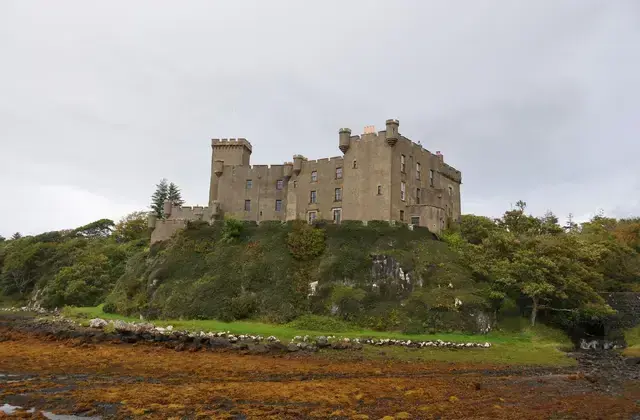 The HighlandsDunvegan Castle
 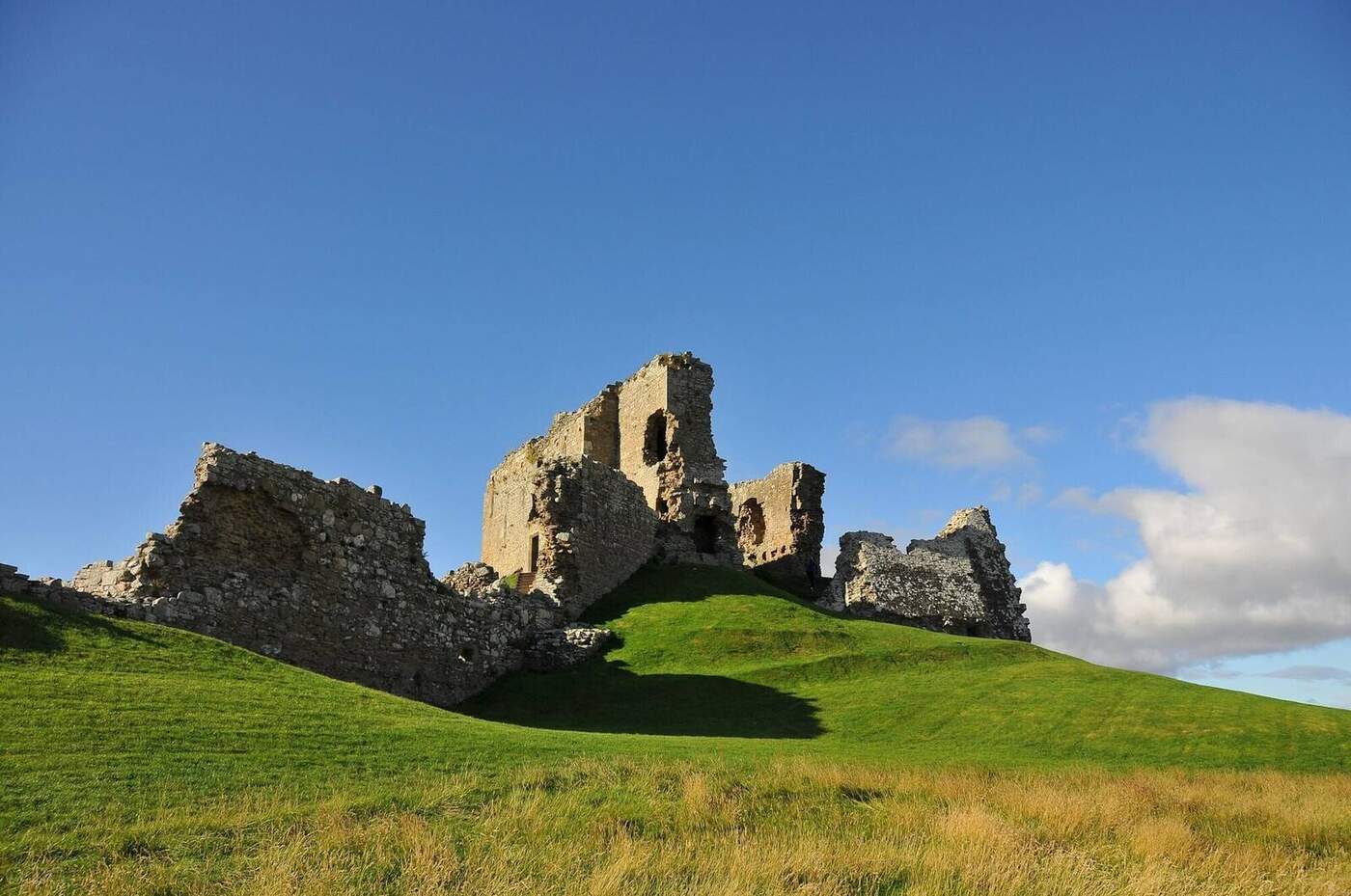 The HighlandsDuffus Castle
 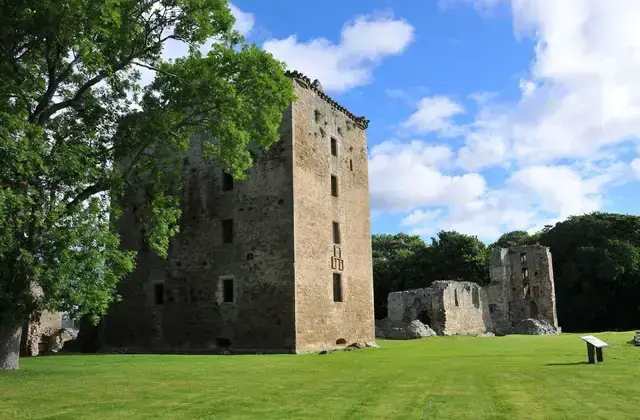 The HighlandsSpynie Palace