TICKETS£16.00
2026 prices and opening season checked on Dunrobin’s official visitor page; confirm before booking.
View current prices
Adult (17+)£16.00
Concession£14.00
Child (6+)£10.00
Under 6Free
Family 2 adults + 3 children£47.00
 Castle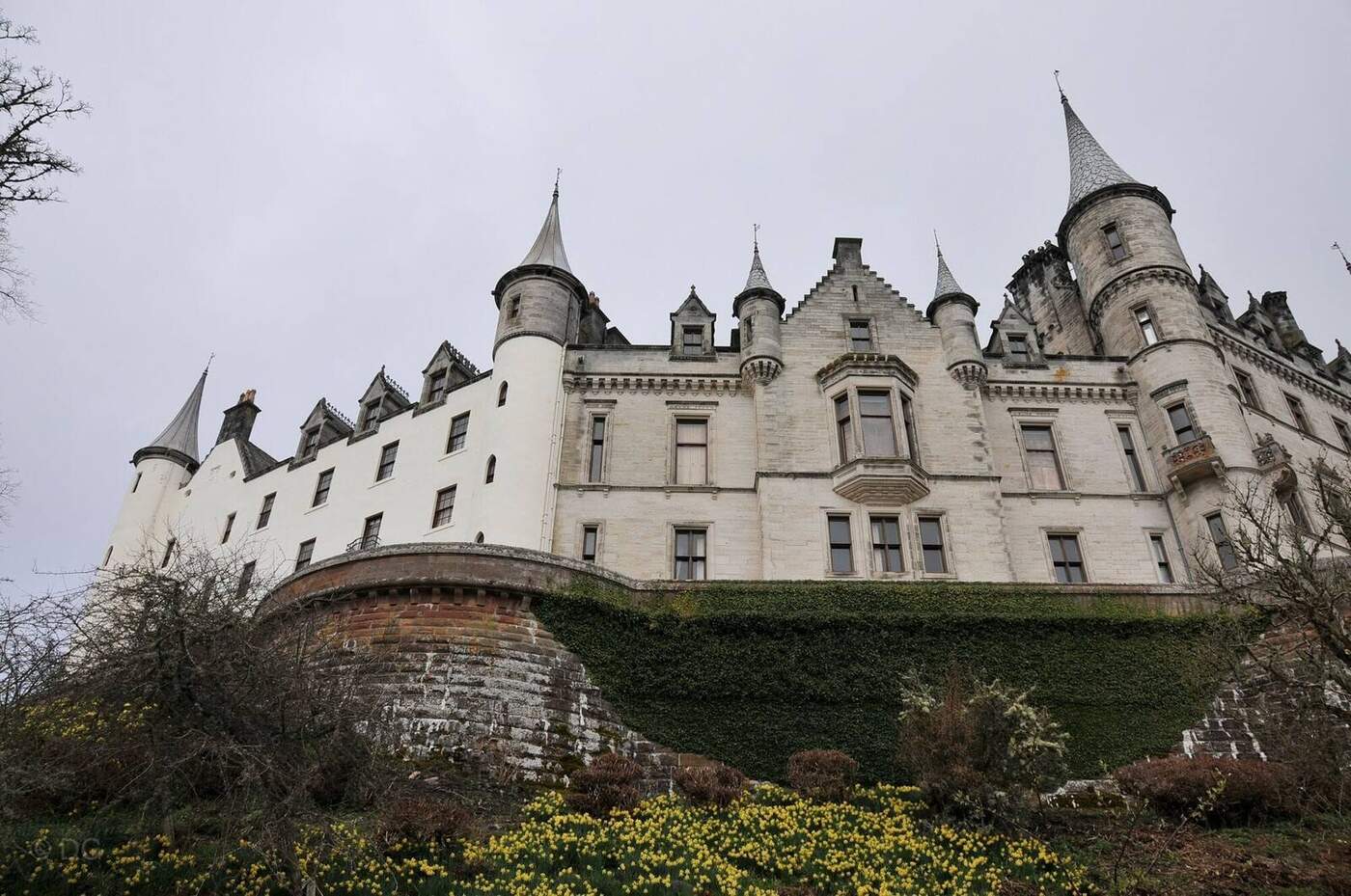
SUTHERLAND SEAT · GOLSPIE
A northern château. Above the Moray Firth.
PLAN YOUR VISIT
Dunrobin, Golspie, Sutherland, KW10 6SF
2026 prices and opening season checked on Dunrobin’s official visitor page; confirm before booking.
Adult (17+)£16.00
Concession£14.00
Child (6+)£10.00
Under 6Free
Family 2 adults + 3 children£47.00
Dunrobin’s official 2026 page lists 1 April–31 October opening. The ticket includes the castle, museum and gardens; the castle is half a mile north of Golspie on the A9.
Parking information
Free visitor parking, with space for around 200 cars and four coaches. Follow the castle entrance from the A9.
Parking sources checked · 11 October 2026
The site has parking for around 200 cars, shop, toilets and a tearoom. Historic interiors and garden slopes mean that individual routes vary in accessibility.
A spectacular Highland day out whose architecture and gardens deserve the attention they receive, provided the Sutherland estate story is given equal space.
WHAT TO EXPECT
01 / THE STORY
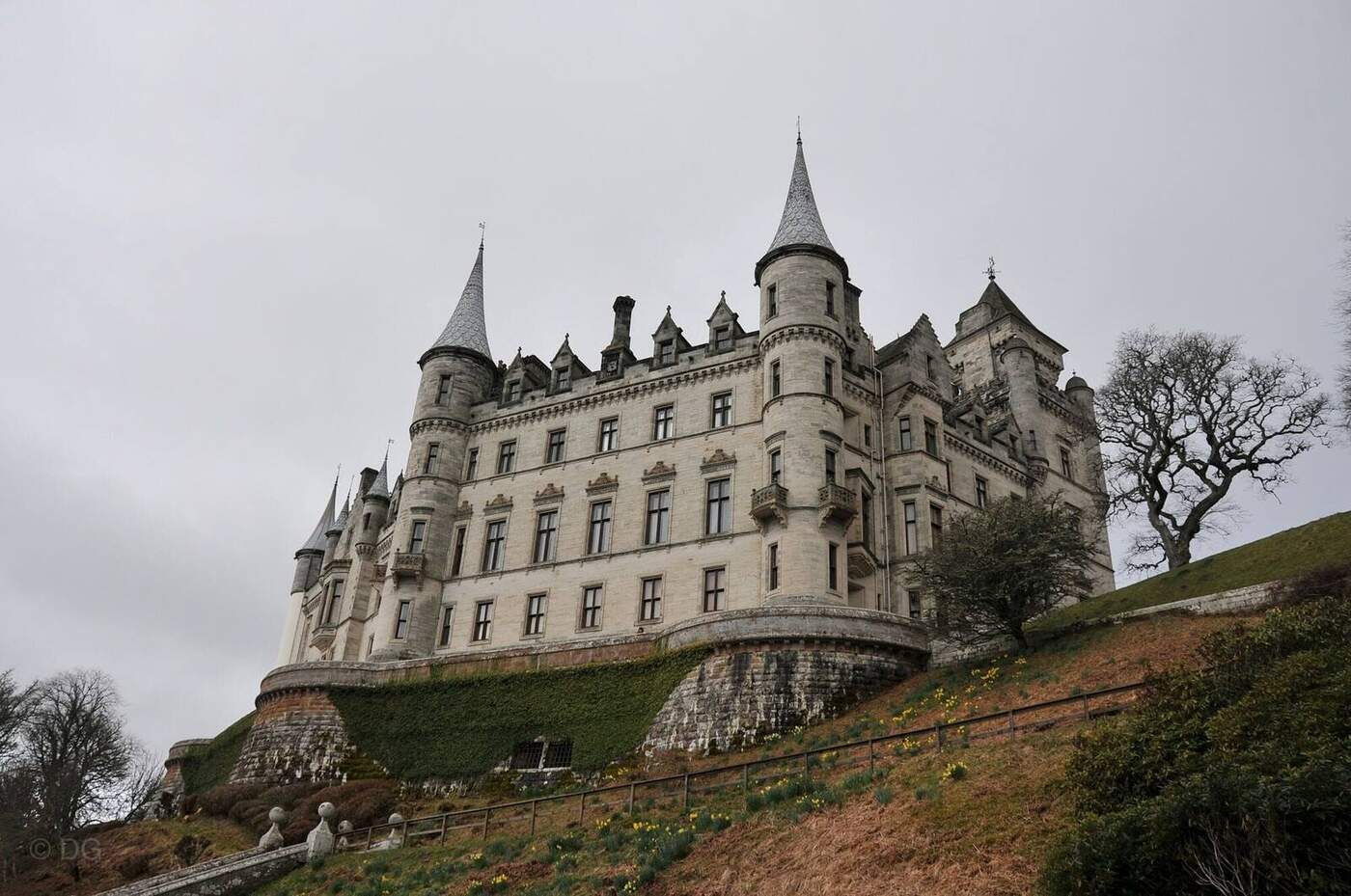
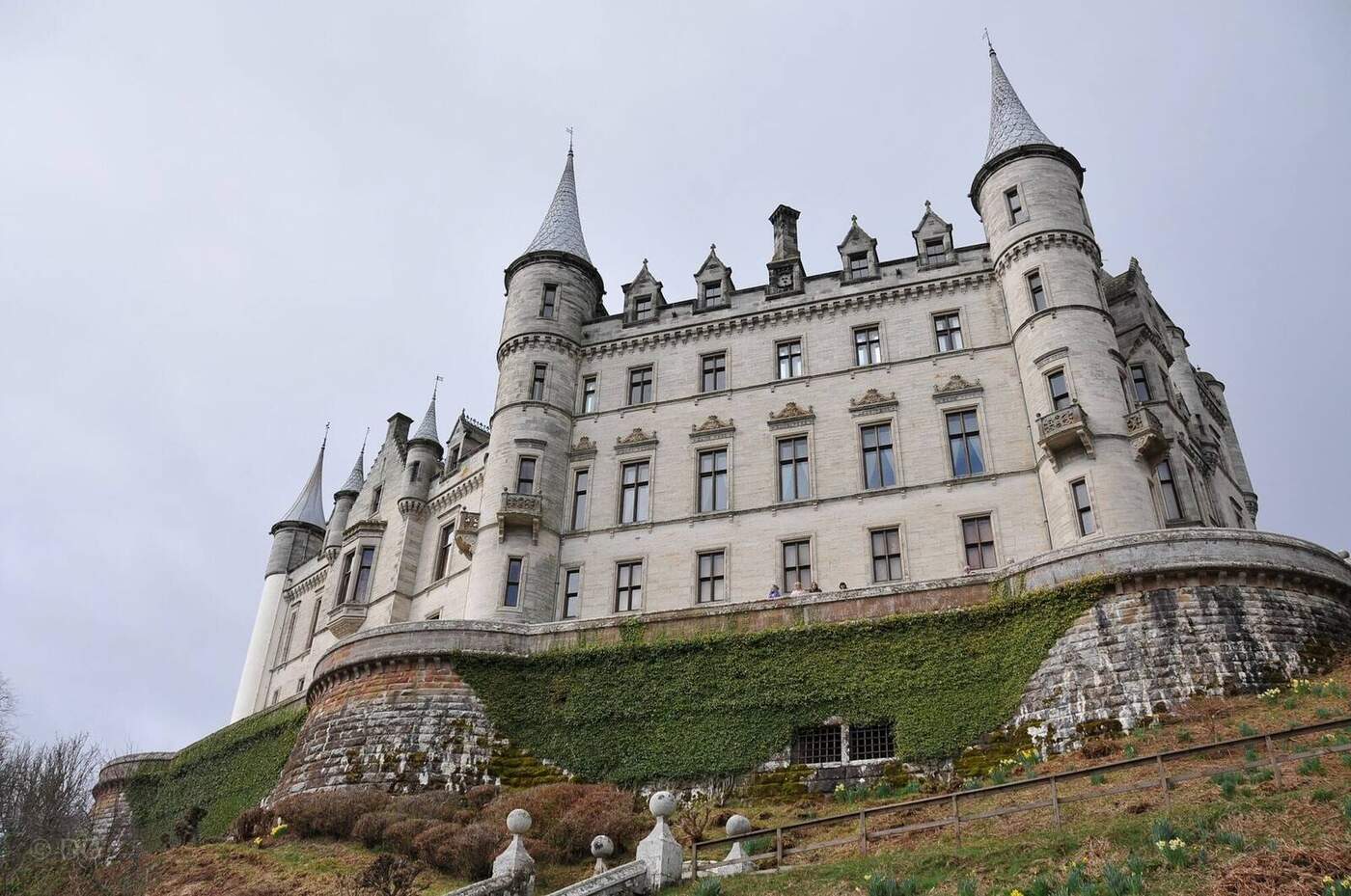
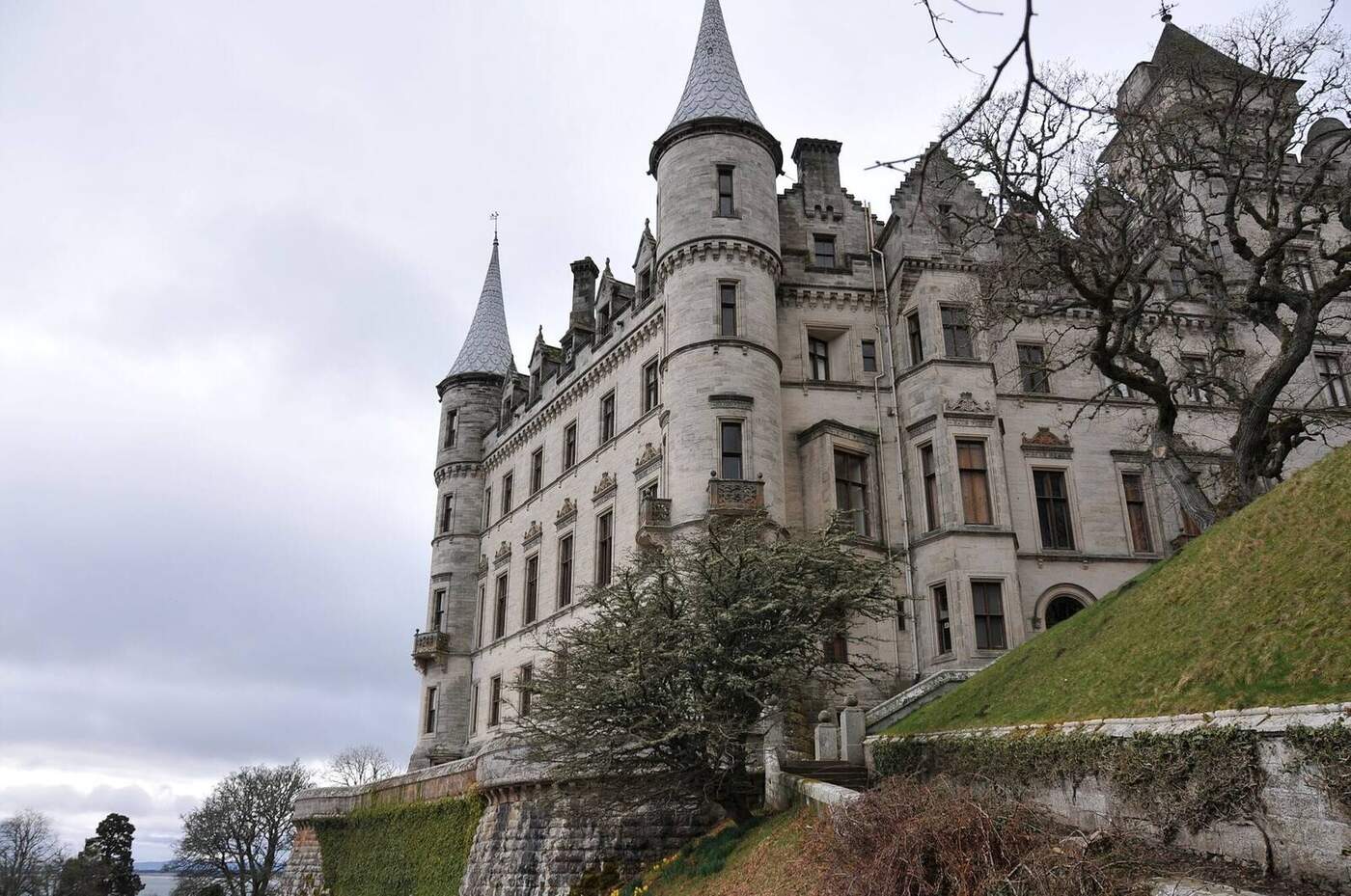
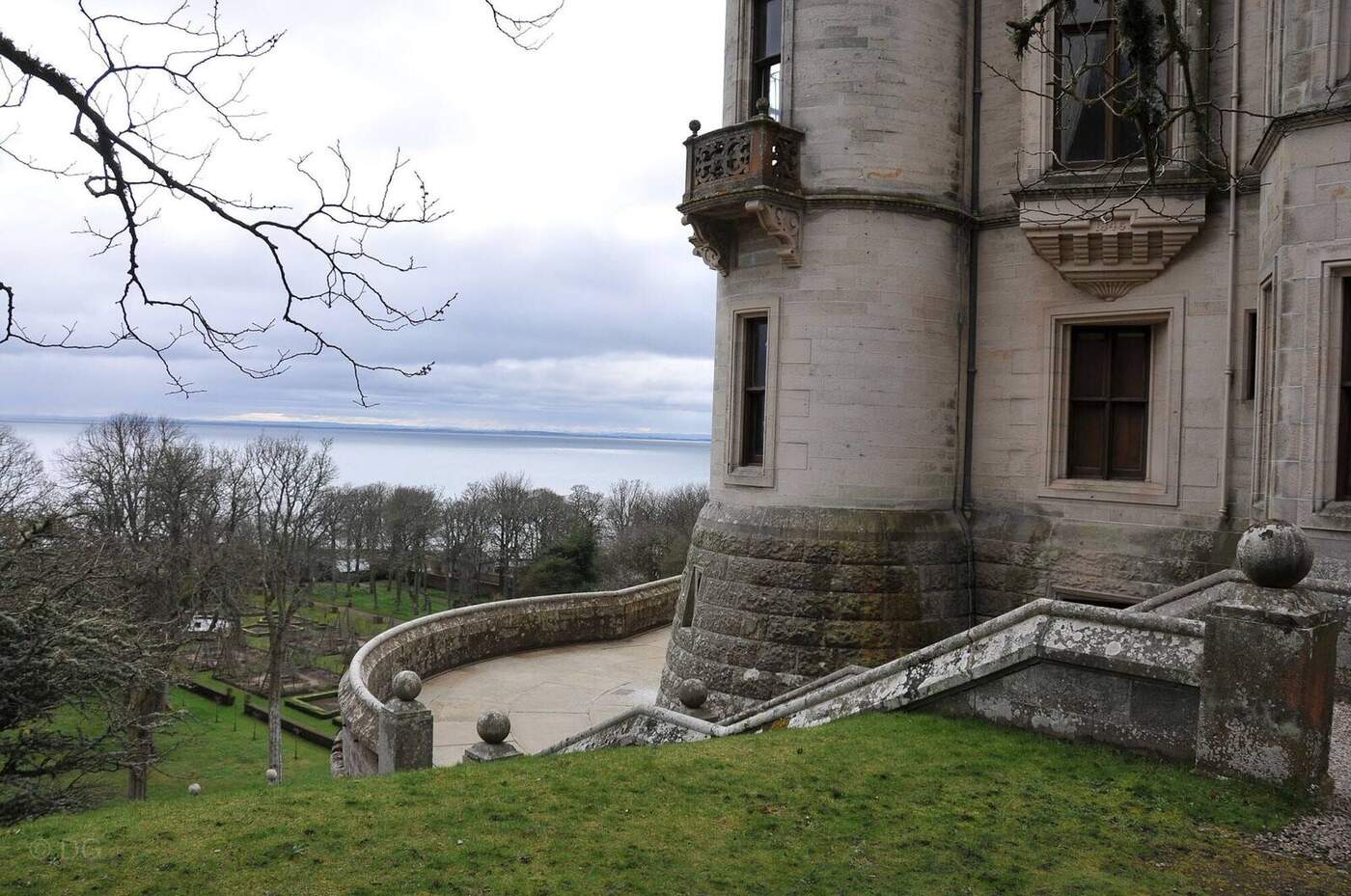
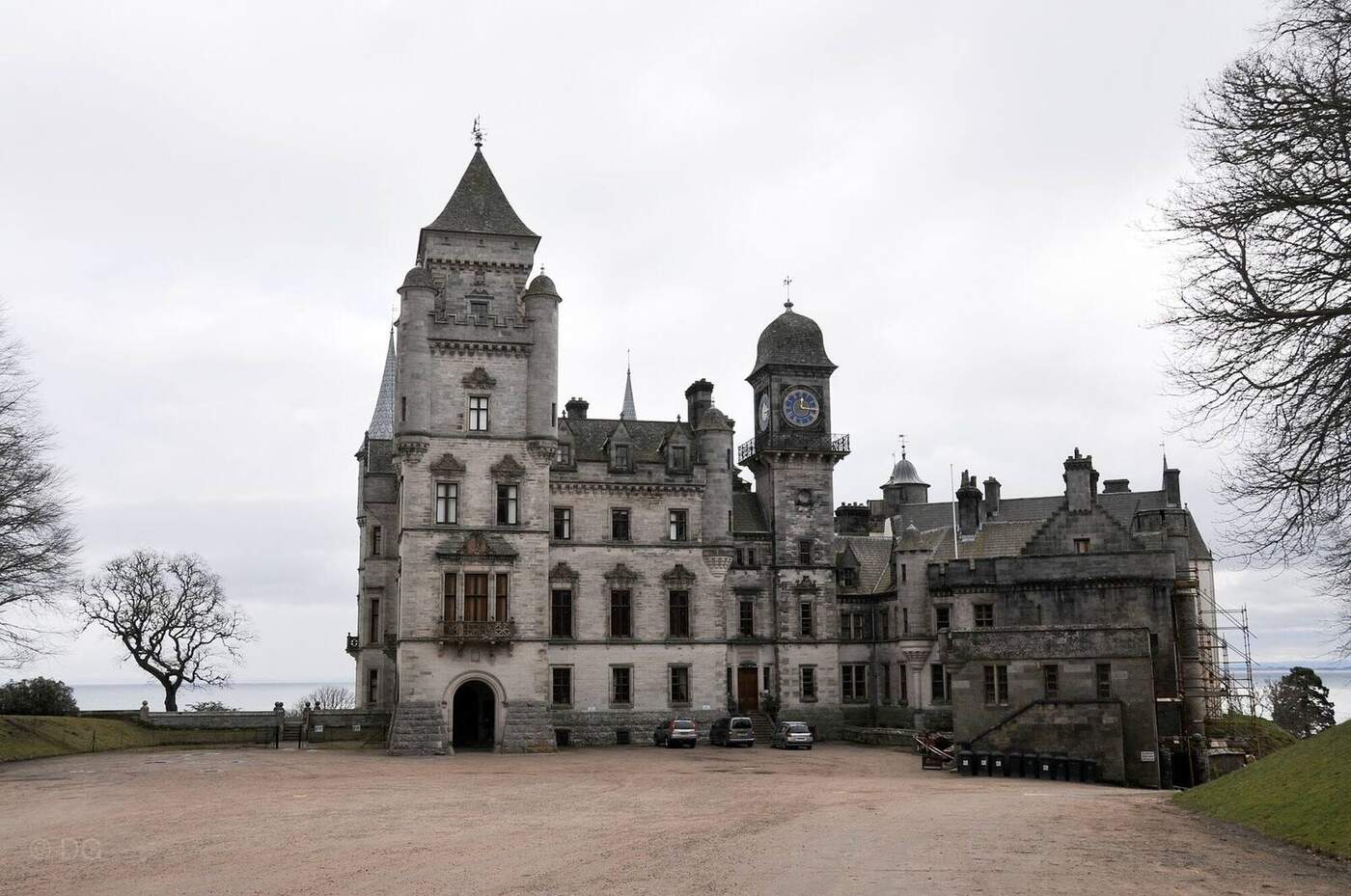
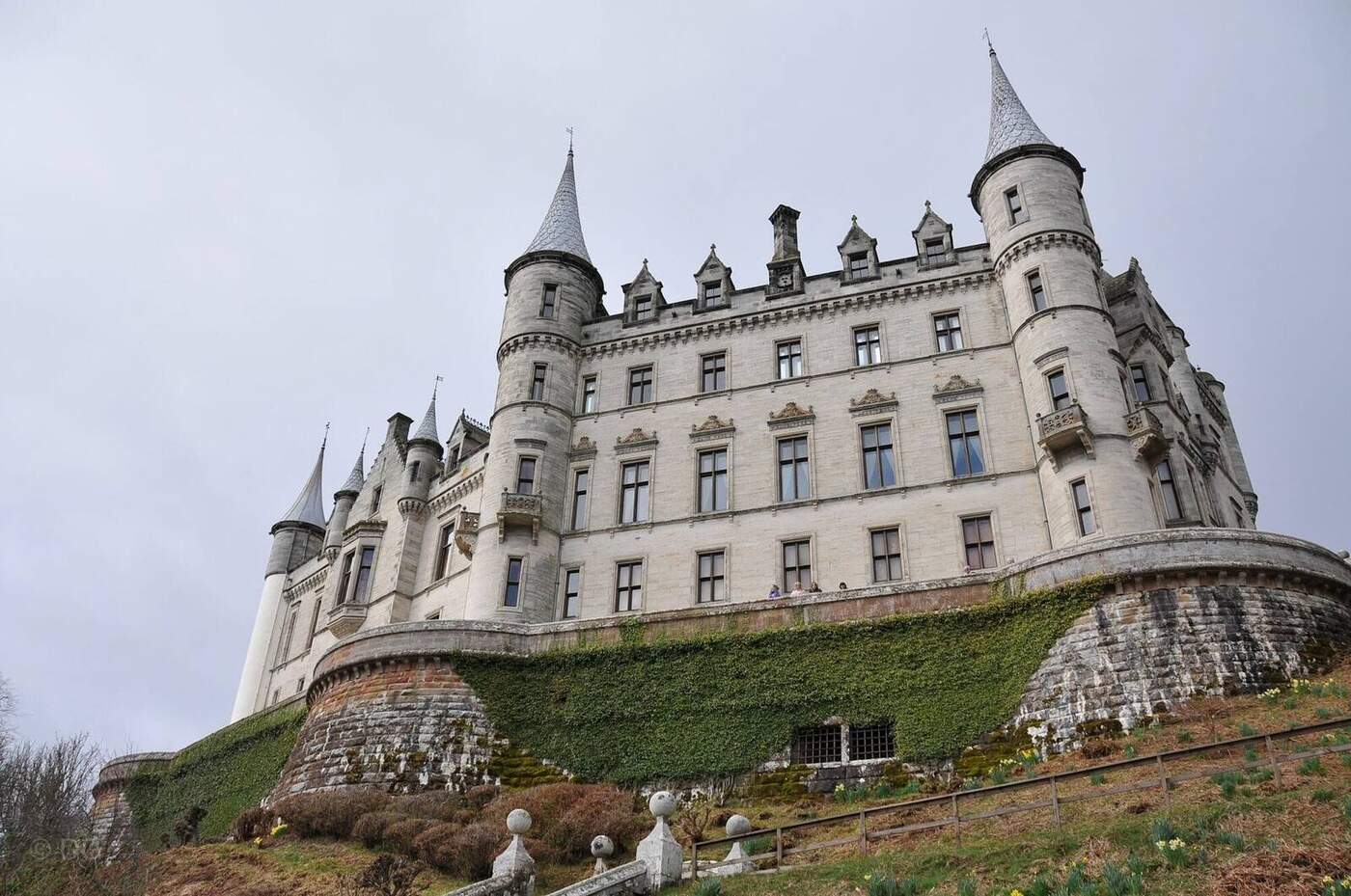
Dunrobin looks like a French château transported to the edge of the Moray Firth. Conical roofs rise above formal terraces, while the sea completes a view deliberately arranged for drama.
The beauty is real, and so is the difficult history of the Sutherland estate. A good visit keeps architecture, collections, gardens and the human cost of land policy in the same story.
The exterior is only the opening scene. Interiors, museum collections and gardens descending towards the sea each explain a different part of the estate.
Check the seasonal programme and demonstration times. This is a managed house visit that rewards several hours, not a roadside photo stop.
A Sutherland stronghold existed here in the medieval period, and Historic Environment Scotland dates the surviving keep to the fourteenth century.
Later builders absorbed it into a much larger residence. The fairytale outline is therefore a Victorian transformation around older fabric, not a single medieval design.
Sir Charles Barry and William Leslie are associated with the great mid-nineteenth-century campaign. Published records acknowledge uncertainty over the exact division of responsibility.
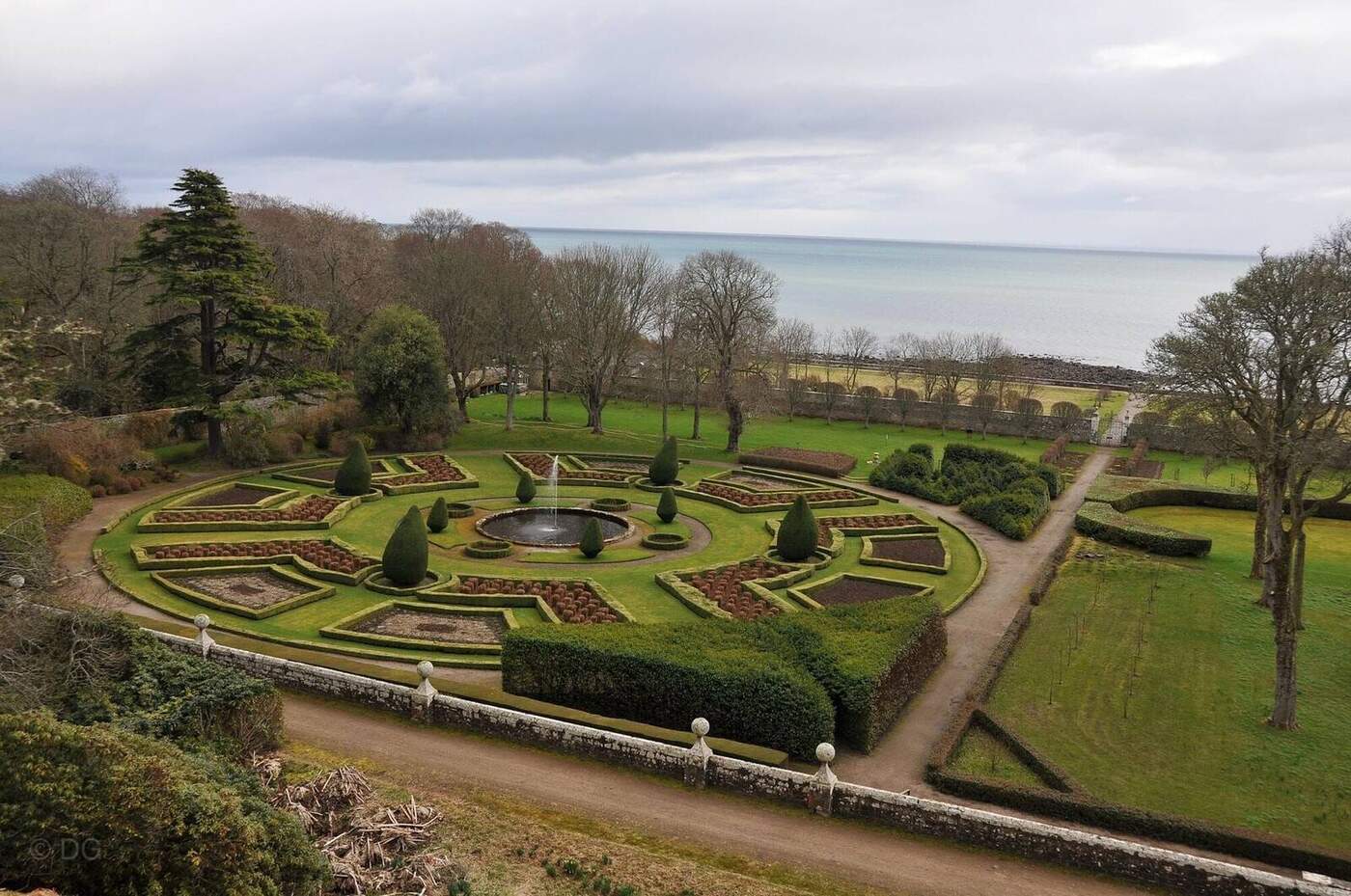
The terraces and château forms turned house, garden and Firth into one composition. Giving every detail to one architect would simplify a collaborative history.
02 / VISUAL JOURNAL
Every photograph on this page was taken by CastleScotland during visits to the site.
01 / THE STORY CONTINUES
During the Sutherland Clearances, estate policies displaced communities as land inland was reorganised for large sheep farms. Many people were moved towards coastal settlements; hardship, resistance and emigration followed.
The details are complex, but the subject is essential. The wealth and power represented by Dunrobin cannot be separated from the lives shaped by the estate.
Dunrobin served as a naval hospital when fire damaged it in 1915. Sir Robert Lorimer directed major post-war restoration and interior work.
From 1965 to 1972, the castle served as a boys' school. These unexpected uses sit behind rooms that can otherwise feel frozen in aristocratic time.
Stanley Kubrick used Dunrobin's exterior as a continental spa in Barry Lyndon (1975). It also became a major location for What We Did on Our Holiday (2014).
The château appearance makes the screen disguise convincing. The garden seen in the same Barry Lyndon sequence, however, was filmed elsewhere—another example of cinema stitching locations together.
03 / MOMENTS IN STONE
A Sutherland stronghold develops; HES dates the surviving keep to the fourteenth century. The architecture turns a medieval seat into a deliberate Victorian spectacle.
The Sutherland Clearances profoundly disrupt estate communities. The terraces make the Moray Firth part of every main view.
Major work associated with Barry and Leslie creates the château appearance. The beauty of the house belongs beside the human history of Sutherland land policy.
Fire damages the castle during its use as a naval hospital.
Lorimer directs important restoration and interior work.
Dunrobin serves as a boys’ school.
The medieval core was enlarged through later building campaigns, including a seventeenth-century wing and substantial work towards the end of the eighteenth century. Older masonry survived within the growing residence. The château appearance therefore disguises a complicated plan. Looking for changes in scale and connections between ranges is more revealing than treating every tower as part of one medieval defensive scheme.
The great nineteenth-century transformation is associated with Sir Charles Barry and William Leslie. The castle’s account places Barry’s commission in 1845, while HES describes a broader period of work around the middle of the century. HES also acknowledges uncertainty about the division of architectural responsibility. Barry’s importance is clear; crediting every detail exclusively to him would go beyond the evidence.
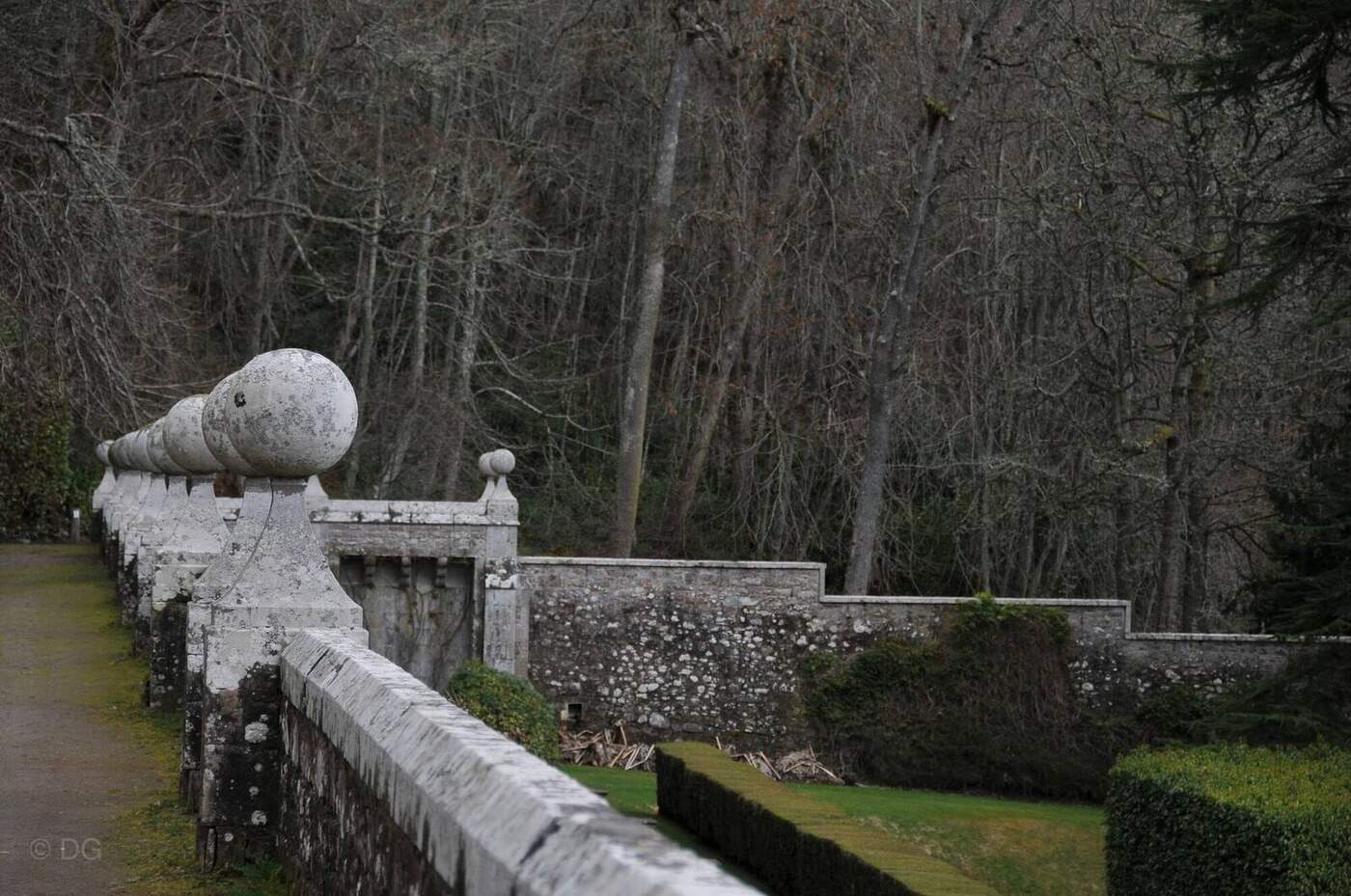
The formal garden acquired its principal nineteenth-century design during the same broad transformation, although gardening here had a much longer history. Terraces tie the house to the shore and organise its most famous views. They create an impression of settled order. That visual harmony should not be mistaken for an unchanged landscape inherited intact from the medieval earls.
Earlier in the nineteenth century, the Sutherland Clearances displaced communities as estate managers reorganised land inland for large sheep farms. Many people were moved towards coastal settlements, with profound consequences for livelihoods and established relationships with the land. Emigration forms part of the wider story, but displacement did not always mean immediate removal overseas. Estate correspondence and the Scottish History Society’s account show both the policy’s advocates and the resistance and hardship it provoked.
In 1915, when Dunrobin was being used as a naval hospital, fire damaged the building. Sir Robert Lorimer’s post-war restoration reshaped important interiors. The rooms should therefore be understood through both Victorian display and twentieth-century repair. A later educational chapter followed: the castle served as a boys’ school from 1965 to 1972, another reminder that aristocratic buildings could find very different uses.
Dunrobin is listed at Category A, and its designed landscape has a separate national inventory entry. The museum’s archaeological objects, including Pictish carved stones, place the visit within a wider northern history. Their presence in a collection does not date the castle’s foundations. Ask where objects came from and how they reached the museum, as well as what they look like.
Allow time for the garden as well as the house. The seaward outlook explains the design particularly well. Check the operator’s current arrangements for interiors, museum access and demonstrations before travelling. Dunrobin is at its most rewarding when spectacular architecture and the more difficult history of the estate remain visible together.
Explore the Castle of Mey and its royal history, compare Dunrobin Castle, or discover the coastal ruins of Sinclair Girnigoe. These stops are spread across the north: use the castle map and allow for travel time.
08 / EXPLORE NEXT
Find Scottish castles by region, landscape or the stories that bring them to life.
 The HighlandsUrquhart Castle
  The HighlandsDunvegan Castle
  The HighlandsDuffus Castle