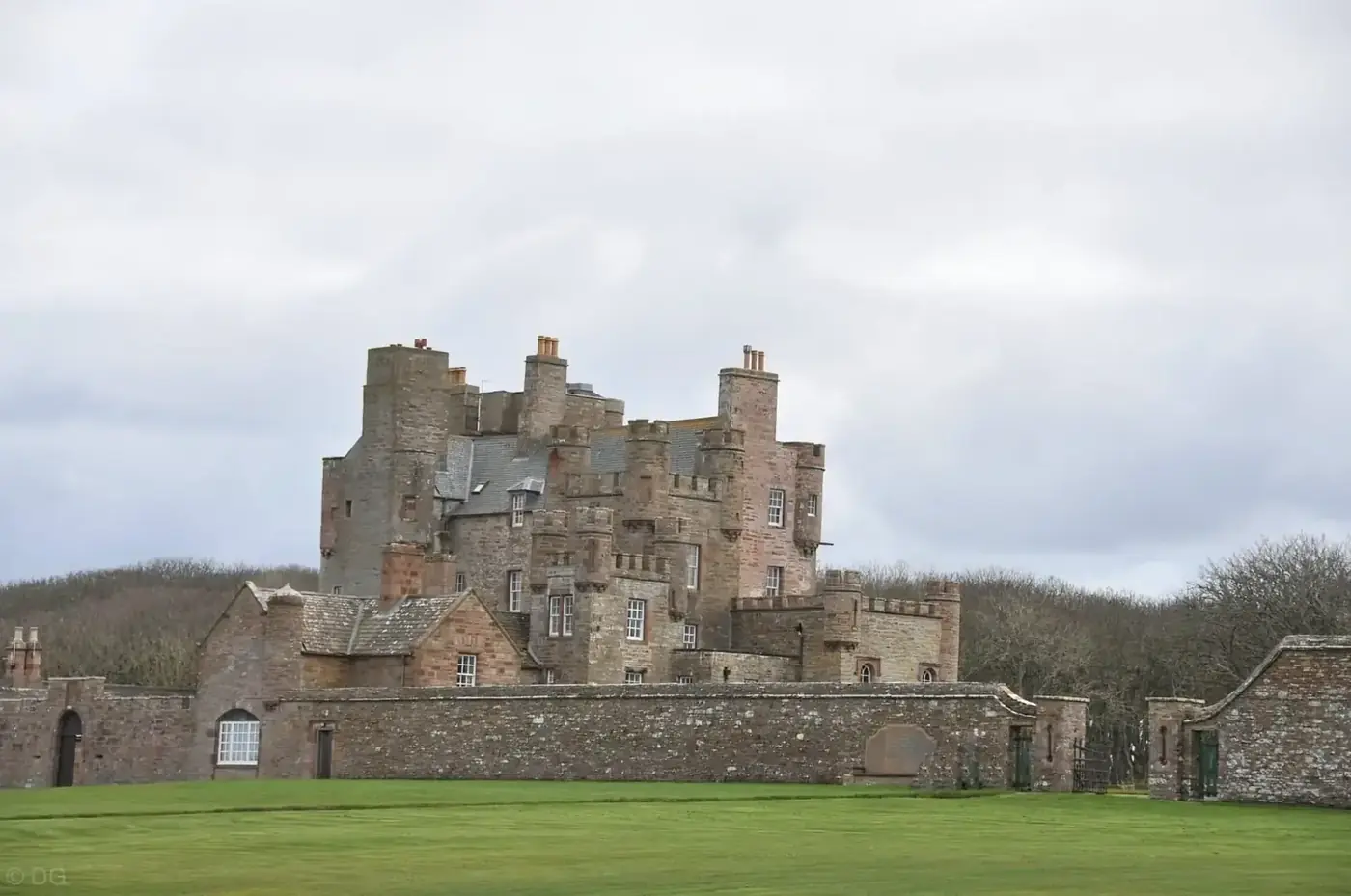
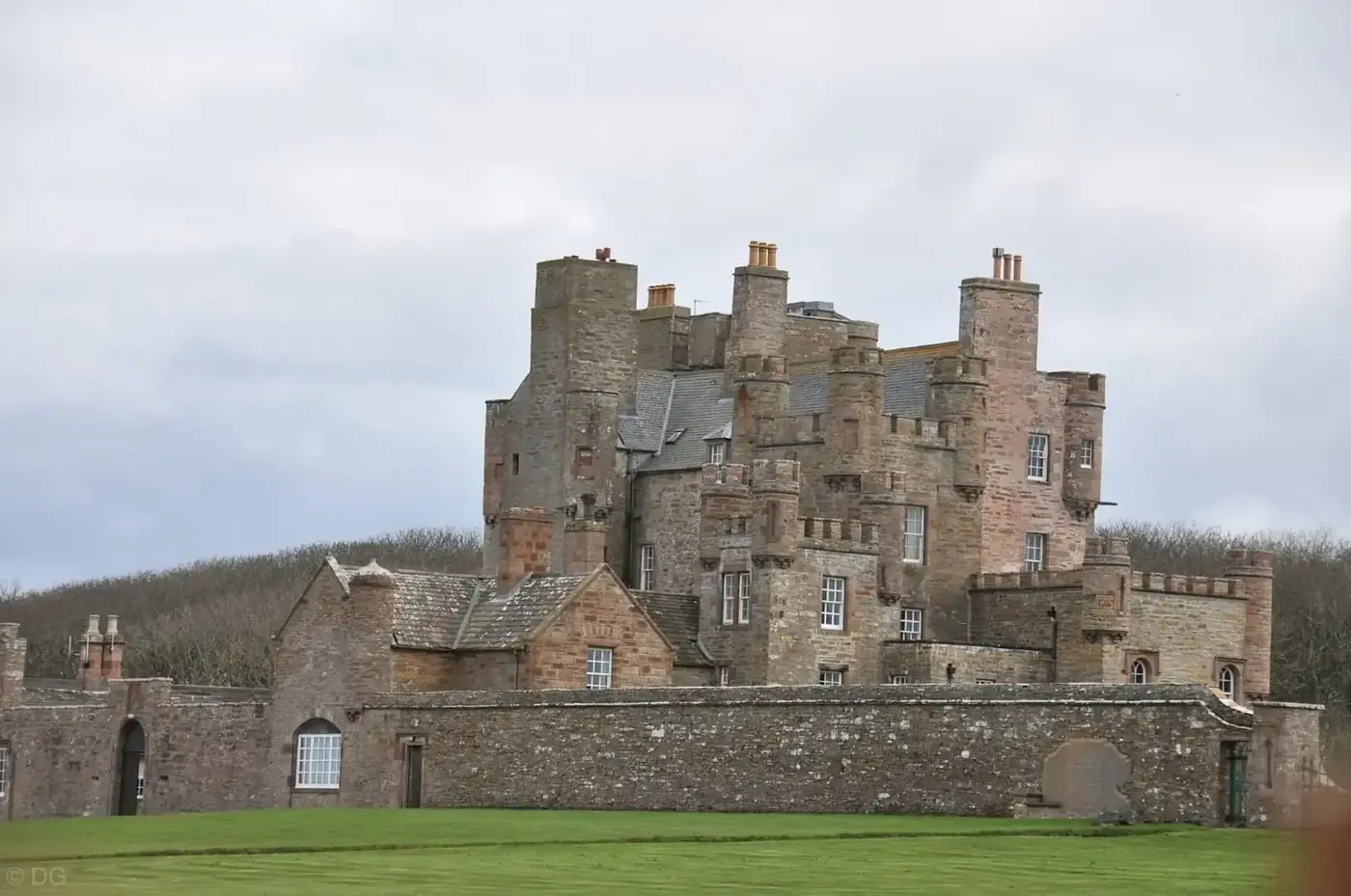
The castle was built for George Sinclair, fourth Earl of Caithness. HES dates its origins probably to 1566–1572, while the castle’s own introduction gives that range without the qualification. Keeping ‘probably’ is appropriate: an approximate building date is more honest than claiming a documented opening day. The older name Barrogill also appears in its history; the Queen Mother restored the name Castle of Mey after her purchase.
Mey’s sixteenth-century design is described as a Z-plan, with projecting towers associated with the main block. Gun openings and corbelled turrets preserve the language of a fortified residence, but the building was repeatedly adapted. The present outline records that sequence of changes rather than an untouched original design.
William Burn was commissioned to alter the house in 1819. His entrance work belongs to a later architectural layer, and the HES listing also records substantial twentieth-century changes. The lesson is visible in the building itself: restoration does not necessarily mean returning every part to a single earlier state. Mey’s identity includes the decisions of people who made an old residence suitable for new ways of living.
When the Queen Mother acquired the property in 1952, it was in poor condition. The estate’s history describes the restoration of the castle, gardens and surrounding parkland between 1953 and 1955, and her return visits in August and October. Mey became a personal northern retreat rather than merely a ceremonial backdrop. That domestic association helps explain why the house and its setting should be considered together.
In 1996 she transferred the property to a charitable trust. The castle’s own account distinguishes that gift from her earlier personal ownership, and that distinction should be preserved. The King’s Foundation now includes Mey among the places in its care. Royal association is therefore not, by itself, evidence that the building is currently the King’s personal property; stewardship and ownership must not be casually confused.
The gardens tell a continuing story too. The estate describes subsequent changes to planting, paths, hedges and places to sit, rather than a garden frozen exactly as it was in the Queen Mother’s lifetime. Shelter is essential on this exposed coast: the enclosing walls give the planting protection from wind and salt spray. Look at that relationship between enclosure and open landscape before treating the garden simply as decoration beside the castle.
Mey and its garden walls are category A listed. The designation recognises an important historic building, but its older descriptive text is not a current ownership register. It still reflects the Queen Mother’s ownership and gives an approximate purchase date that differs from the estate’s clear 1952 account. This is a reminder that even an authoritative heritage record can contain historical information that requires comparison with other evidence.
For the visitor, the most rewarding approach is to look for connections: between the tower and later additions, between rooms and the garden, and between a royal retreat and a much older Caithness estate. Allow the house to be both impressive and domestic, without expecting battlefield ruins or assuming every feature is sixteenth century. Check the official arrangements for tours before travelling. The strength of Mey is precisely its survival through change: a place adapted, restored and cared for rather than reduced to an outline of lost walls.
 Castle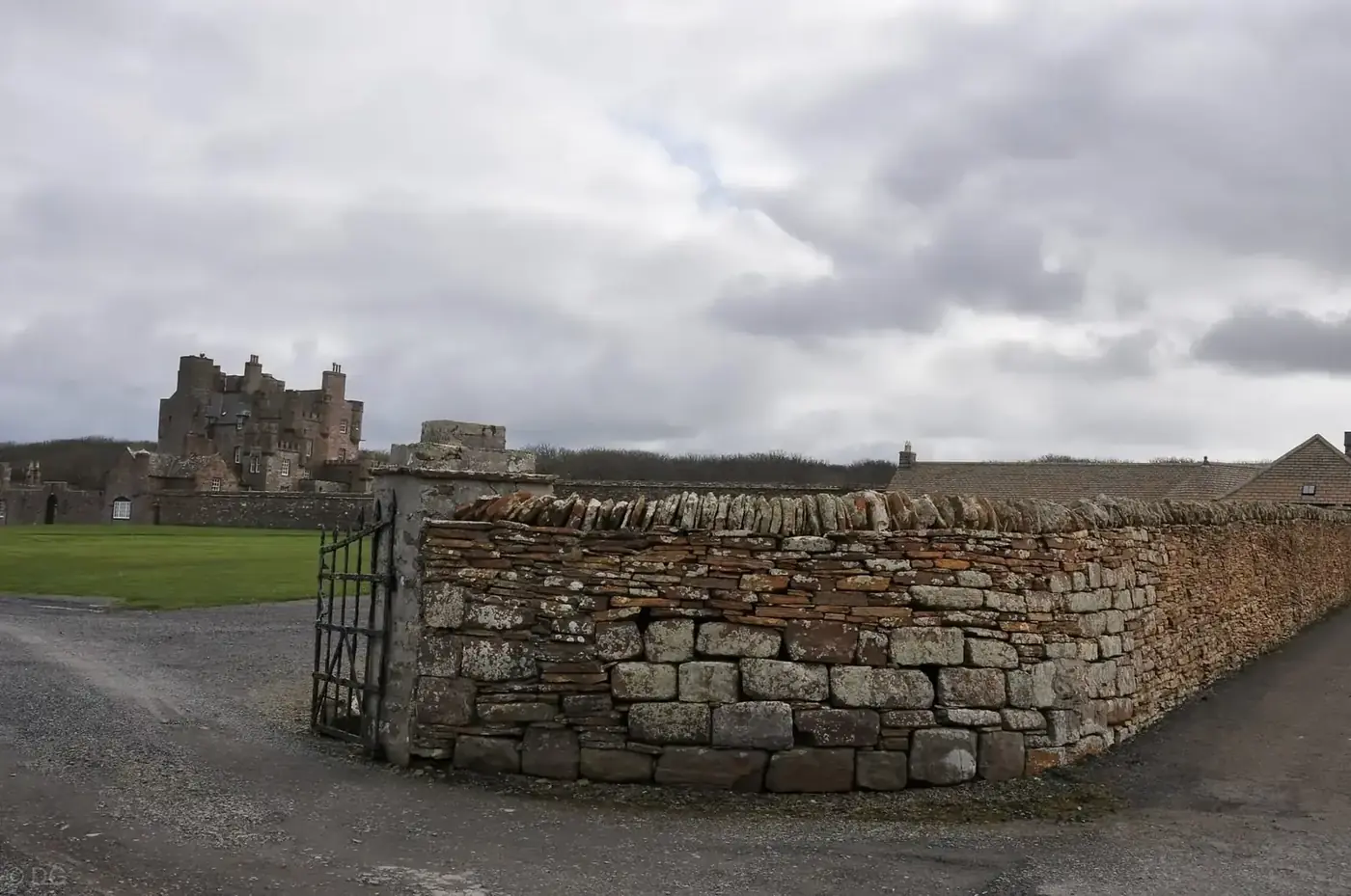
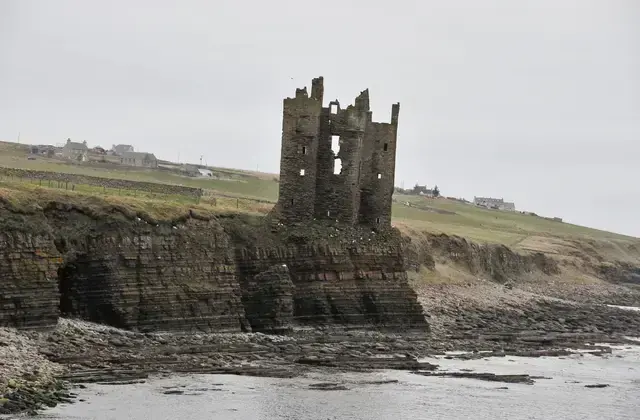 The HighlandsKeiss Castle
  The HighlandsSinclair Girnigoe Castle
  The HighlandsCaisteal Maol