Visitor information follows official or local guidance. Always confirm the latest arrangements before travelling.
View current prices
Exterior viewingNo general public interior admission; private tours operate only when announced by the owner.
Castle
FIELD GUIDE · ARGYLL & THE ISLES
A Scottish castle story. Read through its landscape.
PLAN YOUR VISIT
Loch Laich, near Port Appin, PA38 4DE
Visitor information follows official or local guidance. Always confirm the latest arrangements before travelling.
Exterior viewingNo general public interior admission; private tours operate only when announced by the owner.
No general public interior admission; private tours operate only when announced by the owner.
Parking information
Tour visitors use the Old Inn car park, then walk to the jetty. A booked boat tour is required. The viewpoint café car park is separate.
Parking sources checked · 11 October 2026
View from public roadside and shore viewpoints; the island is not a walk-in attraction.
Essential for photographers and Monty Python fans, even from the shore. An official tour adds the remarkable restoration story when dates and tides allow.
WHAT TO EXPECT
01 / THE STORY
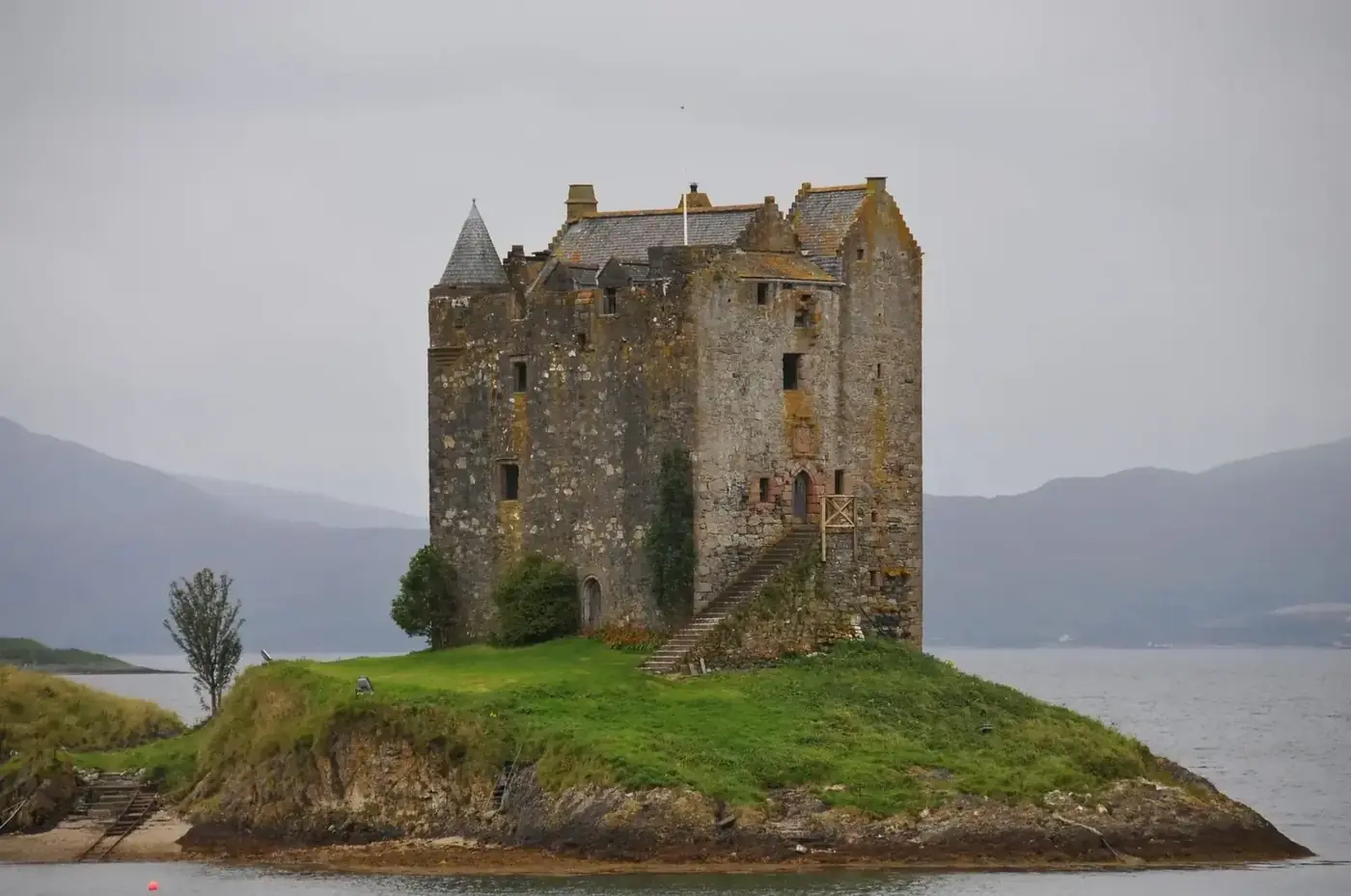
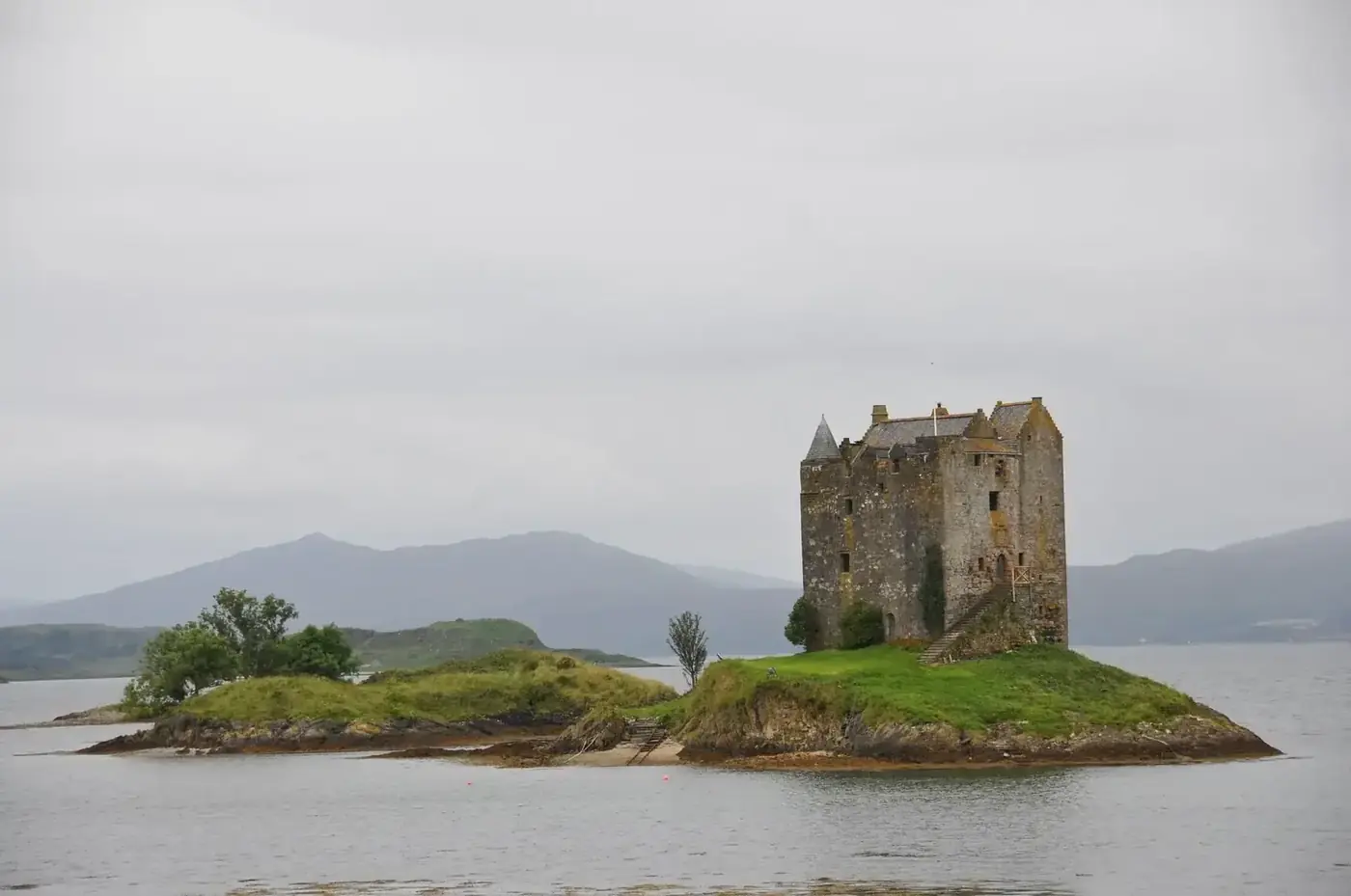
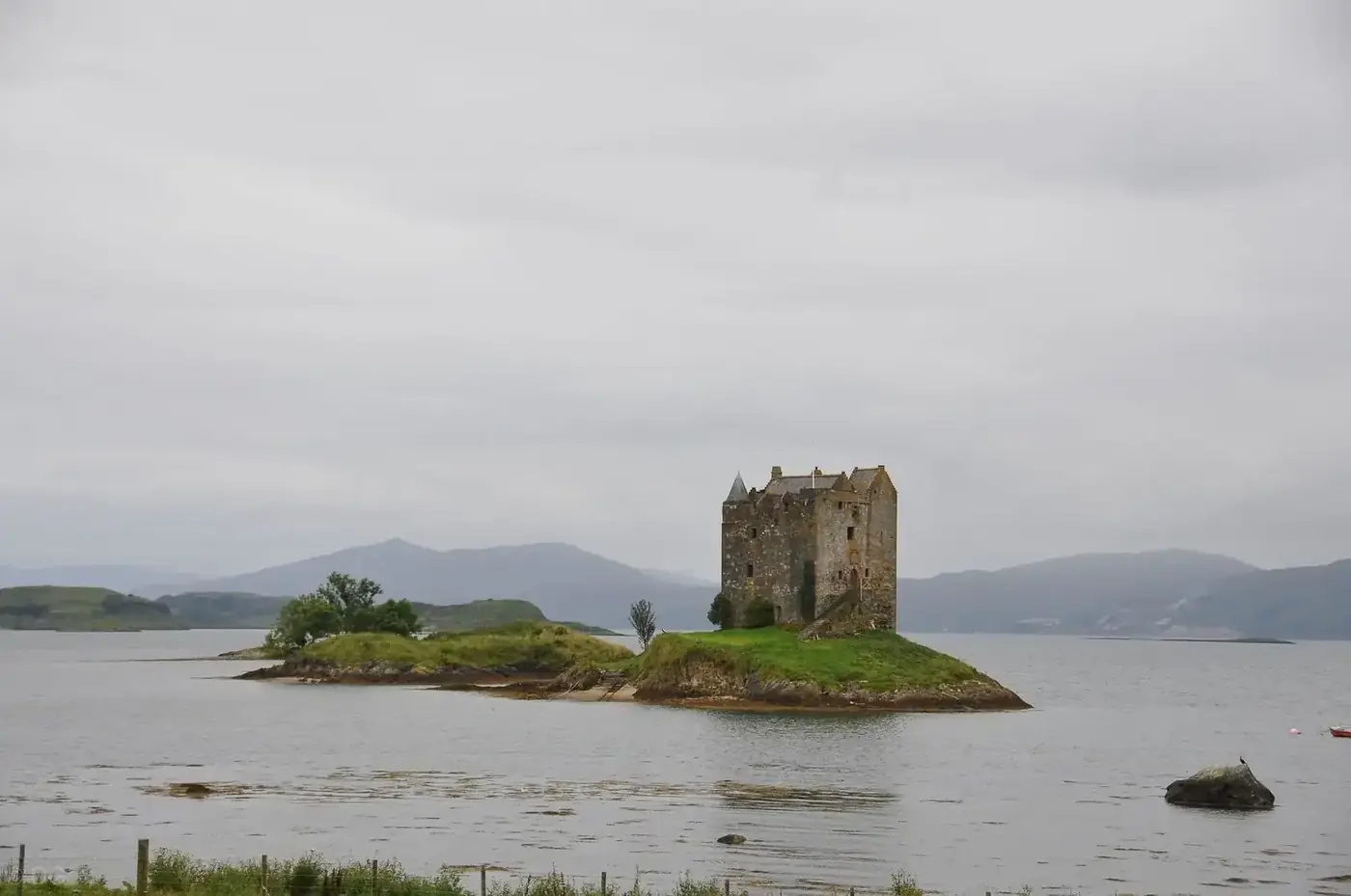
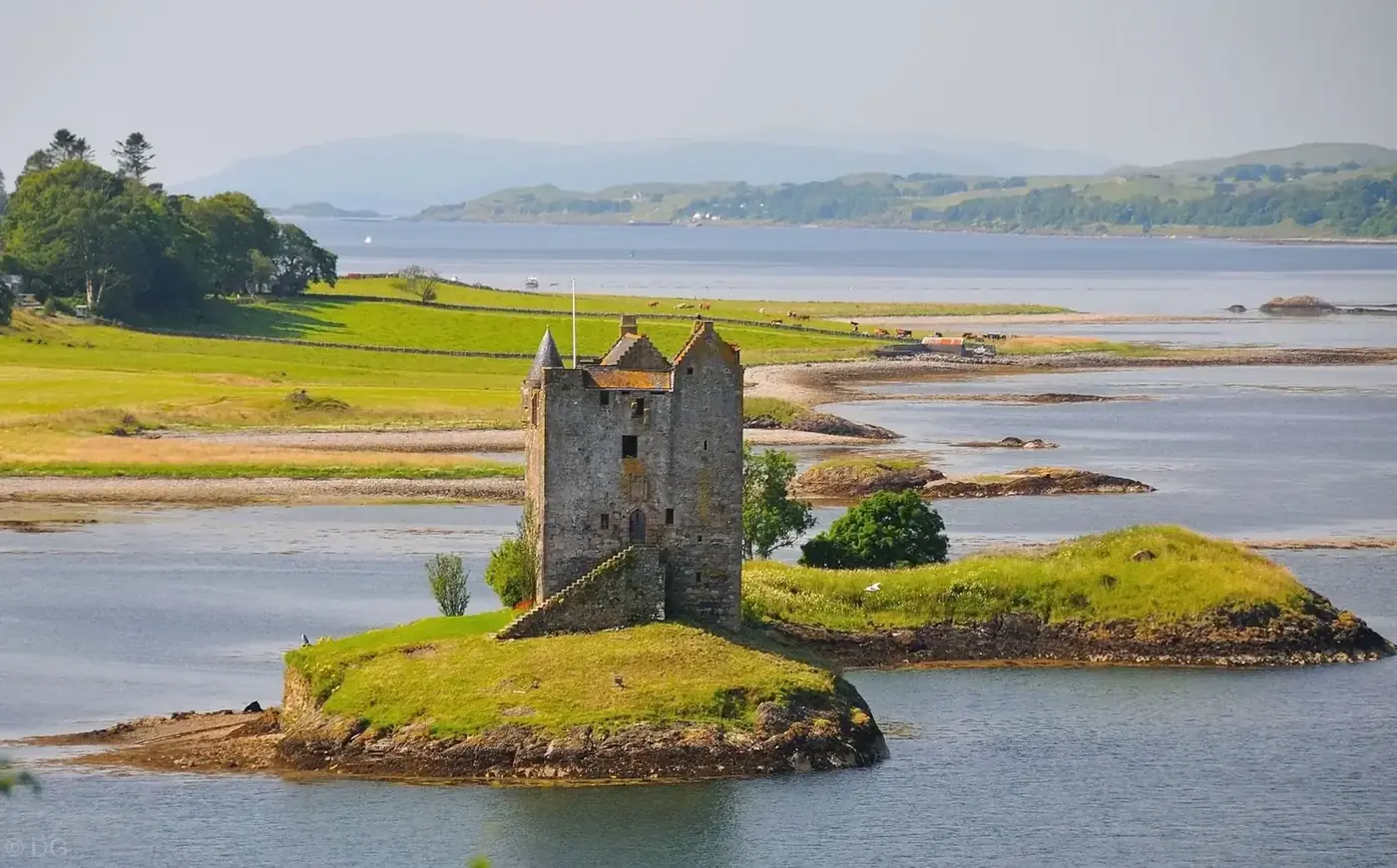
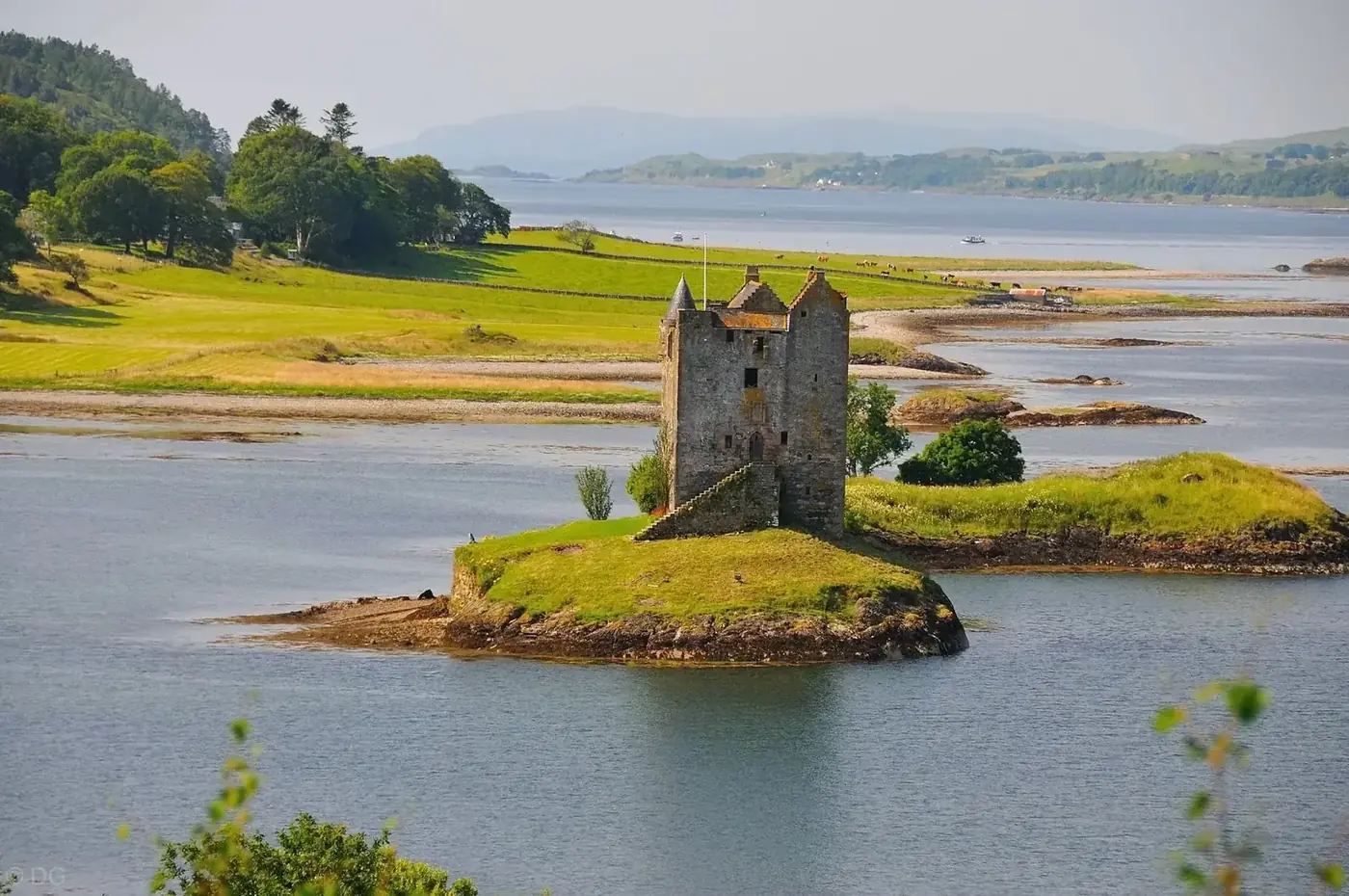
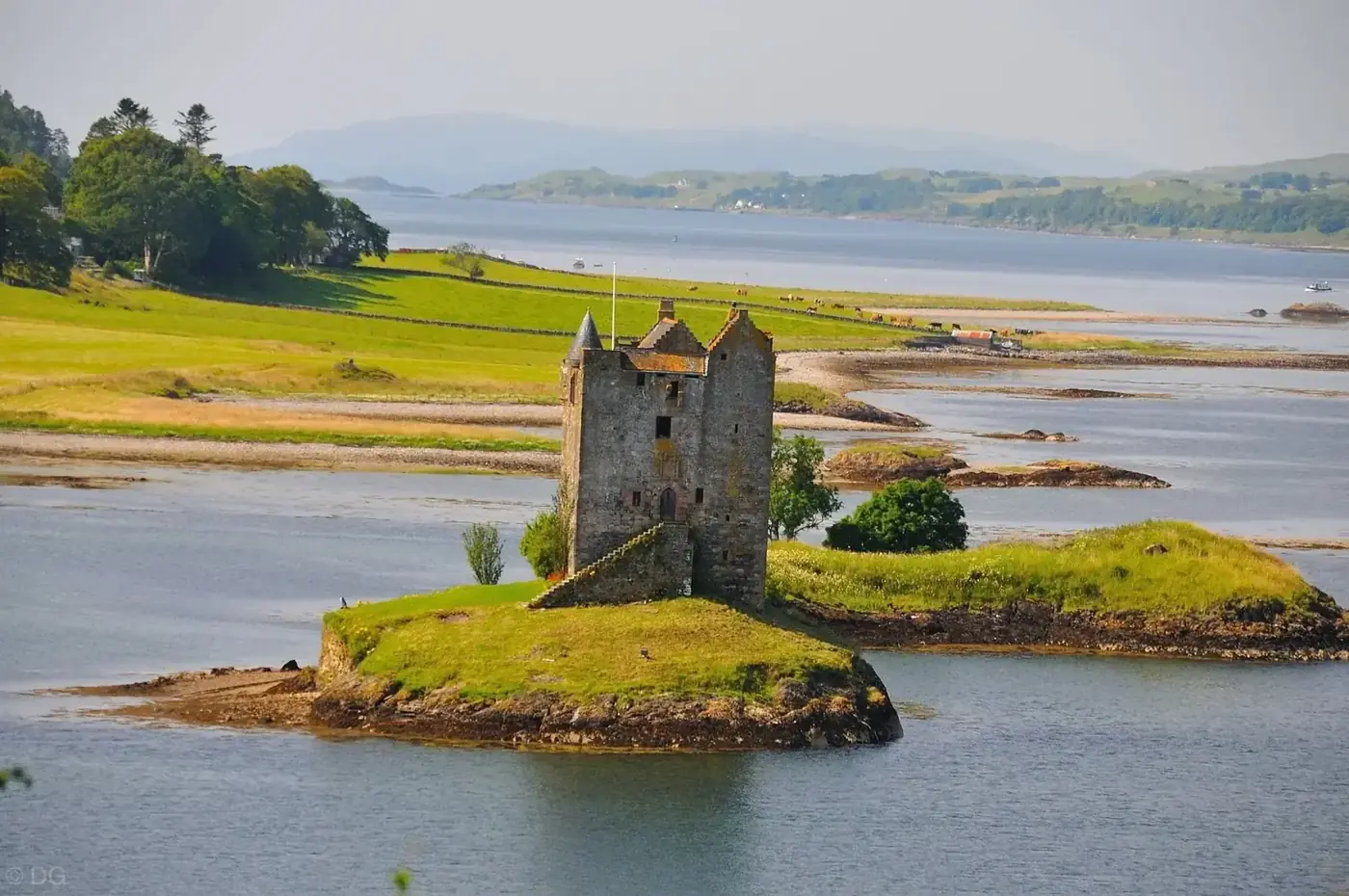
Castle Stalker seems designed for a closing shot: one compact tower on a tidal islet, water in every direction and mountains rising behind it. It is one of Scotland's most recognisable small castles.
The silhouette is historic, but its present completeness owes much to a painstaking family restoration begun in the 1960s. The real story mixes disputed dates, a legendary wager and an unforgettable moment of Monty Python absurdity.
The classic view is from the shore, where the water reveals why the tower's approach was so easy to control. Changes in tide and light can transform the same composition within minutes.
The castle is private and the tidal crossing is difficult. Go onto the island only through an advertised official tour; the roadside viewpoint is the right experience at other times.
The owners' account connects the present castle with Sir John Stewart in the mid-fifteenth century. The national architectural record dates the surviving tower probably to around 1540.
Rather than hiding the disagreement, it is better to see the building as a Stewart stronghold whose exact construction sequence remains debated.
A famous local tradition says Duncan Stewart exchanged Castle Stalker for an eight-oared boat after a drunken wager. Sources even differ over whether the barter happened in 1614 or around 1620.
Campbell control is part of the historical story; the irresistible wager is folklore around that transfer. Enjoy it as a tale, not as a signed sales contract.

02 / VISUAL JOURNAL
Every photograph on this page was taken by CastleScotland during visits to the site.
01 / THE STORY CONTINUES
By the nineteenth century the tower had lost its roof. Stewart Allward acquired it in 1965 and, with family and friends, began the long restoration that made it habitable again.
That work is not a footnote. The castle seen in photographs is the result of historic masonry, research, practical invention and years of modern care.
At the end of Monty Python and the Holy Grail, Stalker becomes the wonderfully named Castle Aaargh. The absurd finale gave this small Argyll tower an international screen identity.
It also makes a useful contrast with nearby Doune, which played several other castles in the same film. Here, the location's isolated exterior is the star.
The castle's published history records an extraordinary episode during the Jacobite rising of 1745. A government garrison of 59 men held the small island tower against roughly 300 Stewarts of Appin.
The attackers even brought light cannon, but failed to force a surrender. After Culloden, Castle Stalker was used as a place where Jacobite troops were to hand in their weapons—a striking reversal for a stronghold long associated with the Stewarts.
03 / MOMENTS IN STONE
RCAHMS dates the surviving tower probably to about 1540; the family account proposes the mid-15th century. The present tower’s architectural dating should be distinguished from traditions about an earlier fort.
The castle passed to Campbell control; the reported barter is dated differently in the sources. The boat-for-castle story is a tradition; the exact circumstances are not securely established.
Stewart Allward and his family undertook the major restoration that made the castle habitable again. The tower is restored and habitable, while only fragments of its outer enclosure survive.
Its construction date needs qualification. The family website proposes a building campaign around the mid-fifteenth century under Sir John Stewart. However, the RCAHMS architectural account dates the surviving tower probably to about 1540, and the HES listing describes it as sixteenth century. These are different interpretations, not interchangeable dates for one securely documented event. The later dating has the stronger architectural basis in the sources consulted; the earlier account should remain an attributed possibility rather than a precise foundation year.
Stories of an earlier MacDougall fort and royal hunting visits belong to the castle’s broader historical tradition. The owner’s account treats several of these connections cautiously, and they should not be used to prove the age of the present walls. Similarly, the famous story that Duncan Stewart exchanged the castle for a boat after a drunken wager is best presented as tradition. The HES listing places a barter in 1614, whereas the family account gives around 1620. The transfer to Campbell control is clearer than the colourful circumstances or exact year.
The building itself offers firmer evidence. A rectangular tower contains vaulted lower accommodation and rooms above, linked by a winding stair. The principal entrance is raised above ground level; its present stone approach replaced earlier arrangements. A hall and upper chambers made this a domestic stronghold as well as a defensive building. The relationship between landing place, entrances and rooms explains more than imagining the tower as an empty lookout.
Only fragments of the surrounding barmkin, the outer enclosure, remain. That distinction matters: the tower’s impressive completeness should not be extended to every part of the original complex. Conversely, the loss of the enclosure does not make the restored tower a collection of disconnected ruins. Architectural records describe a lower level, two upper floors and a garret; simple storey counts can differ according to whether the roof accommodation is included.
By the early nineteenth century the building was losing its roof. The RCAHMS account places that loss before 1831, while the family narrative gives about 1840, so a broad period is safer than a single certain year. Charles Stewart of Achara purchased the castle in 1908. The major restoration began after Lt Col Stewart Allward acquired it in 1965. The family describes a prolonged effort involving relatives and friends, turning a roofless shell into a habitable building.
Today the castle is privately owned, and the family’s visitor arrangements should be checked before planning to land. There is no reason to confuse a distant view with unrestricted access to the island. A shoreline photograph can show the whole relationship between tower, water and surrounding hills. For a closer reading, use an advertised visit rather than attempting an independent crossing. Castle Stalker rewards that distinction: its appeal is both the extraordinary setting and the care through which an old stronghold became a home again.
Find Scottish castles by region, landscape or the stories that bring them to life.