TICKETSFree
No admission fee; conditions depend on weather and the exposed shoreline path.
View current prices
Exterior viewingFree
ParkingFree roadside/nearby parking
 Castle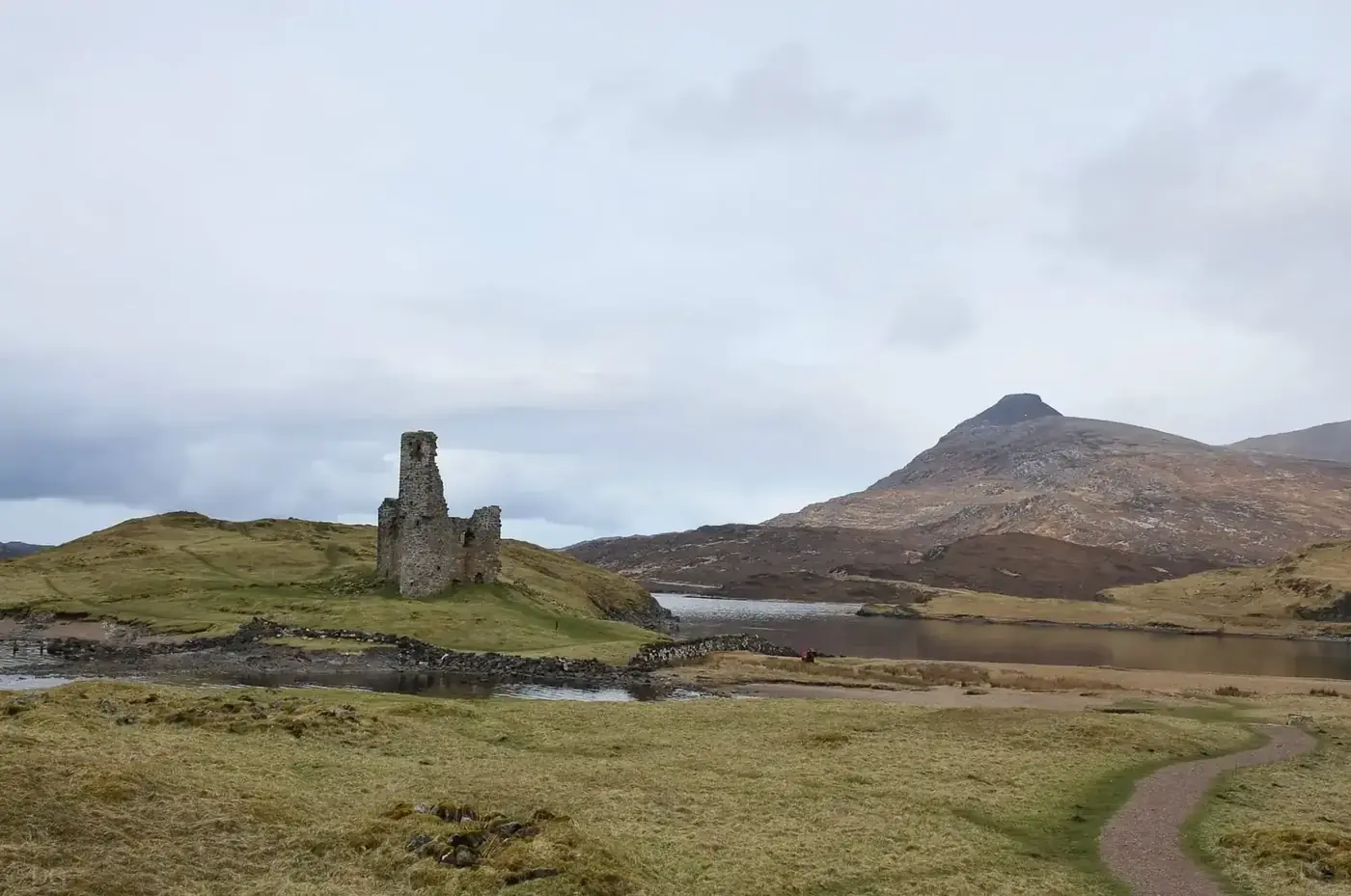
LOCH ASSYNT RUIN · NORTH-WEST
Stone, water and mountain. A Highland story in fragments.
PLAN YOUR VISIT
Loch Assynt, near Inchnadamph, IV27 4HN
No admission fee; conditions depend on weather and the exposed shoreline path.
Exterior viewingFree
ParkingFree roadside/nearby parking
There is no ticketed attraction. Parking is available near the A837; the short approach can be wet and uneven, especially after rain.
Parking information
Use Ardvreck Castle Car Park beside the A837. The council announced an extension and redesigned lay-bys in 2026. Current charges and any remaining restrictions are not confirmed; follow the signs on arrival.
Parking sources checked · 11 October 2026
Ground and stone are slippery in wet weather. Respect the ruin and do not climb walls.
One of the Highlands’ strongest landscape stops, with a compact ruin, a documented Montrose connection and a second abandoned residence nearby.
WHAT TO EXPECT
01 / THE STORY
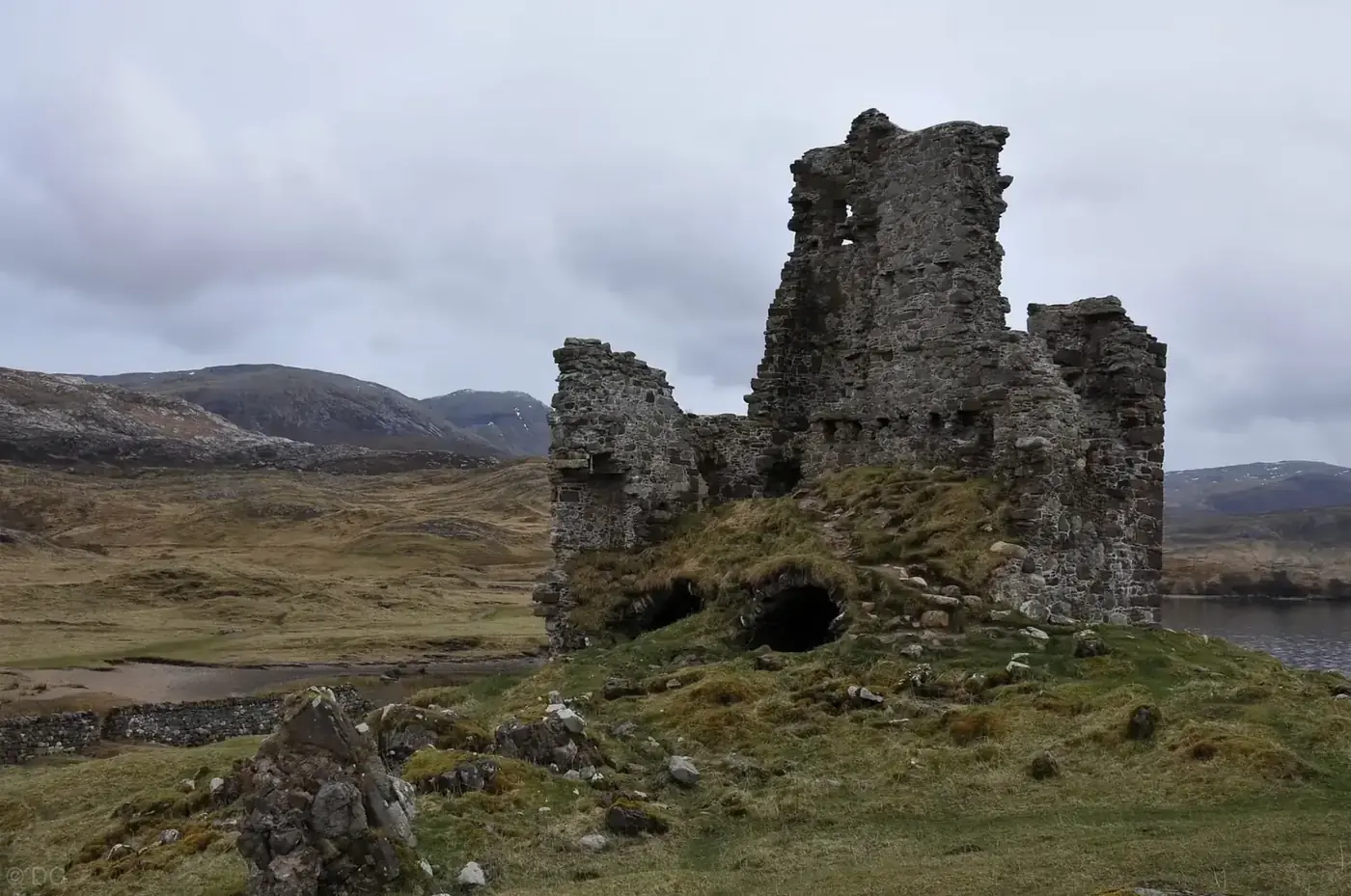
Ardvreck is a small fragment in an enormous Highland picture. Loch Assynt, mountains and sudden changes of weather give the broken MacLeod tower a presence far beyond its size.
The best documented drama came in 1650, when the defeated Marquess of Montrose was held here before being taken towards execution in Edinburgh.
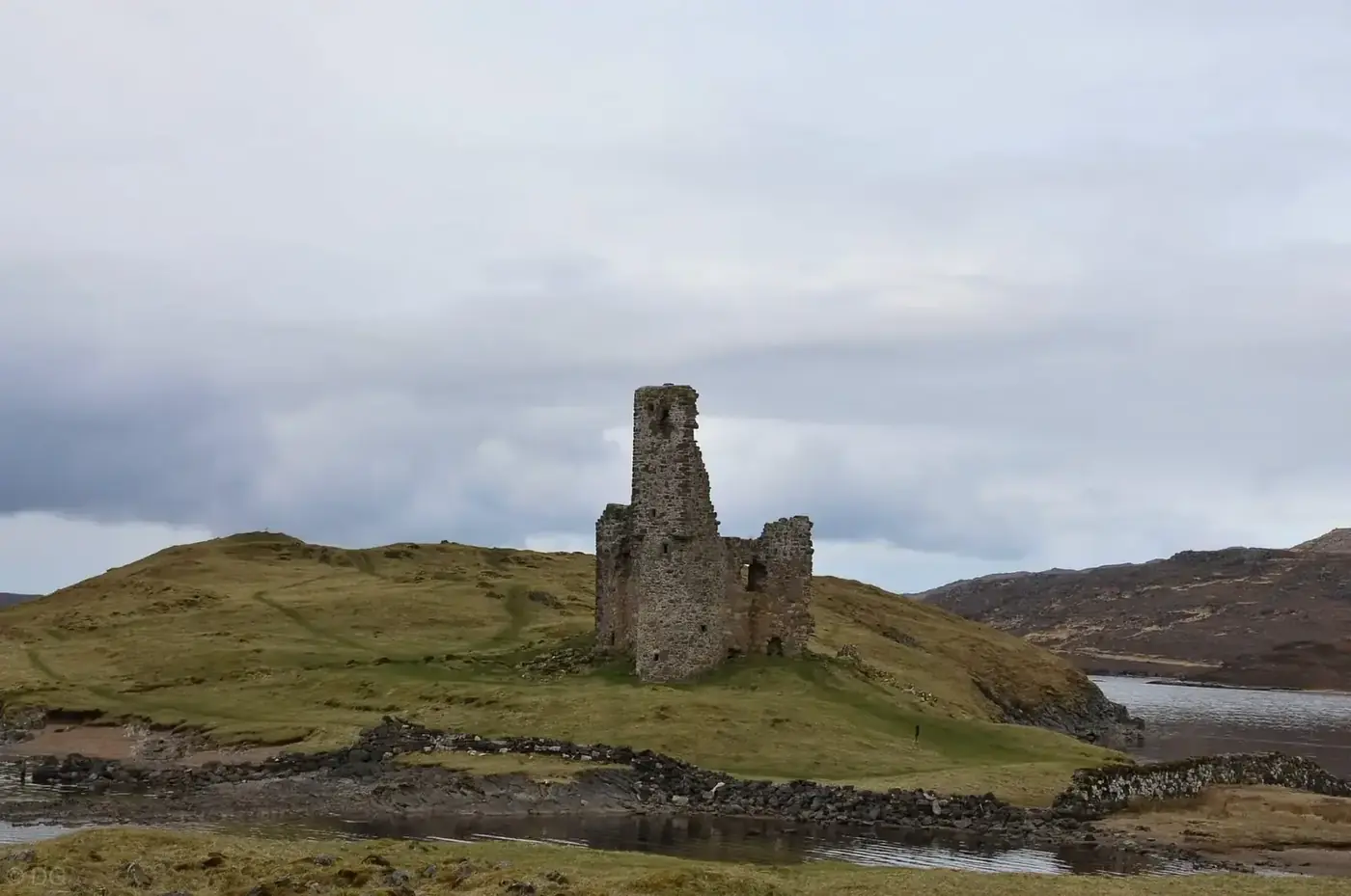
When water levels and light align, the promontory makes the ruin appear almost afloat. Begin with the wide view: Loch Assynt and the mountains explain why this small fragment feels so dramatic.
Then move closer to read the surviving tower. Ground can be wet and masonry fragile, so use the established approach and do not climb the ruins.
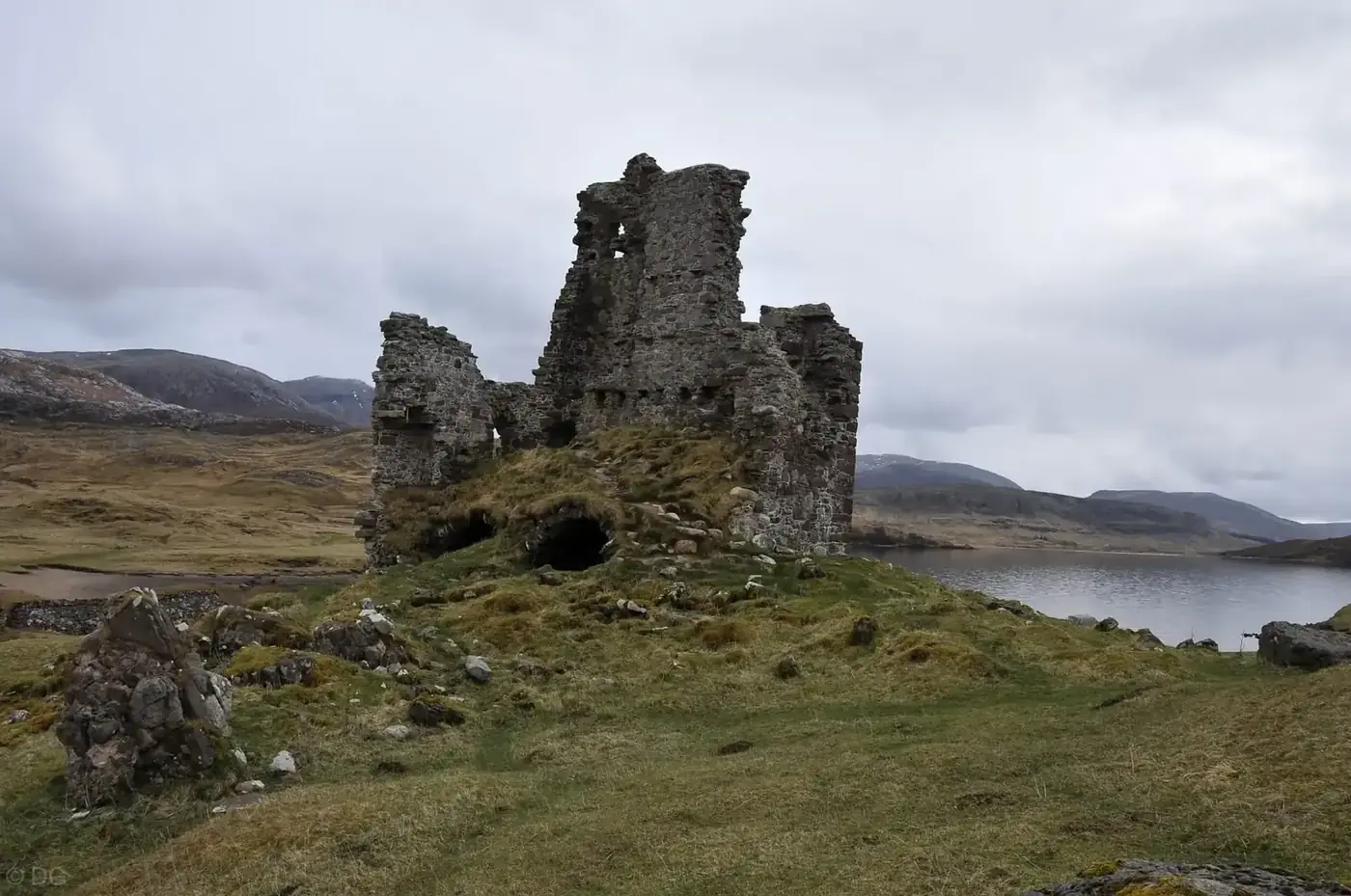
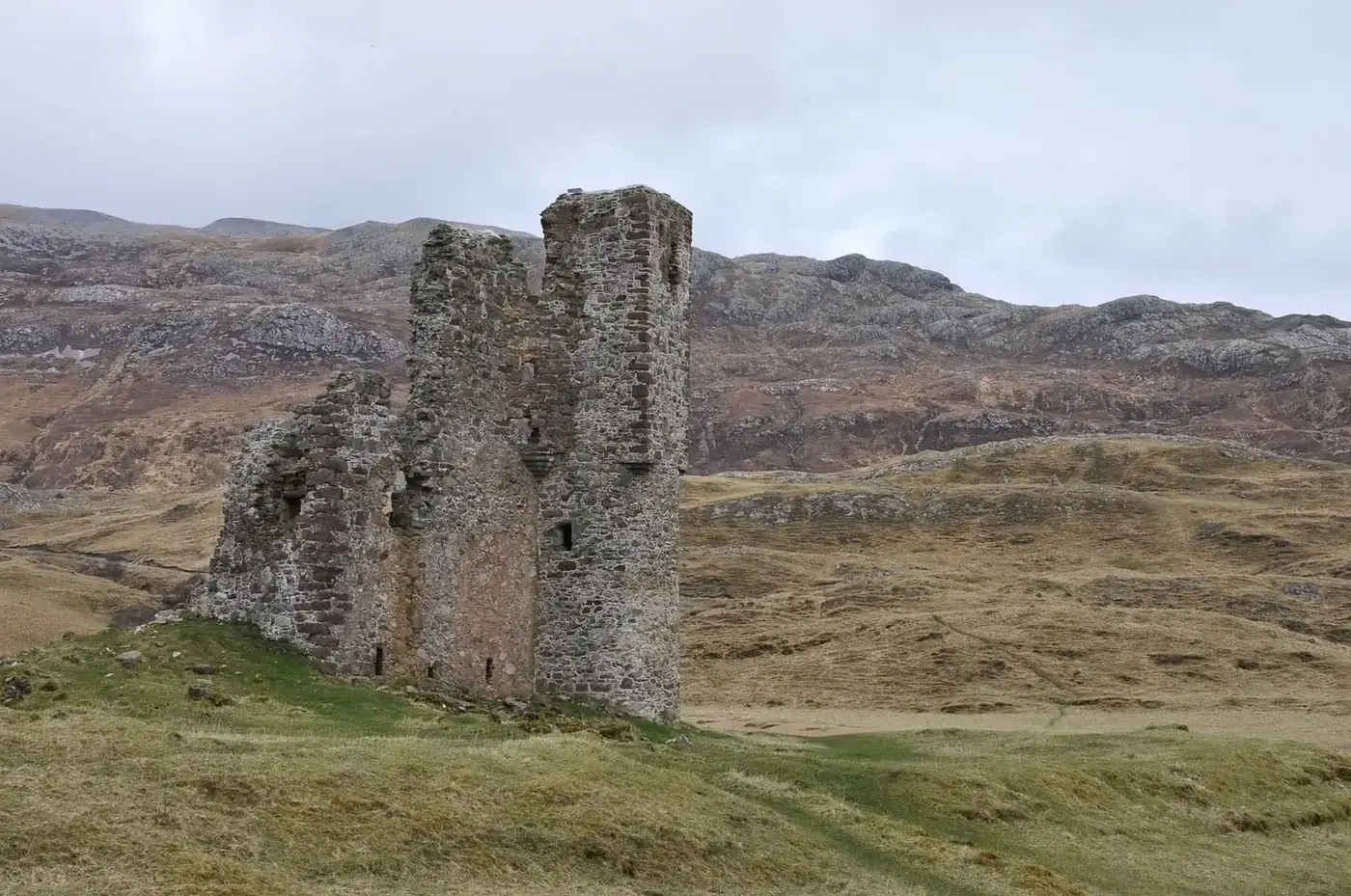
The rectangular keep probably rose through four storeys. Three vaulted compartments occupied the ground floor, a circular stair tower served the upper rooms, and traces around the promontory mark a forecourt, defences, a garden and working buildings.
Surveyors recorded two iron cannon barrels in one of the lower compartments; they were later preserved at Lochinver. The detail gives the broken tower a surprisingly tangible military past.
After defeat at Carbisdale in 1650, James Graham, Marquess of Montrose, was captured in Assynt and held at Ardvreck before being handed to government forces.
He was later executed in Edinburgh. His imprisonment is documented, but the story that Neil MacLeod’s wife deliberately lured him into a cellar belongs to later tradition.
02 / VISUAL JOURNAL
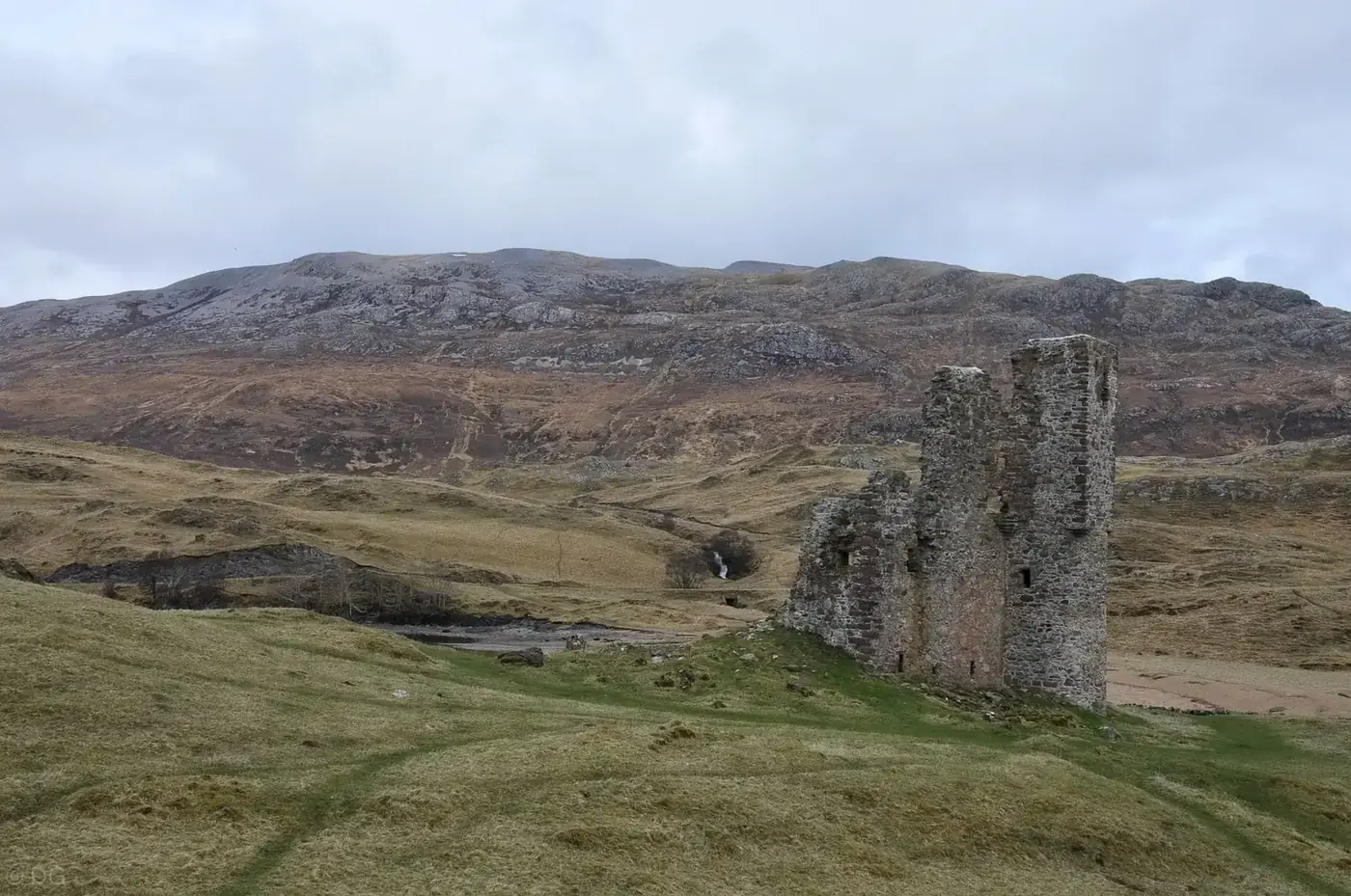
Every photograph on this page was taken by CastleScotland during visits to the site.
01 / THE STORY CONTINUES
Local tradition tells of a weeping daughter of MacLeod who promised herself to the Devil to save her father’s castle, then died in Loch Assynt—or, in another version, leapt from a castle window.
A second apparition is a tall man in grey, often identified as Montrose. These are legends rather than verified events, but they are among Ardvreck’s most memorable stories.
Calda House was built around 1725 as a replacement residence associated with Kenneth Mackenzie. Its larger country-house form reveals changing expectations of comfort.
Seeing both ruins turns one stop into a comparison: a compact clan tower beside the shell of a more fashionable eighteenth-century home.
03 / MOMENTS IN STONE
HES favours a late-16th-century tower; a survey also proposes an earlier phase. Vaulted rooms, four levels and a circular stair tower reveal a residence that grew over time.
Montrose is held here after his defeat and capture. Montrose was held at Ardvreck; the dramatic story of his betrayal belongs to later tradition.
Calda House is built as a replacement residence. Calda House replaced the old clan tower with a very different idea of comfort and status.
The residence was compact but more complex than the surviving walls first suggest. Its rectangular keep had a circular stair tower at the south-east corner, three vaulted ground-floor compartments and probably four storeys. The first-floor hall was also vaulted, while timber floors divided the private rooms above. Traces of a forecourt, a rampart and possible ditch, a walled garden and a barn or kiln show that Ardvreck once occupied much more of the promontory.
Two iron cannon barrels were recorded in a ground-floor compartment during twentieth-century survey work and were later preserved at Lochinver. It is a small discovery, but an evocative one: the ruin now looks delicate, yet firearms once formed part of the equipment of this remote clan residence.
In 1650 James Graham, Marquess of Montrose, was defeated at Carbisdale, captured in Assynt and held at Ardvreck before being handed to government forces. He was later taken to Edinburgh and executed. The imprisonment is documented; the familiar story that Neil MacLeod’s wife deliberately lured Montrose into a cellar belongs to later tradition and should be told as such.
Ardvreck also has two enduring ghost stories. One describes a weeping daughter of MacLeod who promised herself to the Devil to save her father’s castle and then died in Loch Assynt—or, in another version, leapt from a window. The other apparition is a tall man in grey, often identified as Montrose. Neither tale is evidence for an event, but both reveal how betrayal, death and the loch became attached to the memory of the place.
Nearby Calda House was built around 1725 as a more fashionable replacement residence associated with Kenneth Mackenzie. Seeing the two ruins together makes the change immediately visible: Ardvreck is a compact clan tower; Calda is the shell of an eighteenth-century country house. Historic Assynt later helped conserve both sites, and Ardvreck remains protected as scheduled monument SM1895.
08 / EXPLORE NEXT
Find Scottish castles by region, landscape or the stories that bring them to life.
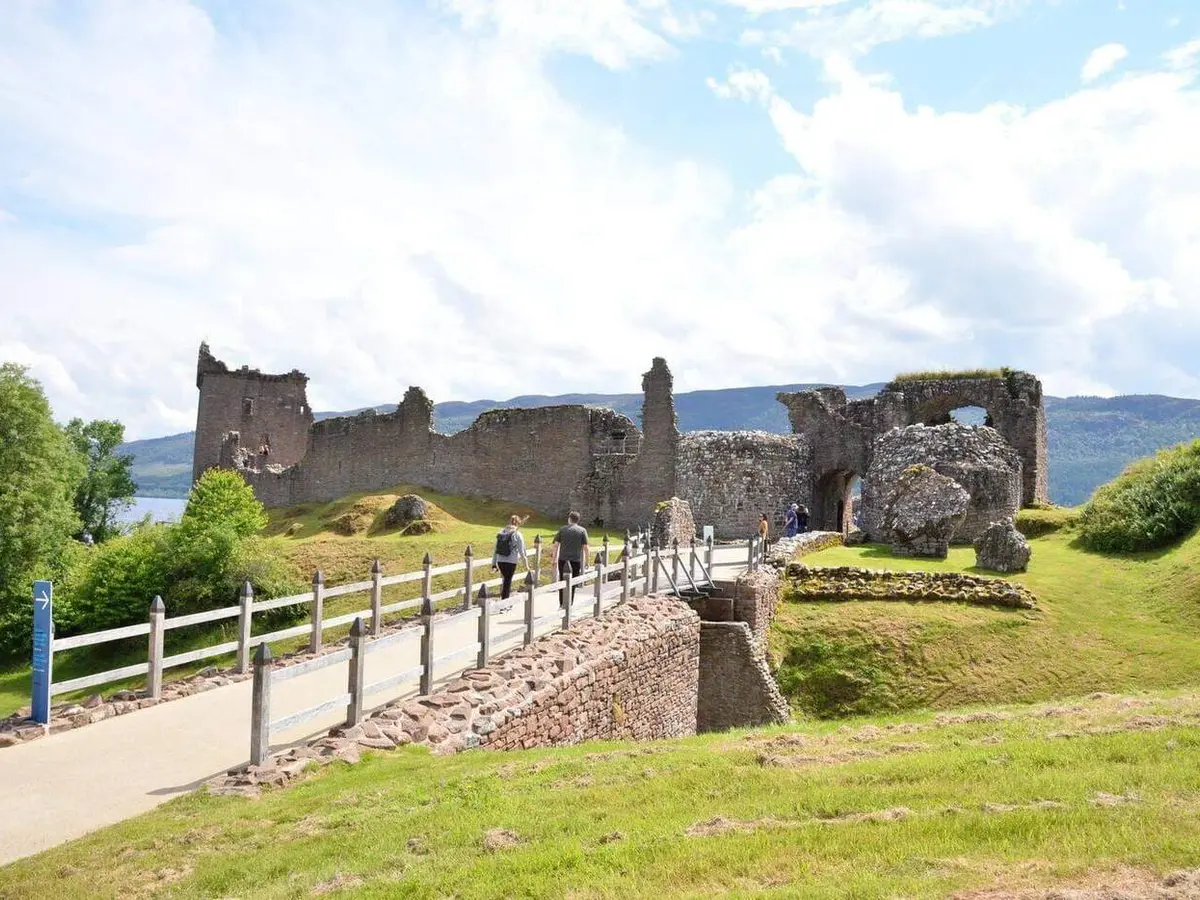 The HighlandsUrquhart Castle
 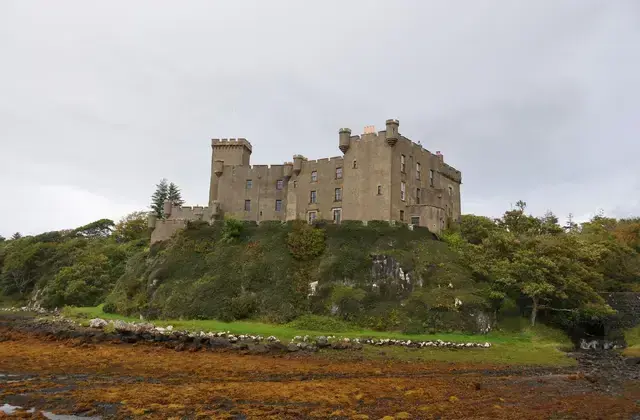 The HighlandsDunvegan Castle
 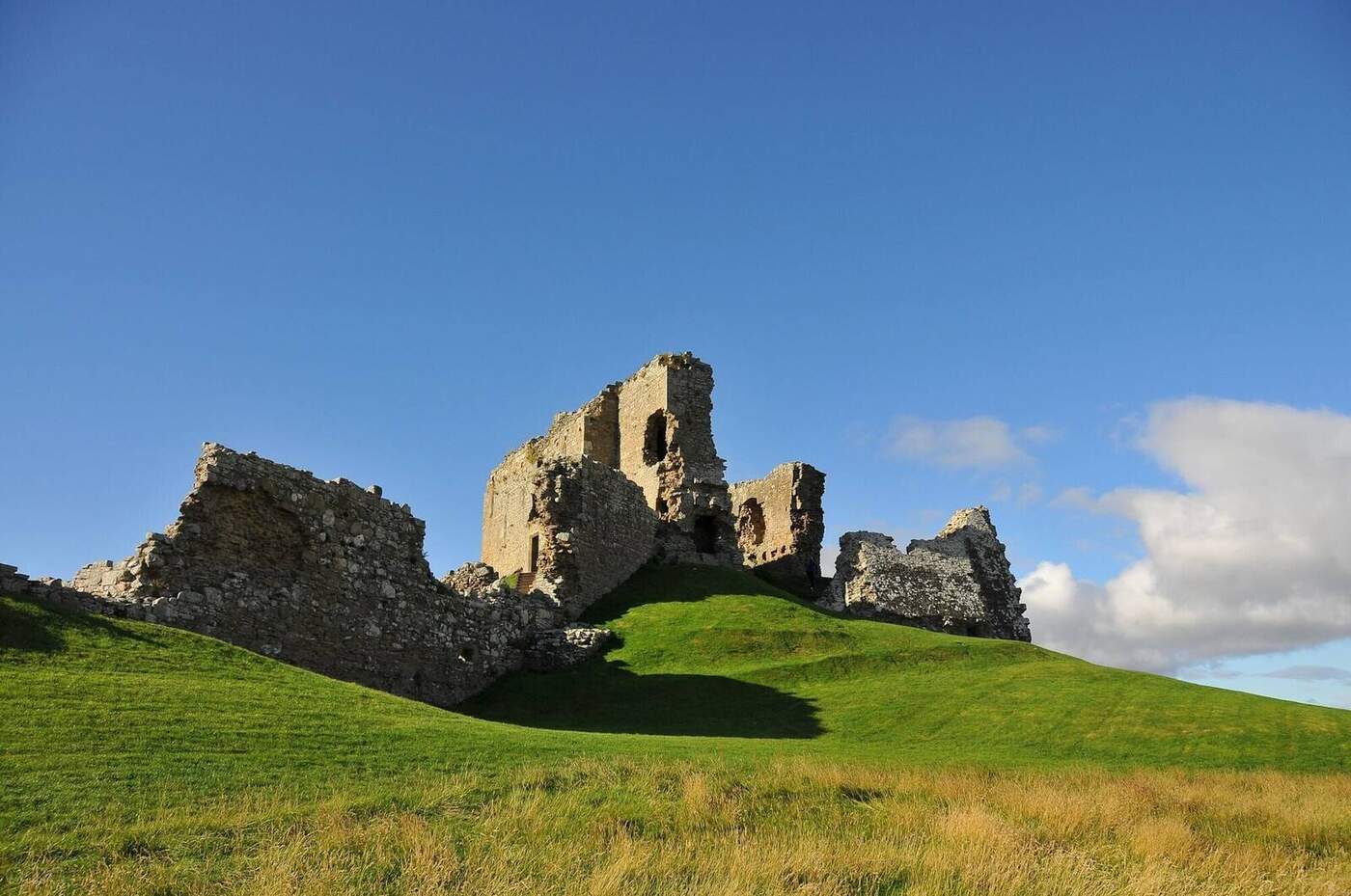 The HighlandsDuffus Castle