TICKETSFree
No standard ticketed admission; observe safety fencing and local access guidance.
View current prices
Exterior viewingFree
InteriorNo routine public access
 Castle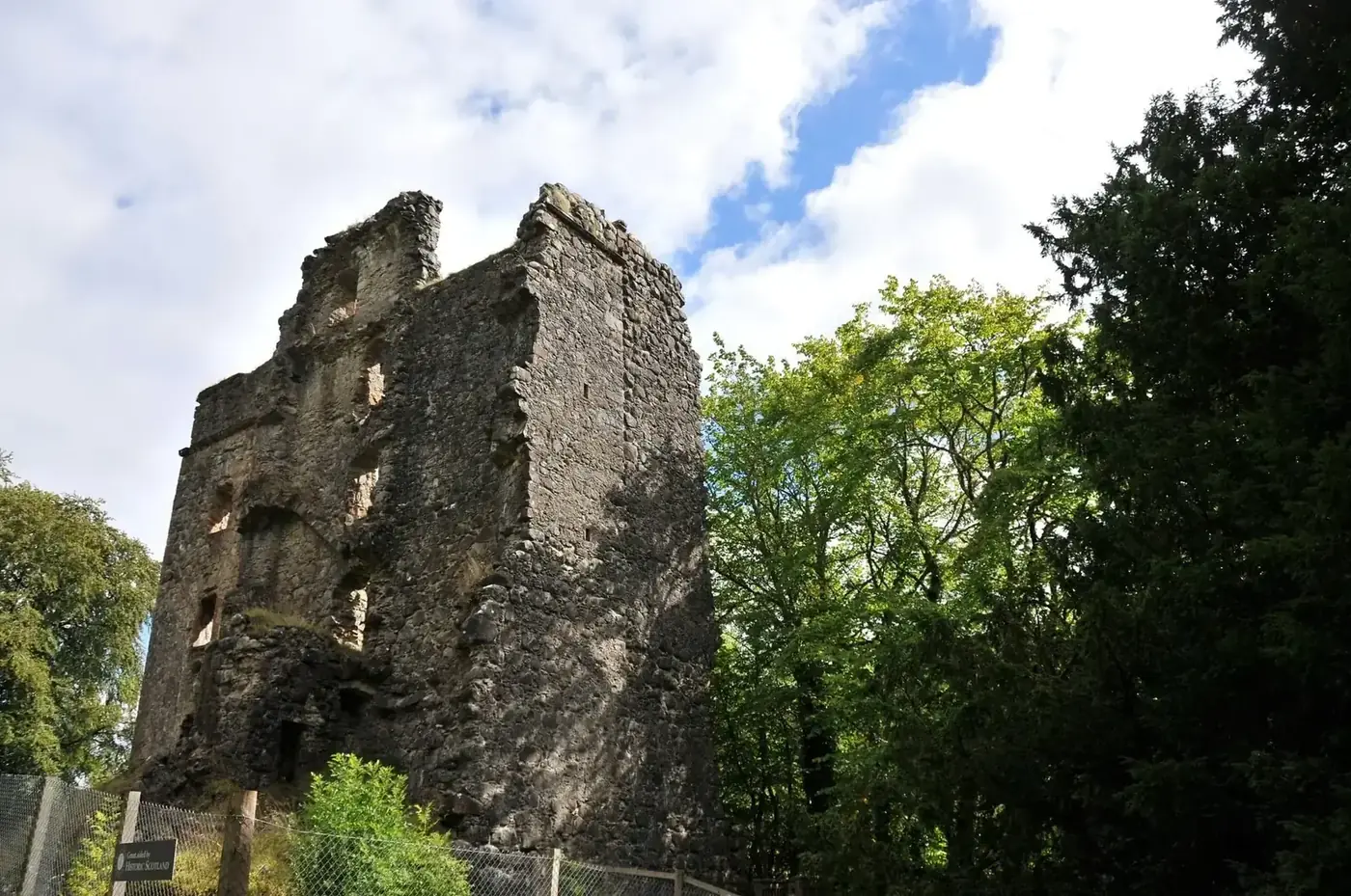
MACDONELL STRONGHOLD · GREAT GLEN
A broken tower. At the crossroads of Highland power.
PLAN YOUR VISIT
Near Invergarry, Loch Oich, Highland
No standard ticketed admission; observe safety fencing and local access guidance.
Exterior viewingFree
InteriorNo routine public access
There is no standard admission. The ruin is beside the Great Glen route near Invergarry; check current boundaries and view safely from permitted ground.
Parking information
A small parking area is reported immediately beside the ruins, near Glengarry Castle Hotel's entrance. The ruins lie in the hotel grounds; check signs and ask about parking before use.
Parking sources checked · 11 October 2026
The castle is fragile and some areas may be fenced. Do not climb or enter unstable masonry.
A powerful Great Glen exterior stop for loch scenery, MacDonell history and a ruin whose present walls emerged between two destructive campaigns.
WHAT TO EXPECT
01 / THE STORY
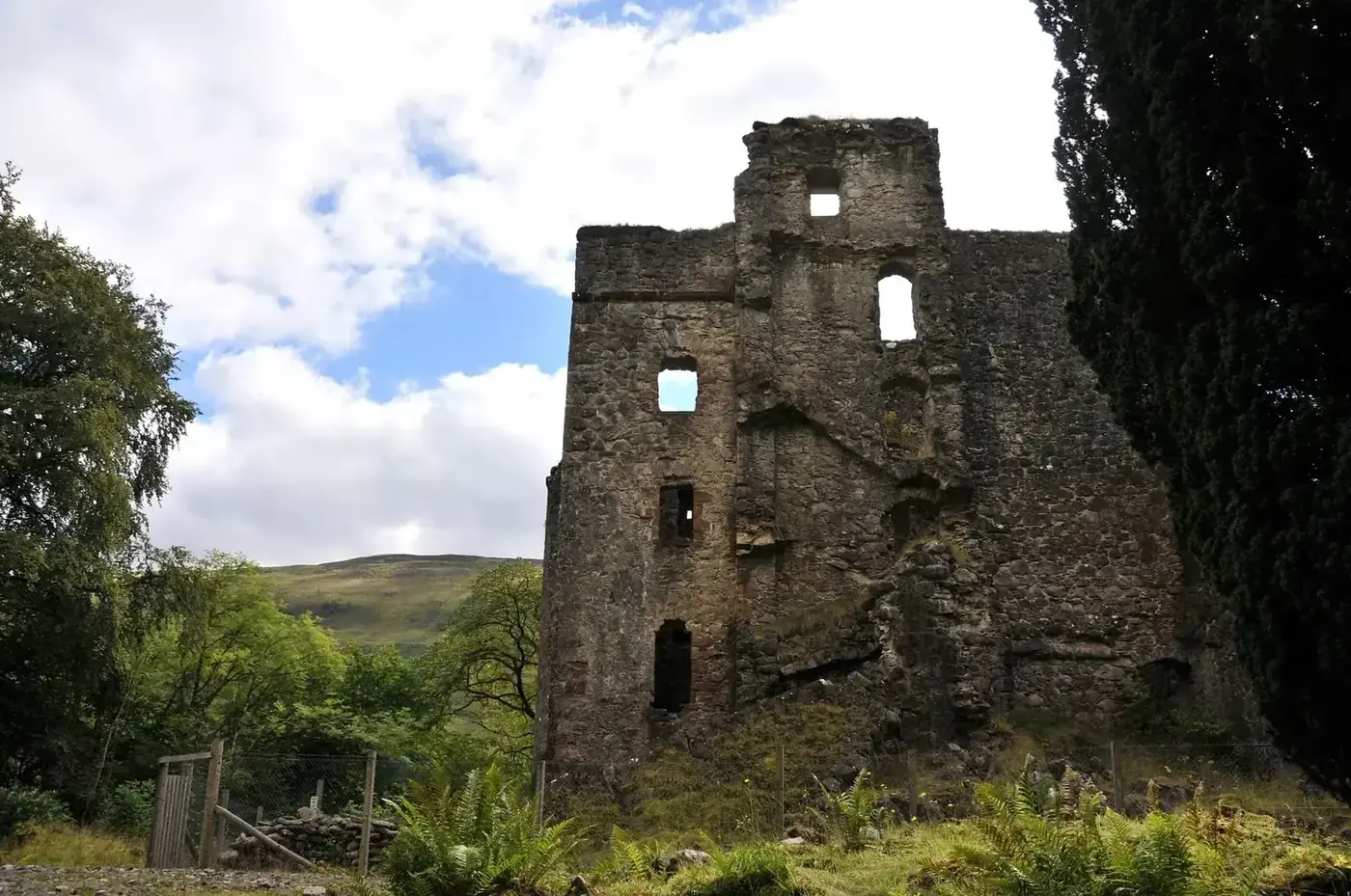
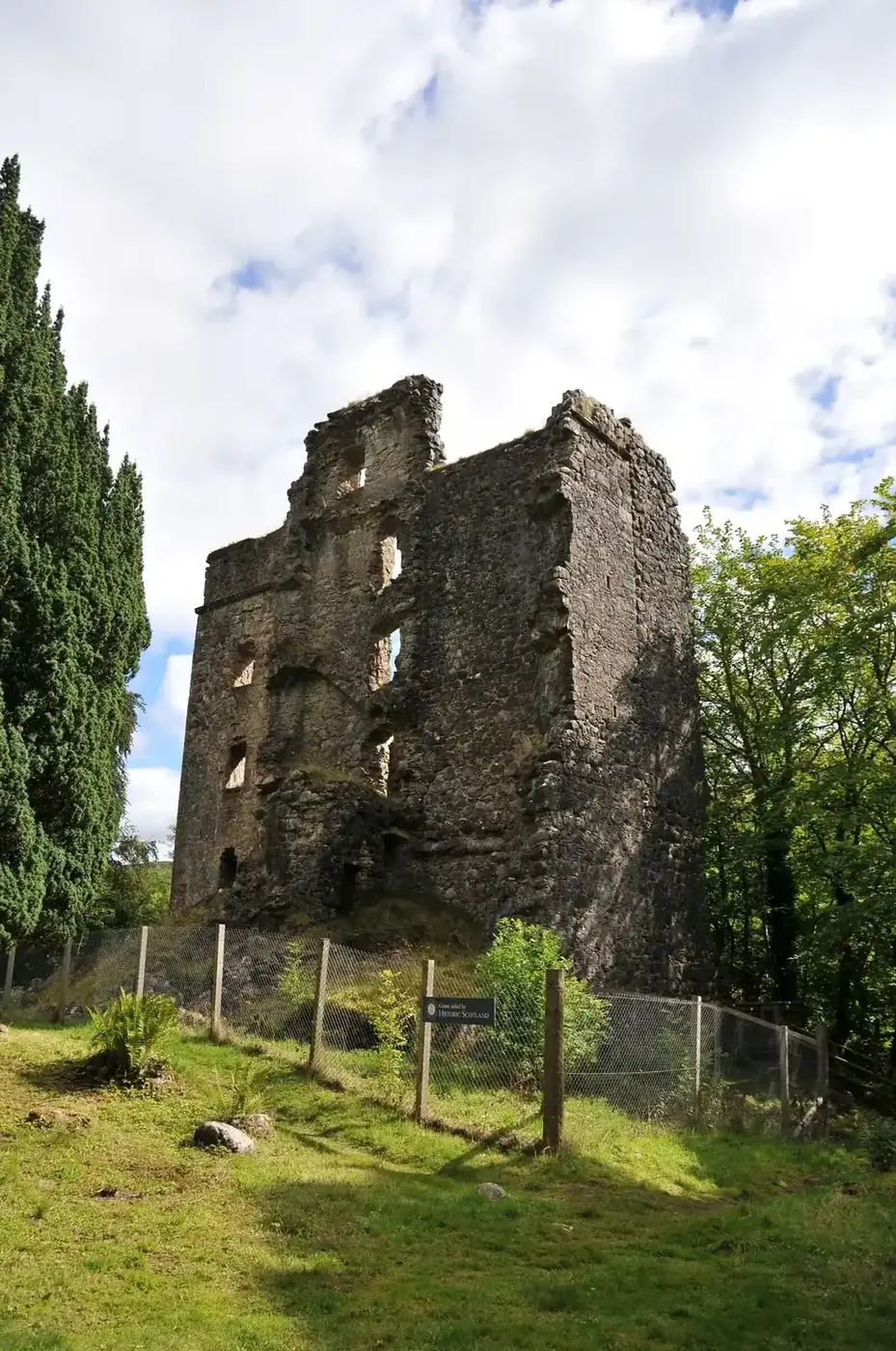
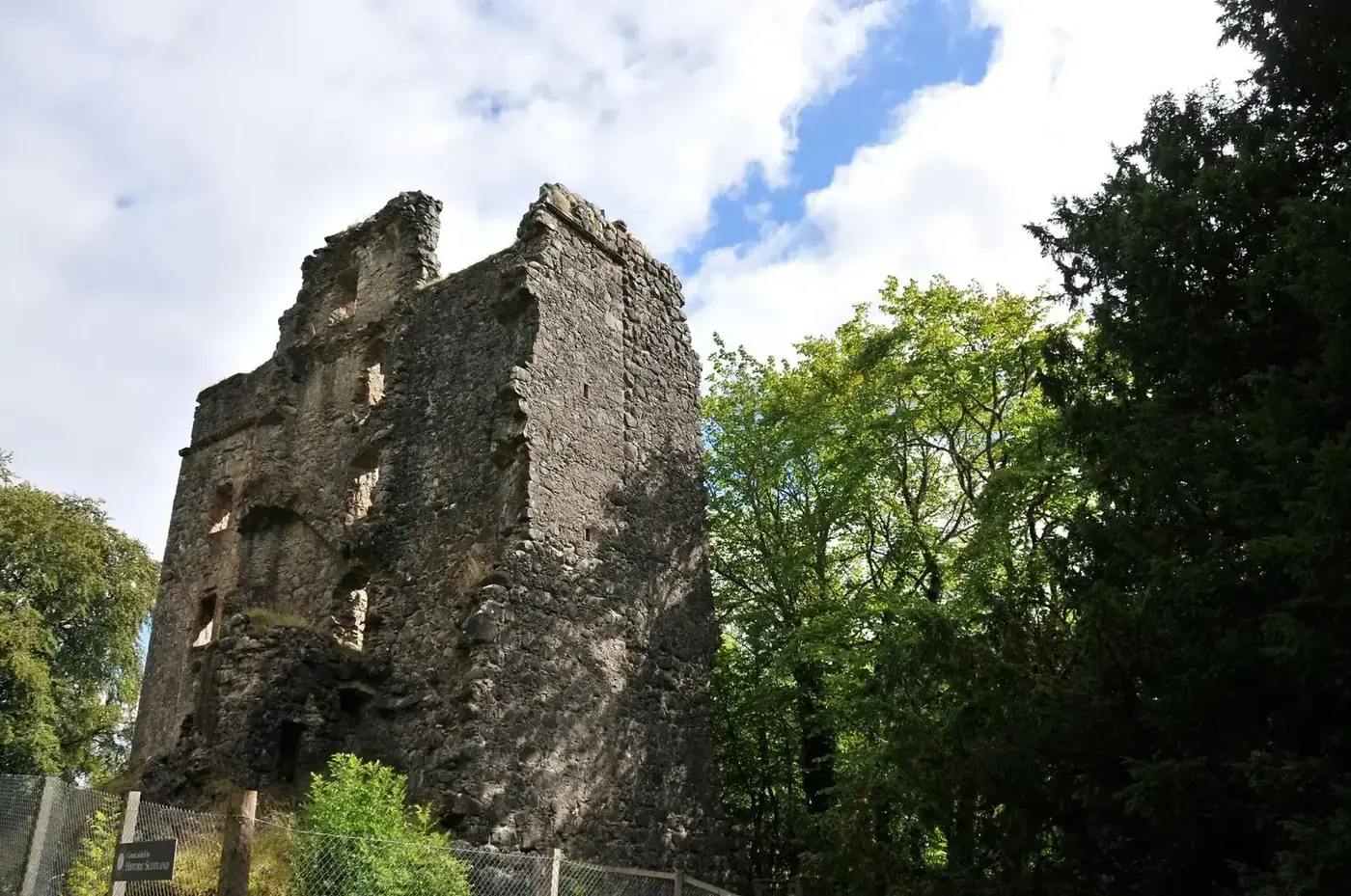
Invergarry rises above Loch Oich on the rocky point traditionally called Raven's Rock. The tall broken walls belonged to the MacDonells of Glengarry and still dominate this part of the Great Glen.
Its history contains destruction and rebuilding. The standing tower is mainly later seventeenth-century, even though conflict reached an earlier castle in 1654.
A wide lochside view makes the height and strategic position immediately clear. The tower watched movement through a landscape that still channels travel north and south.
Treat the ruin as an exterior site and respect boundaries around unstable masonry. The water belongs in the story and the photograph.
General George Monck's forces damaged an earlier stronghold in 1654. Later seventeenth-century rebuilding produced most of the L-plan tower visible today.
Sources vary between the 1660s and around 1670 for that work. The broad sequence is secure; an exact completion year is not.
02 / VISUAL JOURNAL
Every photograph on this page was taken by CastleScotland during visits to the site.
01 / THE STORY CONTINUES
The MacDonells' Stuart loyalty gives Invergarry a genuine Jacobite context. Local tradition also associates Prince Charles Edward Stuart with visits in 1745 and 1746.
A broad political connection does not confirm every claimed overnight stay. The tradition is worth telling with that limit visible.
Government troops operating under the Duke of Cumberland attacked and burned Invergarry in 1746. The castle was not restored as the family's principal home.
The nearby nineteenth-century Invergarry House, now a hotel, belongs to a different owner and period. Shared names should not turn it into a direct rebuild of the tower.
03 / MOMENTS IN STONE
An earlier castle is damaged by Monck’s forces. The tower belongs to the movement and conflict of the Great Glen, not just to a picturesque lochside view.
Rebuilding produces the principal surviving tower-house fabric. Government reprisals after Culloden ended the castle’s life as the MacDonells’ main residence.
Government forces devastate the MacDonell stronghold. Current access is part of the guide: check the official or local notice before making the final approach.
Accounts of the Cromwellian campaign record destruction by General George Monck’s forces in 1654. Rebuilding followed, but its timing is described differently in the available histories. The nearby estate’s account gives approximately 1660–1665, while the architectural account formerly published through Canmore associates restoration with the mason Robert Nicholson around 1670. The secure outline is a damaged stronghold followed by substantial later-seventeenth-century work, rather than a precisely dated reconstruction completed in one campaign.
The plan is shaped like an L. A smaller wing projects from the main block, and stair towers served the upper accommodation. The principal block rose through five storeys, with part of the stair arrangement extending higher. Although the outline looks severe, the castle was also a household. Historic Environment Scotland identifies the likely hall and private accommodation, but warns that decay prevents every internal arrangement from being reconstructed confidently.
Look particularly at the surviving openings and the relationship between the main block and the reduced wing. Shot-holes protected vulnerable points, including the entrance and cellar areas; they did not turn the entire residence into a purpose-built artillery fortress. The staircase organisation suggests the effort required to move through a tall house, in which storage, service and more private spaces had to fit within a restricted footprint. The broken fabric makes some of those relationships visible today.
The family’s Stuart loyalties connect the site with the Jacobite period. Local tradition also associates Prince Charles Edward Stuart with visits during the campaigns of 1745 and 1746. Specific movements and overnight stays need more evidence than the castle’s general Jacobite connection, so they are best treated cautiously. The decisive event in the ruin’s history is better established: government troops operating under the Duke of Cumberland attacked and burned Invergarry in 1746, after Culloden.
The castle was not subsequently restored as the family’s principal residence. Its later surroundings should nevertheless be distinguished from an immediate replacement built by the same household. The nearby Invergarry House, now Glengarry Castle Hotel, was designed by David Bryce for Edward Ellice junior and built in 1866–1869. It belongs to a different ownership and architectural chapter. The ruined tower and the later mansion therefore tell related, but separate, stories about the estate.
Invergarry is protected as a scheduled monument. The former listing was removed in 2015 as part of a review of overlapping designations; that did not remove the castle’s protection. Approach it as an exterior encounter, and respect the boundaries around unstable masonry. A view that includes Loch Oich explains more than a close crop of the walls alone. The water, high rooms and restricted rocky site help evoke an inhabited stronghold, while the gaps and broken stair towers record the limits of what survives. This is a place where an unfinished view of the past is more truthful than a perfectly complete reconstruction.
Compare Castle Tioram on Loch Moidart with Old Inverlochy Castle near Fort William. These are separate journeys with their own access restrictions. Check the map of Scottish castles and current visitor notices before setting out.
08 / EXPLORE NEXT
Find Scottish castles by region, landscape or the stories that bring them to life.
 The HighlandsUrquhart Castle
  The HighlandsDunvegan Castle
  The HighlandsDuffus Castle