TICKETS£12.50
Prices apply to the gardens and were checked on the official visitor page; opening is seasonal.
View current prices
Adult garden admission£12.50
Child 5–16£5.00
Family£30.00
Castle interiorNot routinely open
 Castle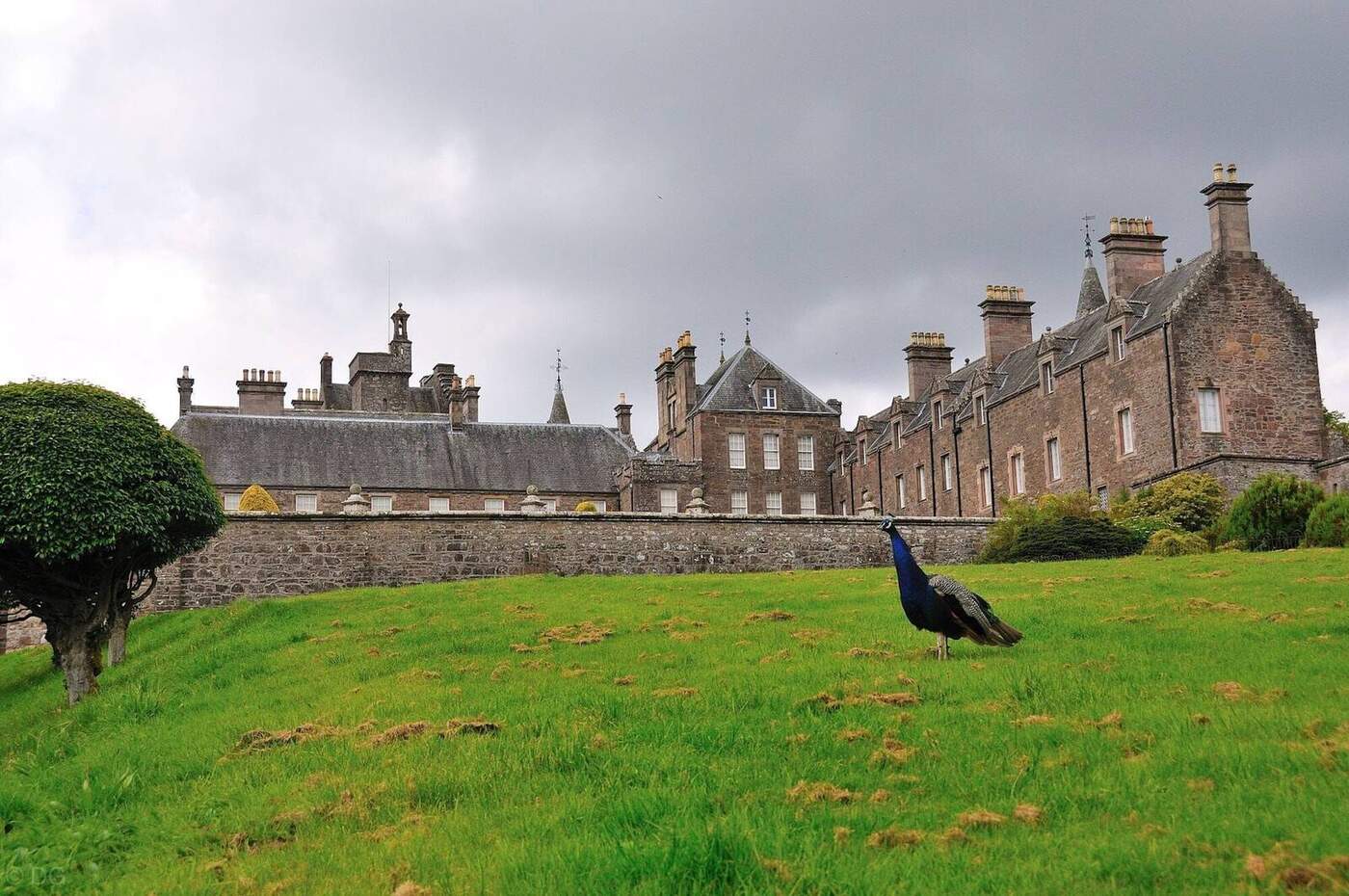
FORMAL GARDENS · MUTHILL
A medieval tower. A garden designed like theatre.
PLAN YOUR VISIT
Muthill, Crieff, PH7 4HN
Prices apply to the gardens and were checked on the official visitor page; opening is seasonal.
Adult garden admission£12.50
Child 5–16£5.00
Family£30.00
Castle interiorNot routinely open
The ticket is for Drummond Castle Gardens, not a routine castle interior visit.
Parking information
Free visitor parking is at Drummond Castle Gardens during the garden opening season. Follow signs from the A822; coaches, campervans and large vehicles use the separate signed coach entrance. Ask at the ticket office about wheelchair parking.
Parking sources checked · 11 October 2026
The main experience is outdoors and includes historic garden terrain. Check the official page for weather-related closures and accessibility details.
An exceptional garden-first visit for design, photography and screen connections, with the clearest reward coming from the view over the parterre rather than a castle interior.
WHAT TO EXPECT
01 / THE STORY
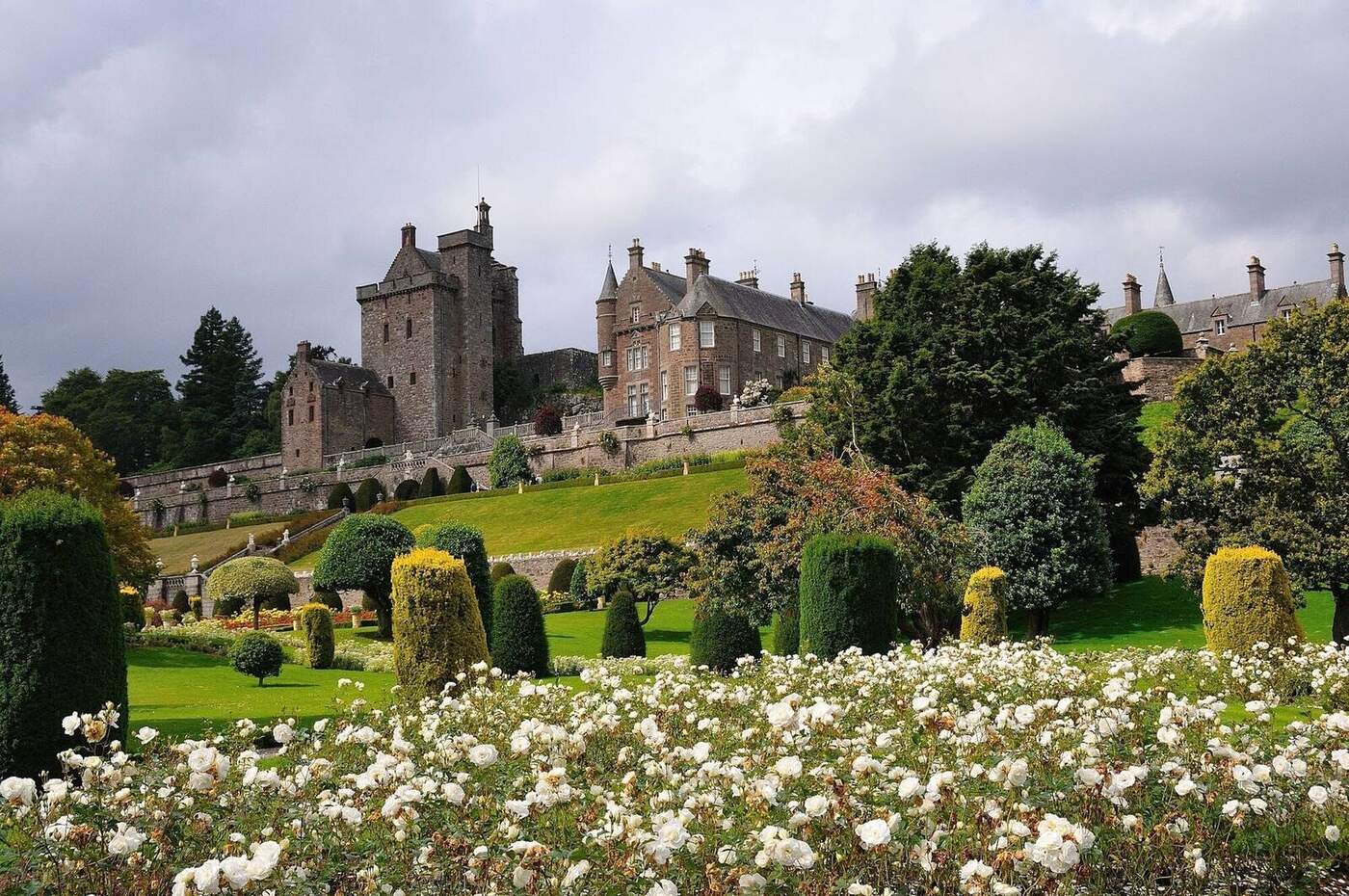
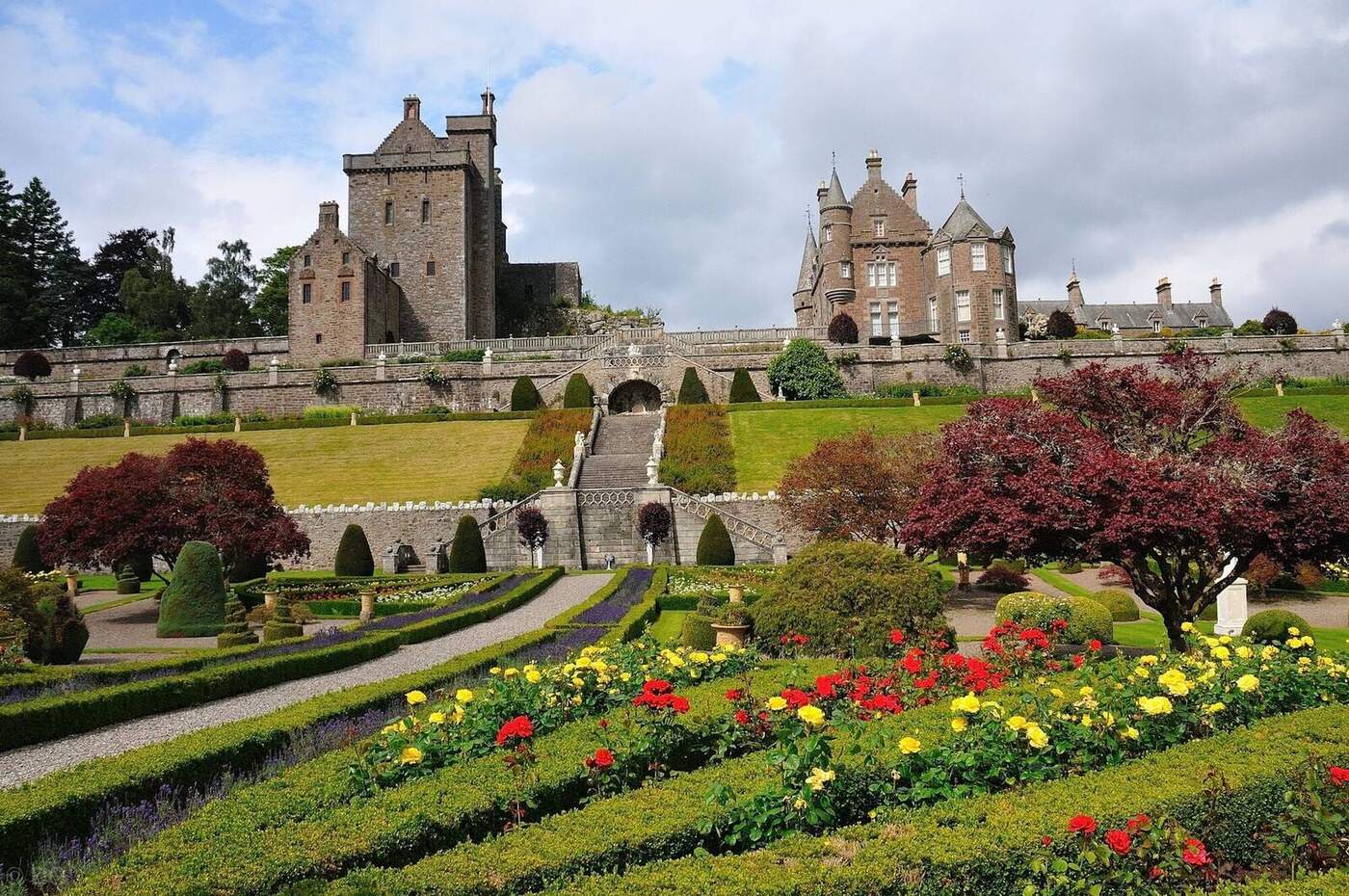
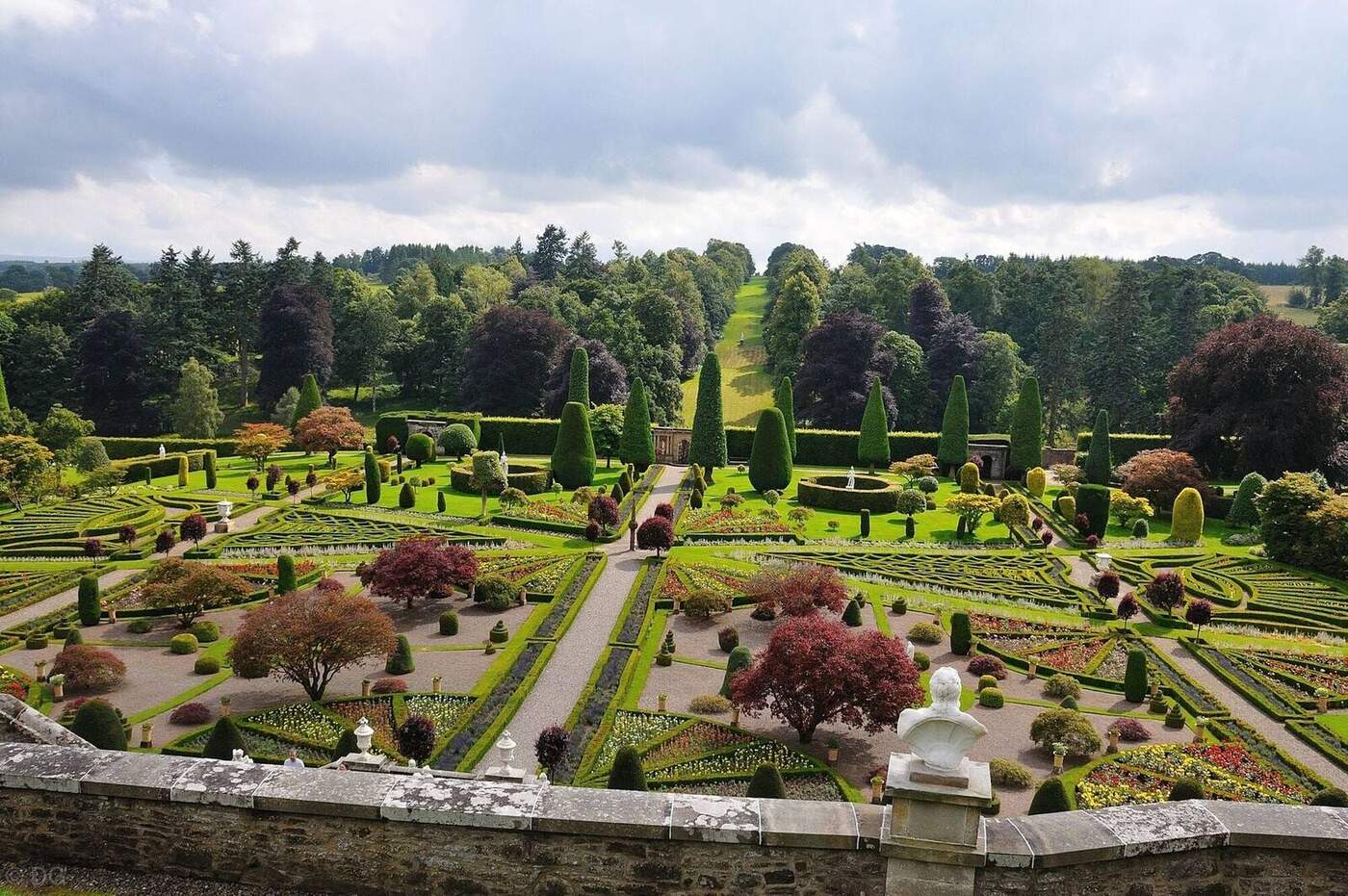
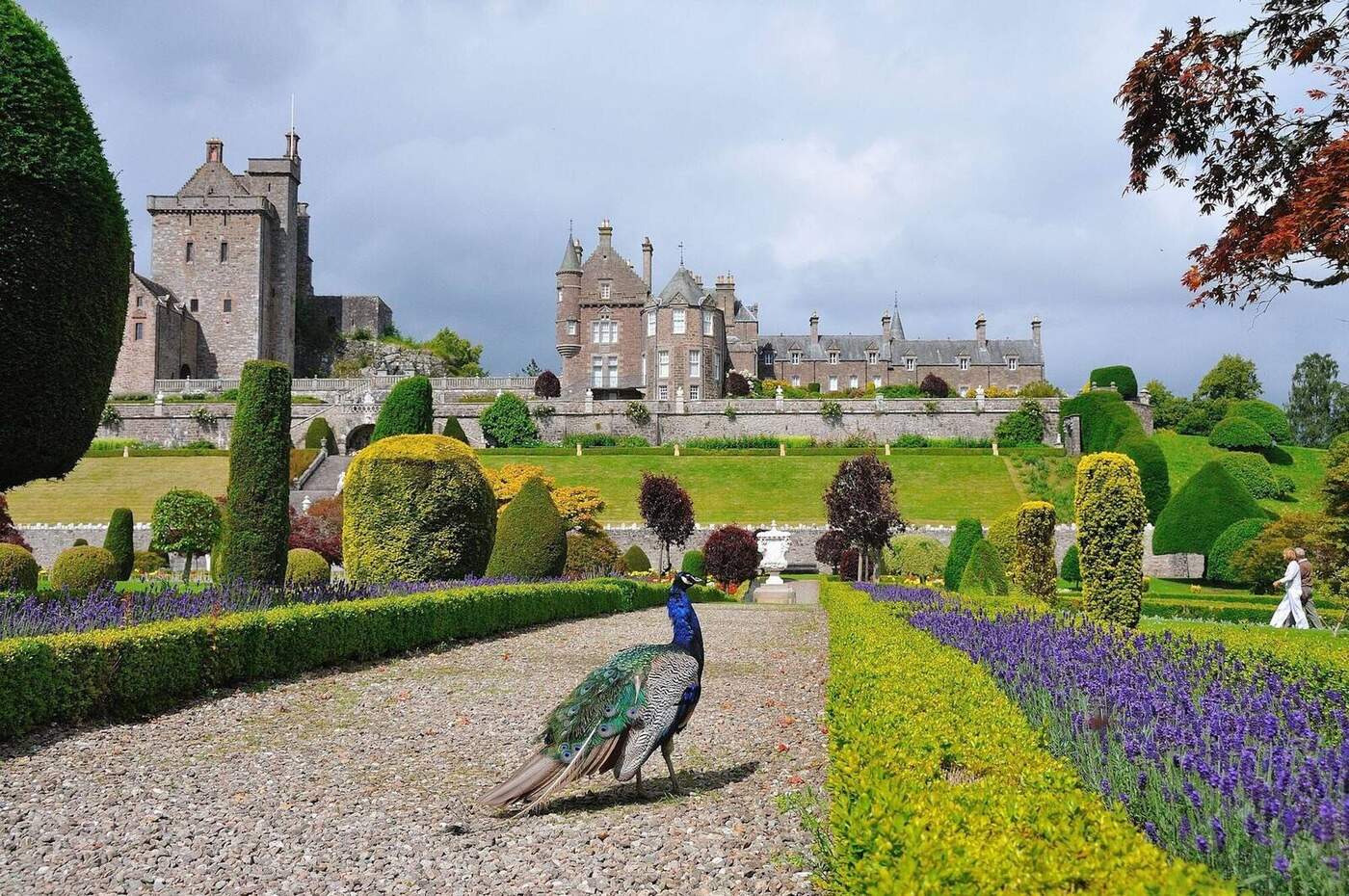
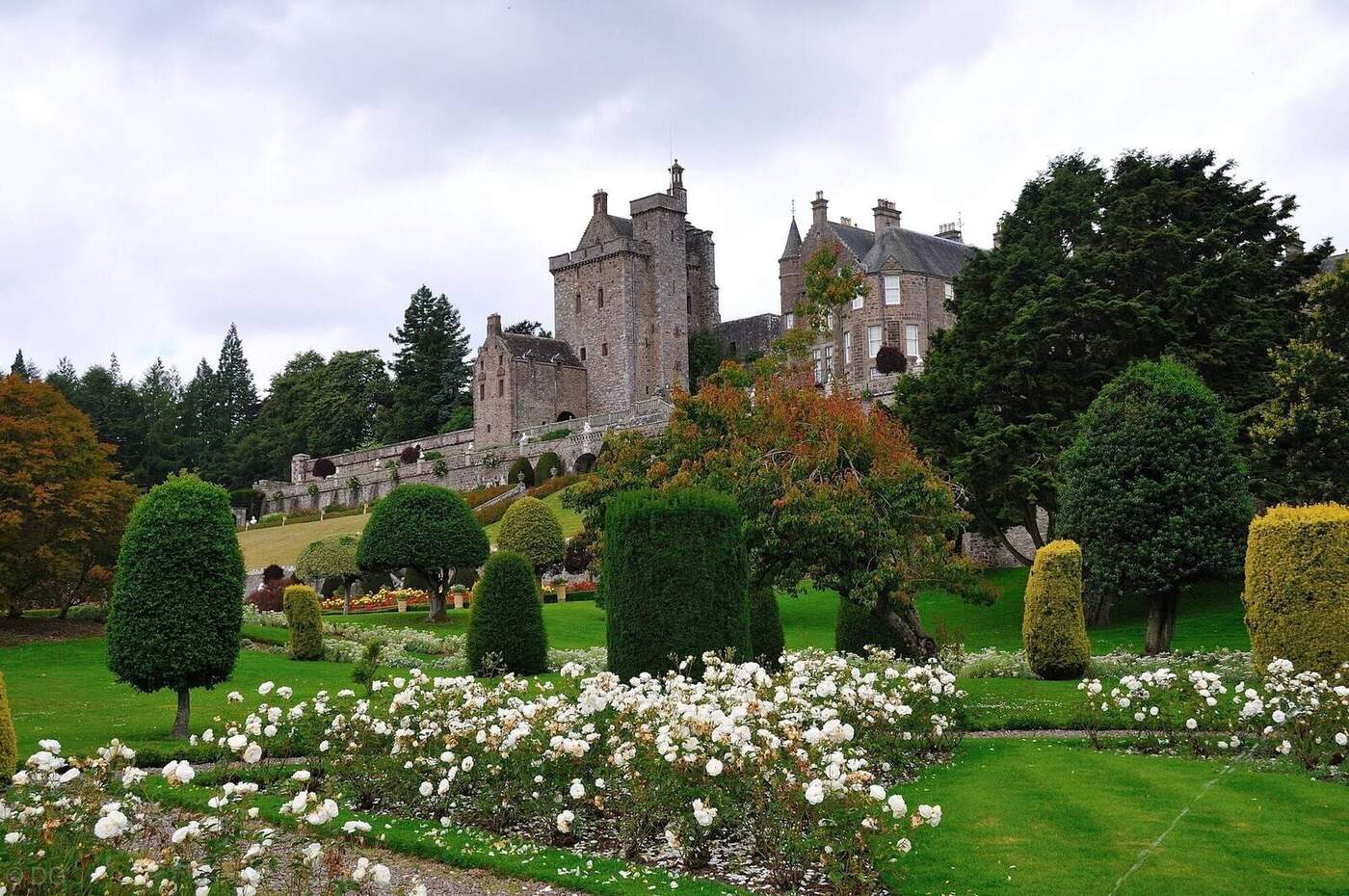
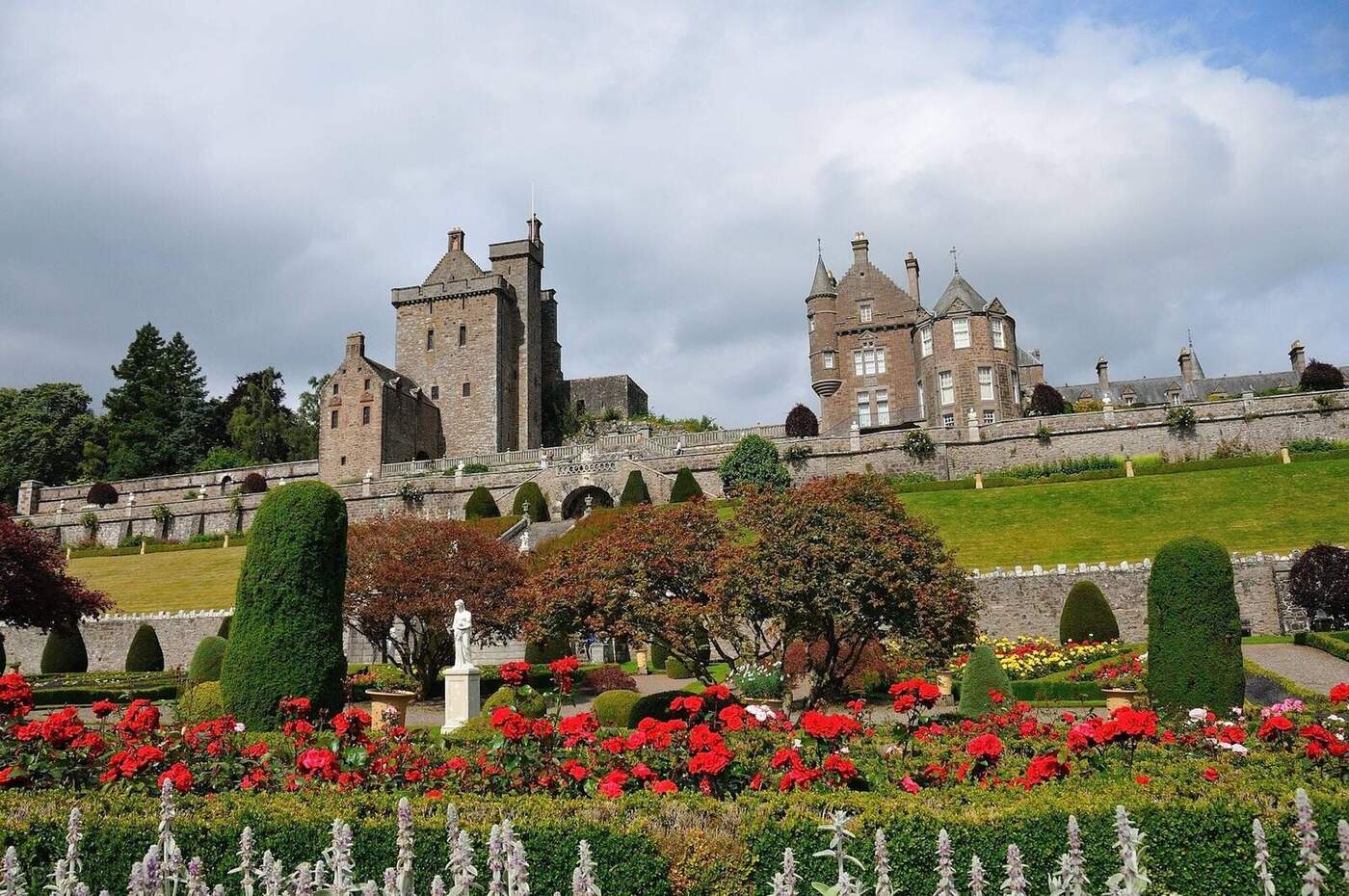
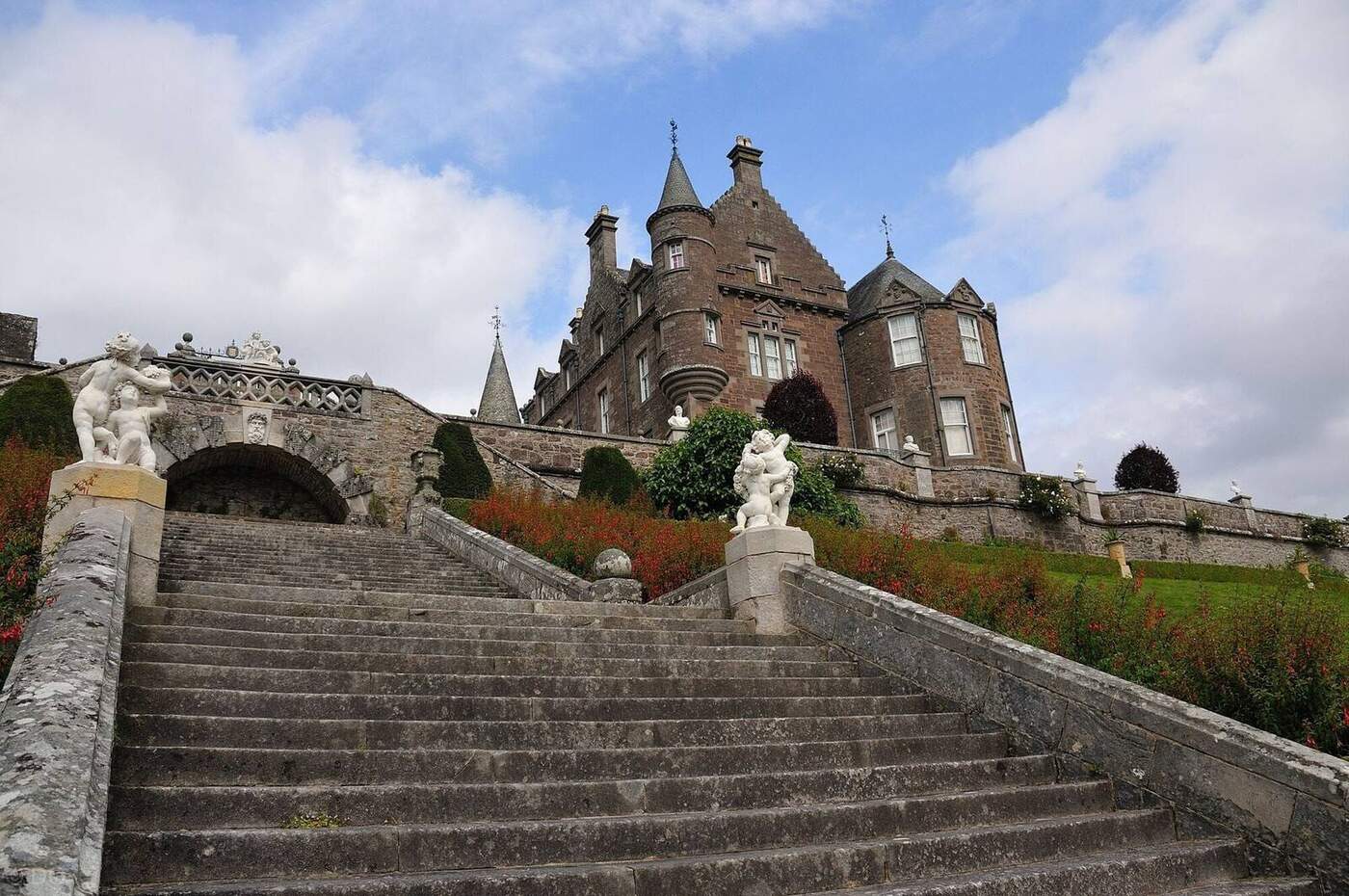
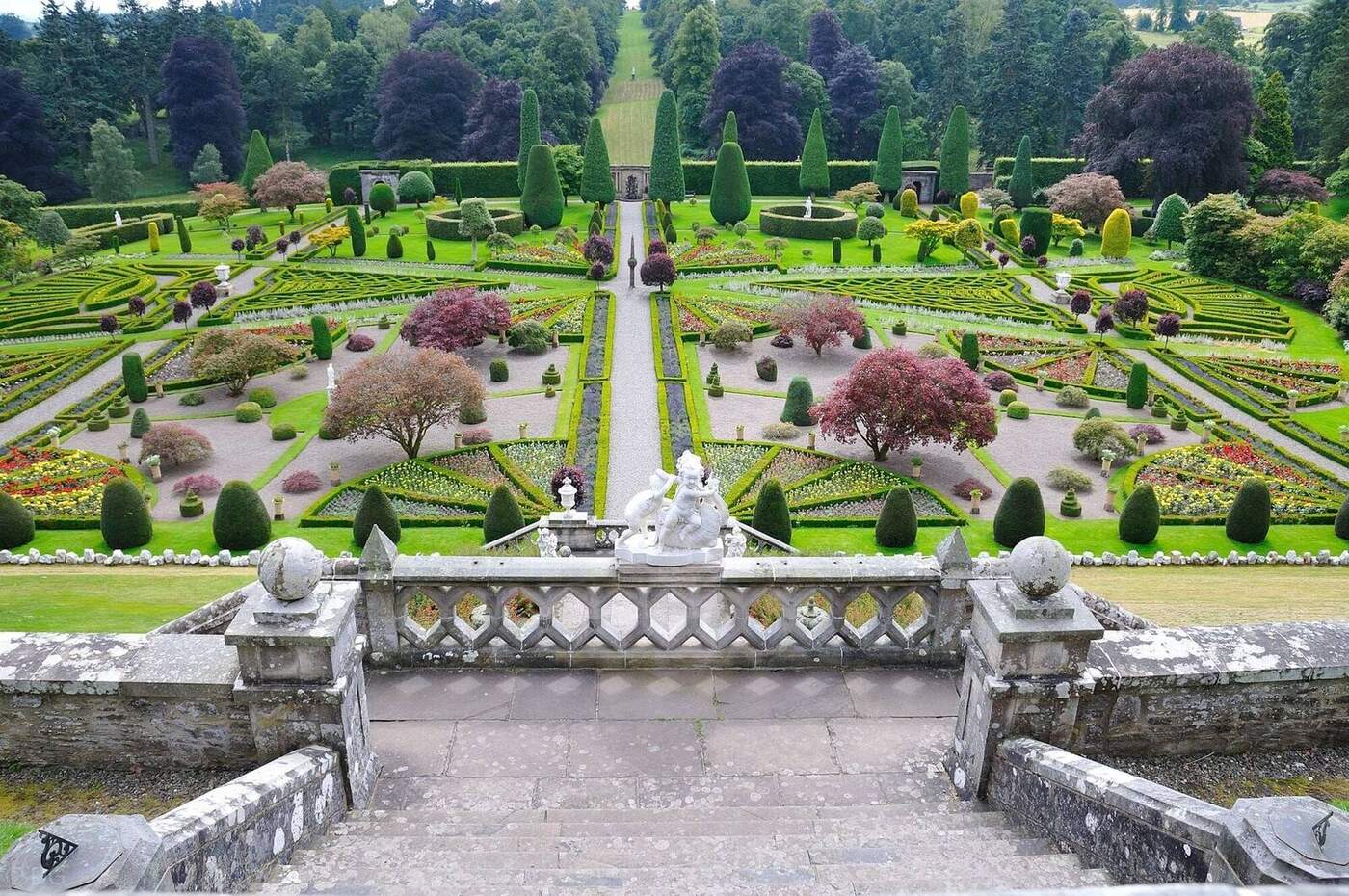
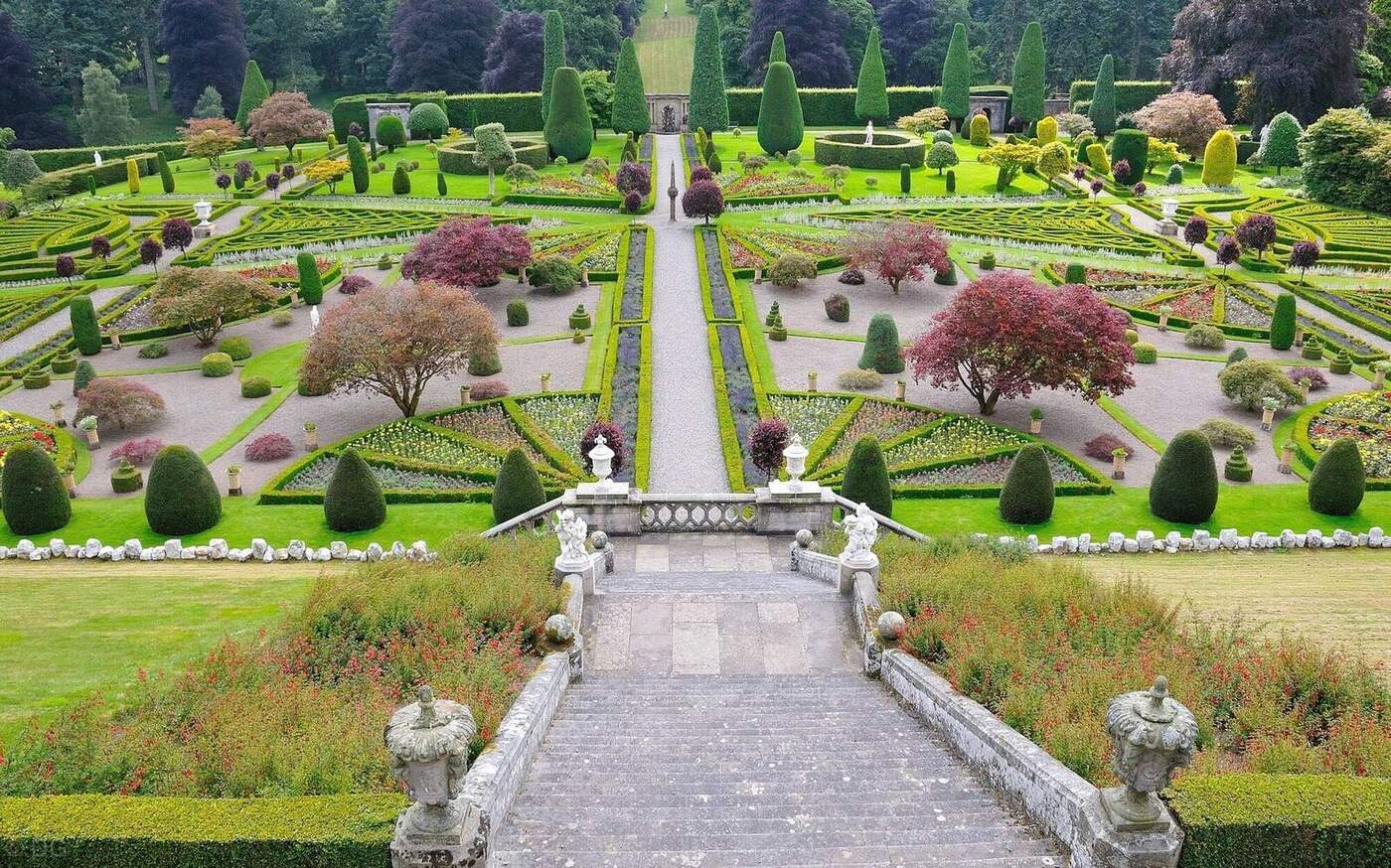
At Drummond, the castle provides the balcony and the garden steals the scene. From the terrace, paths, clipped planting and the central sundial spread below like a huge piece of living geometry.
The ticket is for the gardens; the castle interior is not routinely open to visitors. Come expecting a designed landscape with medieval stone above it, and the experience makes immediate sense.
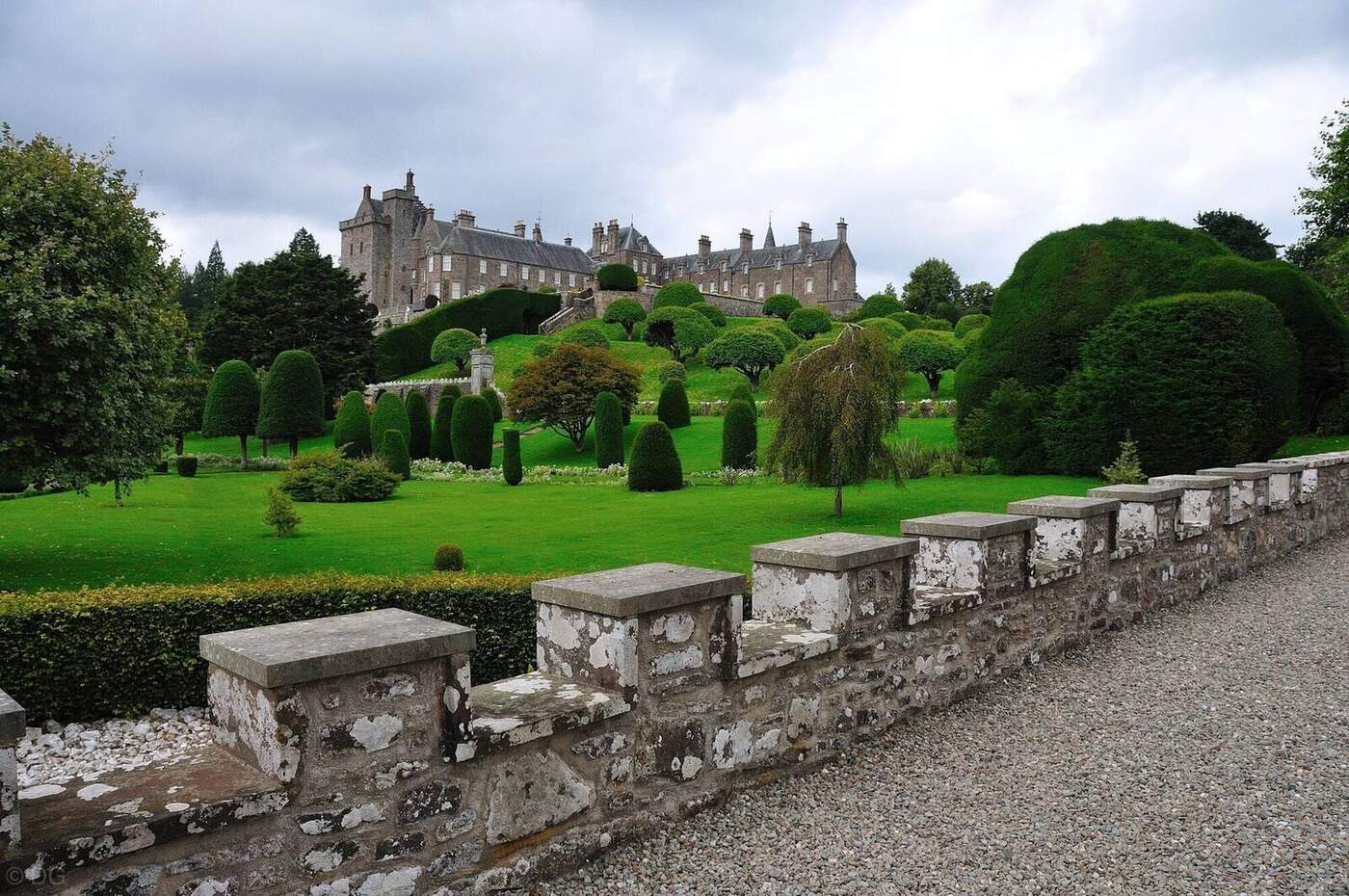
Few Scottish castle visits begin with a view like this. The formal garden is best understood from above, then discovered again at ground level as hedges hide and reveal different parts of the design.
Seasonal planting changes the colour and texture, so current visitor information matters. The underlying geometry is the constant.
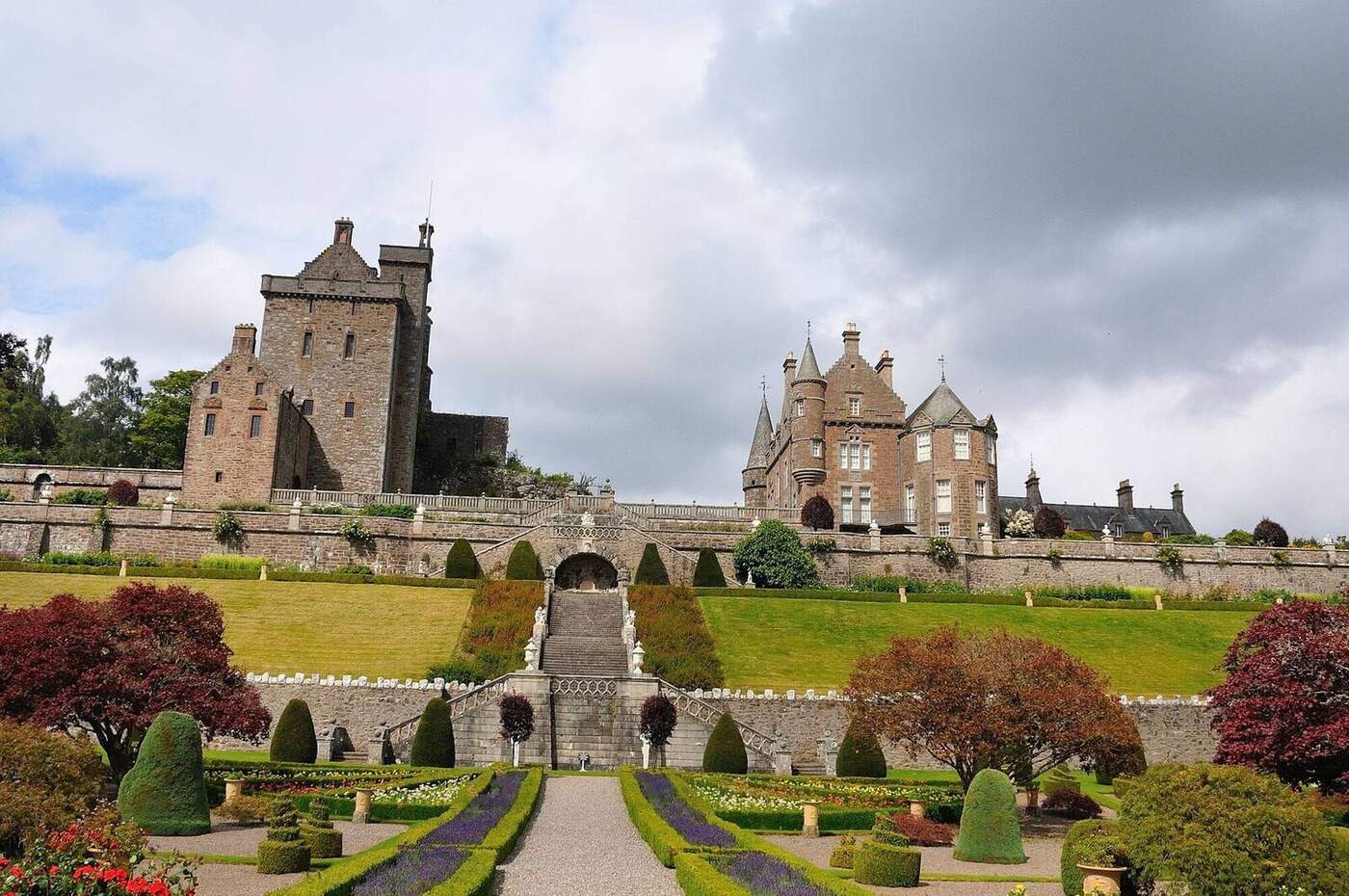
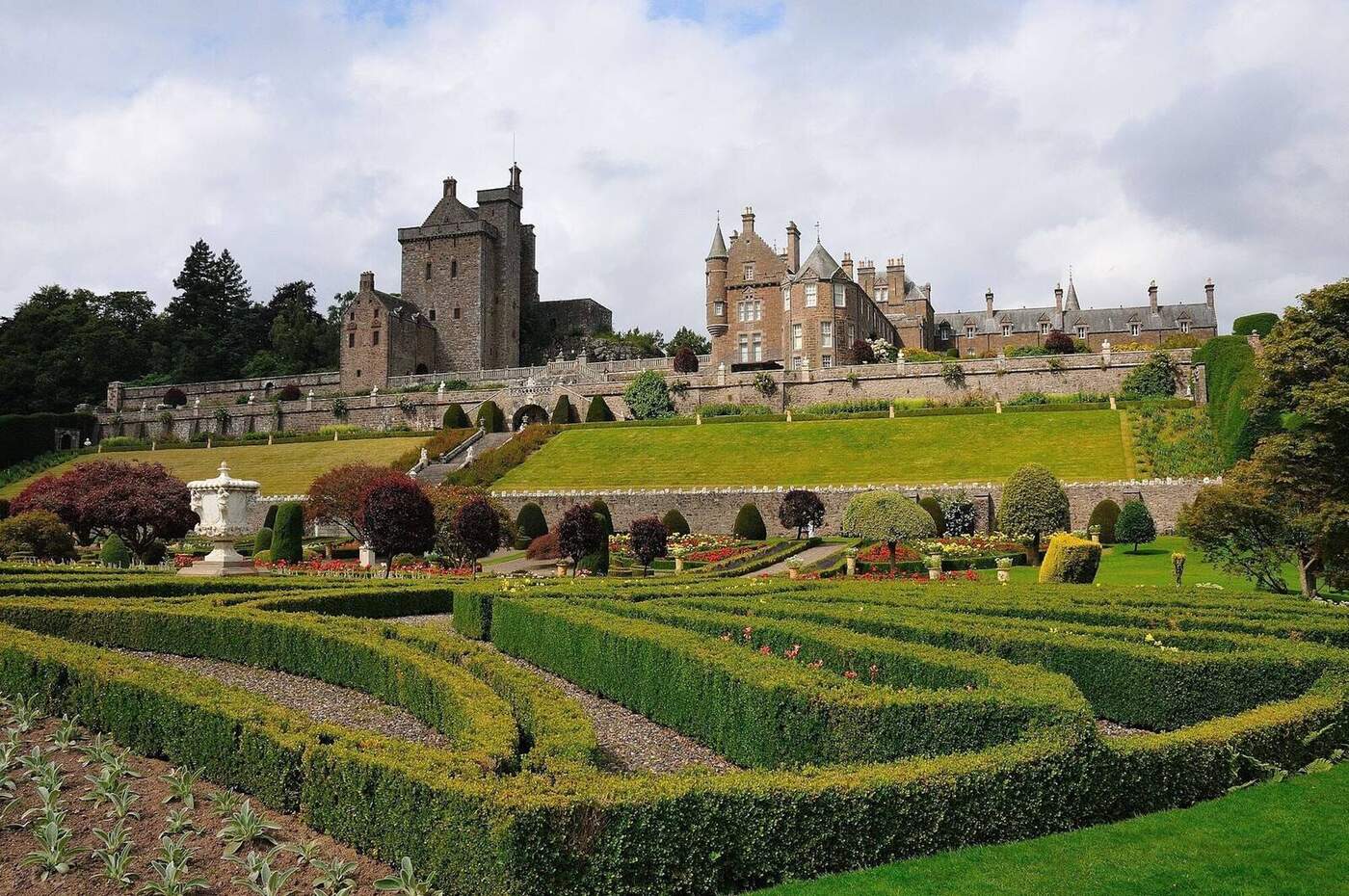
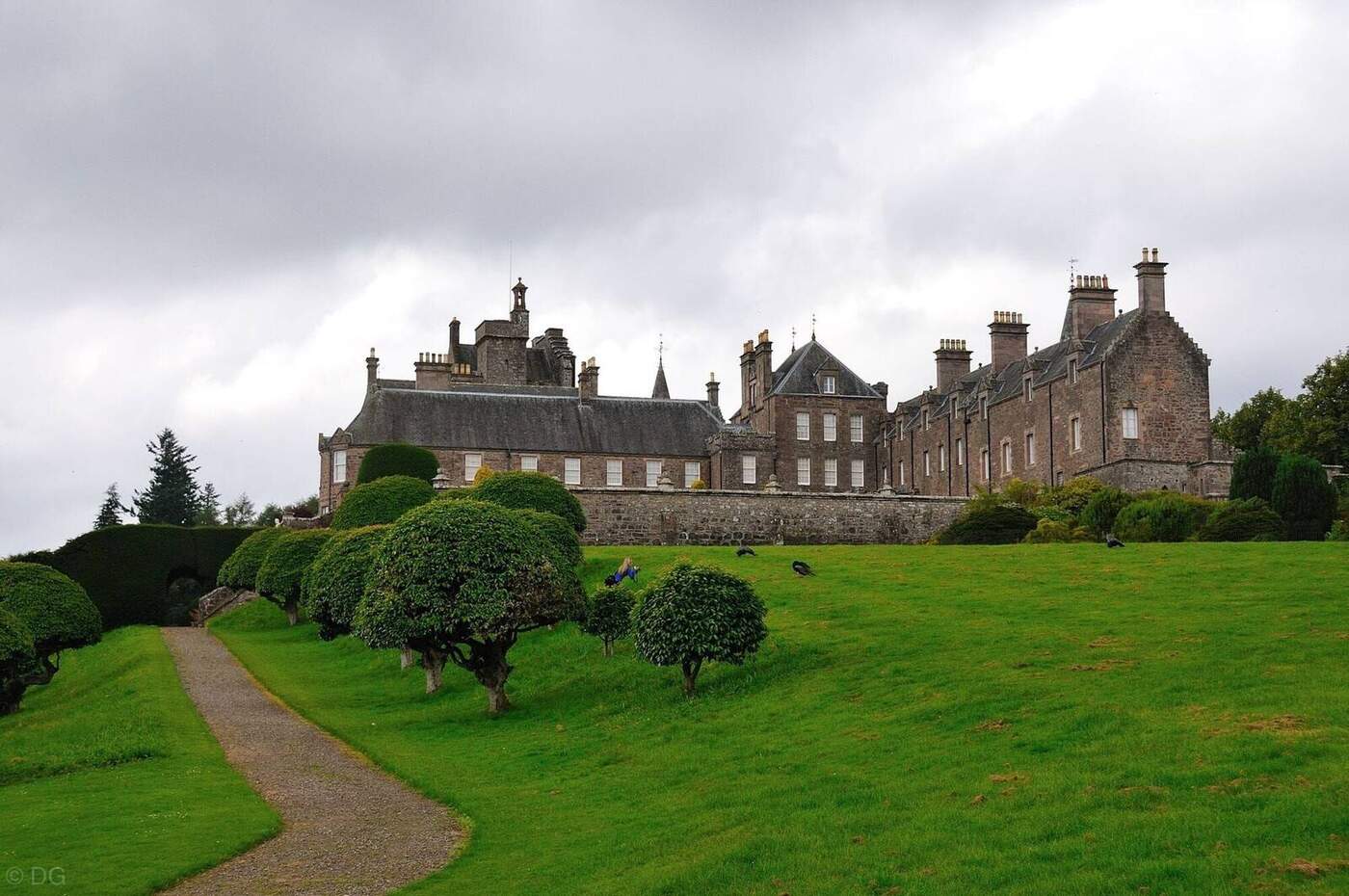
John, first Lord Drummond, built the original keep from around 1490. Later additions and Victorian rebuilding created the architectural group seen today.
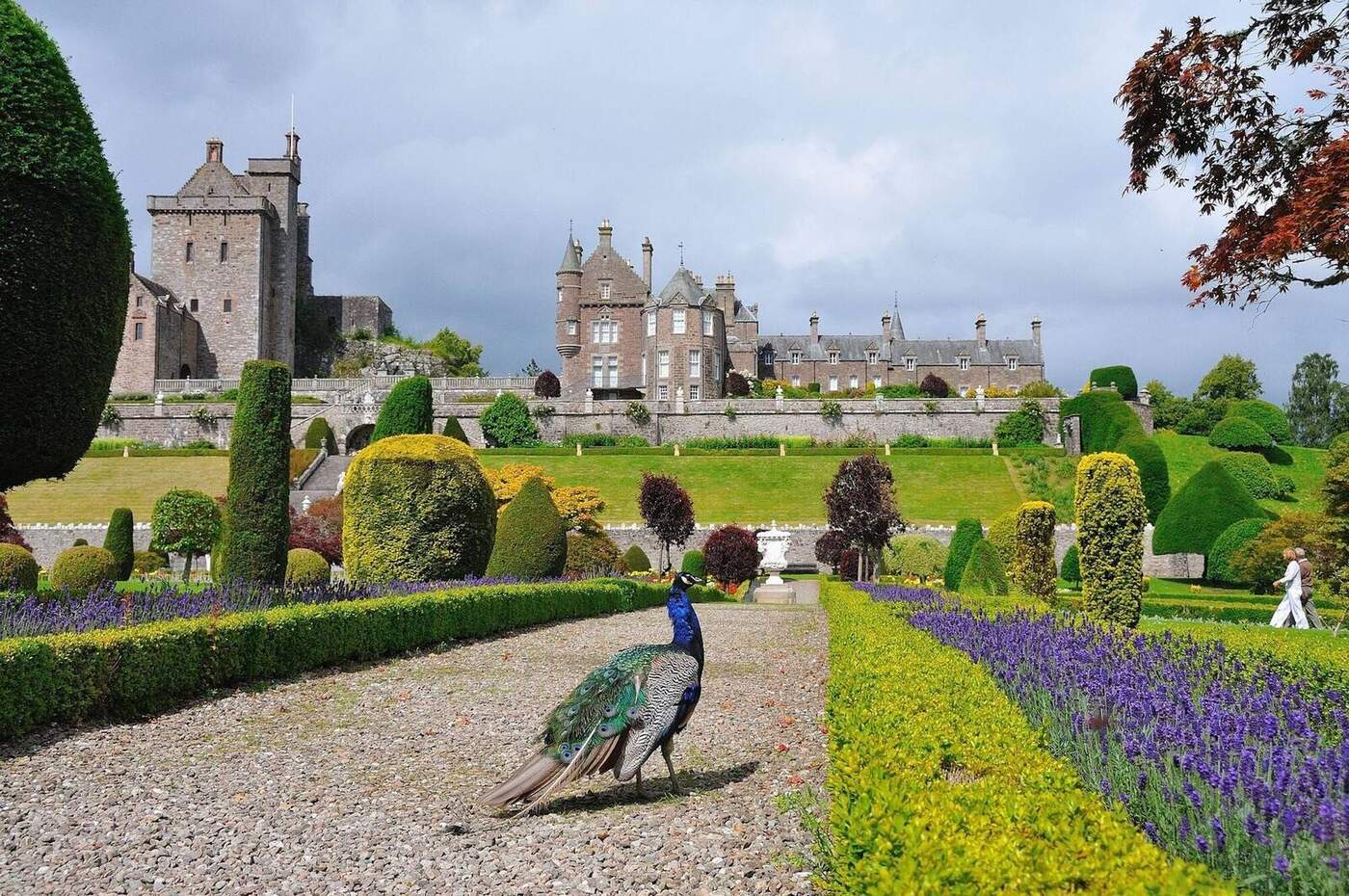
The medieval tower is an important anchor, but this is not a routine room-by-room castle tour. Its strongest public relationship is with the terraces below.
The remarkable stone sundial is dated 1630 and associated with the royal master mason John Mylne. Its many angled surfaces allowed different dials to catch the sun.
It is sculpture, status symbol and scientific instrument at once. Finding it at the centre of the garden rewards a closer look after the grand view from the terrace.
02 / VISUAL JOURNAL
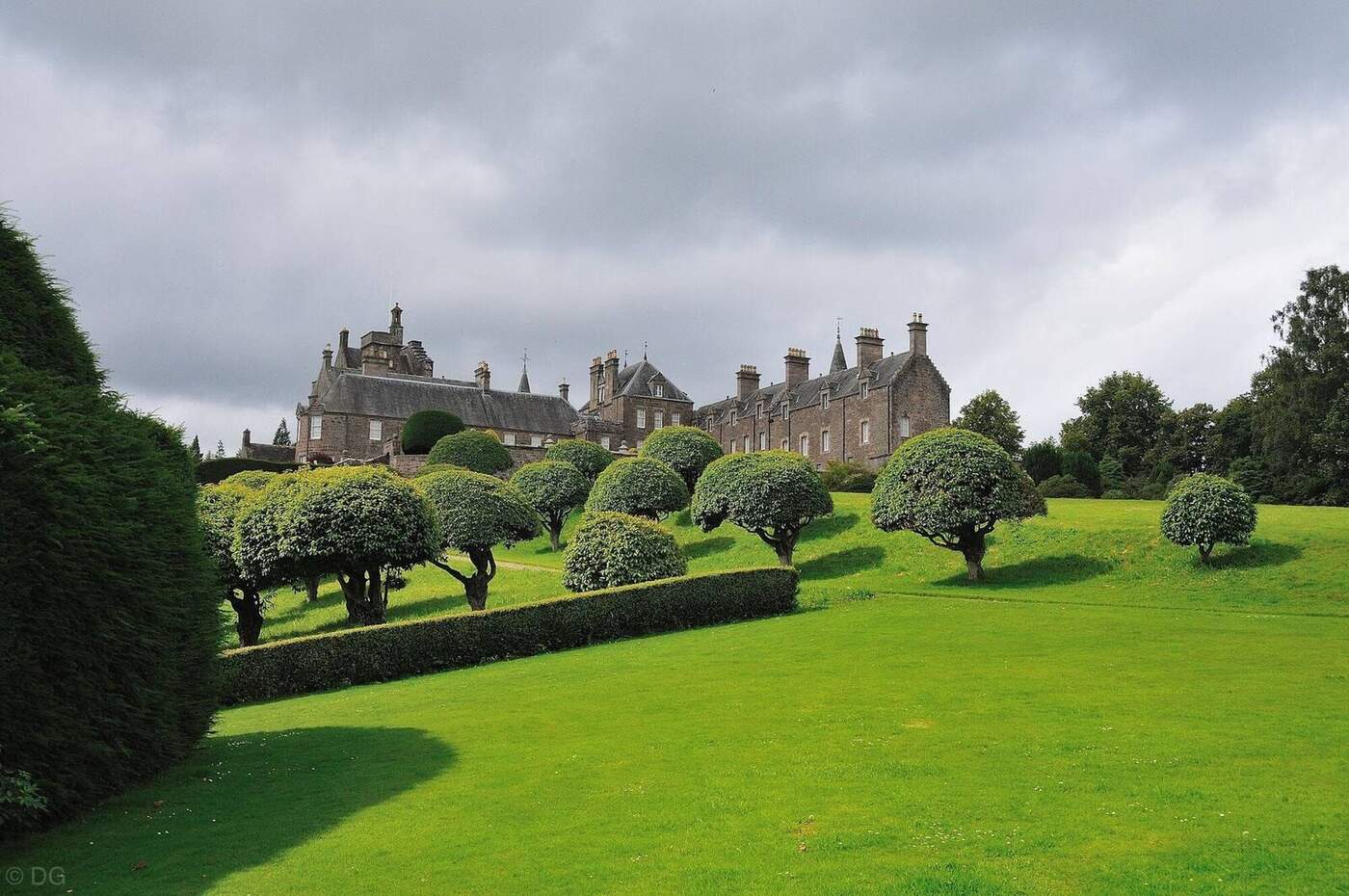
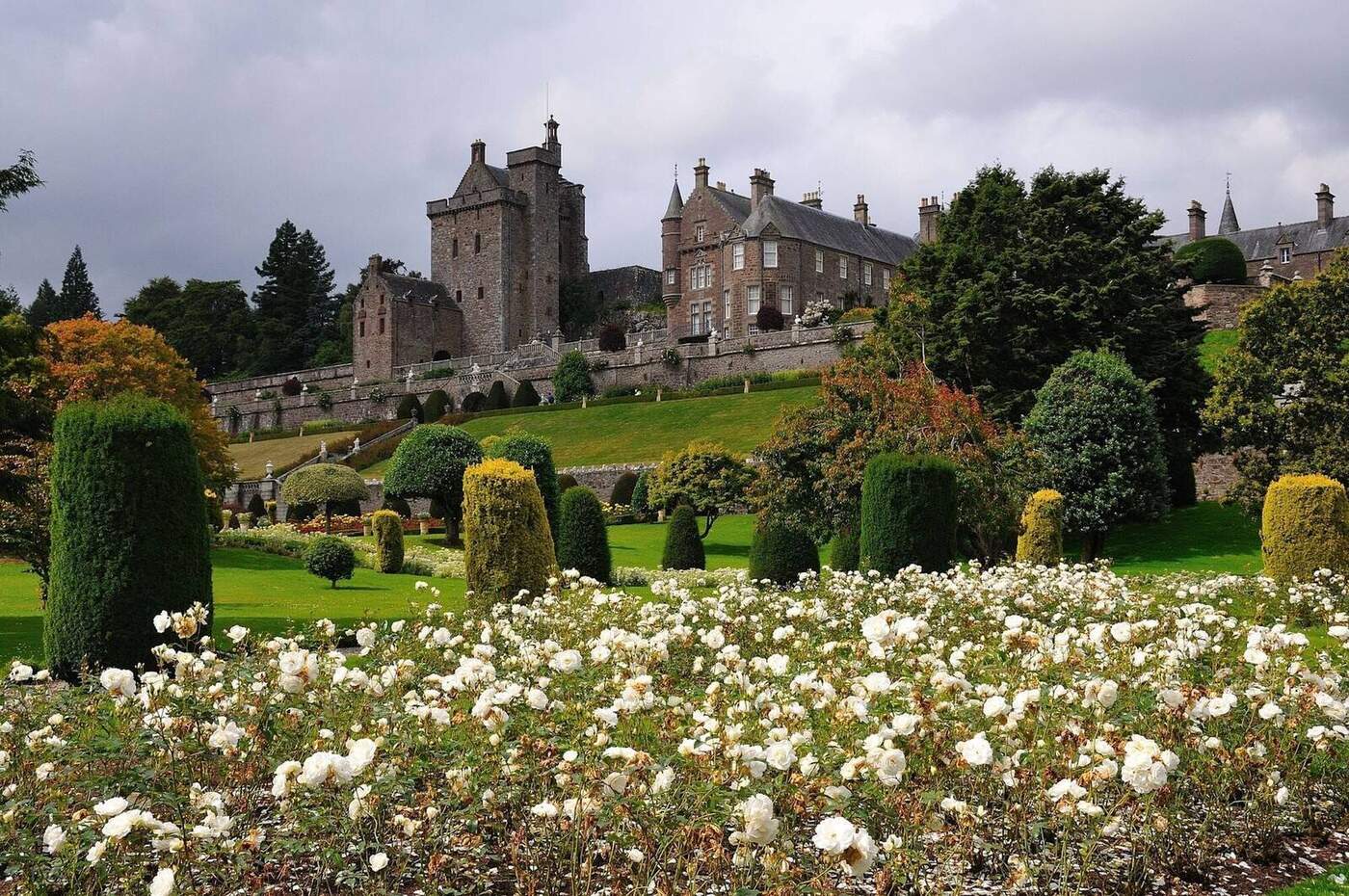
Every photograph on this page was taken by CastleScotland during visits to the site.
10 of 17 photographs
01 / THE STORY CONTINUES
Terraces were developed in the seventeenth century. In the early nineteenth century, Lewis Kennedy produced a new design for Clementina Drummond and her husband Peter Robert Willoughby.
Queen Victoria and Prince Albert visited in 1842. After the Second World War, the garden was renewed in the 1950s under the third Earl and Countess of Ancaster, giving much of the formal display its present form.
The estate records Lord Drummond sending cherries to James IV in 1508. This points to early cultivation, but does not mean the present formal garden has survived unchanged since the king's day.
The better story is one of continuity through reinvention: plants, fashions and owners changed while the landscape remained a place for display.
Outlander used Drummond Castle Gardens to represent the gardens of Versailles. The same landscape also appears in the film Rob Roy (1995).
Those are genuine filming credits, not claims that the stories happened here. The camera borrowed the garden's theatrical order because it can look both unmistakably Scottish and convincingly continental.
03 / MOMENTS IN STONE
John, first Lord Drummond, builds the original keep. The main architectural experience is looking down across the formal garden plan.
The second Earl of Perth develops the formal terraces; the sundial is dated 1630. Planting changes, but the historic geometry remains the constant.
Lewis Kennedy reshapes the formal garden. Tower and garden make a deliberately staged historic landscape.
Queen Victoria and Prince Albert visit the gardens.
The third Earl and Countess of Ancaster renew and simplify the planting.
The decisive early formal garden belongs to the seventeenth century. John Drummond, second Earl of Perth, developed terraces in the 1630s. Earlier cultivation should not be ruled out: the estate records a gift of cherries to James IV in 1508. That reference does not establish the date or layout of the parterre now seen below the castle. An orchard and an elaborate formal garden are different kinds of evidence.
At the centre stands the remarkable sundial dated 1630, associated with master mason John Mylne. Its many differently angled surfaces make it a scientific instrument as well as an ornament. During modern conservation, specialists examined its complex timekeeping and corrected longstanding misunderstandings about its dials. Look at how sunlight falls across the stone rather than expecting a single familiar clock face. The restored instrument remains a particularly tangible connection with seventeenth-century craftsmanship.
The garden’s present structure owes much to Lewis Kennedy’s work in the early nineteenth century for Clementina Drummond and her husband, Peter Robert Willoughby. Terraces and formal planting were renewed around an inherited site. Queen Victoria and Prince Albert visited in 1842. Their admiration belongs to this developing nineteenth-century landscape, not to an untouched garden preserved exactly as its earliest patrons had known it.
Further renewal followed the Second World War. Replanting and simplification in the 1950s were undertaken under the third Earl and Countess of Ancaster. The Countess was Nancy Phyllis Louise Astor, also known as Phyllis, and should not be confused with her mother, the politician Nancy Astor. The older framework survived while the planting responded to a reduced workforce. This is a layered historic landscape, not a literal reconstruction of a single Renaissance moment.
The keep is listed at Category B, while the formal garden has its own Category A designation. The wider landscape is included in Scotland’s national inventory of gardens and designed landscapes. These distinctions recognise different parts of the ensemble; a single label for the entire estate can obscure them. The Grimsthorpe and Drummond Castle Trust manages the gardens and associated heritage, continuing the work of maintaining buildings alongside living plants.
Begin with the elevated view, then follow the permitted paths to examine the design at ground level. The garden has appeared on screen, including in Rob Roy, but its strongest story remains the relationship between estate power and designed nature. Summer colour changes the impression; hedges and terraces explain the underlying geometry. Check current garden access before travelling and plan an outdoor visit. The approach, courtyard and garden provide the experience, rather than a promised tour of the castle’s private rooms.
08 / EXPLORE NEXT
Find Scottish castles by region, landscape or the stories that bring them to life.
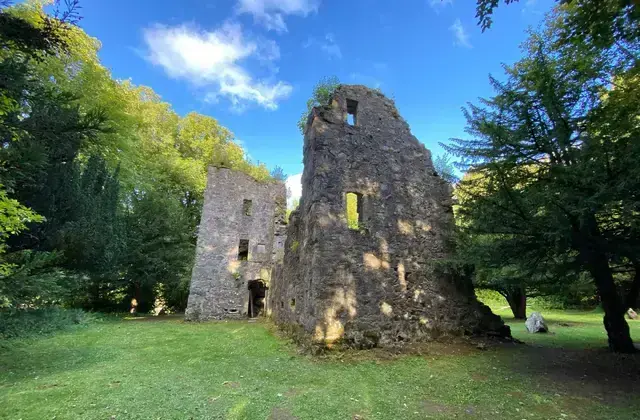 PerthshireFinlarig Castle
 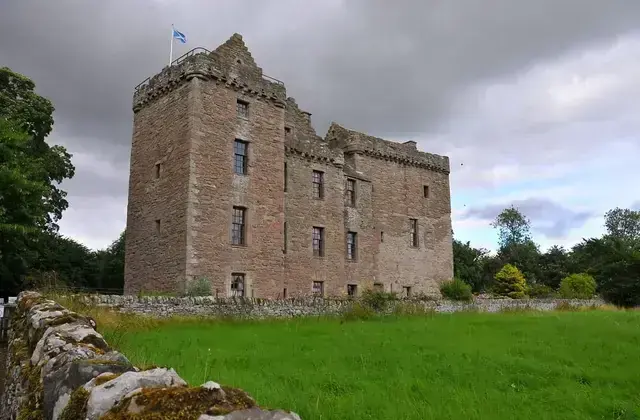 PerthshireHuntingtower Castle
 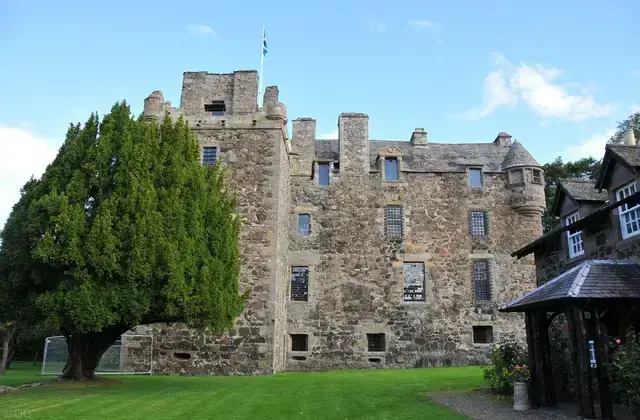 PerthshireElcho Castle